Pearson Edexcel · GCSE · Design and Technology
Timbers: The impact of forces and stresses on each natural and manufactured timber and how they can be reinforced and stiffened
This topic explores the fundamental forces acting on timber structures—compression, tension, shear, and bending—and the practical engineering techniques used to reinforce and stiffen them. Understanding these principles is essential for designing robust, safe, and functional products in your Design and Technology coursework and written exams.
- 6 min read
- 3 worked examples
- 3 practice questions
- 6 key terms
Study Notes
Overview
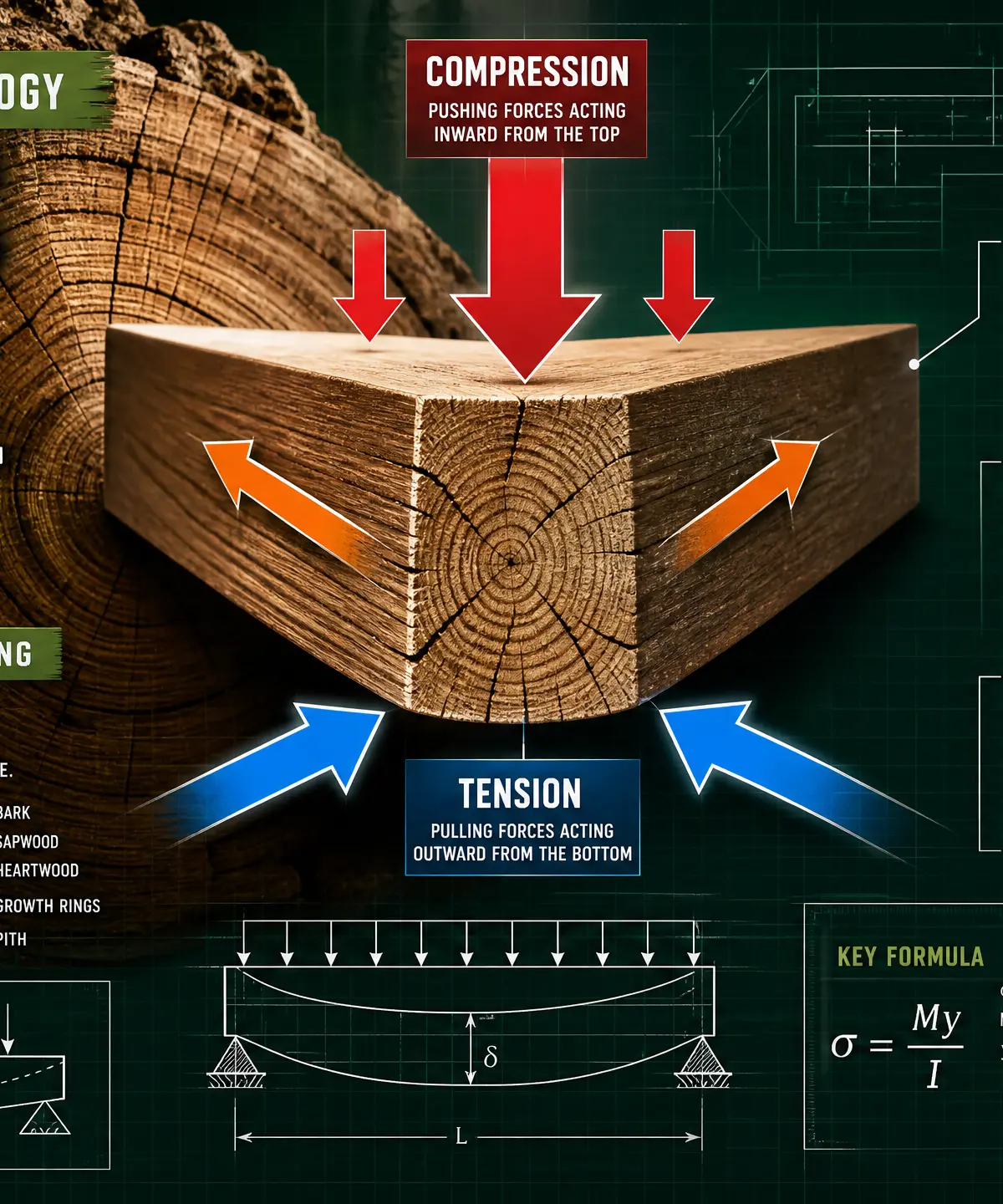
Topic 7.4 sits at the intersection of material science and structural engineering within Design and Technology. When designing products, from small furniture pieces to large architectural structures, understanding how materials respond to loads is critical. This topic covers the specific forces and stresses that natural and manufactured timbers experience, and the practical methods designers use to reinforce and stiffen them to prevent failure.
Key Knowledge & Theory
The Four Fundamental Forces
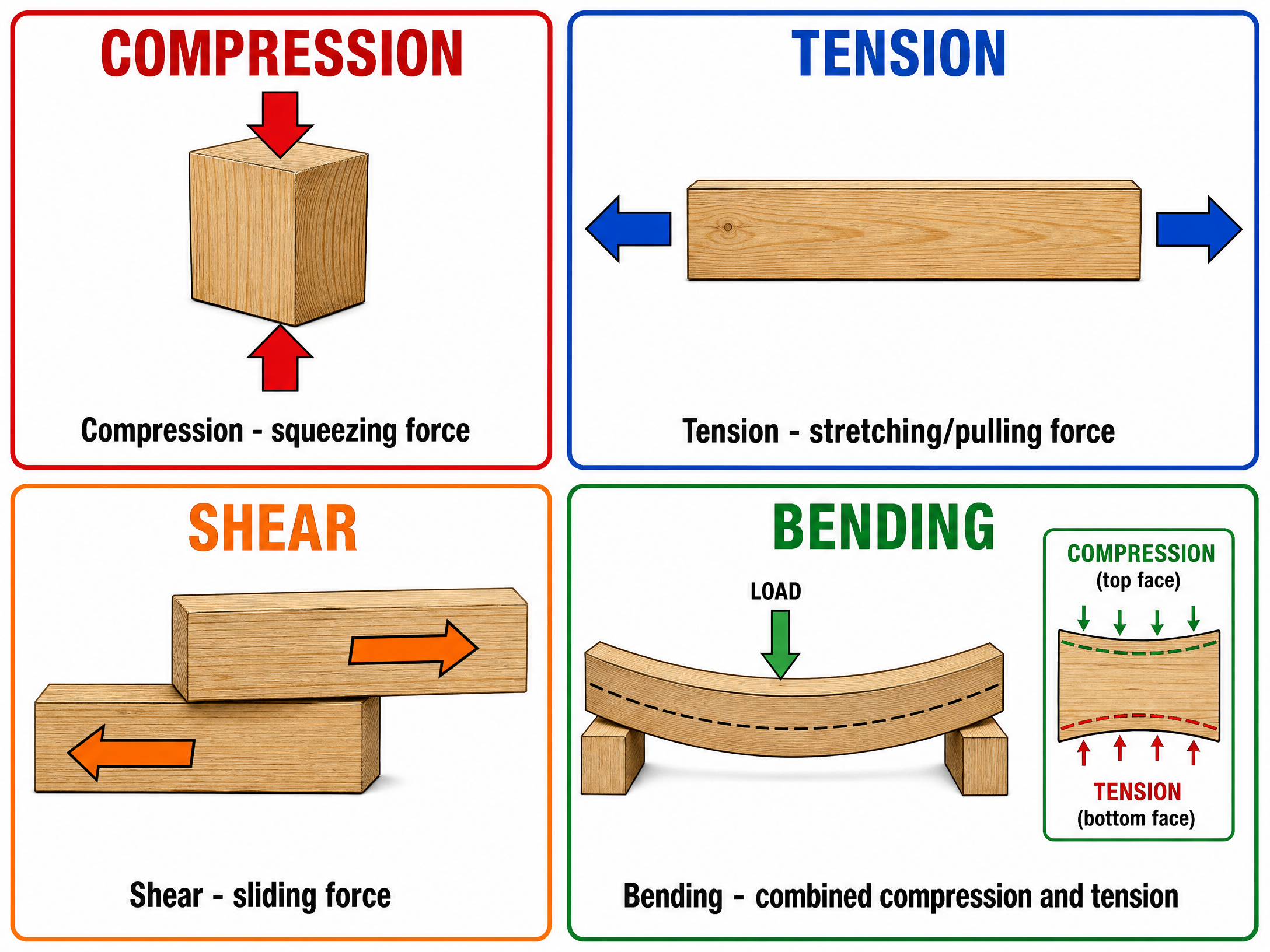
To design successful timber products, candidates must understand how forces act upon materials. A force is a push or pull that can cause a structure to deform or fail.
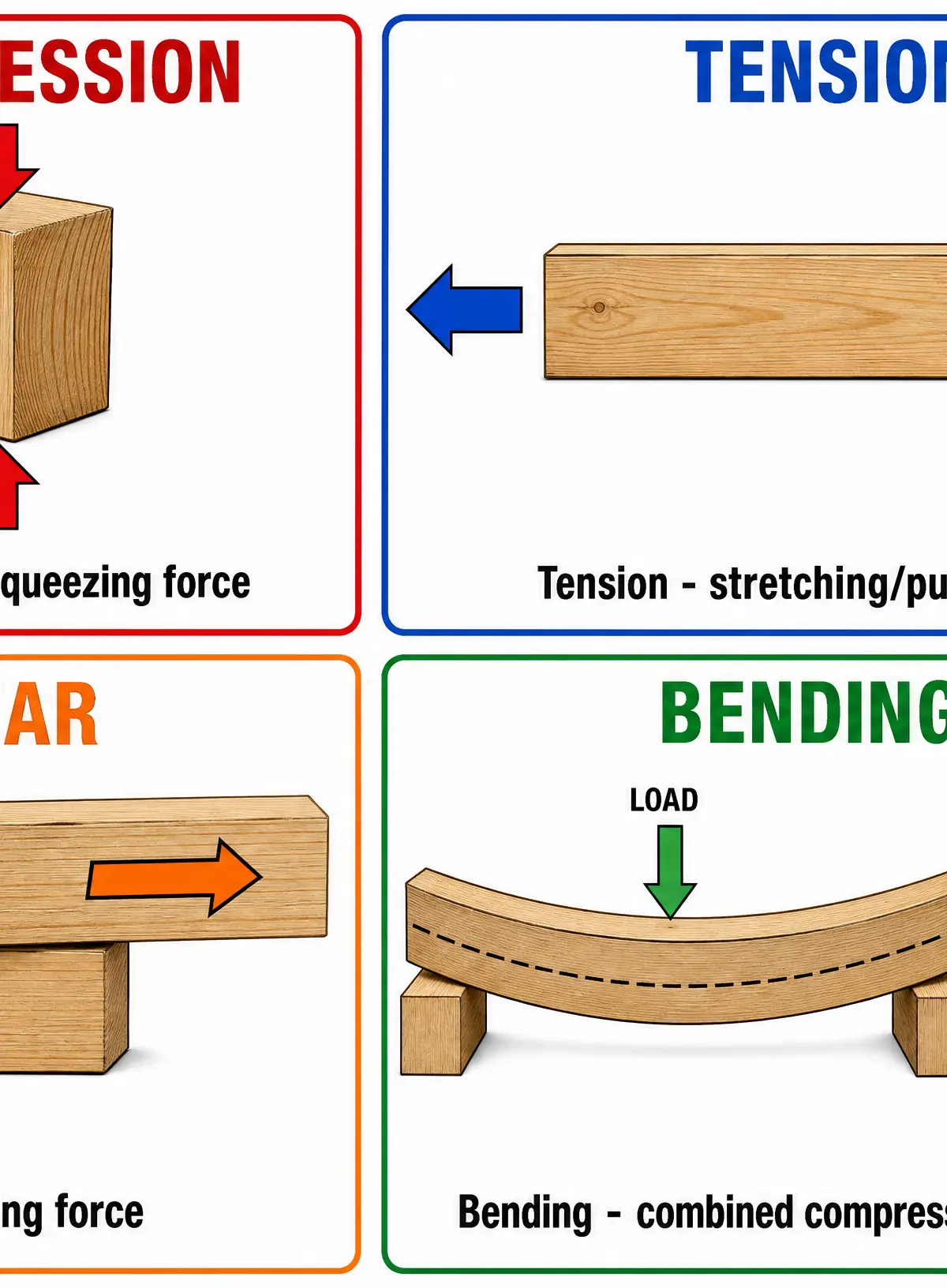
- Compression: A squeezing force that pushes inwards from opposite sides. Timber is highly resistant to compression along the grain, making it ideal for vertical posts and chair legs.
- Tension: A stretching or pulling force acting outwards. Natural timber is strong in tension along the grain due to the alignment of its cellulose fibres.
- Shear: A sliding force where two parts of a material are pushed in opposite, parallel directions. This is a common point of failure in timber joints (like a tenon shearing off) and along the grain of natural timber.
- Bending: A complex force that combines compression on the inner curve (top face of a loaded beam) and tension on the outer curve (bottom face).
Natural vs Manufactured Timbers
Examiners frequently test the distinction between natural and manufactured timbers regarding their structural properties.
| Timber Type | Structural Property | Key Characteristics | Exam Relevance |
|---|---|---|---|
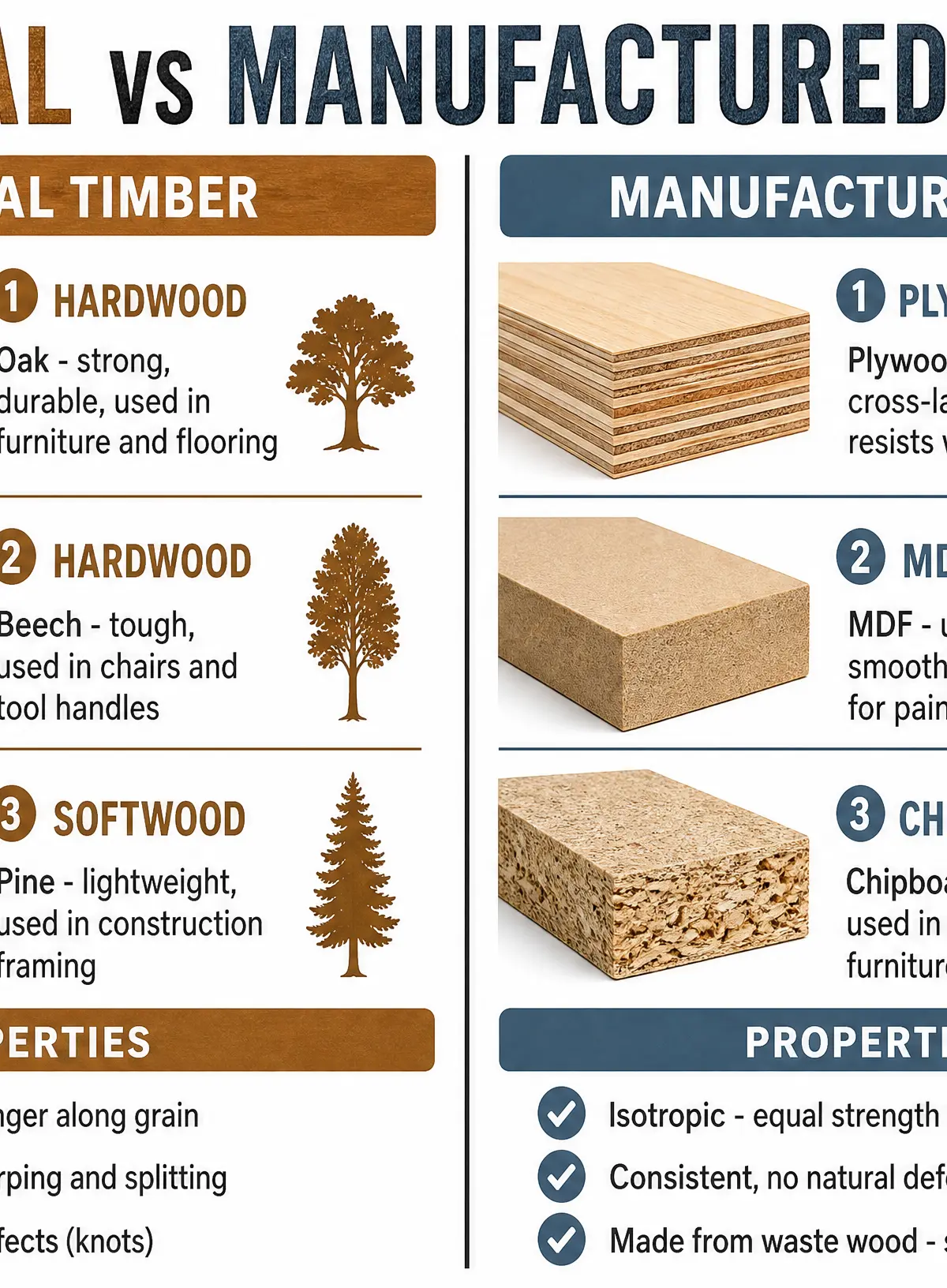
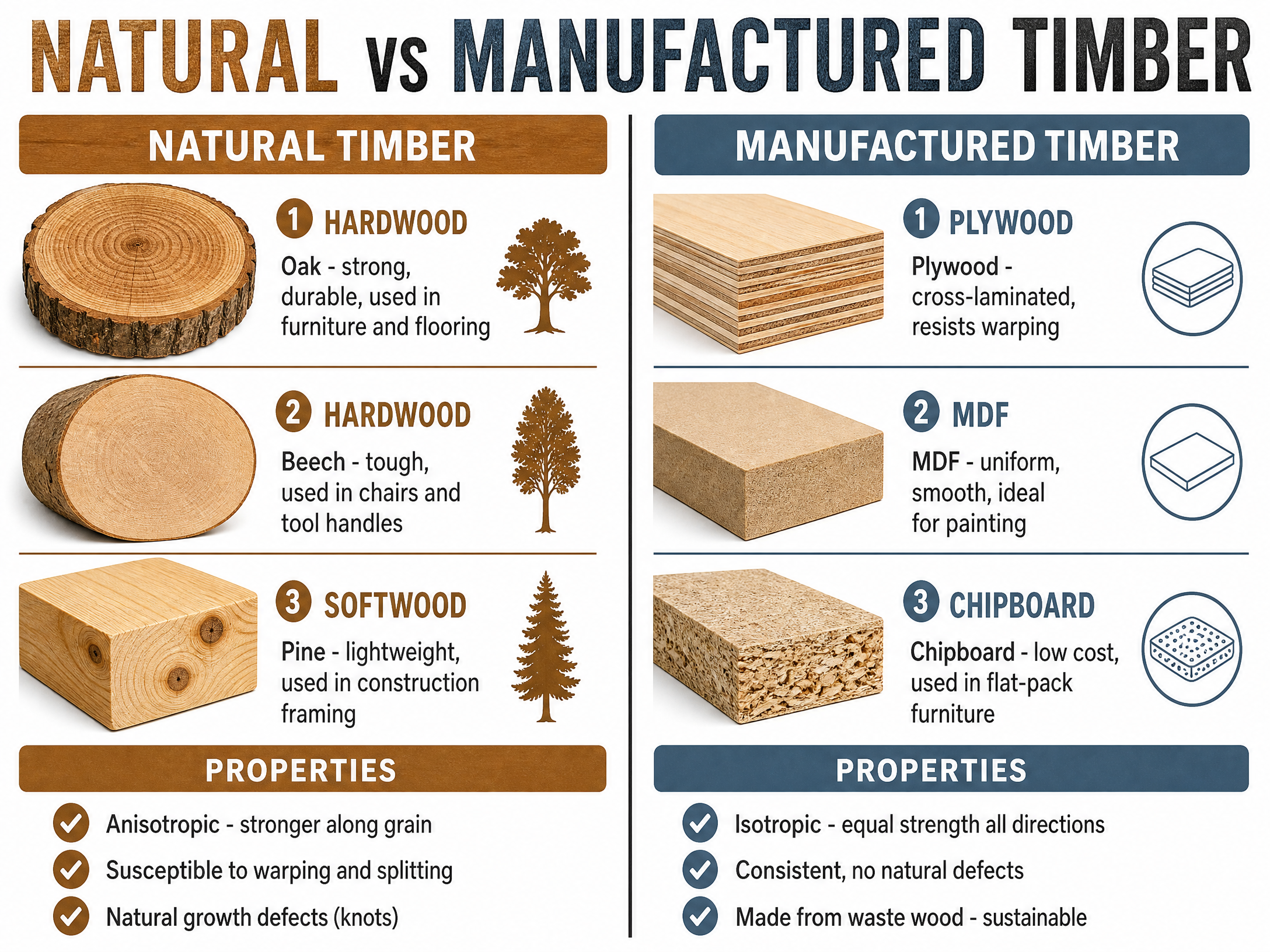
| Natural Timber (e.g., Oak, Pine) | Anisotropic | Properties differ depending on the direction of the grain. Strong along the grain, weak across it. Subject to natural defects (knots, shakes) which create stress concentrations. | Must explain why grain direction dictates how a component is cut and used. |
| Manufactured Boards (e.g., Plywood, MDF) | Isotropic (or more uniform) | Properties are consistent in all directions. Plywood achieves this through cross-lamination of veneers. No natural growth defects. | Must evaluate their use as a stable, predictable alternative to natural timber for large panels. |
Internal Stresses and Pre-stressed Beams
As a tree grows, it develops internal growth stresses—the outer layers are often in tension while the inner core is in compression. When timber is felled and cut, these stresses are released, which, combined with changes in moisture content, causes warping, bowing, and twisting.
In advanced engineering, designers use pre-stressed construction beams. For example, in composite timber-concrete structures, steel tendons are tensioned before the concrete sets. When released, the tendons put the beam into compression, counteracting the tension it will experience under load, allowing for longer, stronger spans.
Practical Skills & Reinforcement Techniques
When a timber structure is insufficient to bear the required loads, designers must employ reinforcement and stiffening techniques. These are practical skills you must apply in your NEA (coursework).
Triangulation in Frame Structures
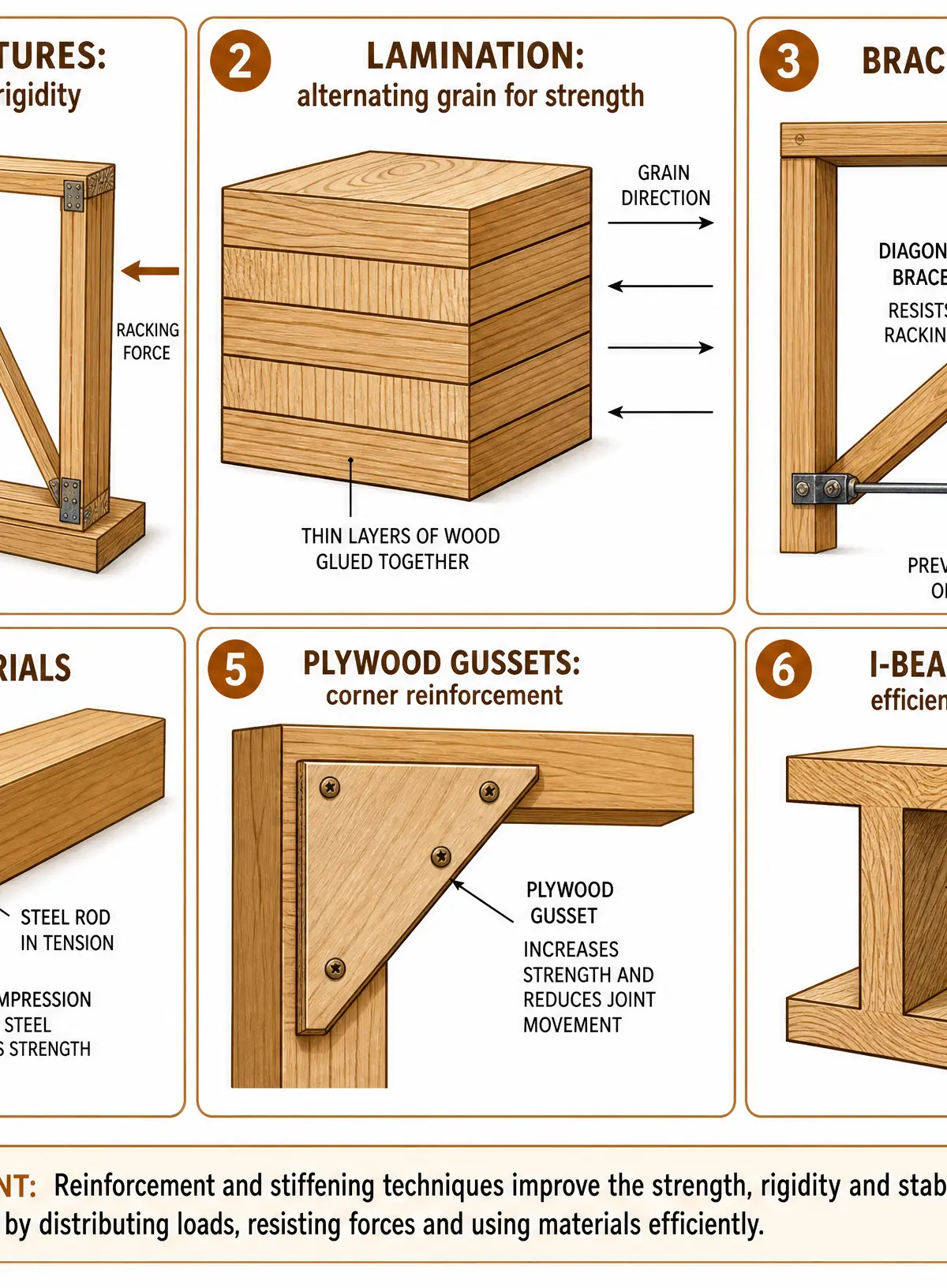
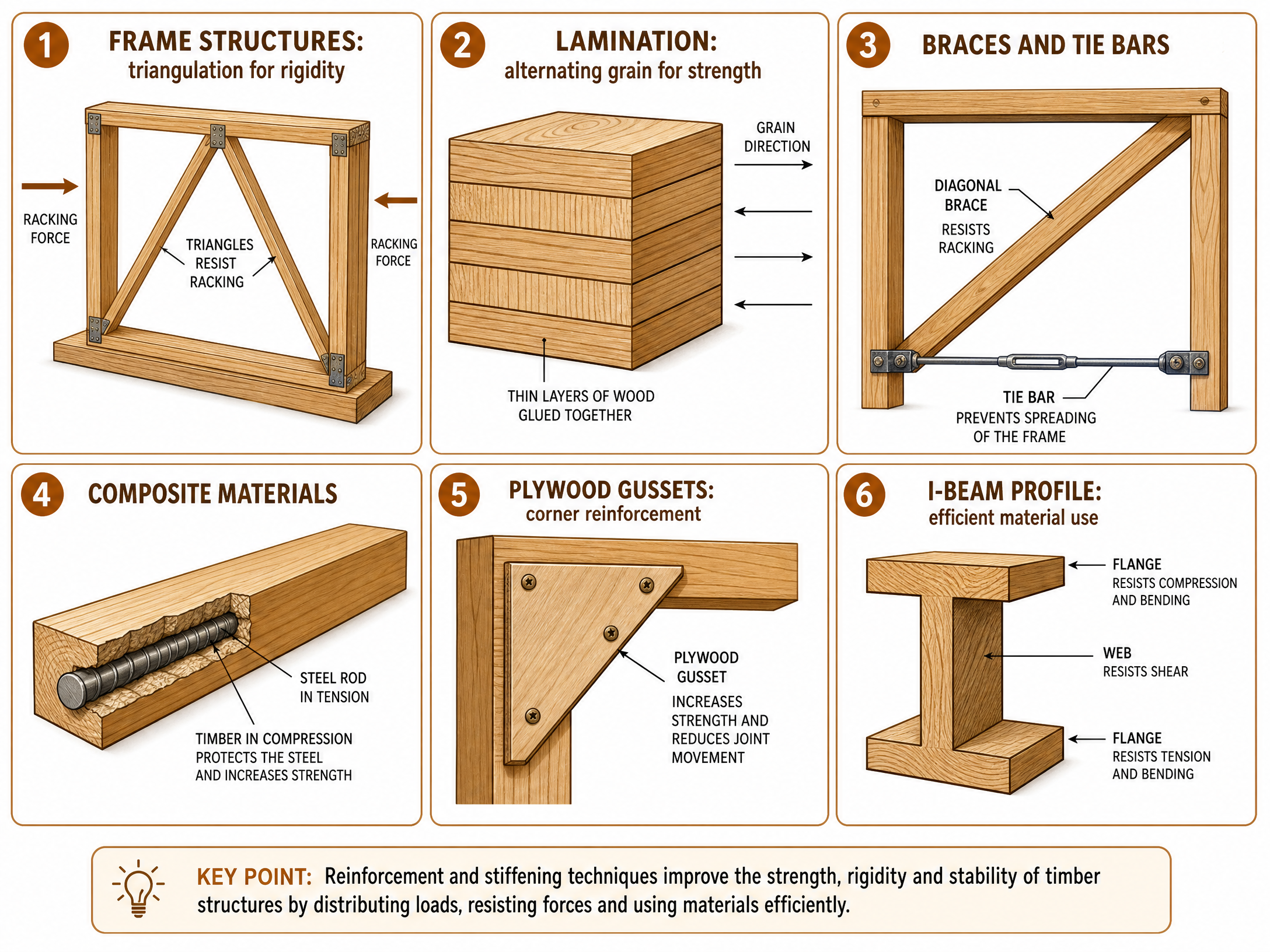
A basic rectangular frame is susceptible to racking—distorting into a parallelogram under lateral force. Triangulation involves adding diagonal braces to create triangles within the frame. Triangles are structurally rigid because their shape cannot change without altering the length of their sides.
Lamination
Lamination involves bonding multiple thin layers of timber together. By alternating the grain direction (as in plywood), the material gains strength in multiple directions and resists splitting. Glulam (glued laminated timber) uses thick laminations to create massive structural beams that outperform solid timber.
Braces and Tie Bars
- Braces: Diagonal members added to a frame to resist compression forces and prevent racking.
- Tie Bars: Tension members (often metal rods) that hold parts of a structure together, preventing them from spreading outward.
Embedding Composite Materials
Timber can be reinforced by embedding materials with superior properties, creating a composite. For example, bonding carbon fibre strips to the tension face of a timber beam significantly increases its stiffness and load-bearing capacity without adding significant weight.
Listen to the Podcast
For a deeper dive into these concepts and top exam tips, listen to our dedicated revision podcast:

Portfolio/Coursework Guidance
Assessment Criteria
In your NEA, examiners award marks for demonstrating a clear understanding of structural integrity. You must justify your material choices and construction methods based on the forces your product will face.
Building a Strong Portfolio
- Annotate Forces: Draw arrows on your design sketches showing where compression, tension, and bending will occur.
- Justify Reinforcement: If you use a gusset plate or a cross-halving joint, explain why it is necessary to resist shear or racking forces.
- Evidence Testing: Include photos of physical models being tested under load to prove your structural decisions work.
Exam Component
Written Exam Knowledge
Expect questions that ask you to identify forces acting on a given product (e.g., "Name the force acting on the seat of the chair"), explain why a specific reinforcement technique was chosen, or compare the structural suitability of natural vs manufactured timber for a specific context.
Practical Exam Preparation
If your course includes a practical exam, practice cutting accurate joints (like mortise and tenon) that maximize gluing surface area to resist shear and tension. Practice creating small laminations to understand how the process increases stiffness.
Visual Resources
3 diagrams and illustrations
Interactive Diagrams
1 interactive diagram to visualise key concepts
Conceptual Flow Outline
Problem-solving flowchart for timber structural failure
Worked Examples
3 worked examples — open one to explore the question and available guidance.
Practice Questions
Test your understanding — click to reveal model answers
Identify the force that acts on the rope of a playground swing when a child sits on it. (1 mark)
Hint: Think about whether the rope is being squeezed or stretched.
Explain how the structure of plywood makes it suitable for use as flooring in a house. (3 marks)
Hint: Mention how it is made (lamination/veneers) and how that affects its strength across different directions.
A student is designing a timber bridge for a model railway. Discuss the methods they could use to stiffen the bridge structure to ensure it does not bend under the weight of the trains. (6 marks)
Hint: Think about frame structures, profiles, and composite materials. Use PEE paragraphs.