Pearson Edexcel · GCSE · Design and Technology
Timbers: The sources, origins, physical and working properties of each natural and manufactured timber and their social and ecological footprint
This topic covers the essential knowledge of timbers required for GCSE Design and Technology. You will learn to classify hardwoods, softwoods, and manufactured boards, understand their physical and working properties, and evaluate their social and ecological footprints to make justified material choices.
- 6 min read
- 3 worked examples
- 4 practice questions
- 6 key terms
Study Notes
Overview
Timber is one of the most fundamental and widely used materials in Design and Technology. Understanding its sources, properties, and environmental impacts is crucial not only for the written exam but also for making informed, sustainable material choices in your Non-Exam Assessment (NEA) project. This topic requires you to distinguish between natural and manufactured timbers, understand how they behave when worked, and evaluate the wider ecological footprint of their use.
Listen to the revision podcast below to consolidate your understanding:

Key Knowledge & Theory
Core Concepts: Classification of Timbers
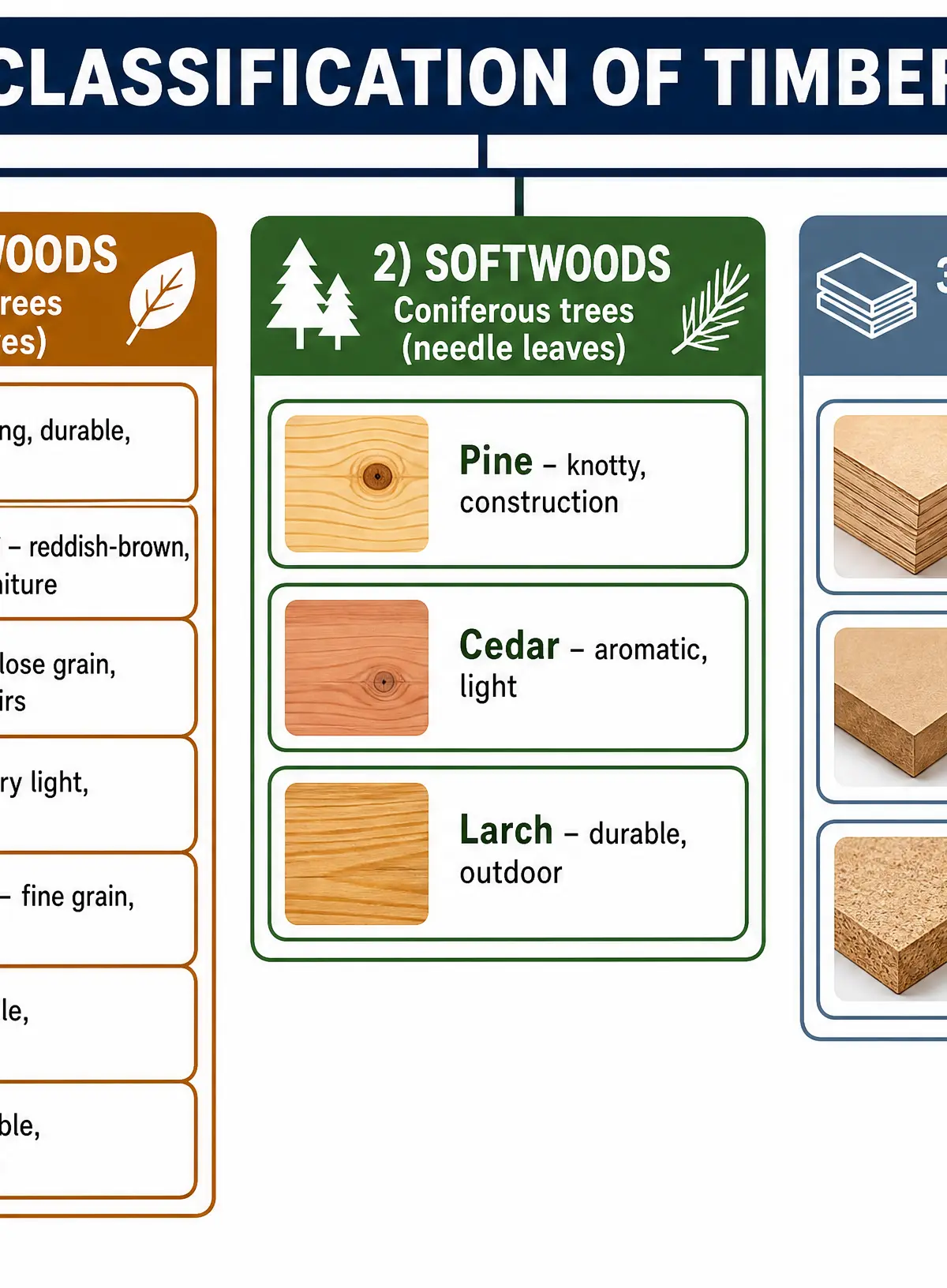
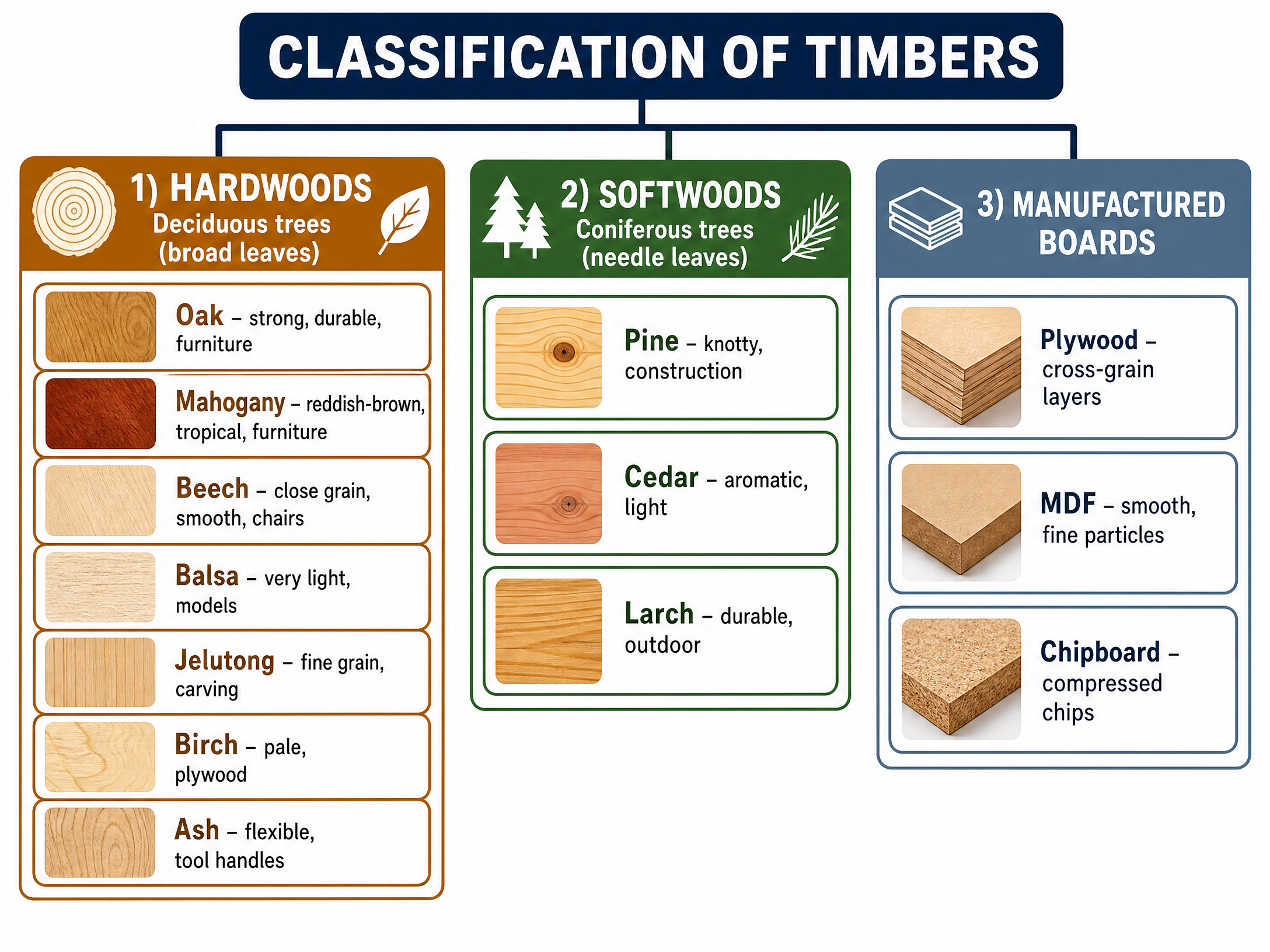
Timbers are broadly classified into three categories: Hardwoods, Softwoods, and Manufactured Boards. It is vital to understand that 'hardwood' and 'softwood' refer to the botanical origin of the tree, not the physical hardness of the wood.
1. Hardwoods
Hardwoods come from deciduous trees (trees that lose their leaves in autumn). They are generally slower-growing, which makes them denser, harder, and more expensive. They often have attractive grain patterns.
2. Softwoods
Softwoods come from coniferous trees (evergreen trees with needles and cones). They grow much faster than hardwoods, making them cheaper, more readily available, and generally more sustainable.
3. Manufactured Boards
These are engineered materials made by bonding wood fibres, chips, or veneers together with adhesives. They are produced in large, stable sheets of uniform thickness, making them highly suitable for quantity production and flat-pack furniture.
Key Timbers and Their Properties
| Timber Type | Category | Key Properties | Common Uses |
|---|---|---|---|
| Oak | Hardwood | Very strong, durable, hard, attractive grain. | High-quality furniture, flooring, boat building. |
| Mahogany | Hardwood | Reddish-brown, durable, easy to work. | High-end furniture, veneers. (Note: often linked to rainforest deforestation). |
| Beech | Hardwood | Close, fine grain, hard, resists denting. | Children's toys, workshop benches, chairs. |
| Balsa | Hardwood | Exceptionally light and soft, high strength-to-weight ratio. | Prototyping, model making (e.g., aircraft). |
| Pine | Softwood | Pale, knotty, relatively soft, easy to work. | Construction framing, cheap furniture, interior joinery. |
| Cedar | Softwood | Lightweight, aromatic, natural resistance to rot/insects. | Outdoor furniture, cladding, fences. |
| Plywood | Manufactured | Made of cross-grain veneers. High strength, resists warping. | Construction, boat building (marine ply), furniture. |
| MDF | Manufactured | Smooth surface, no grain, easily machined. | Painted furniture, internal joinery. (Requires dust mask when cutting). |
| Chipboard | Manufactured | Made from compressed chips. Cheap, poor moisture resistance. | Kitchen worktops (when laminated), flat-pack furniture. |
Technical Vocabulary
Examiners award marks for the precise use of technical terminology when describing materials.
- Physical Properties: Characteristics of the material itself (e.g., grain structure, knots, colour, density).
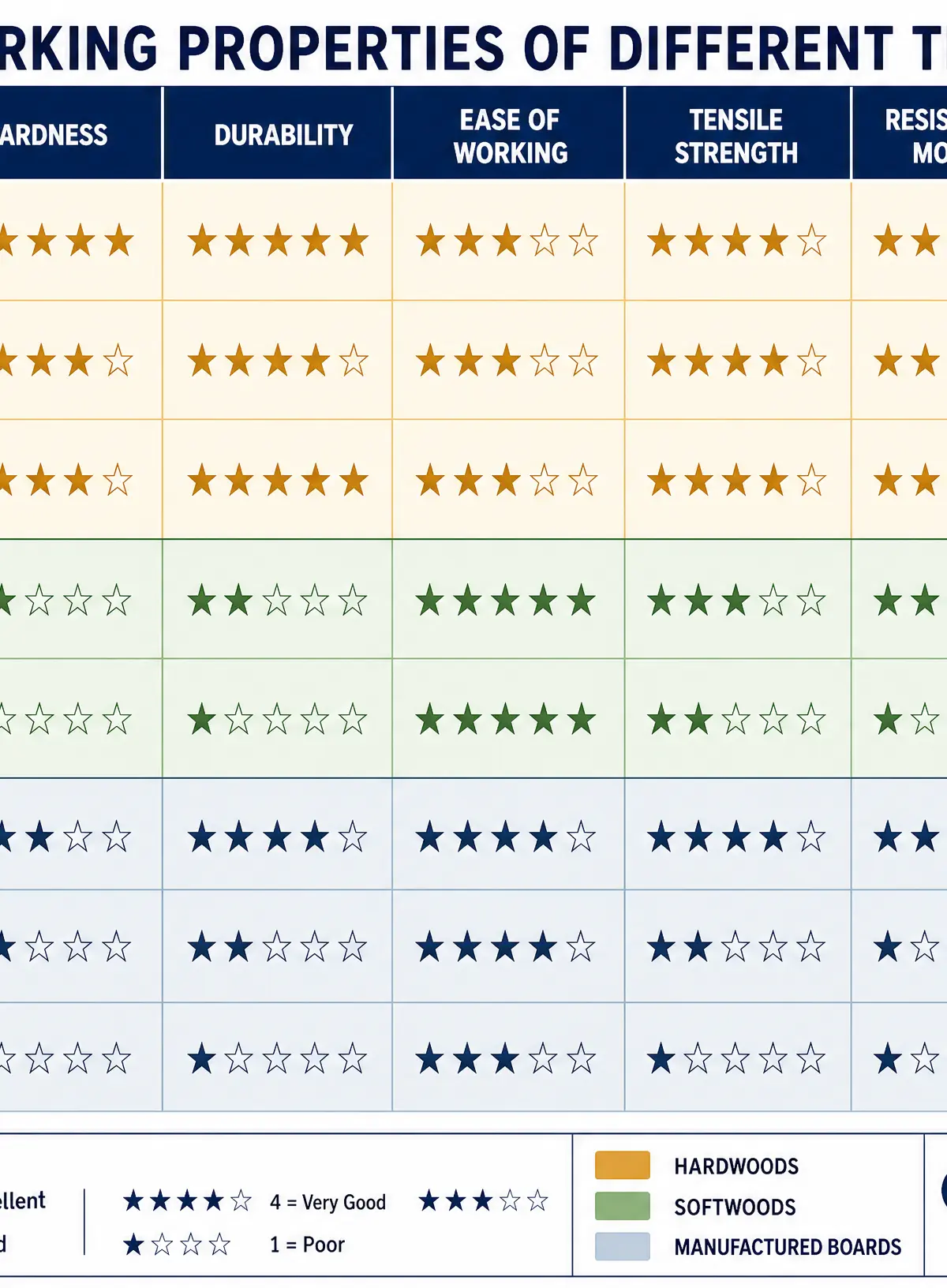
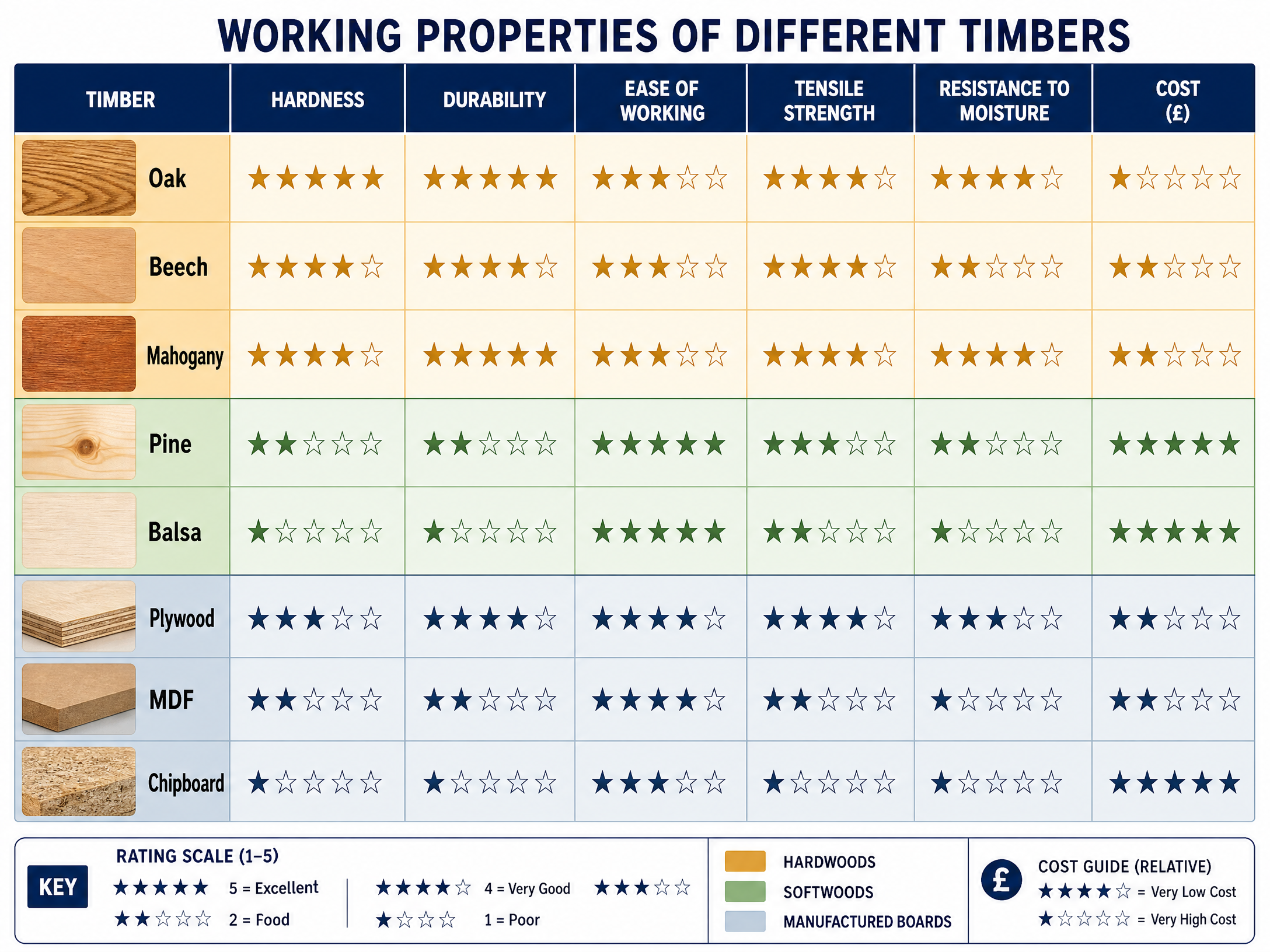
- Working Properties: How the material behaves when subjected to forces or tools (e.g., hardness, toughness, durability, tensile strength).
- Social and Ecological Footprint: The wider impact of harvesting and processing the material on the environment and human communities.
Practical Skills
Techniques & Processes
When working with timbers in your NEA, you must demonstrate competence in various processes:
- Marking Out: Using a try square, marking gauge, and marking knife for precision.
- Wasting (Cutting/Shaping): Using appropriate saws (tenon saw for straight cuts, coping saw for curves) and chisels.
- Fabrication (Joining): Selecting the right joint for the context. Traditional joints (dovetail, mortise and tenon) show high skill; knock-down (KD) fittings are appropriate for flat-pack designs.
- Finishing: Applying surface treatments (varnish, wax, oil, paint) to protect the timber and enhance its aesthetics.
Materials & Equipment
Safety is paramount. Always wear appropriate PPE (Personal Protective Equipment). When cutting MDF, the fine dust is hazardous; extraction systems and dust masks are mandatory.
Portfolio/Coursework Guidance
Assessment Criteria
In your NEA, marks are awarded for Justification of Material Choice. You cannot simply state "I used pine because it is cheap." You must justify it against your specification, considering aesthetic, environmental, availability, cost, and functional factors.
Building a Strong Portfolio
Document your material testing. Show photographic evidence of testing different joints or finishes on offcuts before applying them to your final product. Annotate these photos explaining why a particular finish or joint was selected.
Exam Component
Written Exam Knowledge
The written paper frequently features questions requiring you to:
- Identify specific timbers from their properties.
- Compare two materials for a specific application.
- Evaluate the environmental impact of using certain timbers.
Ecological and Social Footprint
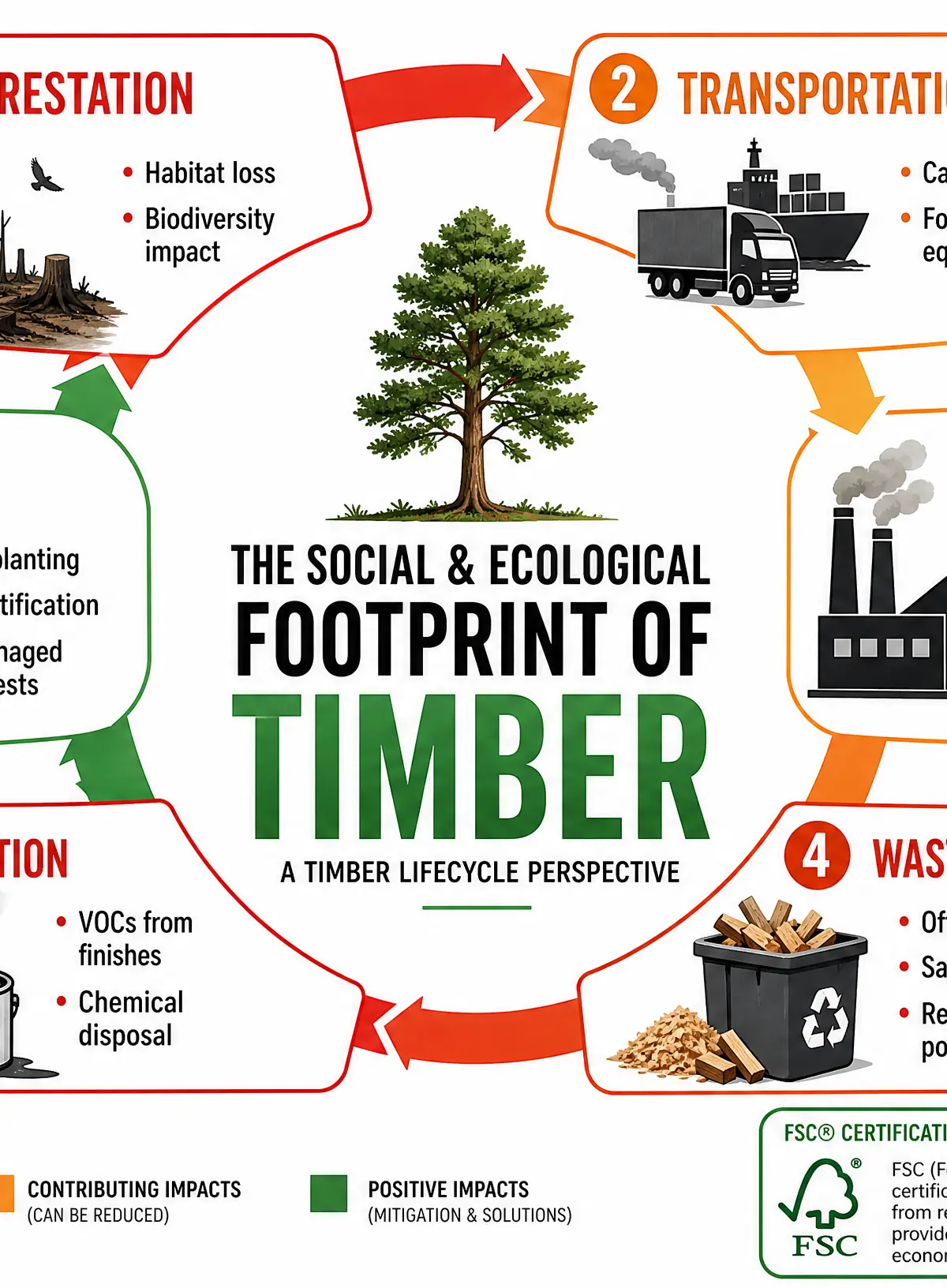
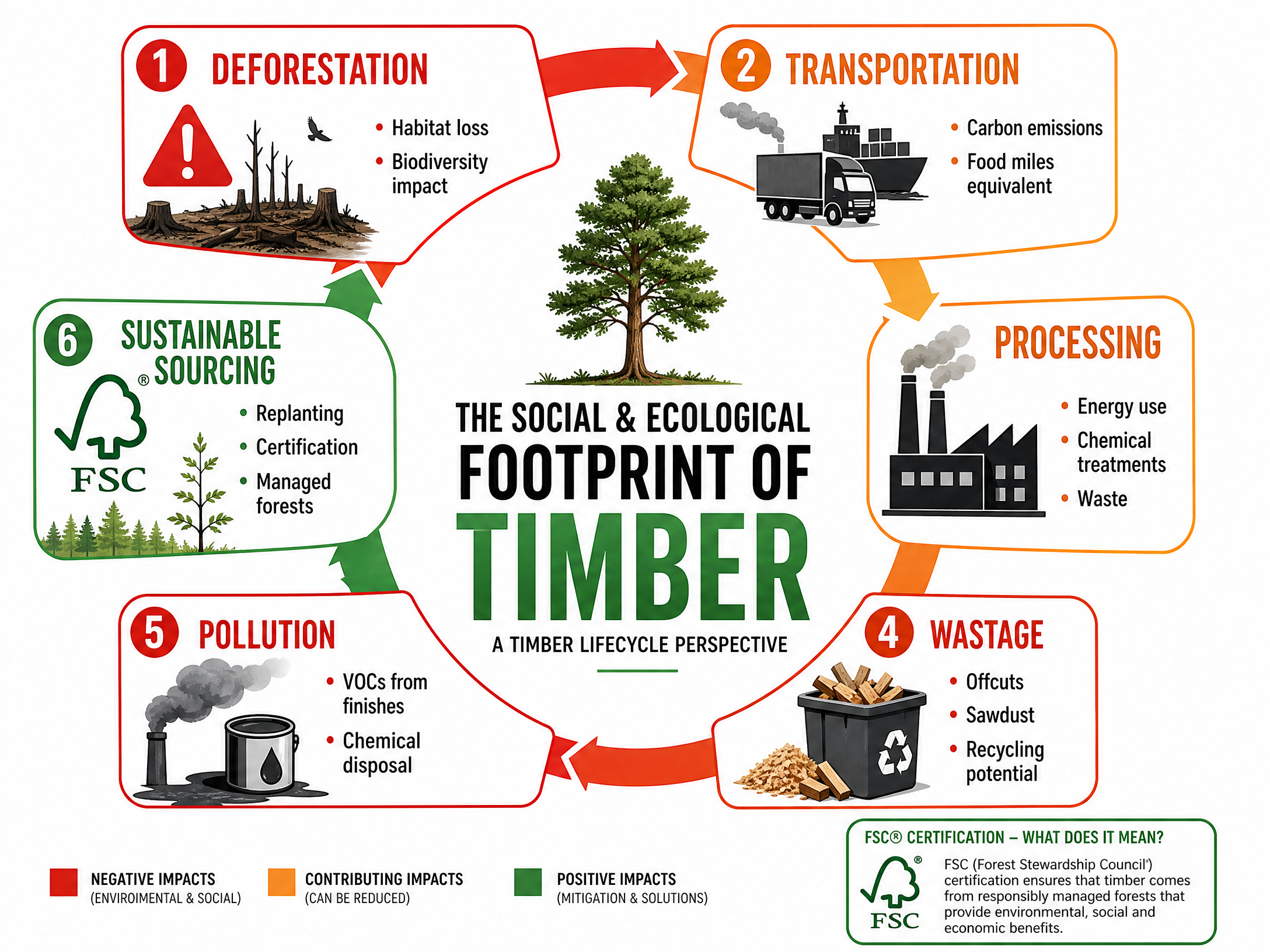
Examiners increasingly focus on sustainability. You must be able to discuss:
- Deforestation: The permanent removal of trees, destroying habitats and contributing to global warming.
- Transportation: The carbon emissions associated with shipping heavy timbers globally (food miles equivalent).
- FSC Certification: The Forest Stewardship Council ensures timber is harvested from responsibly managed forests where trees are replanted.
- End of Life: How easily the product can be recycled or disposed of safely. Manufactured boards often contain toxic resins that complicate recycling.
Visual Resources
3 diagrams and illustrations
Interactive Diagrams
1 interactive diagram to visualise key concepts
Conceptual Flow Outline
Material Selection Decision Process
Worked Examples
3 worked examples — open one to explore the question and available guidance.
Practice Questions
Test your understanding — click to reveal model answers
Identify one softwood and state one common application for it. (2 marks)
Hint: Think of coniferous trees. What is cheap and used to build house frames?
Explain why Beech is an appropriate material choice for a child's wooden toy block. (3 marks)
Hint: Consider the safety requirements for a child's toy and link them to the specific grain and physical properties of Beech.
Discuss the ecological footprint of using tropical hardwoods such as Mahogany in furniture manufacturing. (6 marks)
Hint: Use a structured approach. Discuss the impact at the source (the forest), the impact of moving the material, and potential mitigations (like FSC).
A student is making a storage box. They have chosen to use 15mm Plywood instead of 15mm solid Pine. Evaluate this decision. (4 marks)
Hint: Compare the structural properties of manufactured boards versus natural solid timber.