Pearson Edexcel · GCSE · Design and Technology
Timbers: The way in which the selection of each natural and manufactured timber is influenced
This comprehensive topic covers the six critical factors—Environmental, Aesthetic, Cost, Social, Cultural/Ethical, and Availability—that designers must evaluate when selecting natural and manufactured timbers. Mastering these factors is essential for making informed design choices, justifying material selection in coursework, and securing high marks in the written exam.
- 8 min read
- 3 worked examples
- 3 practice questions
- 6 key terms
Study Notes
Overview
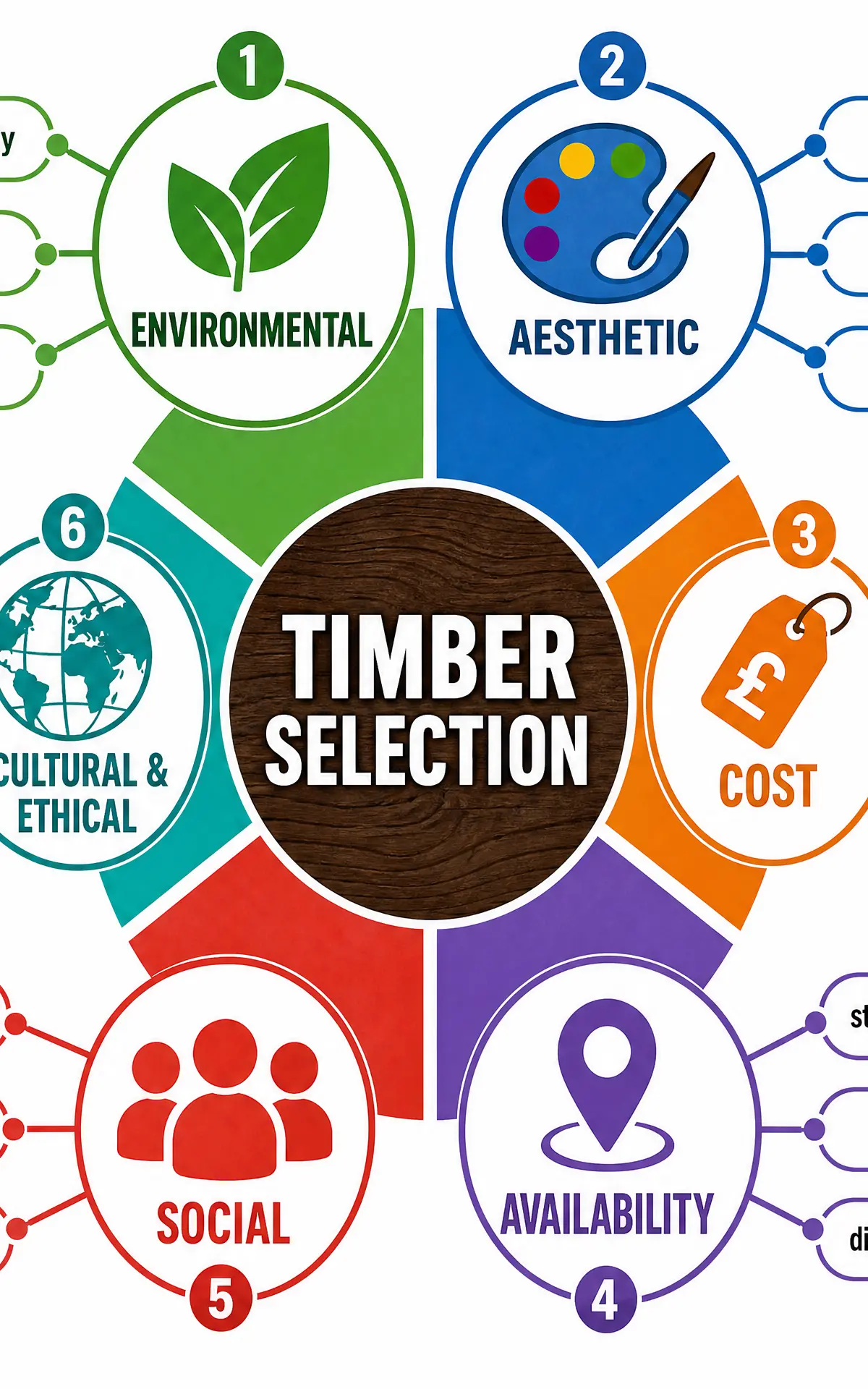
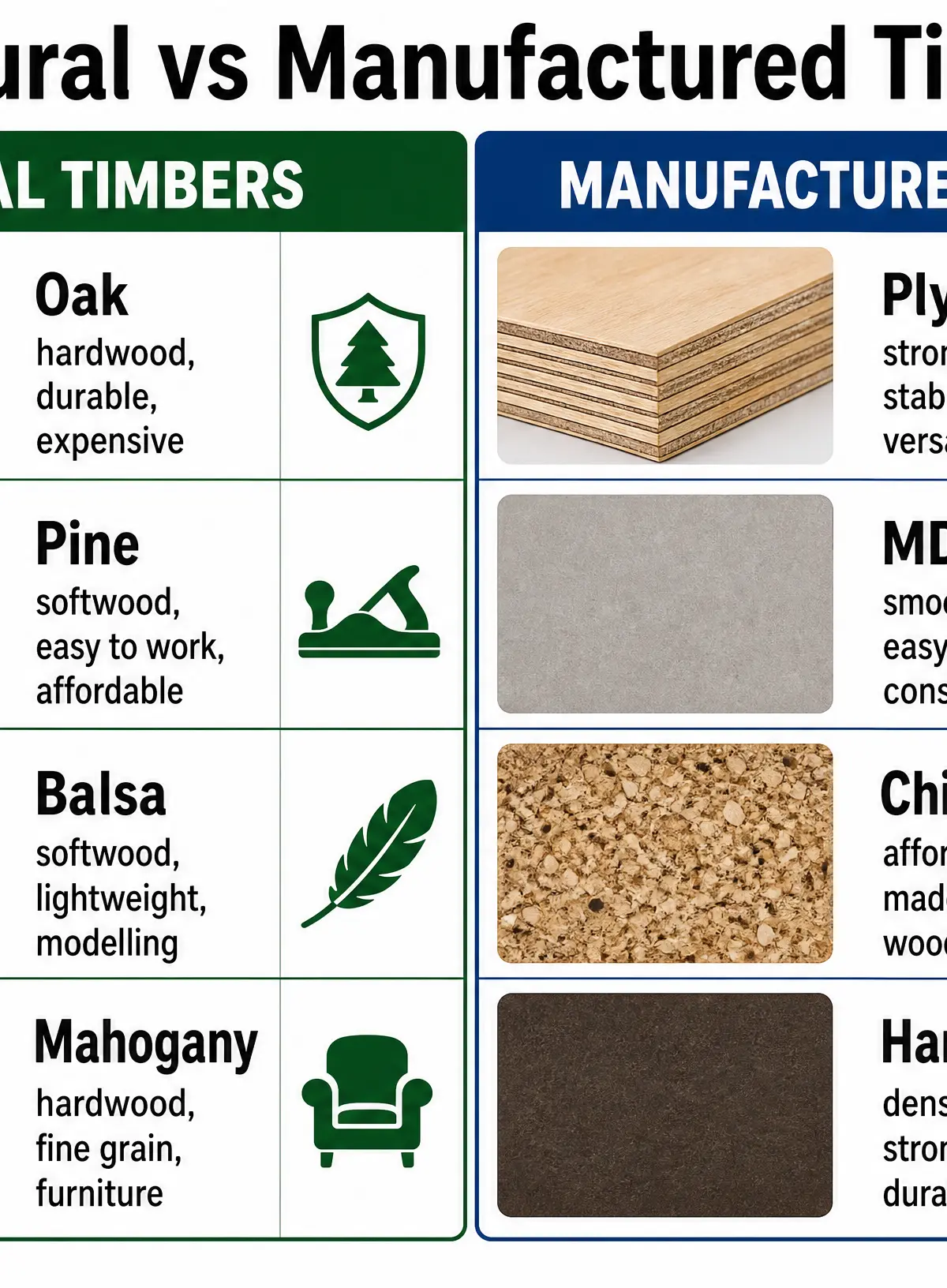
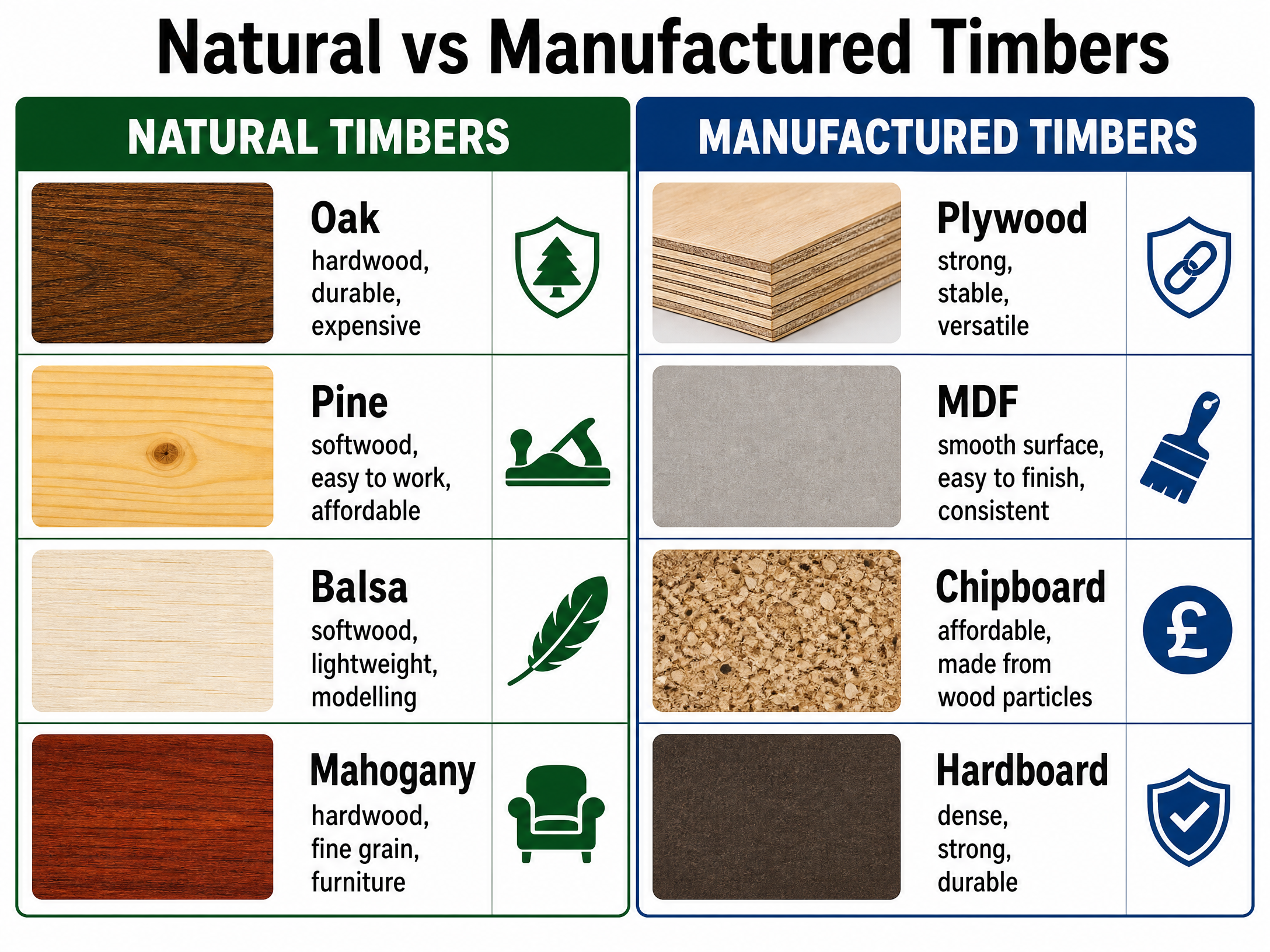
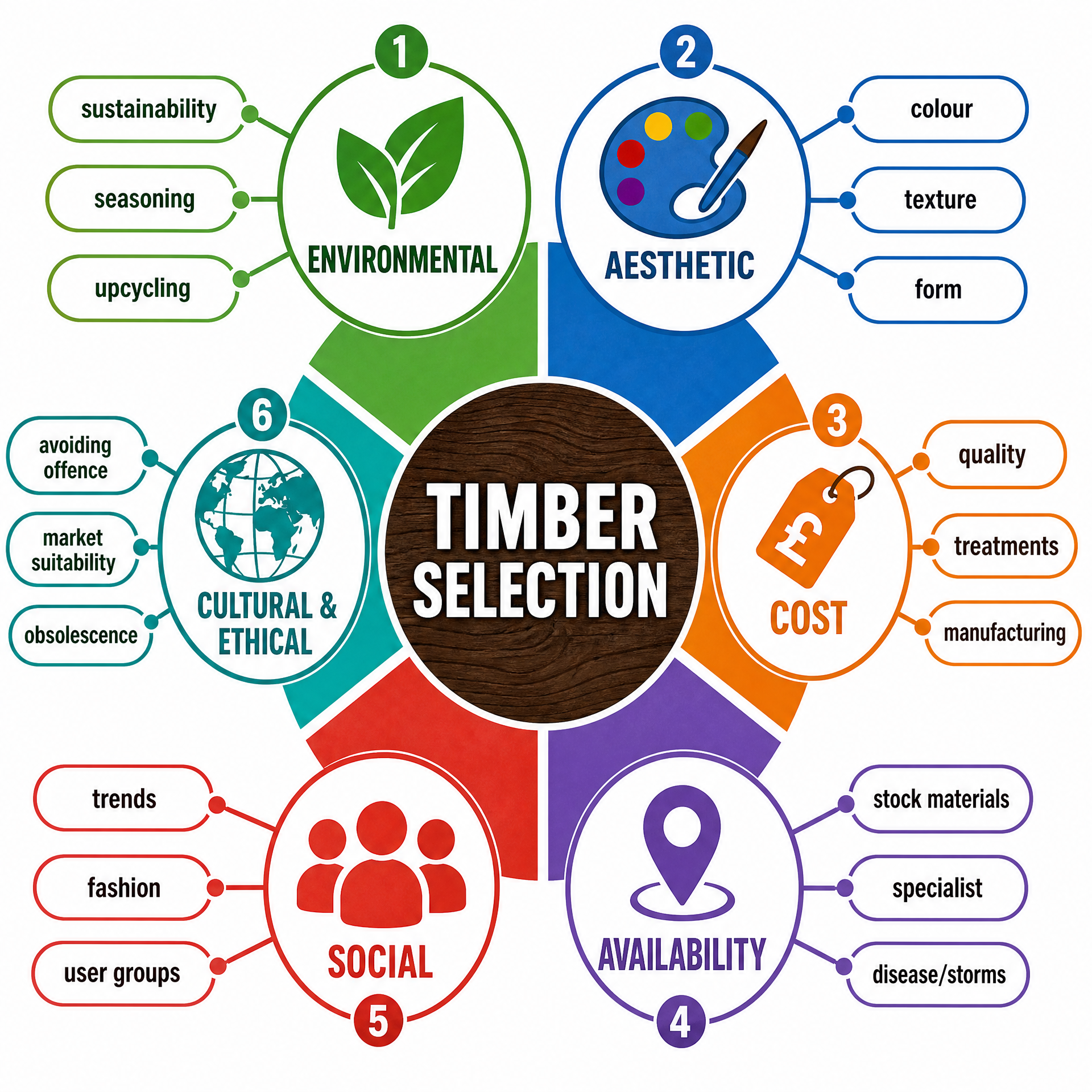
Selecting the right timber is one of the most important decisions a designer makes. Whether choosing a natural timber (like oak, pine, or mahogany) or a manufactured board (like MDF, plywood, or chipboard), the choice is rarely based on a single characteristic. Instead, designers must balance a complex web of competing factors. In the GCSE Design and Technology specification, these are categorised into six main areas: Environmental, Aesthetic, Cost, Social, Cultural and Ethical, and Availability.
Understanding these factors is crucial not only for the written exam but also for your Non-Exam Assessment (NEA), where you must justify your material choices with clear, reasoned arguments.
Key Knowledge & Theory
The Six Selection Factors (EACSCA)
To effectively evaluate timber selection, candidates must understand the specific considerations within each of the six main factors.
1. Environmental FactorsDesigners have a responsibility to consider the ecological impact of their material choices.
- Sustainability: Is the timber sourced from responsibly managed forests? Look for FSC (Forest Stewardship Council) certification.
- Genetic Engineering: Some trees are genetically modified to grow faster or resist disease, increasing yield but raising ecological concerns.
- Seasoning: Timber must be dried (seasoned) to reduce moisture content. This requires energy (kiln seasoning) but prevents warping and extends the product's lifespan.
- Upcycling: Can existing timber be repurposed? Using reclaimed wood reduces the demand for virgin timber and lowers the carbon footprint.
2. Aesthetic FactorsHow a product looks and feels is often the primary driver of consumer choice.
- Form: The physical shape the material can take. Can it be easily steam-bent or carved?
- Colour: The natural hue of the wood (e.g., the pale yellow of pine versus the rich red-brown of mahogany).
- Texture: The tactile quality of the surface and the visual pattern of the grain (e.g., the distinctive open grain of oak).
3. Cost FactorsCommercial viability depends on managing costs throughout the product lifecycle.
- Quality of Material: Higher quality, defect-free hardwoods are significantly more expensive than knotty softwoods or manufactured boards.
- Manufacturing Processes: Does the timber require specialist tools, slower machining speeds, or complex joining methods? Hardwoods often increase manufacturing time and tool wear.
- Treatments: Softwoods used outdoors require treatments (like tanalising) to prevent rot, while indoor timbers may need fire-proofing. These treatments add to the overall material cost.
4. Availability FactorsEven the perfect material is useless if it cannot be sourced reliably.
- Stock Materials: Designing around standard, readily available sizes (e.g., 2440mm x 1220mm sheet materials) ensures reliable supply and reduces waste.
- Specialist Materials: Exotic hardwoods may need to be specially imported, leading to long lead times and supply chain risks.
- Environmental Impact: Hurricanes, severe storms, and diseases (like Dutch elm disease or ash dieback) can suddenly wipe out supplies of specific timbers, forcing designers to find alternatives.
5. Social FactorsDesign must respond to the needs and desires of society.
- Different Social Groups: A product designed for an affluent demographic might use premium hardwoods, while budget furniture targets students or young professionals using flat-pack manufactured boards.
- Trends and Fashion: Interior design trends heavily influence timber choice. For example, the trend for 'Scandi-chic' popularised light-coloured woods like birch and pine, while 'industrial' trends favour reclaimed, distressed timber.
- Popularity: High demand for a fashionable timber can lead to shortages and price increases.
6. Cultural and Ethical FactorsThe broader moral implications of material consumption.
- Avoiding Offence: Designers must be aware of cultural sensitivities, such as avoiding timbers from species considered sacred in the target market's culture.
- Suitability for Intended Market: Products exported globally must meet the cultural expectations and legal standards of the destination country.
- The Consumer Society: Mass production fuels rapid consumption of timber resources. Designers must weigh the ethics of feeding this demand.
- Built-in Product Obsolescence: Designing products from cheap, low-durability materials (like low-grade chipboard) so they fail quickly and force replacement is highly profitable but ethically questionable.
Technical Vocabulary
- FSC (Forest Stewardship Council): An international organisation that certifies sustainably managed forests.
- Seasoning: The controlled process of reducing the moisture content of timber to make it stable and workable.
- Tanalising: A commercial pressure-treatment process that forces preservatives into timber to protect against rot and insect attack.
- Obsolescence: When a product becomes no longer useful or fashionable. Built-in obsolescence is when this is deliberately engineered by the manufacturer.
- Manufactured Boards: Timber sheets produced by gluing wood layers or wood fibres together (e.g., MDF, Plywood, Chipboard).
Practical Skills
Applying Selection Factors to Design
When designing a product, you must actively balance these competing factors. For example, when designing outdoor garden furniture:
- Aesthetics vs. Cost: You might want the rich colour and durability of Teak (Aesthetic), but the target market cannot afford it (Cost).
- Compromise: You select Pine (Cost/Availability).
- Treatment: Because Pine is a softwood and susceptible to rot, you must specify that it is tanalised (Cost/Environmental).
- Justification: You justify this choice by explaining that tanalised pine offers a sustainable (if FSC certified), affordable solution that meets the functional requirements of outdoor use, even if it lacks the premium aesthetic of teak.
Portfolio/Coursework Guidance
In your Non-Exam Assessment (NEA), examiners award significant marks for material selection.
**Assessment Criteria (AO2 - Apply knowledge and understanding):**To access the top mark bands, you must provide a comprehensive justification for your final material choices.
Building a Strong Portfolio:
- Do not just list materials. Create a comparison table evaluating three possible timbers against the specific requirements of your design brief.
- Reference the six factors. Explicitly mention cost, aesthetics, and environmental impact in your annotation.
- Provide evidence of testing. If possible, include photographs of small physical tests (e.g., testing a finish on a scrap of pine vs. MDF) to prove you have considered aesthetics and manufacturing processes practically.
Exam Component
Written Exam Knowledge
Questions on timber selection frequently appear in Section B (In-depth knowledge) of the written paper. They often present a specific product (e.g., a flat-pack wardrobe, a high-end dining chair, or a children's toy) and ask you to evaluate or justify the choice of material.
**Listen to the Podcast:**For a detailed breakdown of how to tackle these exam questions, listen to our dedicated revision podcast:

Exam Strategy: The PEEL Paragraph
For extended response questions (6-8 marks), use the PEEL structure to ensure you explain rather than just describe:
- Point: State the factor influencing the choice.
- Evidence: Give a specific example related to the product in the question.
- Explain: Detail why this matters (e.g., how it affects cost, durability, or the environment).
- Link: Tie the explanation back to the specific needs of the target user or design brief.
Visual Resources
2 diagrams and illustrations
Interactive Diagrams
1 interactive diagram to visualise key concepts
Conceptual Flow Outline
The Timber Selection Decision Process
Worked Examples
3 worked examples — open one to explore the question and available guidance.
Practice Questions
Test your understanding — click to reveal model answers
Identify one aesthetic factor and one environmental factor that influence timber selection. (2 marks)
Hint: Think about how the wood looks, and where it comes from.
Explain two reasons why a designer might choose to use standard stock sizes of MDF rather than ordering specialist solid timber for a batch-produced coffee table. (4 marks)
Hint: Think about the Availability and Cost factors. How do standard sizes affect manufacturing?
A company is designing a high-end, luxury dining table for export to international markets. Evaluate the cultural, ethical, and aesthetic factors they must consider when selecting the timber. (6 marks)
Hint: You must cover all three areas mentioned in the question. Use the PEEL structure.