Pearson Edexcel · IGCSE · English Literature
The Whale Rider
The Whale Rider is a powerful, mythical tale of a young Maori girl fighting for her destiny against patriarchal tradition. Studying this text rewards candidates who can analyse Ihimaera's blending of ancient myth with contemporary social issues.
- 6 min read
- 2 worked examples
- 4 practice questions
- 8 key terms
Study Notes
Overview
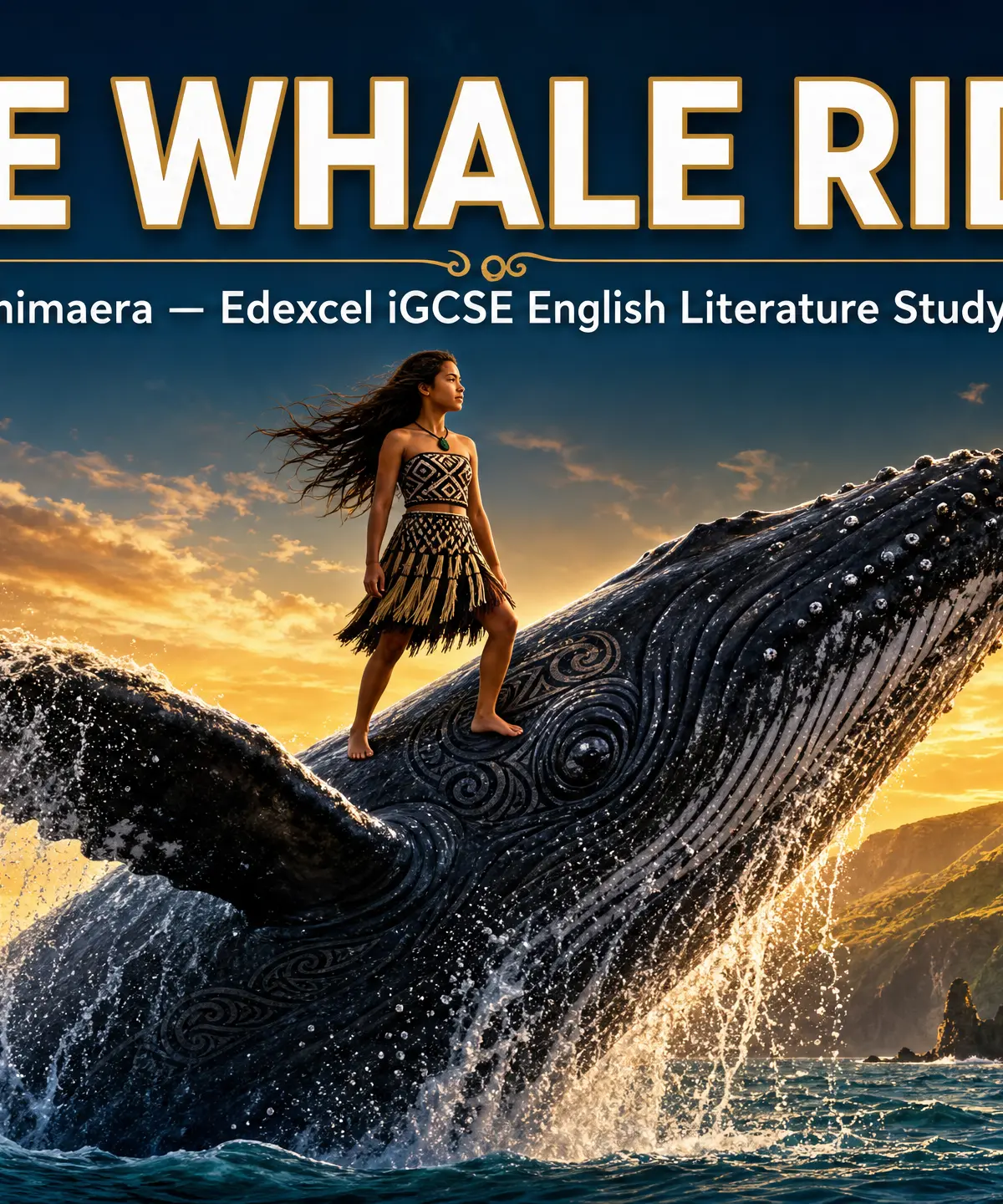
The Whale Rider by Witi Ihimaera is a deeply moving novel that explores the collision between ancient Maori traditions and the modern world. For Edexcel iGCSE Literature candidates, this text offers rich opportunities to analyse structural dualities (myth vs. reality), powerful symbolism, and a subversive protagonist. Examiners consistently reward candidates who can move beyond plot summary to explore how Ihimaera uses the narrative voice of Rawiri and the recurring motif of the whale to comment on cultural survival, gender roles, and environmentalism.
Listen to the comprehensive revision podcast here:

Plot/Content Overview
- Spring/Summer: The novel opens with the mythological arrival of Paikea. In the present, Kahu is born. Her grandfather, Koro Apirana, is deeply disappointed she is a girl, as he needs a male heir to lead the tribe. Kahu's mother dies shortly after childbirth. Porourangi (her father) leaves for Europe. Kahu is raised by her grandparents and her uncle Rawiri.
- Autumn: Koro starts a school for boys to find the next leader. Kahu secretly listens and learns. She retrieves the sacred stone (rei puta) that Koro throws into the ocean—a test the boys failed. Koro remains blind to her destiny.
- Winter: The ancient bull whale leads his pod to the beach, symbolising the spiritual crisis of the community. The men fail to save them. Kahu communicates with the whale, climbs onto its back, and leads the pod out to sea, sacrificing herself.
- Resolution: Kahu survives and is found in the hospital. Koro finally recognises her as the true whale rider and leader. The natural and spiritual order is restored.
Themes
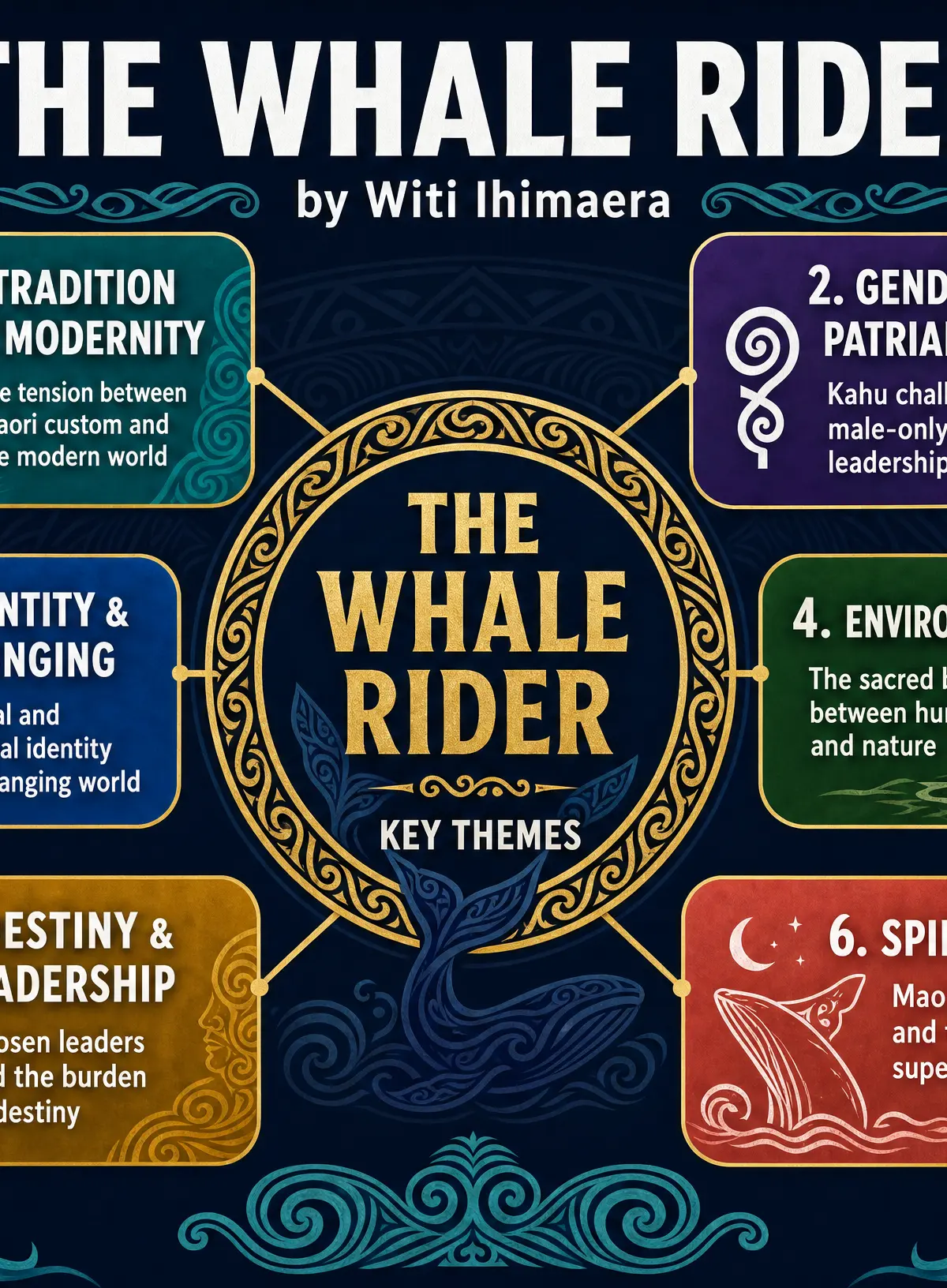
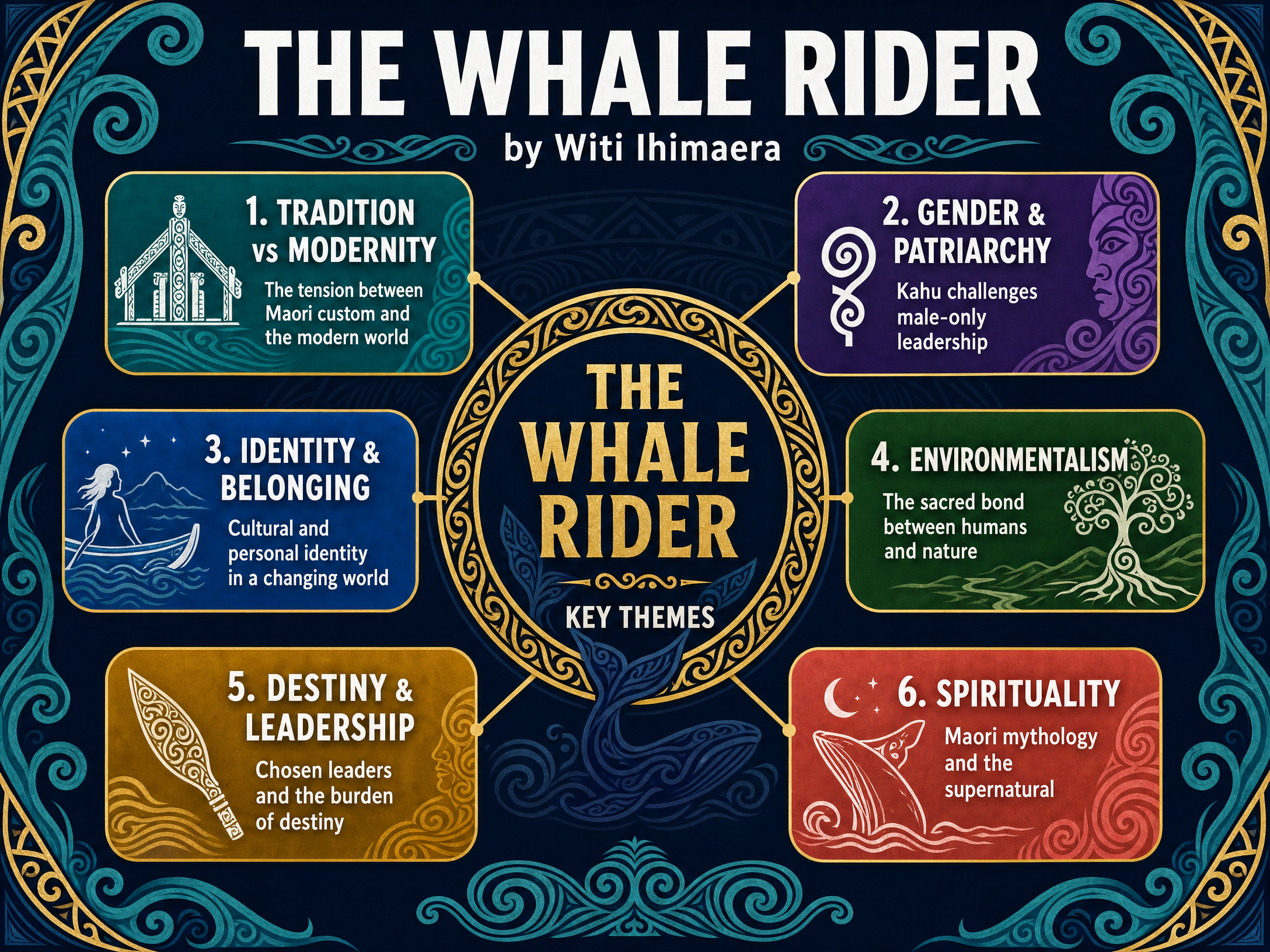
Theme 1: Tradition vs Modernity
Ihimaera explores the tension between preserving ancient Maori customs (tikanga) and adapting to a changing world. Koro represents rigid adherence to tradition, believing only a male can lead. The younger generation's drift away from the village represents the threat of modernity. The novel suggests that tradition must evolve to survive.
Key Quotes:
- "He isn't just my grandfather... He is the chief." (Rawiri) - Highlights the absolute authority of traditional patriarchal structures.
- "Rules are meant to be broken." (Nanny Flowers) - Represents the necessary challenge to rigid tradition from within the culture.
Theme 2: Gender and Patriarchy
Kahu's struggle is fundamentally against a patriarchal system that cannot see her worth because of her gender. Her ultimate triumph is not a rejection of her culture, but a fulfillment of its deepest spiritual truths, proving that leadership is about spiritual connection, not gender.
Key Quotes:
- "A girl... I will have nothing to do with her." (Koro) - Establishes the central conflict immediately.
- "She was the whale rider." (Rawiri) - The simple, declarative resolution of her identity.
Theme 3: Environmentalism and Spirituality
The whales are not just animals; they are ancestors (tipuna). Their beaching reflects the spiritual sickness of the human community. Kahu's bond with the whales highlights the necessity of living in harmony with nature.
Key Quotes:
- "The whale is a sign." - Links the natural world to spiritual destiny.
- "Let me be the one." (Kahu) - Her willingness to sacrifice herself for the natural/spiritual order.
Character Analysis
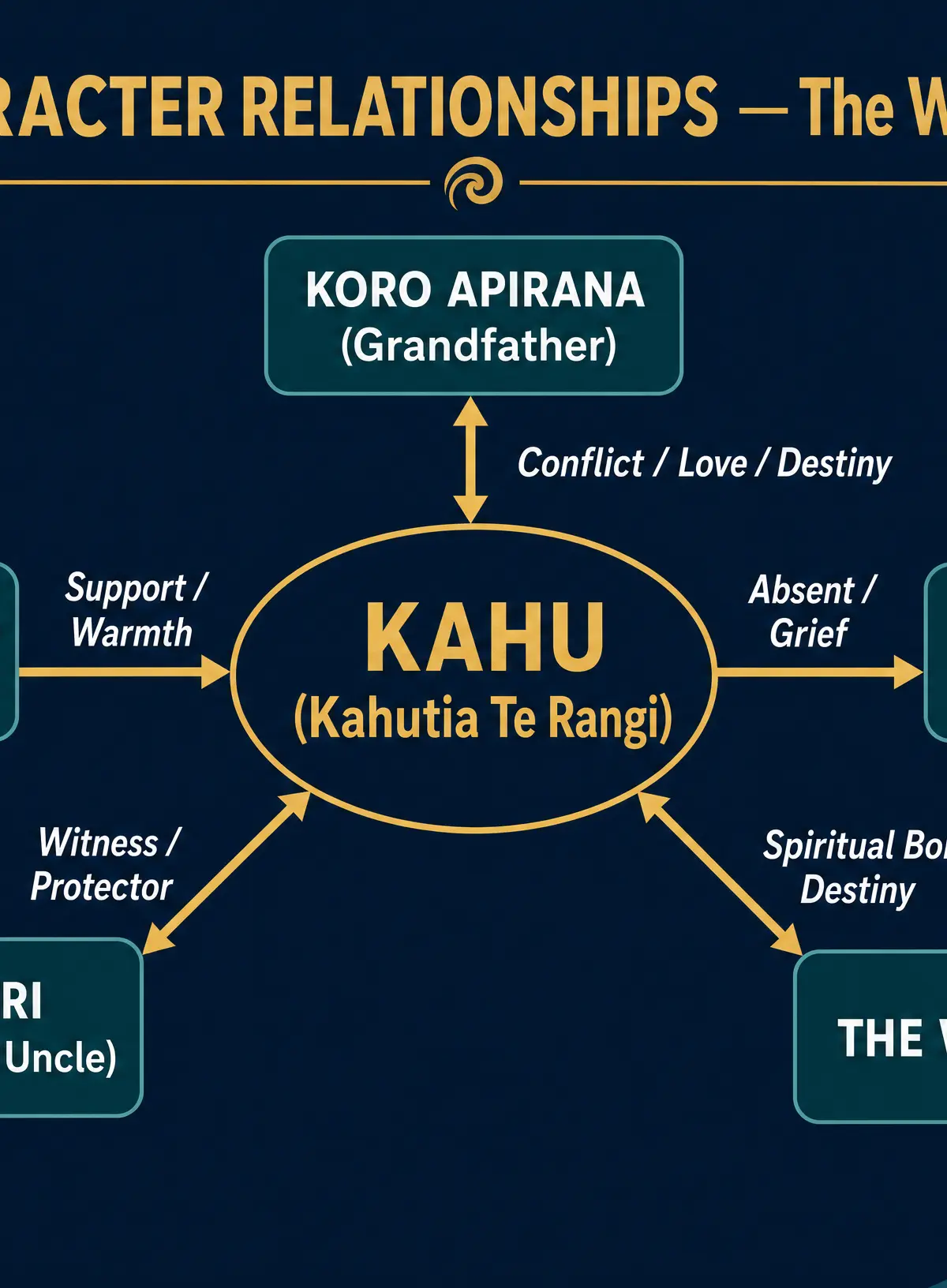
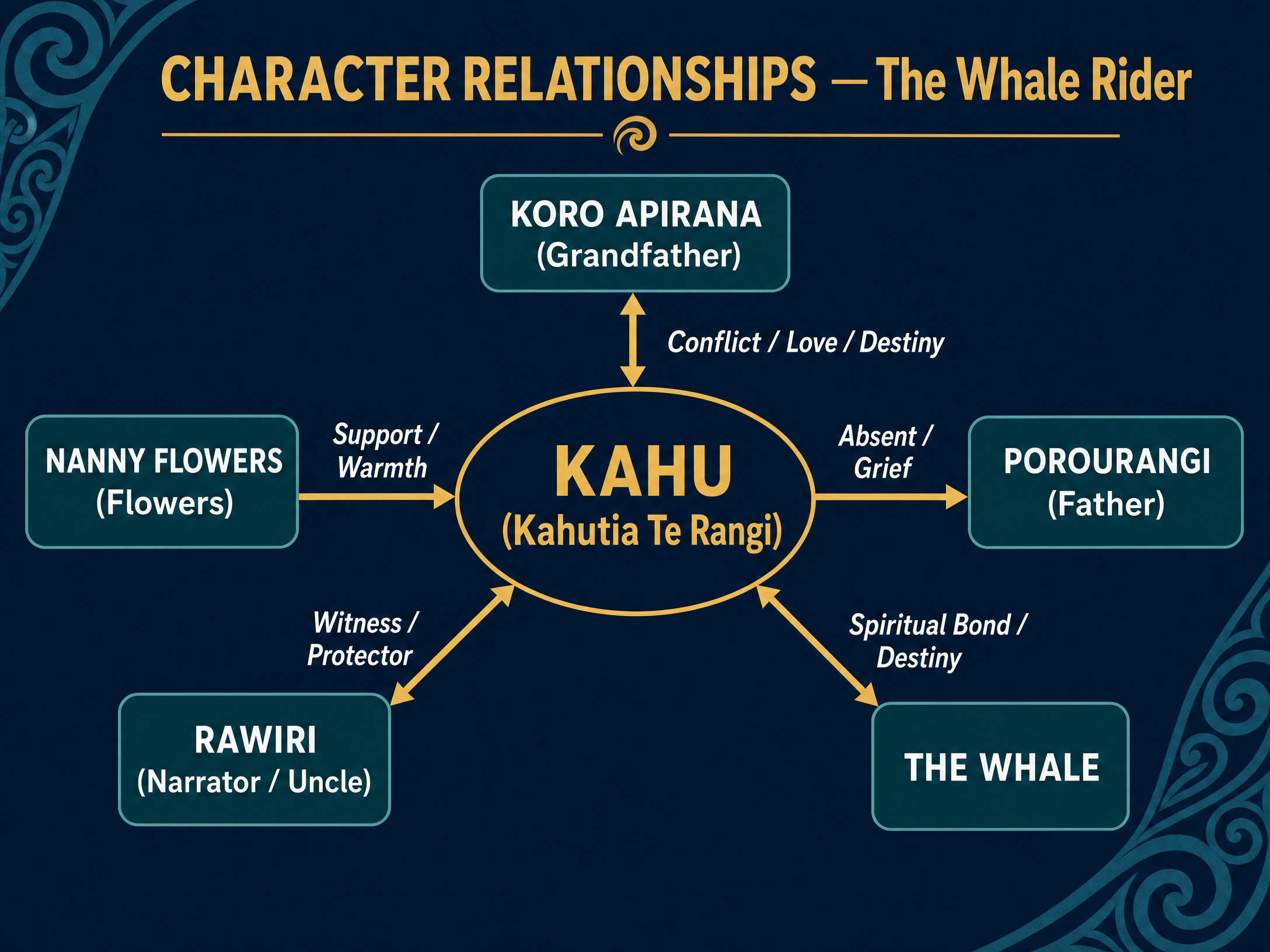
Kahu (Kahutia Te Rangi)
Role: The protagonist and the chosen leader; the reincarnation of Paikea.
Key Traits: Resilient, spiritually connected, deeply loving (especially towards Koro despite his rejection), determined.
Character Arc: Moves from a rejected child desperately seeking her grandfather's love to the saviour of her people and the recognised leader.
Essential Quotes:
- "I love you, Paka." (Shows her unconditional love despite his rejection)
- "It's not Paka's fault, Nanny... that I'm a girl." (Shows her understanding and lack of bitterness)
Koro Apirana
Role: The antagonist (though not a villain); the current chief and grandfather.
Key Traits: Stubborn, deeply traditional, fearful for his culture's survival, blind to the truth.
Character Arc: Moves from rigid patriarchal blindness to humble acceptance of Kahu's destiny.
Essential Quotes:
- "He was the old world, we were the new."
- "I should have known..." (His final realization)
Rawiri
Role: The narrator; Kahu's uncle.
Key Traits: Observant, protective, searching for his own identity.
Character Arc: Leaves the village to explore the world (Papua New Guinea), experiences racism, and returns to find his true belonging with his people.
Essential Quotes:
- "I was the one who was supposed to look after her."
Writer's Methods
- Dual Narrative Structure: Ihimaera weaves the mythic, ancient story of Paikea with the contemporary story of Kahu. This elevates Kahu's story to the level of myth and creates dramatic irony—we know she is the chosen one long before Koro does.
- Narrative Voice: Rawiri's first-person narration is warm and colloquial. As an 'insider', he provides an intimate view of the culture, but as an observer of Kahu, he maintains the mystery of her spiritual connection.
- Symbolism: The rei puta (whale tooth) symbolises leadership. The whales symbolise the spiritual health of the Maori people. The koru (spiral) symbolises growth and the unfolding of destiny.
- Language: The integration of te reo Maori (Maori language) without constant translation forces the reader to engage with the culture on its own terms, asserting cultural identity.
Context
- Cultural Context: The novel is steeped in Maori whakapapa (genealogy) and tikanga (customs). Understanding the sacredness of the marae (meeting house) and the role of the chief is vital.
- Historical Context: Written in the 1980s, a time of Maori cultural renaissance in New Zealand, when there was a strong push to reclaim language, land, and traditions lost to colonization.
- Literary Context: It is a post-colonial text that challenges Western narrative forms by blending realism with indigenous myth (magical realism).
Visual Resources
2 diagrams and illustrations
Interactive Diagrams
1 interactive diagram to visualise key concepts
Conceptual Flow Outline
Kahu's Character Arc and Narrative Structure
Worked Examples
2 worked examples — open one to explore the question and available guidance.
Practice Questions
Test your understanding — click to reveal model answers
Explore how Ihimaera presents the conflict between tradition and modernity in The Whale Rider. (30 marks + 4 AO4)
Hint: Consider Koro's school for boys, Rawiri's travels, and how Kahu represents a bridge between the two.
How does Ihimaera use the symbol of the whale to explore ideas about nature and spirituality? (30 marks + 4 AO4)
Hint: Look at the dual narrative (the mythic whale) and the climax (the beached whales).
Explore the presentation of Nanny Flowers and her significance in the novel. (30 marks + 4 AO4)
Hint: Focus on her relationship with Koro and her support for Kahu.
Starting with the extract where Rawiri leaves for Papua New Guinea, explore how Ihimaera presents the theme of identity and belonging. (30 marks + 4 AO4)
Hint: Connect Rawiri's physical journey to his internal search for cultural identity.