Pearson Edexcel · IGCSE · English Literature
Western Lane
Western Lane is a beautifully restrained, Booker-shortlisted novella about a British-Gujarati family navigating profound grief through the rigorous discipline of squash. Studying this text rewards candidates who can analyse what is left unsaid—how silence, physical movement, and the sterile space of the squash court become profound expressions of loss and coming-of-age.
- 8 min read
- 2 worked examples
- 4 practice questions
- 8 key terms
Study Notes
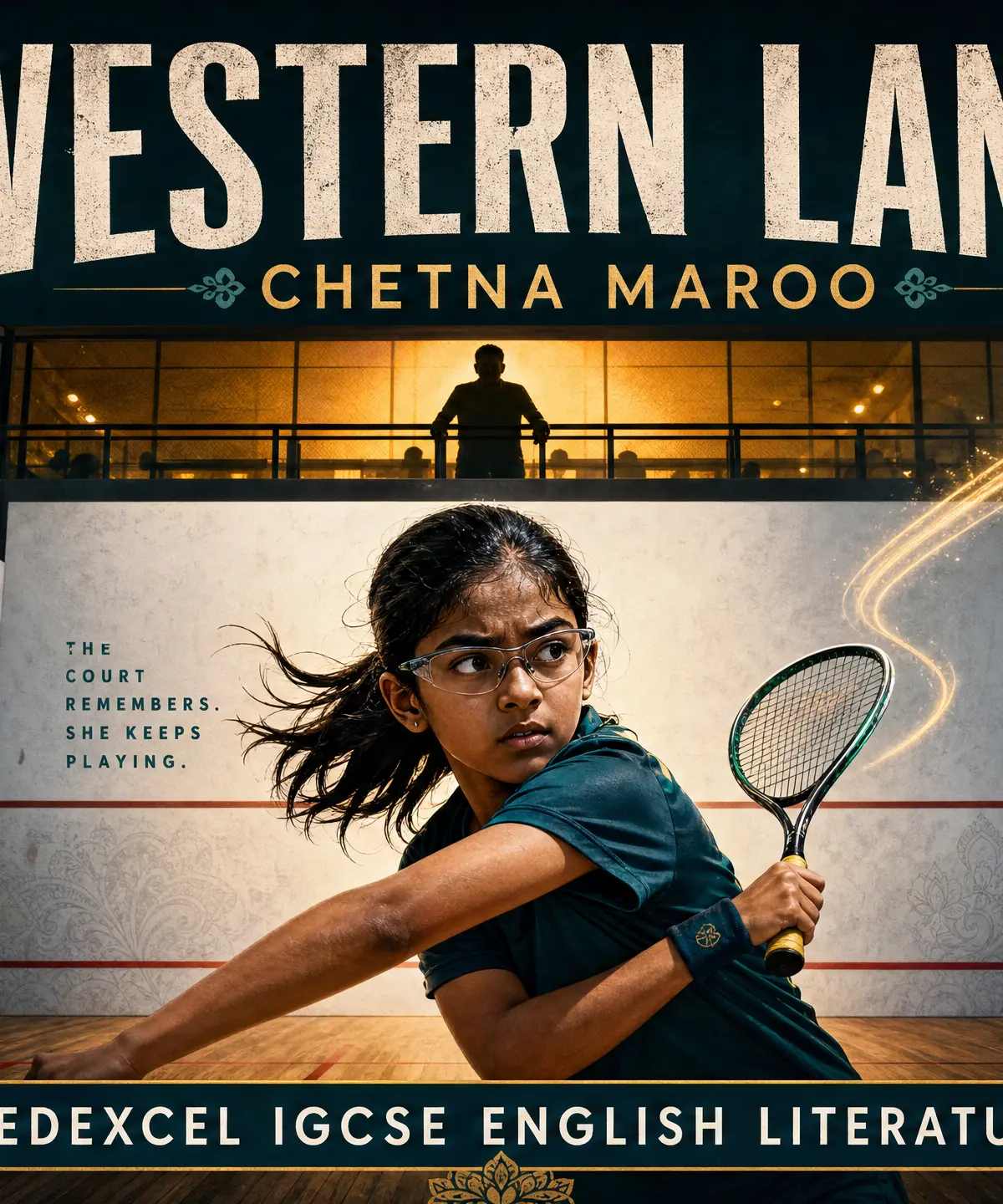
Overview
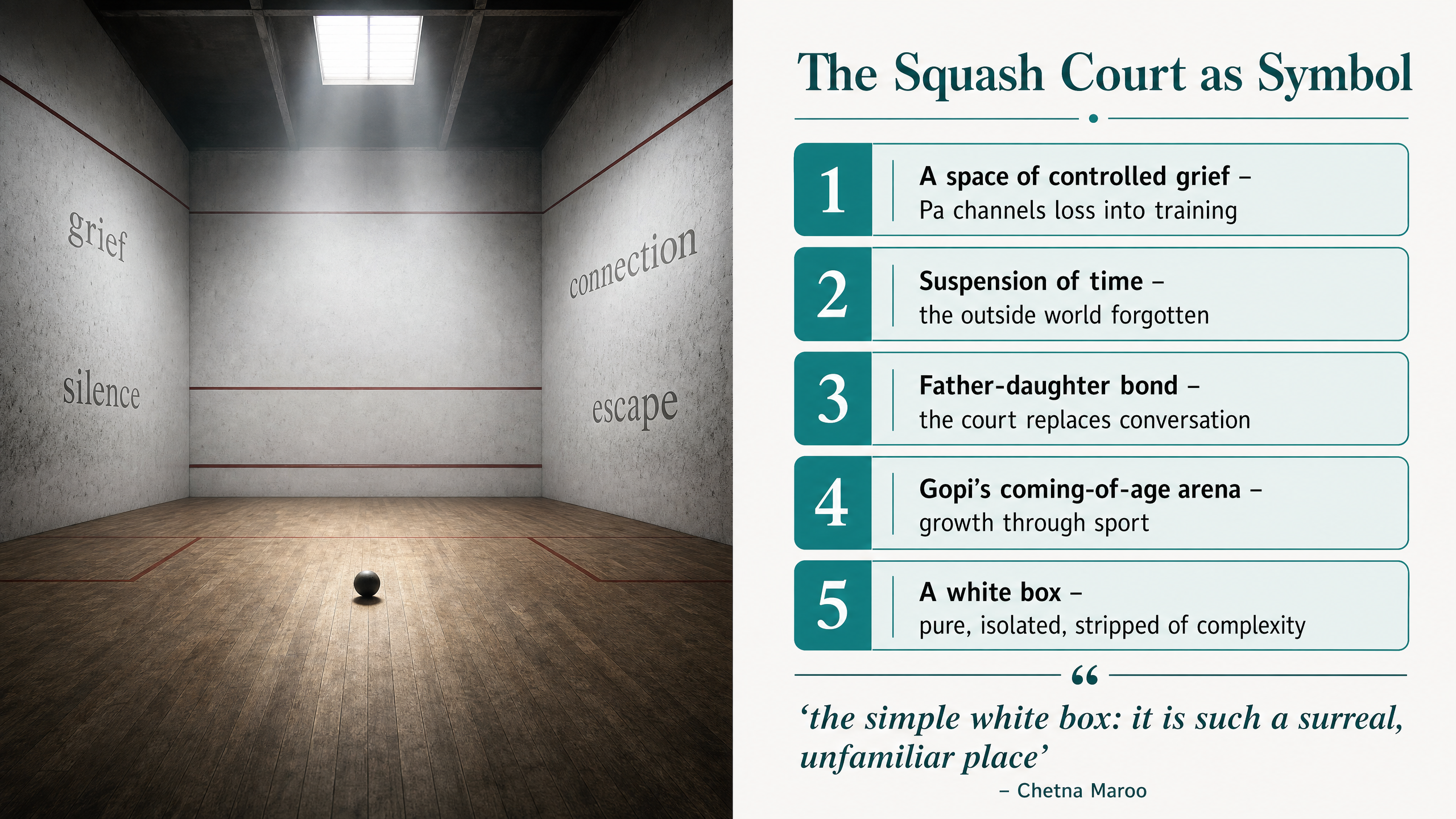
Chetna Maroo's Western Lane is a tender, crystalline coming-of-age novel (bildungsroman) that explores the reverberations of grief within a British-Gujarati family in 1980s London. Following the death of their mother, eleven-year-old Gopi, her two teenage sisters, and her father find their lives fundamentally altered. Pa channels his inability to articulate his sorrow into a rigorous squash training regimen for his daughters, particularly Gopi. For Edexcel IGCSE Literature candidates, the key to high marks lies in analysing Maroo's extraordinary restraint. Examiners reward perceptive analysis of the unsaid—how the sterile, enclosed space of the squash court symbolises a suspension of time and a refuge from the complexities of the outside world. The narrative is driven not by dramatic plot twists, but by subtle shifts in emotional distance, physical movement, and the delicate dynamics of sisterhood.
Podcast Episode
Listen to this 10-minute deep dive into the text, covering core concepts, exam tips, and a quick-fire recall quiz.

Plot/Content Overview
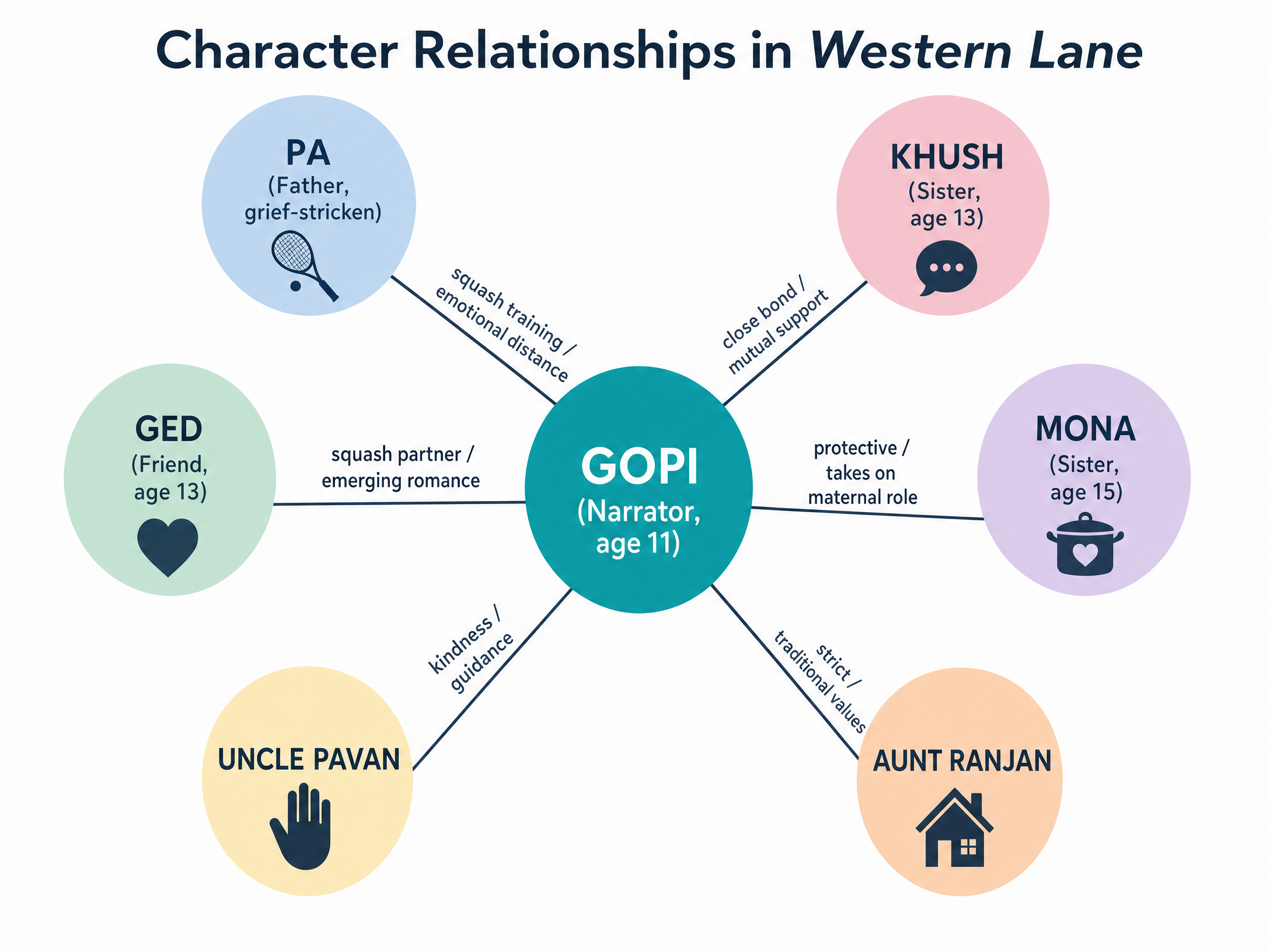
Chapters 1-2: The novel establishes the immediate aftermath of Ma's death. Eleven-year-old Gopi introduces her family: fifteen-year-old Mona, who tries to manage the household; thirteen-year-old Khush, who speaks to Ma's spirit at night; and Pa, who is emotionally paralysed. To cope, Pa introduces the girls to squash at the Western Lane leisure centre. Gopi shows natural talent and begins to obsess over the game, whilst dealing with the onset of puberty and her first period.
Chapters 3-5: Pa focuses his attention entirely on Gopi's training, pairing her with a thirteen-year-old boy named Ged. As Gopi and Ged train for an upcoming tournament, a quiet romance begins to blossom. Meanwhile, the family struggles financially and emotionally. Mona takes a job and becomes interested in an older boy, Shaan. Tensions rise when Pa's interactions with Ged's mother, Linda, spark gossip within the Gujarati community. The pressure culminates when Gopi accidentally hits Pa in the face with a squash ball during a tense game.
Chapters 6-8: The injury forces a break in training, and Ged's mother stops him from playing with Gopi. Pa's mental state deteriorates further, leading the sisters to call their kind Uncle Pavan for help. Pavan and Aunt Ranjan arrive from Edinburgh. Pa gently offers Gopi the chance to move to Edinburgh to live with her aunt and uncle. Despite Ranjan's initial resistance, Pavan ensures Gopi can compete in the Durham squash tournament. In the final chapter, Gopi, Ged, and Shaan all compete. Gopi wins her final match, experiencing a moment of profound, quiet triumph. The novel ends with a sense of hopeful ambiguity, as Gopi listens to her uncle and aunt reminisce about her parents.
Themes
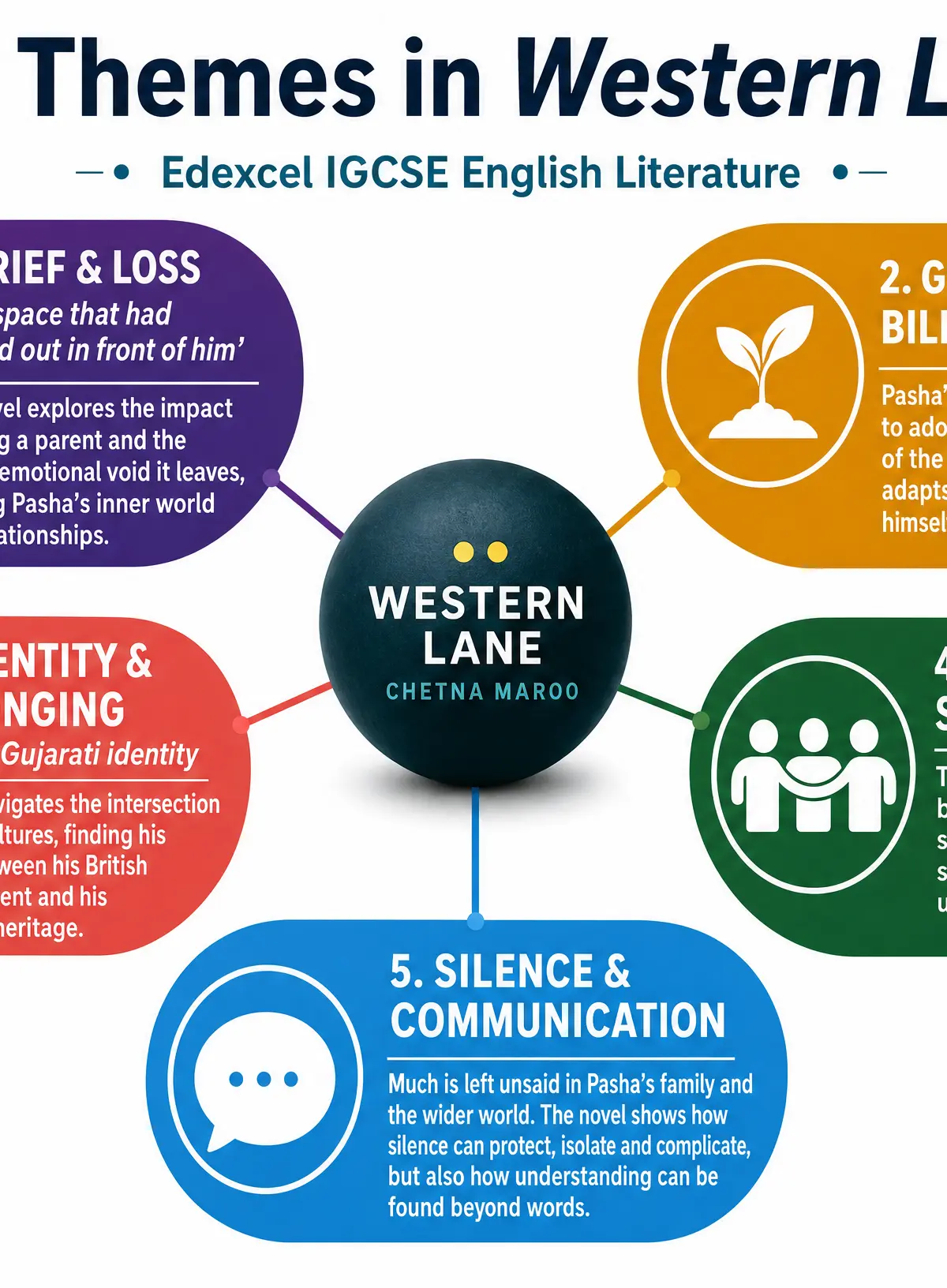
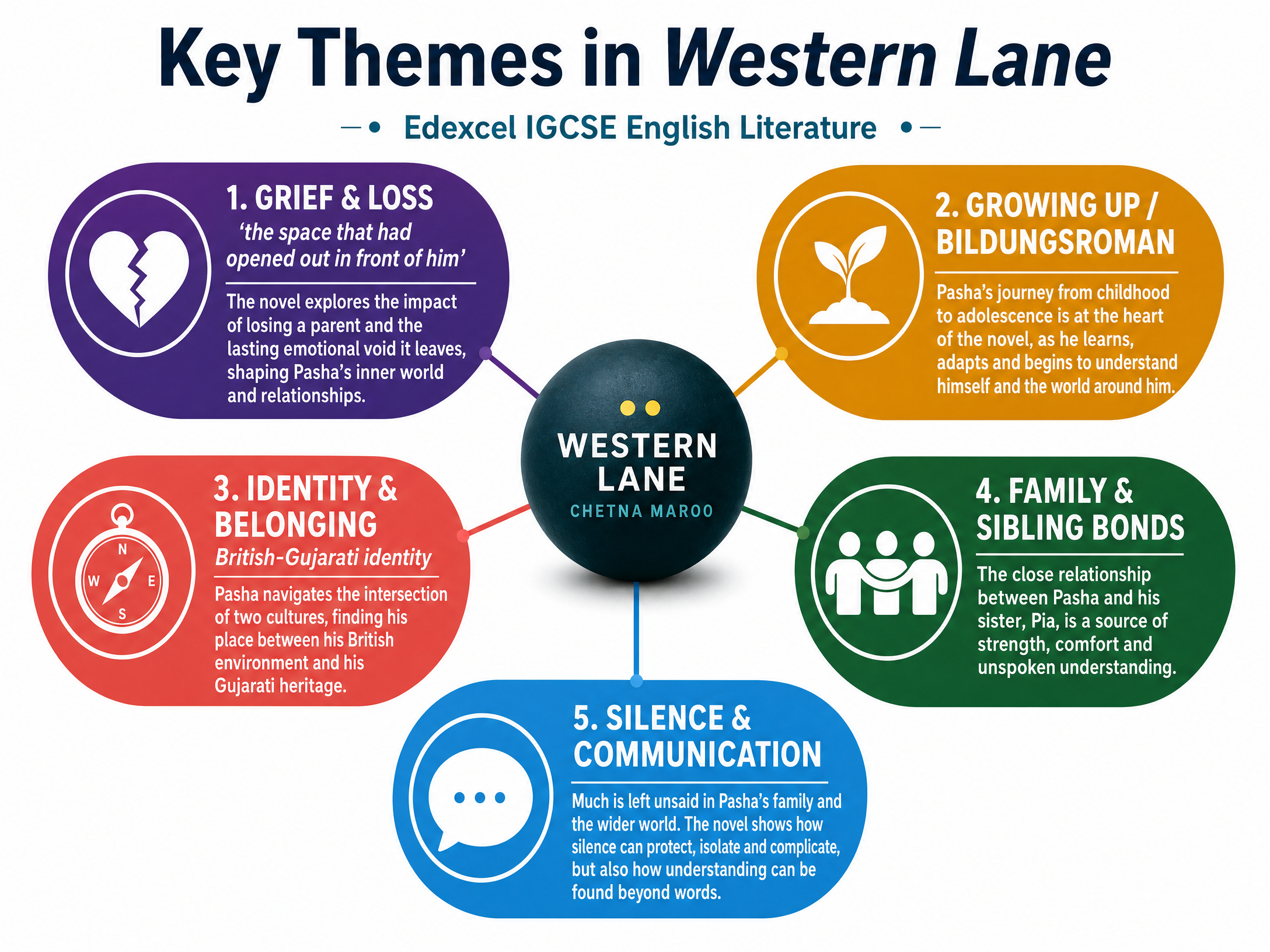
Theme 1: Grief and Loss
Grief is the central, animating force of the novel. Maroo presents grief not as dramatic wailing, but as a profound absence—a physical and emotional void that the characters struggle to navigate. Pa's inability to speak about his loss drives him to the squash court, where physical exertion replaces emotional expression. The sisters grieve in different ways: Mona through assumed responsibility, Khush through imagined conversations, and Gopi through the discipline of sport.
Key Quotes:
- "the space that had opened out in front of him" - This spatial metaphor perfectly captures how grief is experienced as a vast, unfillable emptiness.
- "The effort to speak made him wince" - Demonstrates how Pa's grief is physically debilitating; words fail him completely.
- "Now she was gone, our capacity to hurt her seemed infinite." - Gopi's profound realisation of the permanence of loss and the guilt of the survivors.
Theme 2: Growing Up (Bildungsroman)
The novel is a classic coming-of-age story. Gopi transitions from childhood to early adolescence, marked by physical changes (her first period) and emotional awakenings (her feelings for Ged). The squash tournament serves as the crucible for her maturation, ending with her independent victory.
Key Quotes:
- "I want you to become interested in something you can do your whole life." - Pa's insistence on squash is an attempt to equip his daughters for adulthood without their mother.
- "Have you thought about what happens after this?" - Ged's question to Gopi highlights the uncertainty of the future and the inevitability of change.
Theme 3: Identity, Belonging, and Context
Set in 1980s London, the novel subtly explores the experience of a British-Gujarati family. The characters navigate the expectations of their tight-knit community (who gossip about Pa) and the underlying racism of broader British society. The squash court becomes a neutral zone where these tensions are temporarily suspended.
Key Quotes:
- "no one spat on us from a height and told us to go home" - A devastating double negative that reveals the casual, everyday racism the girls face outside their safe spaces.
- "Aunt Ranjan's afraid of us because she doesn't know how to find out what we're thinking." - Highlights the generational and cultural disconnect between the UK-raised girls and their traditional aunt.
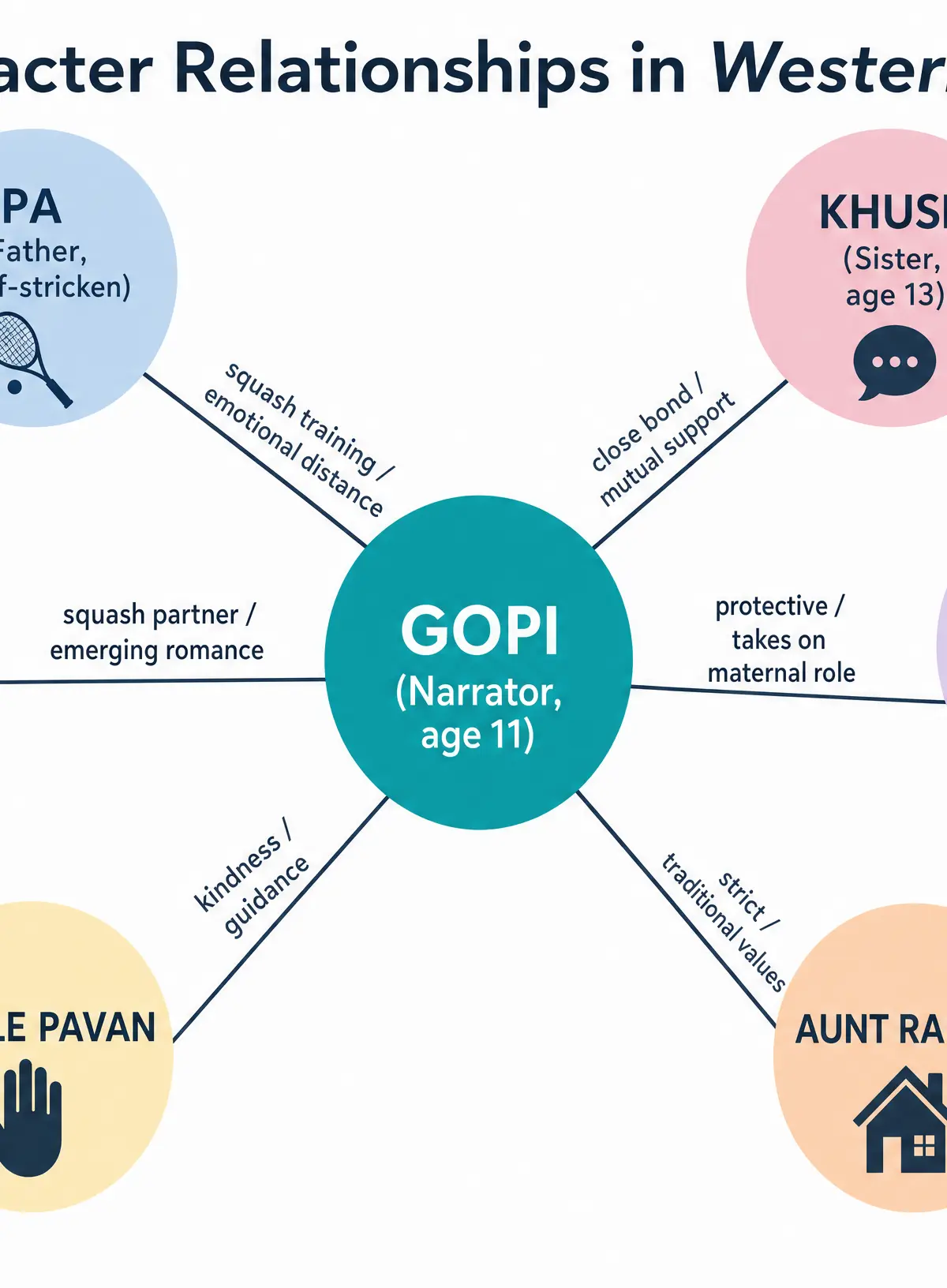
Character Analysis
Gopi (Narrator)
Role: The eleven-year-old protagonist and narrator. Her limited, first-person perspective filters the family's grief through the lens of a child trying to understand the adult world.
Key Traits: Observant, physically talented, emotionally restrained, fiercely loyal to her sisters.
Character Arc: Moves from a confused, grieving child to a disciplined athlete who achieves a measure of independence and maturity through her tournament victory.
Essential Quotes:
- "I knew that if I said yes, then we would be close again. But I was already answering him."
- "What amazed me was that John McEnroe could come away from the umpire's chair with his shoulders slumped... and then lift his racket and play the way he played."
Pa
Role: The grieving father who struggles to cope with single parenthood and channels his energy into coaching Gopi.
Key Traits: Silent, broken, dedicated, emotionally distant but deeply loving.
Character Arc: He begins completely unmoored by his wife's death, uses squash as a coping mechanism, suffers a breakdown, but ultimately shows up to support Gopi at her final match.
Essential Quotes:
- "his shoulders, his throat, the white bones visible under his skin – he was telling us that in one day we had exposed him"
- "Pa told us there are times when a player needs help from outside."
Uncle Pavan
Role: The kind, empathetic uncle who provides the emotional support and guidance that Pa is unable to give.
Key Traits: Gentle, perceptive, tactful, supportive.
Character Arc: He acts as a stabilising force, rescuing the family when Pa breaks down and quietly defying his strict wife to allow Gopi to play in the tournament.
Essential Quotes:
- "It's different now … It's your home."
- "But I … we … wanted to know what you thought about it."
Writer's Methods
Maroo's prose is defined by restraint and minimalism. She employs a first-person limited narrative perspective, creating dramatic irony where the reader understands the depth of Pa's depression before the eleven-year-old narrator does.
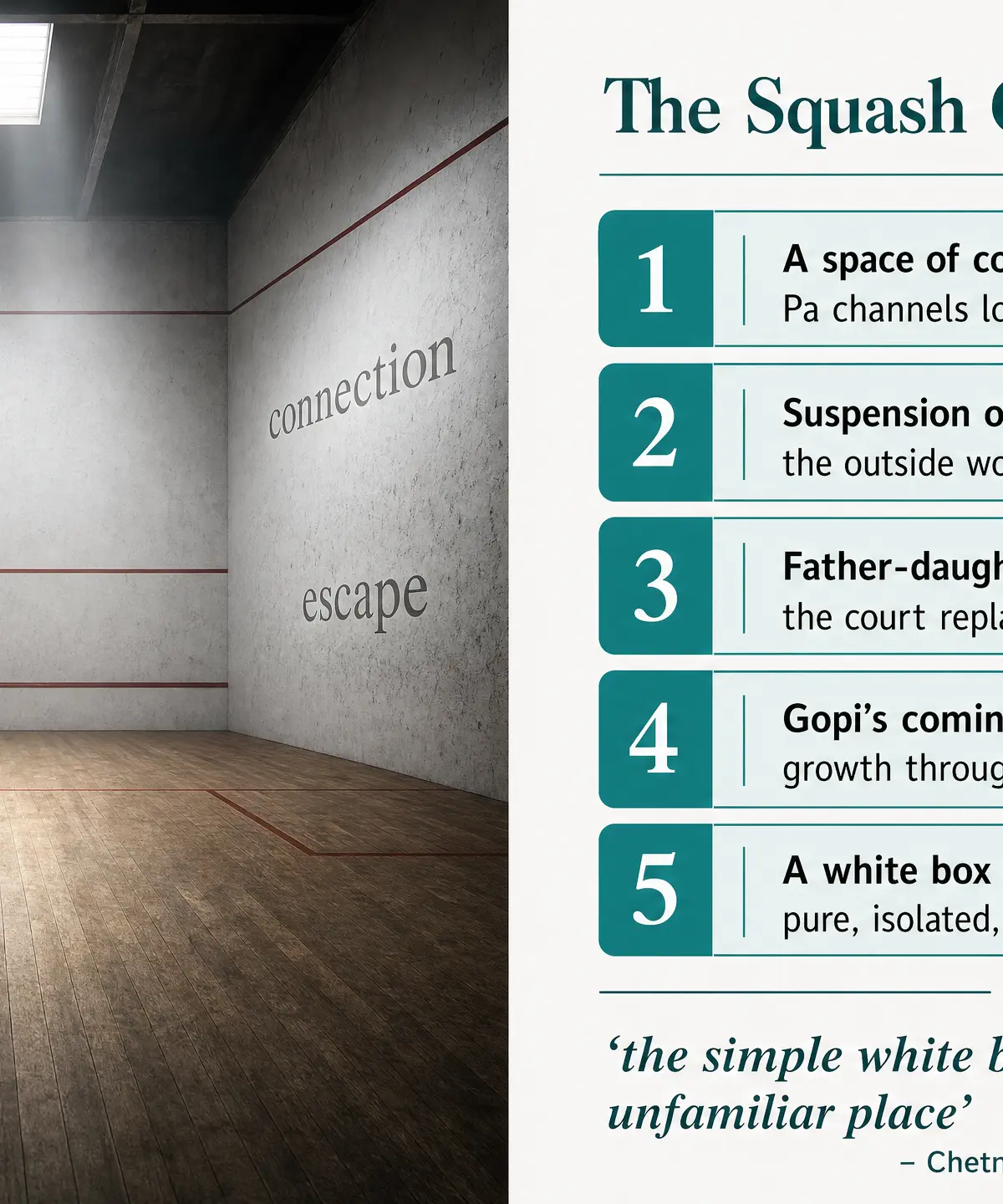
The squash court acts as a central motif and microcosm—a "simple white box" where the chaos of grief and the complexities of racism and community expectations are stripped away, leaving only the pure, rhythmic echo of the ball. Maroo frequently uses spatial metaphors to describe emotion, framing grief as "space" and connection as physical proximity on the court.
Context
Examiners expect candidates to integrate context (AO4) seamlessly. Key contextual factors include:
- The 1980s British Immigrant Experience: The subtle but pervasive racism of Thatcher's Britain, which makes the family's isolation more profound and the squash court more necessary as a sanctuary.
- Jain/Gujarati Traditions: The expectation of the patriarchal figure to provide spiritual and practical guidance, which Pa struggles to fulfil, and the intense scrutiny of the local community.
- The Bildungsroman Genre: The literary tradition of the coming-of-age novel, focusing on the psychological and moral growth of the protagonist from youth to adulthood.
Visual Resources
3 diagrams and illustrations
Interactive Diagrams
1 interactive diagram to visualise key concepts
Conceptual Flow Outline
Narrative Structure and Gopi's Bildungsroman Arc
Worked Examples
2 worked examples — open one to explore the question and available guidance.
Practice Questions
Test your understanding — click to reveal model answers
Explore the significance of the squash court setting in Western Lane. You must consider the context of the novel in your answer. (40 marks)
Hint: Think about the court as a microcosm, a place of silence, and a refuge from the 1980s London context.
Discuss the presentation of sisterhood in the novel. You must consider the context of the novel in your answer. (40 marks)
Hint: Look at how Mona takes on the maternal role, and how Khush supports Gopi physically and emotionally.
How does Maroo present the difficulty of communication in Western Lane? You must consider the context of the novel in your answer. (40 marks)
Hint: Focus on Pa's physical pain when speaking, Khush talking to ghosts, and squash as a substitute language.
Explore the character of Mona and how she changes. You must consider the context of the novel in your answer. (40 marks)
Hint: Consider her initial assumption of the mother role, her rebellion, and her relationship with Shaan.