Pearson Edexcel · GCSE · Geography
A natural resource is any feature or part of the environment that can be used to meet human needs
Master the foundational concept of natural resources, their classification, and the critical environmental impacts of human exploitation. This topic is essential for understanding global challenges and is heavily tested in resource management and physical environment exam papers.
- 4 min read
- 3 worked examples
- 5 practice questions
- 6 key terms
Study Notes
Overview
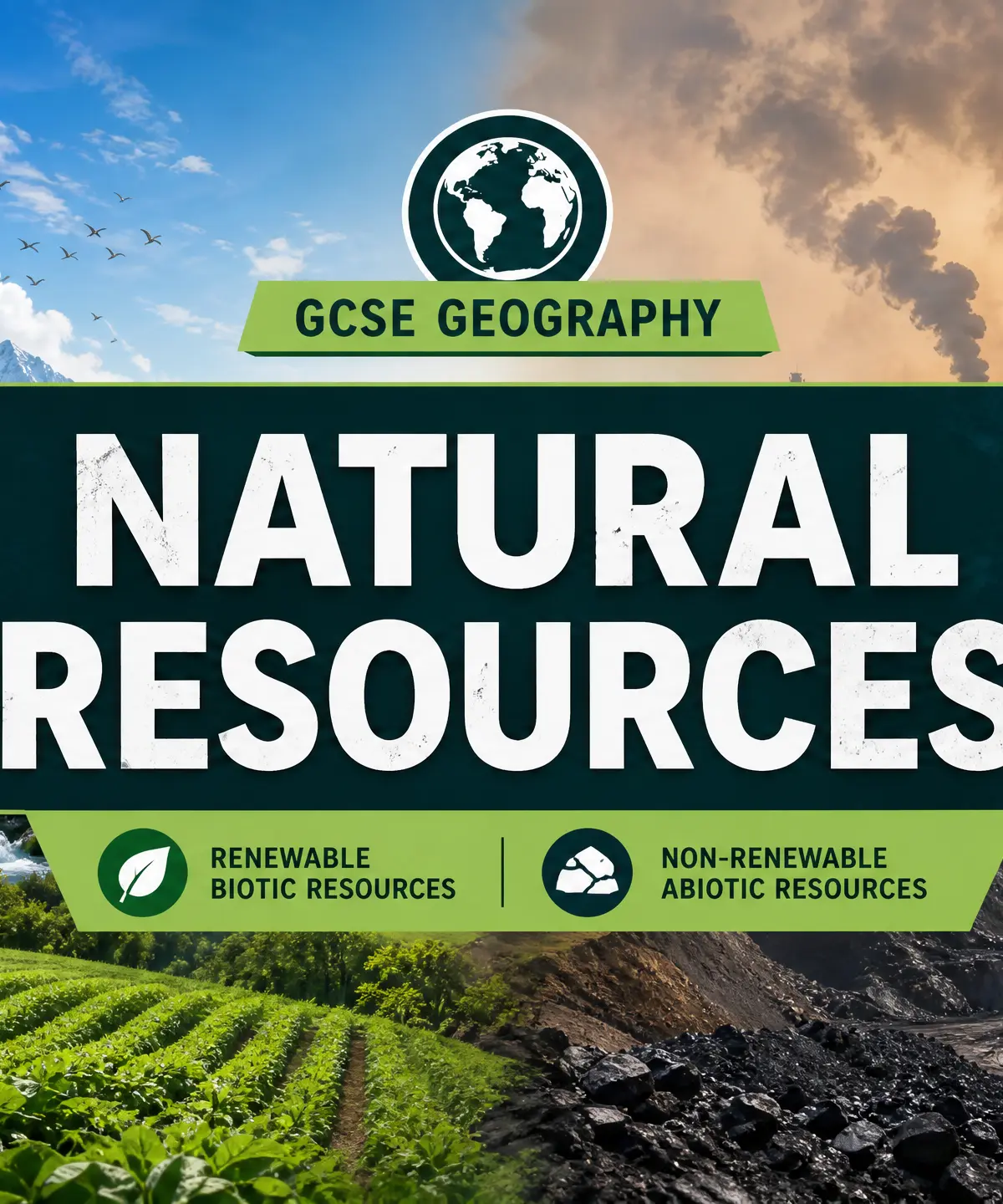
This study guide covers the fundamental concept of natural resources—any feature or part of the environment that can be used to meet human needs. Understanding this topic is crucial as it forms the basis for exploring how human activities interact with the physical environment, a core theme in GCSE Geography. Examiners expect candidates to accurately define resources, classify them into biotic/abiotic and renewable/non-renewable categories, and clearly explain the causal links between specific exploitation methods and their resulting environmental degradation. Mastery of this topic requires the use of precise geographical terminology and specific named examples to achieve the highest mark bands.
Podcast Episode
Listen to this 10-minute audio revision session covering core concepts, exam technique, and a quick-fire recall quiz.

Classification of Natural Resources
Natural resources are classified based on their origin and their ability to replenish.
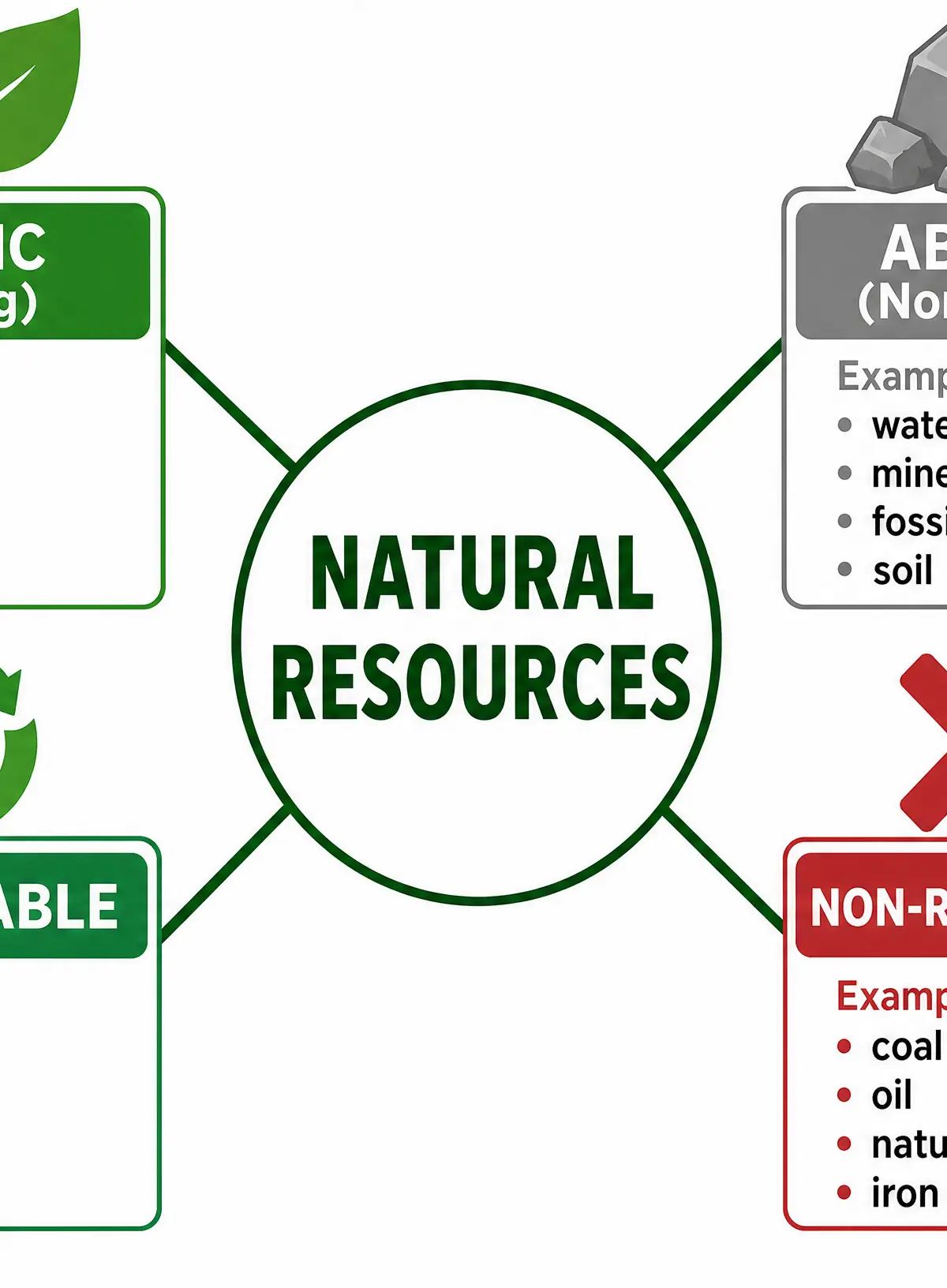
Biotic vs Abiotic Resources
Biotic Resources: Derived from the biosphere (living things). Examples include timber, fish, crops, and livestock.
Abiotic Resources: Derived from the lithosphere, atmosphere, and hydrosphere (non-living things). Examples include water, minerals, soil, and fossil fuels.
Renewable vs Non-Renewable Resources
Renewable Resources: Resources that can be replenished naturally over time, such as solar energy, wind energy, and sustainably managed forests.
Non-Renewable Resources: Finite resources that cannot be replaced once consumed, such as coal, oil, natural gas, and metallic ores.
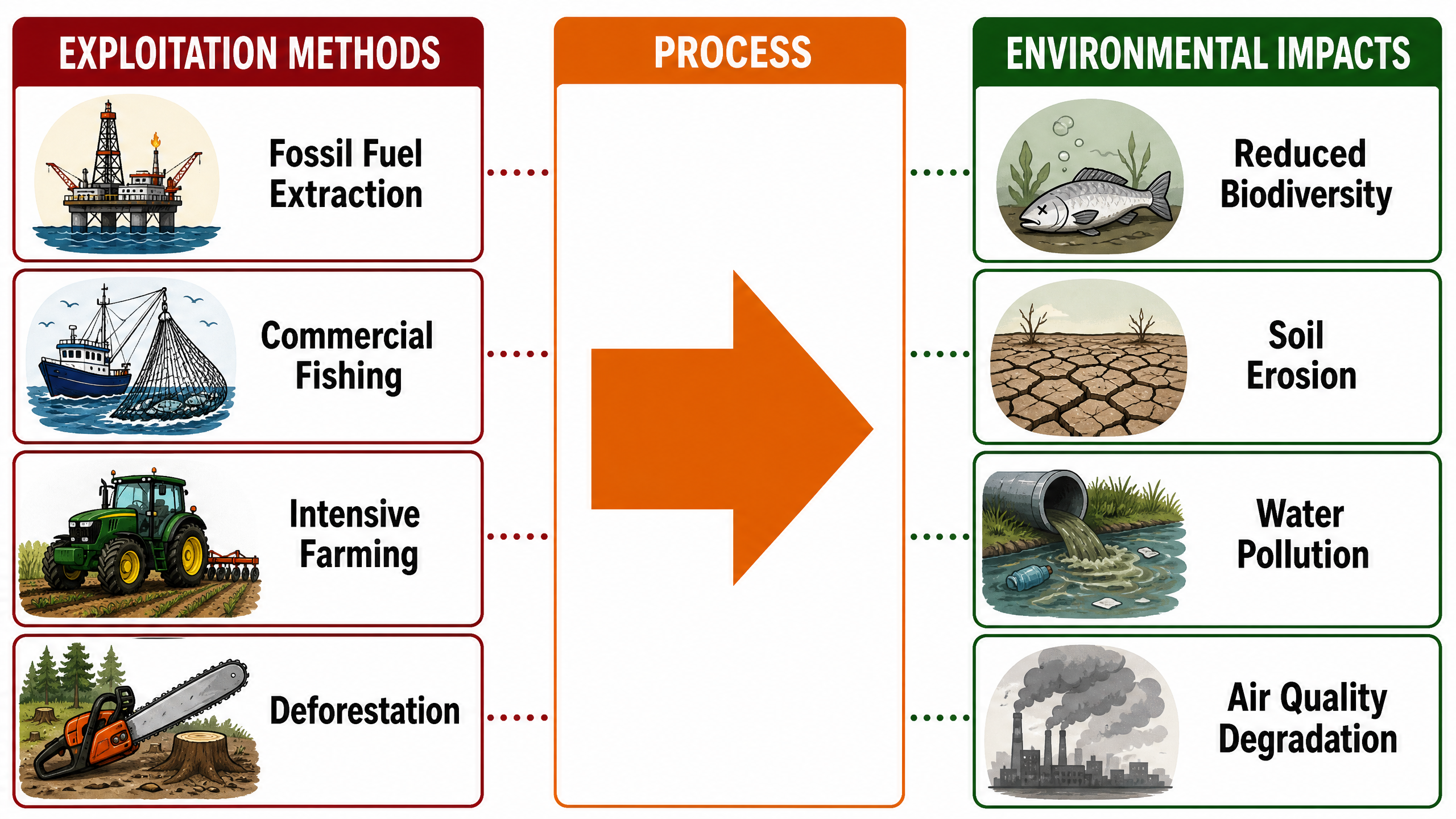
Methods of Resource Exploitation and Environmental Impacts
Examiners heavily reward the ability to link human activity to specific environmental consequences.
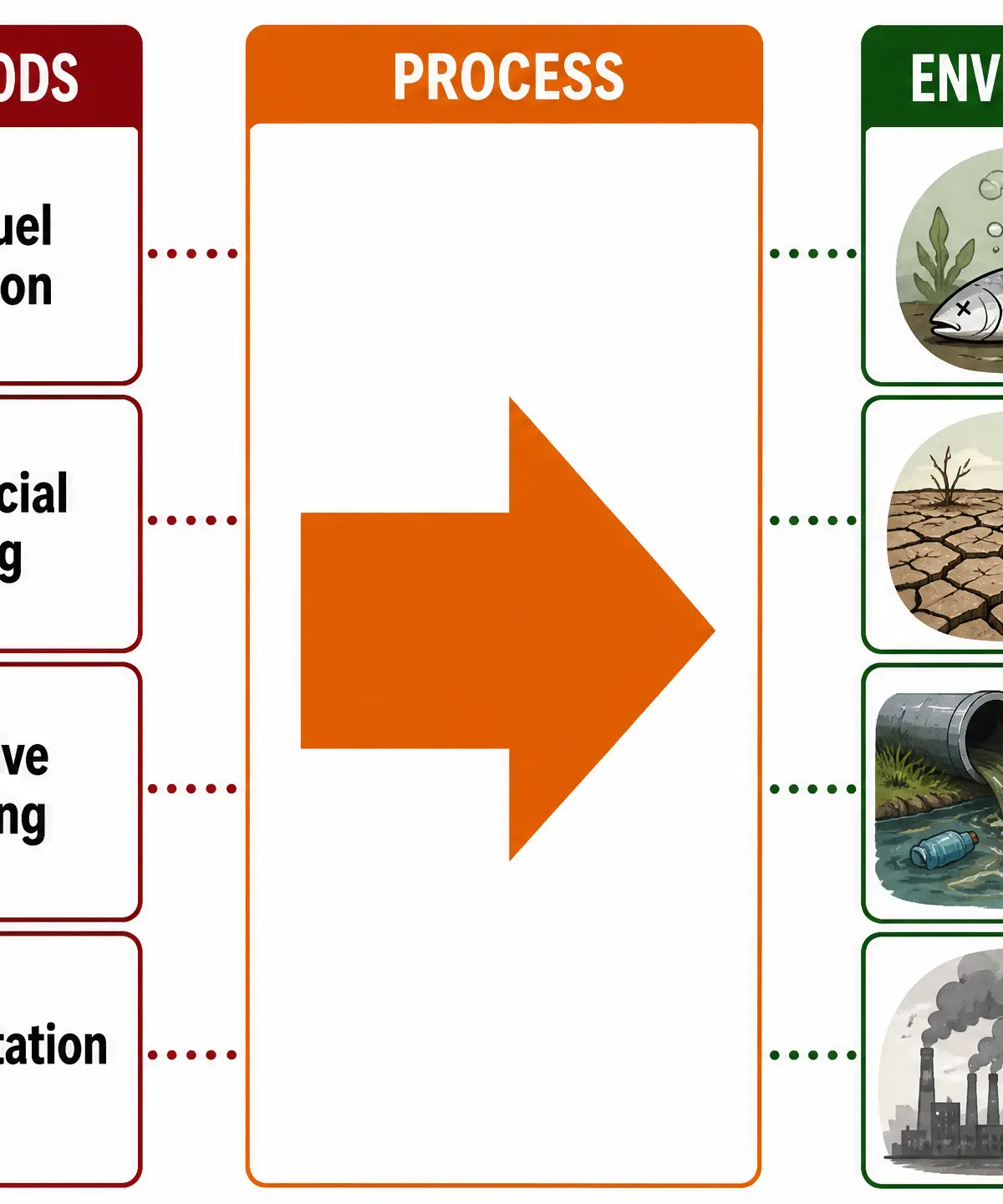
Fossil Fuel Extraction
Methods: Coal mining, oil drilling, natural gas fracking.
Named Example: The UK North Sea oil fields or the Deepwater Horizon oil spill (2010).
Impacts: Oil spills devastate marine ecosystems; burning fossil fuels releases greenhouse gases causing climate change; mining causes subsidence and habitat destruction.
Commercial Fishing
Methods: Deep-sea trawling, longline fishing.
Named Example: The Grand Banks cod fishery collapse, Canada (1992 moratorium).
Impacts: Overfishing leads to the collapse of fish stocks and reduced marine biodiversity; bottom trawling destroys fragile seabed habitats and coral reefs.
Intensive Farming
Methods: Use of chemical fertilisers, pesticides, and heavy machinery.
Named Example: Large-scale agribusiness in East Anglia, UK.
Impacts: Pesticides reduce insect and bird populations (biodiversity loss); fertiliser run-off causes eutrophication in waterways; heavy machinery causes soil compaction, increasing flood risk.
Deforestation
Methods: Clear-cutting for timber, agriculture, or mining.
Named Example: The Amazon Rainforest, Brazil (11,568 sq km lost in 2022).
Impacts: Loss of habitat leading to species extinction; removal of tree roots causes severe soil erosion; disruption of the local water cycle and reduced carbon sequestration.
Visual Resources
2 diagrams and illustrations
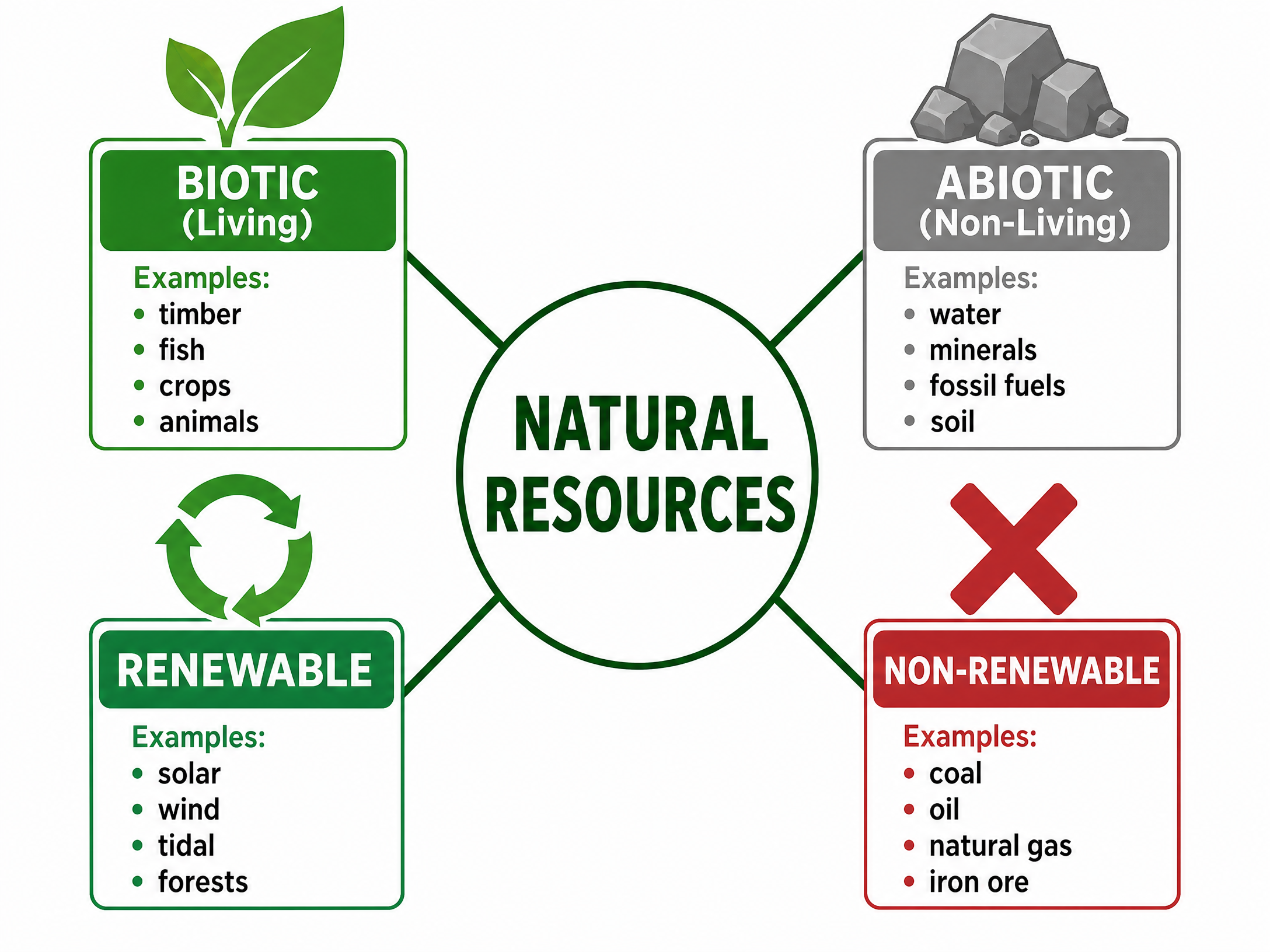
Interactive Diagrams
1 interactive diagram to visualise key concepts
Conceptual Flow Outline
The Chain of Impact: Deforestation
Worked Examples
3 worked examples — open one to explore the question and available guidance.
Practice Questions
Test your understanding — click to reveal model answers
Using an example, explain how the extraction of abiotic resources impacts the environment. (4 marks)
Hint: Name a specific abiotic resource (like coal or oil) and explain two linked environmental impacts.
State two examples of biotic natural resources. (2 marks)
Hint: Think of resources that come from living organisms.
Evaluate the statement: 'The environmental impacts of intensive farming are more severe than those of commercial fishing.' (9 marks + 3 SPaG)
Hint: Provide a balanced argument. Discuss the impacts of farming (e.g., eutrophication, soil compaction) versus fishing (e.g., food chain collapse, seabed damage), and reach a justified conclusion.
Explain how a resource can be biotic but non-renewable. (3 marks)
Hint: Think about the rate of extraction versus the rate of natural replenishment.
Outline one environmental impact of deforestation. (2 marks)
Hint: State the impact and briefly explain why it happens.