Pearson Edexcel · GCSE · Geography
Deciduous woodland ecosystems provide a range of goods and services, some of which are under threat
This study guide covers the dynamic ecosystem of deciduous woodlands, exploring the vital goods and services they provide, the threats they face from climate change and deforestation, and how they can be sustainably managed. Understanding these ecosystems is crucial for grasping human-environment interactions and tackling global environmental challenges.
- 5 min read
- 3 worked examples
- 5 practice questions
- 6 key terms
Study Notes
Overview
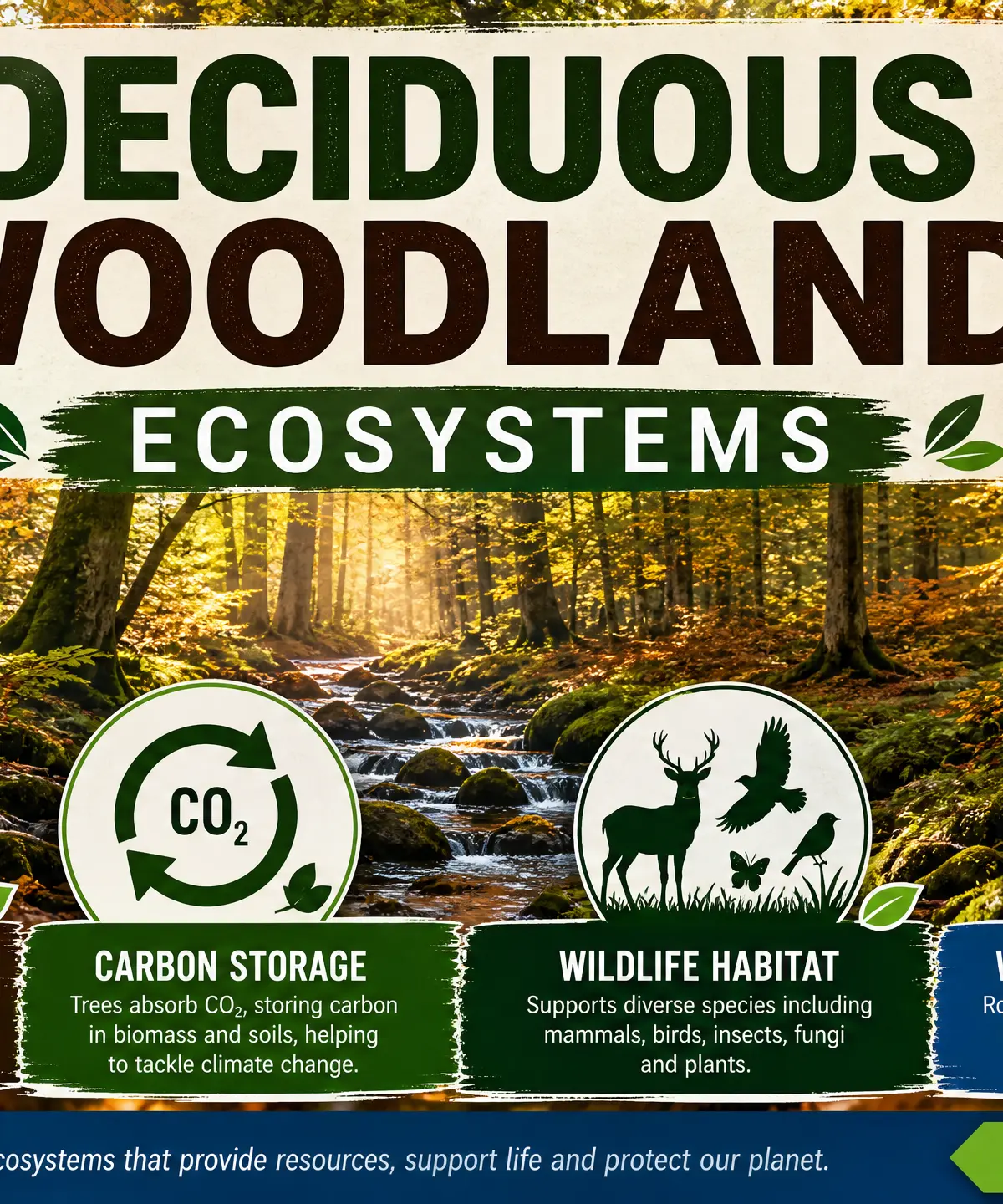
Deciduous woodlands are temperate ecosystems characterised by trees that shed their leaves in autumn. Found across Western Europe, North America, and East Asia, they are vital natural resources that support immense biodiversity. For the GCSE Geography exam, examiners expect you to confidently distinguish between the tangible 'goods' these woodlands provide (like timber and fuel) and the ecological 'services' they perform (such as carbon storage and water regulation). You must also understand how climate change and deforestation threaten these ecosystems, and be able to evaluate sustainable management strategies using specific named examples like the New Forest.
Listen to the companion podcast for a comprehensive audio review:

Woodland Characteristics and Structure
Abiotic and Biotic Links
Characteristics: Deciduous woodlands thrive in temperate maritime climates with moderate rainfall (600-1500mm annually) and mild temperatures. The soils are typically deep, fertile brown earths, rich in nutrients from decaying leaf litter.
Examiner Focus: You must be able to link these abiotic (non-living) factors to the biotic (living) components. The moderate climate and fertile soil allow for a complex, layered vegetation structure, which in turn supports high biodiversity.
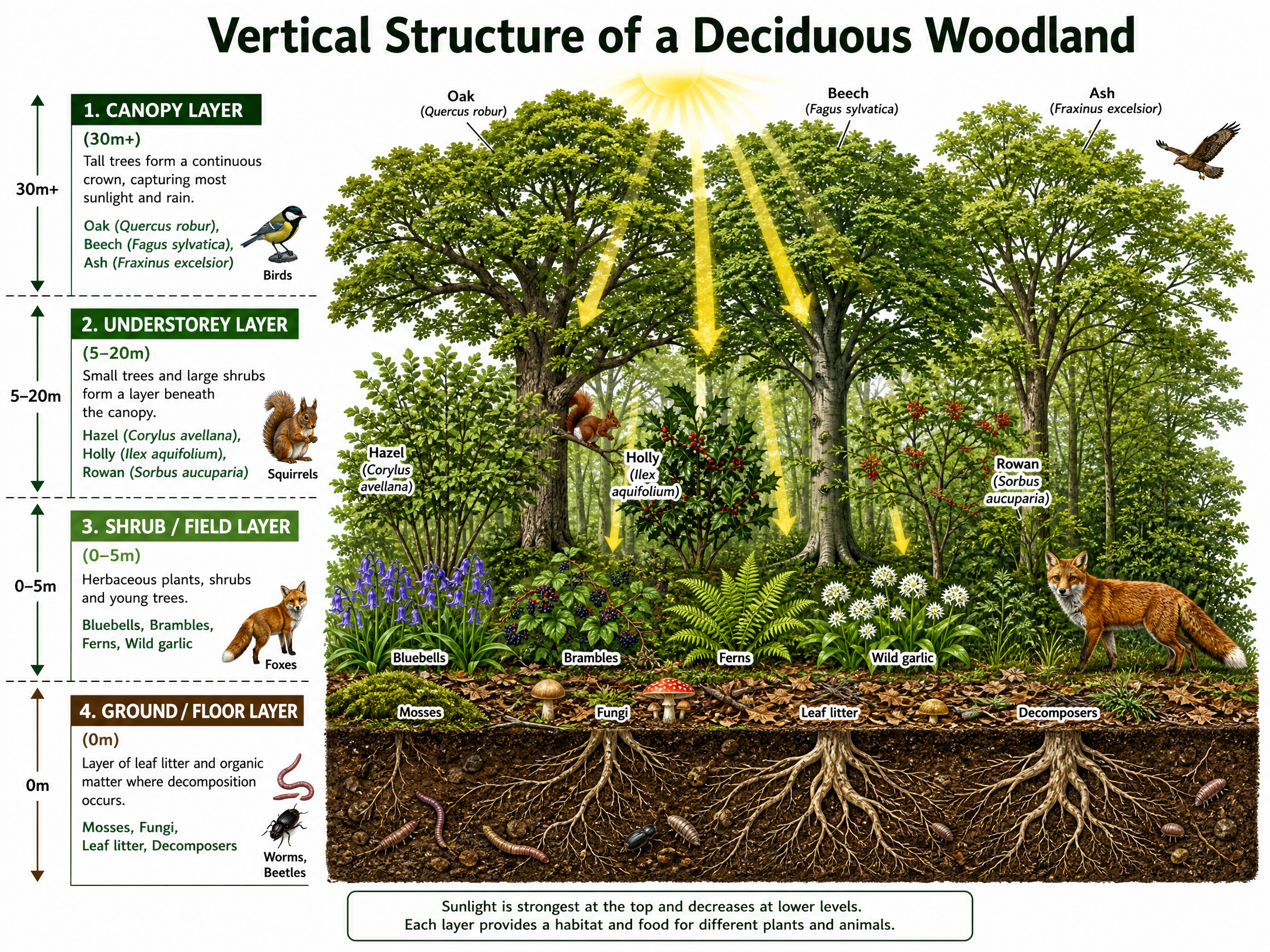
Vertical Structure
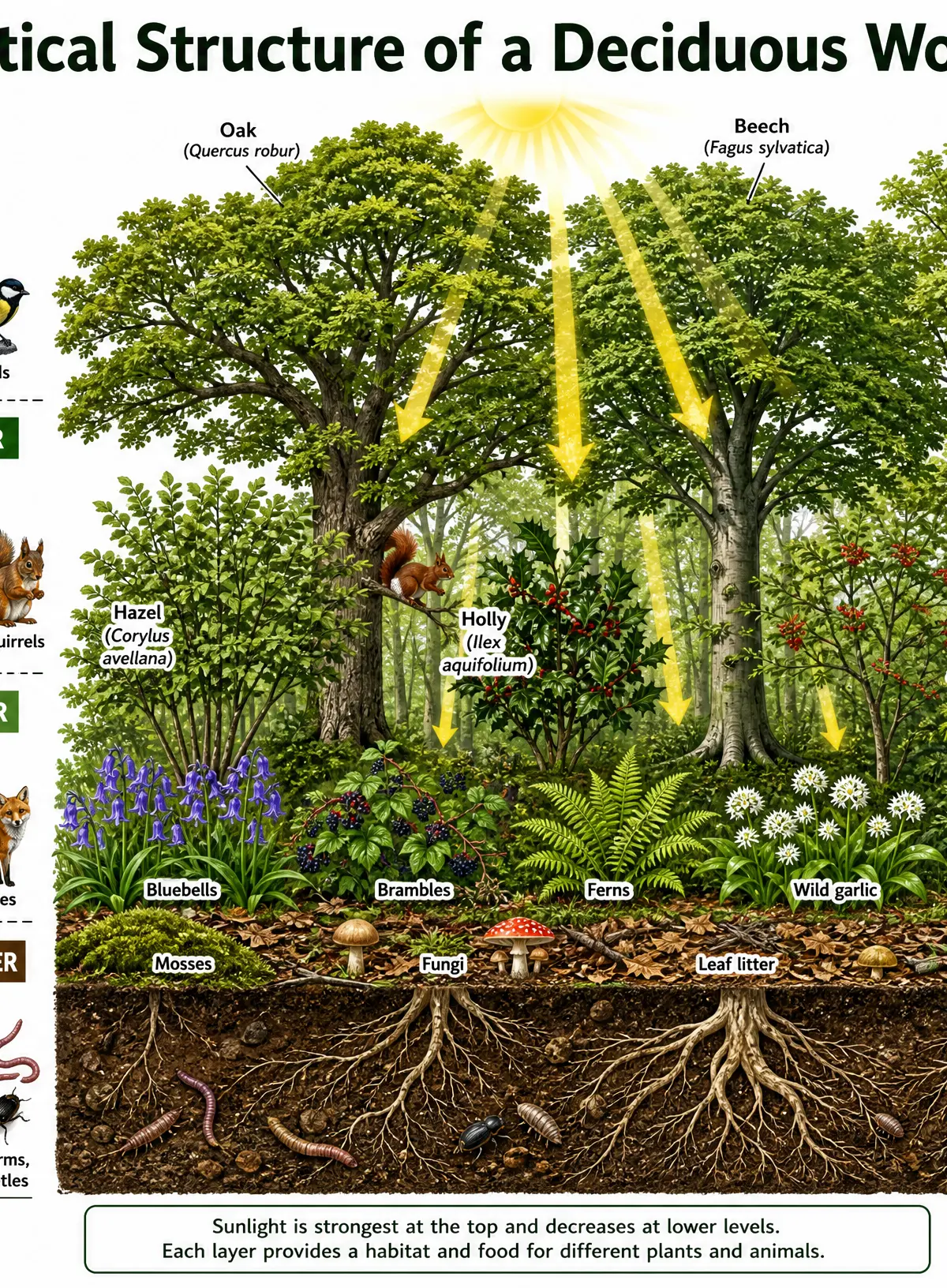
Deciduous woodlands have four distinct layers:
- Canopy Layer (30m+): Dominant trees like Oak (Quercus robur) and Beech form a continuous roof, capturing maximum sunlight.
- Understorey (5-20m): Smaller trees and shrubs like Hazel and Holly adapted to lower light levels.
- Field/Shrub Layer (0-5m): Bluebells, brambles, and ferns. Plants here often flower early in spring before the canopy fully blocks the sun.
- Ground Layer (0m): Mosses, fungi, and deep leaf litter where decomposers recycle nutrients into the brown earth soil.
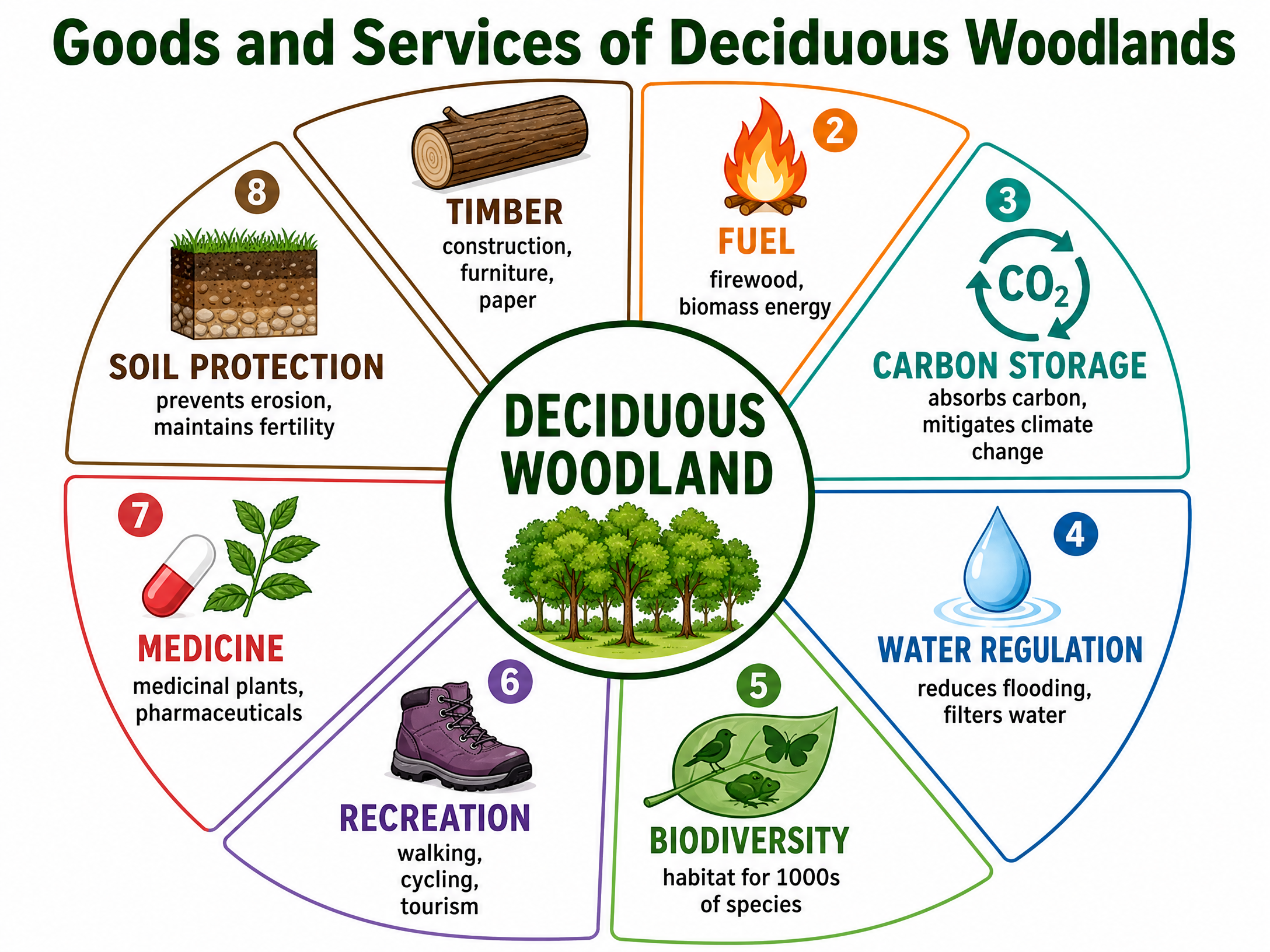
Goods and Services
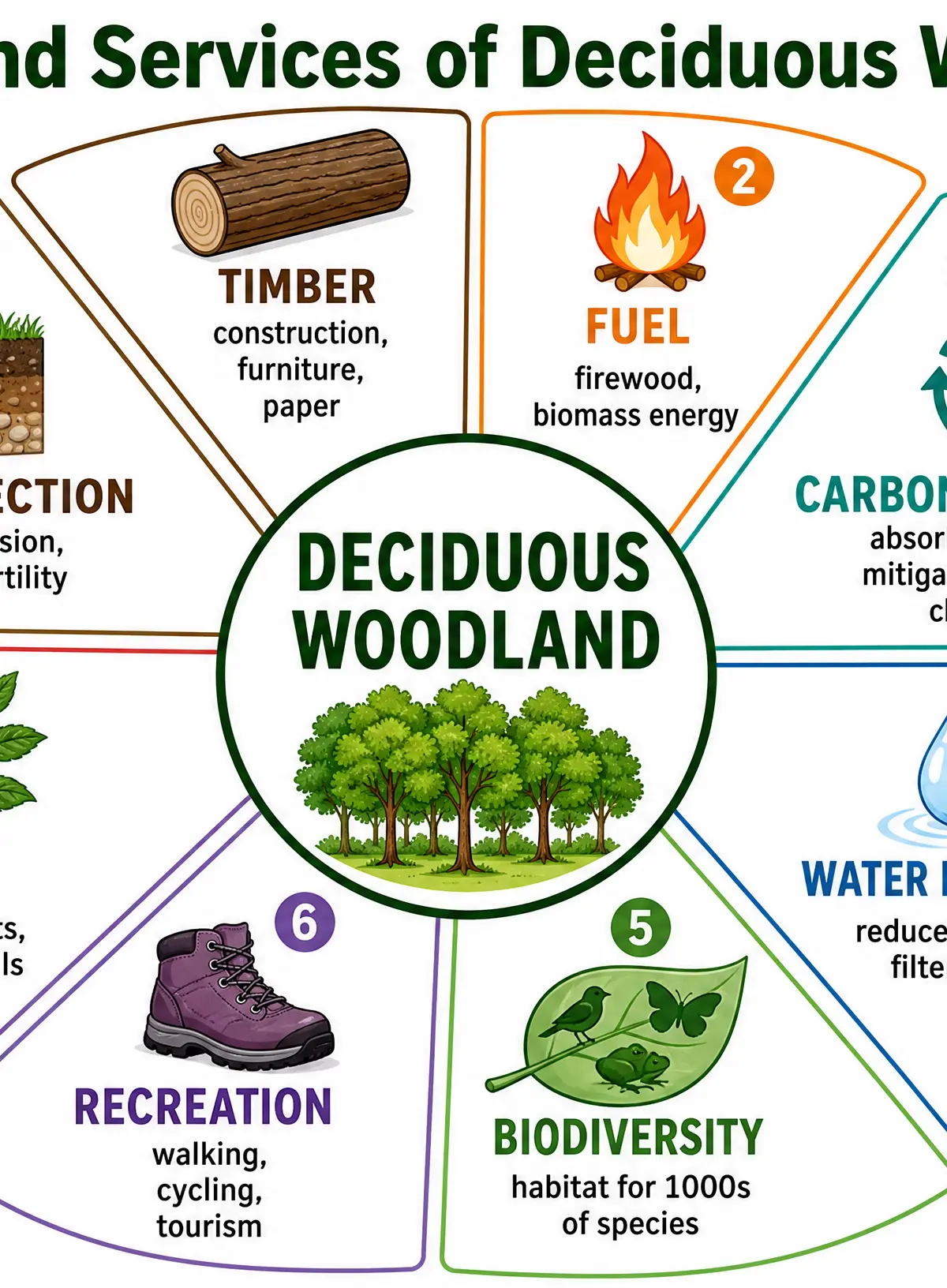
Examiners heavily reward candidates who clearly distinguish between goods and services.
Goods (Tangible Products)
- Timber: High-quality wood from oak, ash, and beech is extracted for construction, furniture, and paper. The UK Forestry Commission manages extensive areas for this purpose.
- Fuel: Firewood and biomass remain important energy sources, particularly in rural areas.
- Non-Timber Forest Products (NTFPs): Foraged items including mushrooms, berries, nuts, and medicinal plants.
Services (Ecological Functions)
- Carbon Storage: Trees act as carbon sinks. A mature oak can absorb ~22kg of CO2 per year, mitigating climate change.
- Water Regulation: Tree canopies intercept rainfall, and roots increase soil infiltration, significantly reducing flood risk and filtering water pollutants.
- Biodiversity Support: UK woodlands provide habitats for over 500 plant species and thousands of invertebrates.
- Recreation: Areas like the New Forest provide immense social and economic value through tourism, walking, and cycling.
Threats to Deciduous Woodlands
Climate Change
- Phenological Mismatch: Warmer springs cause trees to leaf earlier. If caterpillars hatch earlier but migratory birds arrive at their usual time, the food chain is disrupted.
- Drought Stress: Prolonged dry periods weaken trees, making them vulnerable to diseases.
- Pests and Diseases: Warmer winters allow pests to survive. Ash dieback (caused by the fungus Hymenoscyphus fraxineus) has devastated UK ash populations.
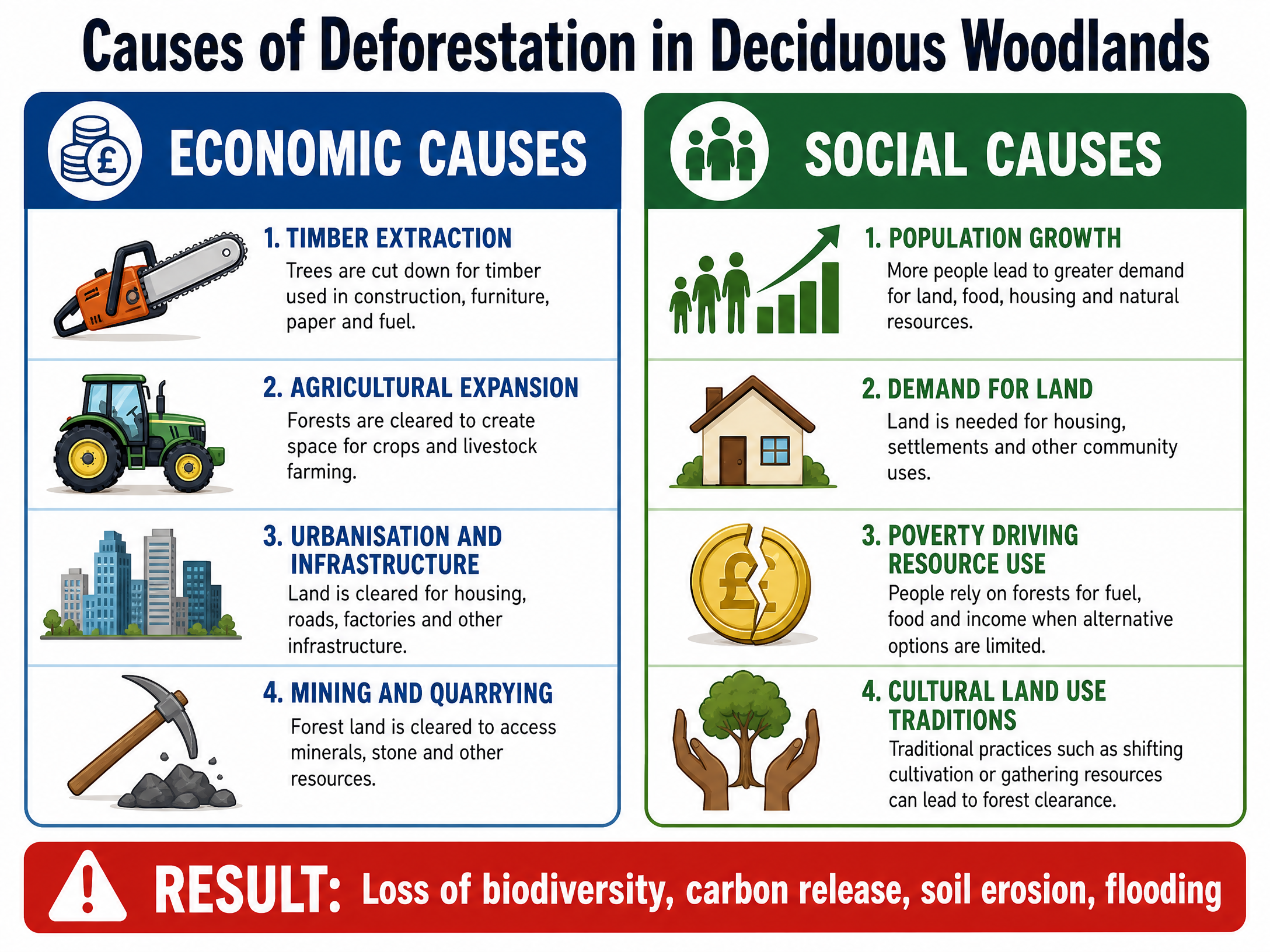
Causes of Deforestation
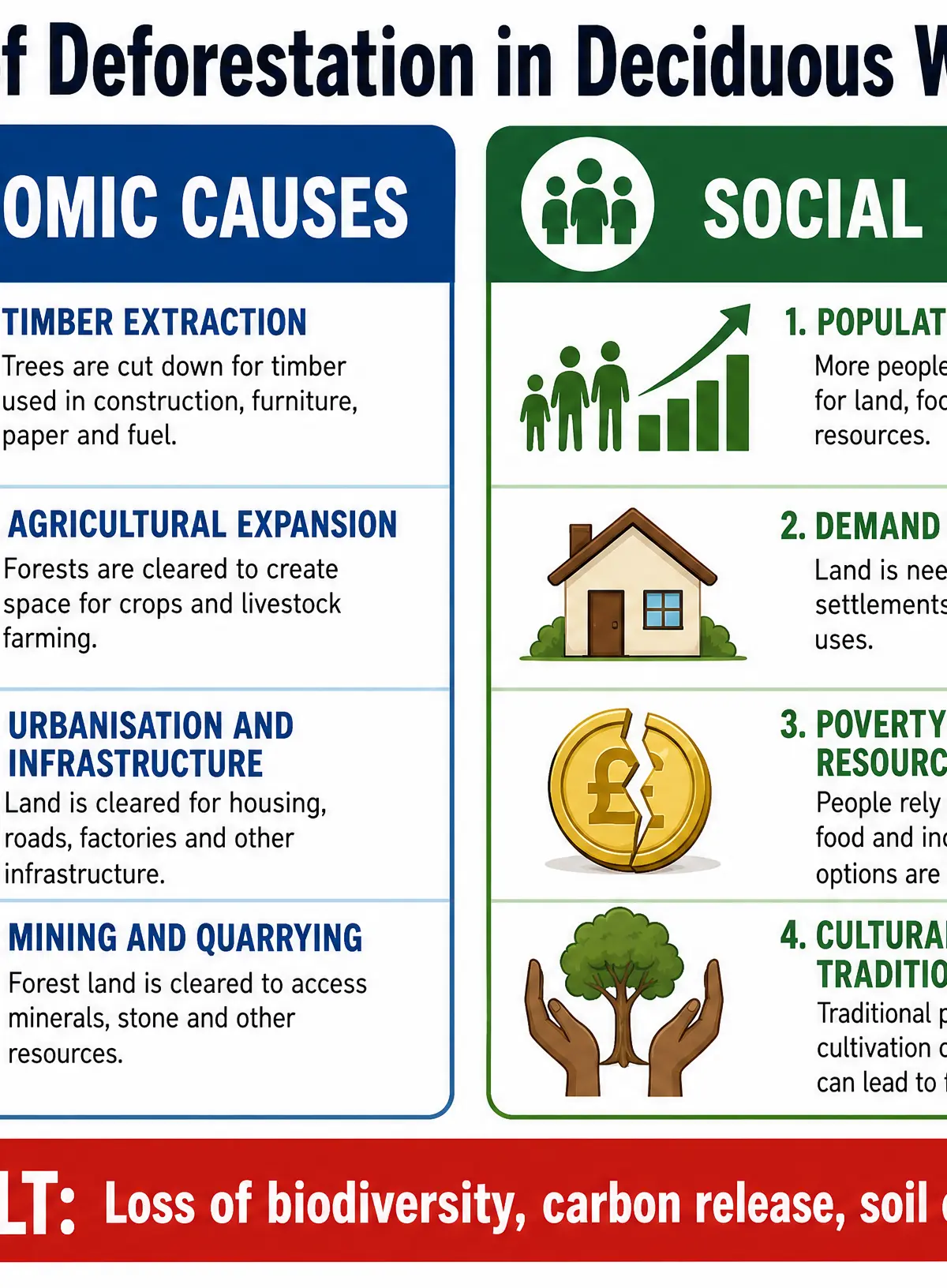
Economic Causes:
- Agricultural Expansion: Clearing woodland to create space for crops and livestock to feed a growing population.
- Timber Extraction: Felling trees for commercial profit.
- Urbanisation & Infrastructure: Clearing land for housing, roads, and industrial development (the UK loses ~1,000 hectares of ancient woodland annually to development).
Social Causes:
- Population Growth: Increases overall demand for space and resources.
- Poverty: In many regions, impoverished communities rely on forest clearance for subsistence farming and fuelwood.
Sustainable Management
Case Study: The New Forest, Hampshire, UK
To achieve Level 3 marks, you must use a named example. The New Forest is managed by Forestry England and the National Park Authority to balance economic, social, and environmental needs.
Strategies:
- Conservation Grazing: Commoners' ponies, cattle, and pigs graze the forest floor, preventing scrub from taking over and maintaining open habitats for diverse plant species.
- Selective Felling: Instead of clear-cutting, individual mature trees are felled, allowing younger trees to grow and maintaining the canopy structure.
- Recreation Zoning: Visitor facilities (car parks, visitor centres) are concentrated in robust areas to protect sensitive ecological zones from trampling and disturbance.
Worked Examples
3 worked examples — open one to explore the question and available guidance.
Practice Questions
Test your understanding — click to reveal model answers
Describe the vertical structure of a deciduous woodland. (3 marks)
Hint: Think about the distinct layers from the top of the trees down to the soil.
Explain two economic causes of deforestation in deciduous woodlands. (4 marks)
Hint: Focus on reasons driven by money or industry, and explain HOW they cause deforestation.
Explain how climate change threatens the biodiversity of deciduous woodlands. (6 marks)
Hint: Use specific terminology like 'phenological mismatch' and 'drought stress'.
To what extent is the sustainable management of deciduous woodlands successful? Use a named example in your answer. (9 marks)
Hint: You must use a case study (e.g., New Forest) and evaluate both successes and challenges before reaching a conclusion.
State one good and one service provided by a deciduous woodland. (2 marks)
Hint: Remember the difference between tangible products and ecological functions.