Pearson Edexcel · GCSE · Geography
Deciduous woodlands show a range of distinguishing features
Deciduous woodlands are complex, dynamic ecosystems defined by their four distinct seasons and incredible biodiversity. Understanding the intricate balance between their physical characteristics, the species that inhabit them, and the human impacts threatening them is essential for mastering GCSE Geography.
- 6 min read
- 3 worked examples
- 5 practice questions
- 6 key terms
Study Notes
Overview
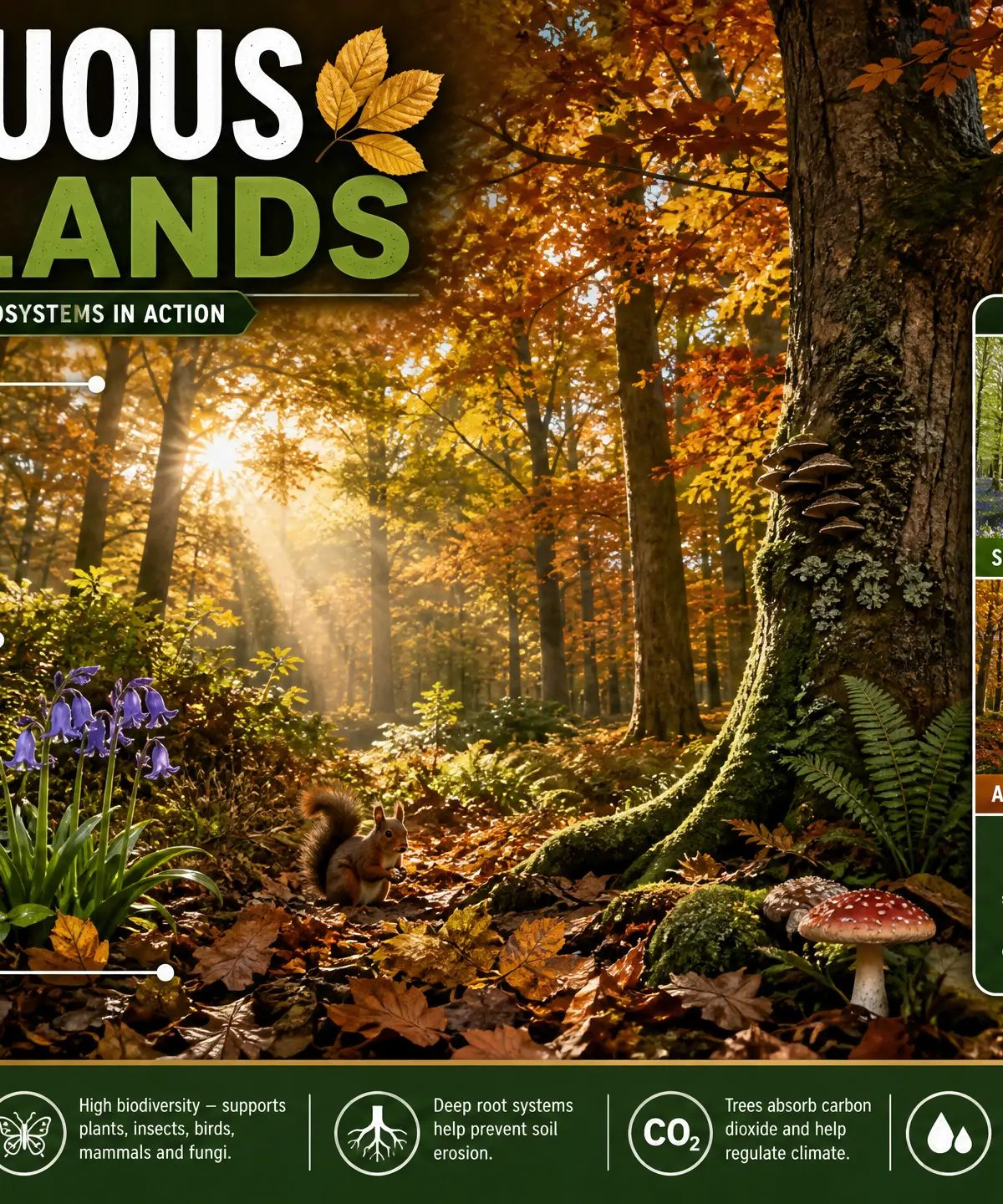
Temperate deciduous woodlands are one of the most important biomes studied at GCSE Geography. Characterised by trees that shed their leaves annually, these ecosystems are found in temperate maritime climates, typically between 40° and 60° North and South of the equator. The defining feature of this ecosystem is its seasonality — four distinct seasons drive the adaptations of flora and fauna, the nutrient cycle, and the overall structure of the woodland.
Examiners expect candidates to demonstrate a clear understanding of the interdependence within this ecosystem. This means you must be able to link the abiotic factors (like climate and soil) directly to the biotic factors (the plants and animals). You will also need to evaluate the goods and services these woodlands provide, the threats they face from human activity and climate change, and how they can be sustainably managed using named examples like Epping Forest.

Ecosystem Characteristics & Structure
Climate
Key Features: Temperate maritime climate.
Specific Knowledge: Mild temperatures (averaging 3°C in winter to 17°C in summer) and moderate rainfall (500-1500mm annually) spread evenly throughout the year.
Exam Relevance: You must explicitly link the climate to adaptations. The cold, darker winters necessitate hibernation and leaf drop, while the warm, moist summers encourage rapid growth and decomposition.
Woodland Stratification (Layers)
Deciduous woodlands are highly stratified, maximising the use of available light.
- Canopy Layer: The uppermost layer (20-30m) formed by mature trees like oak and beech. Intercepts the majority of sunlight.
- Shrub Layer: Smaller trees and bushes like hazel, hawthorn, and holly (5-20m). Adapted to lower light levels.
- Herb Layer: Ferns, bluebells, and brambles on the forest floor. Many flower early in spring before the canopy closes.
- Underground/Forest Floor Layer: Leaf litter, fungi, bacteria, and soil fauna (earthworms) responsible for decomposition.
The Nutrient Cycle (Gersmehl Model)
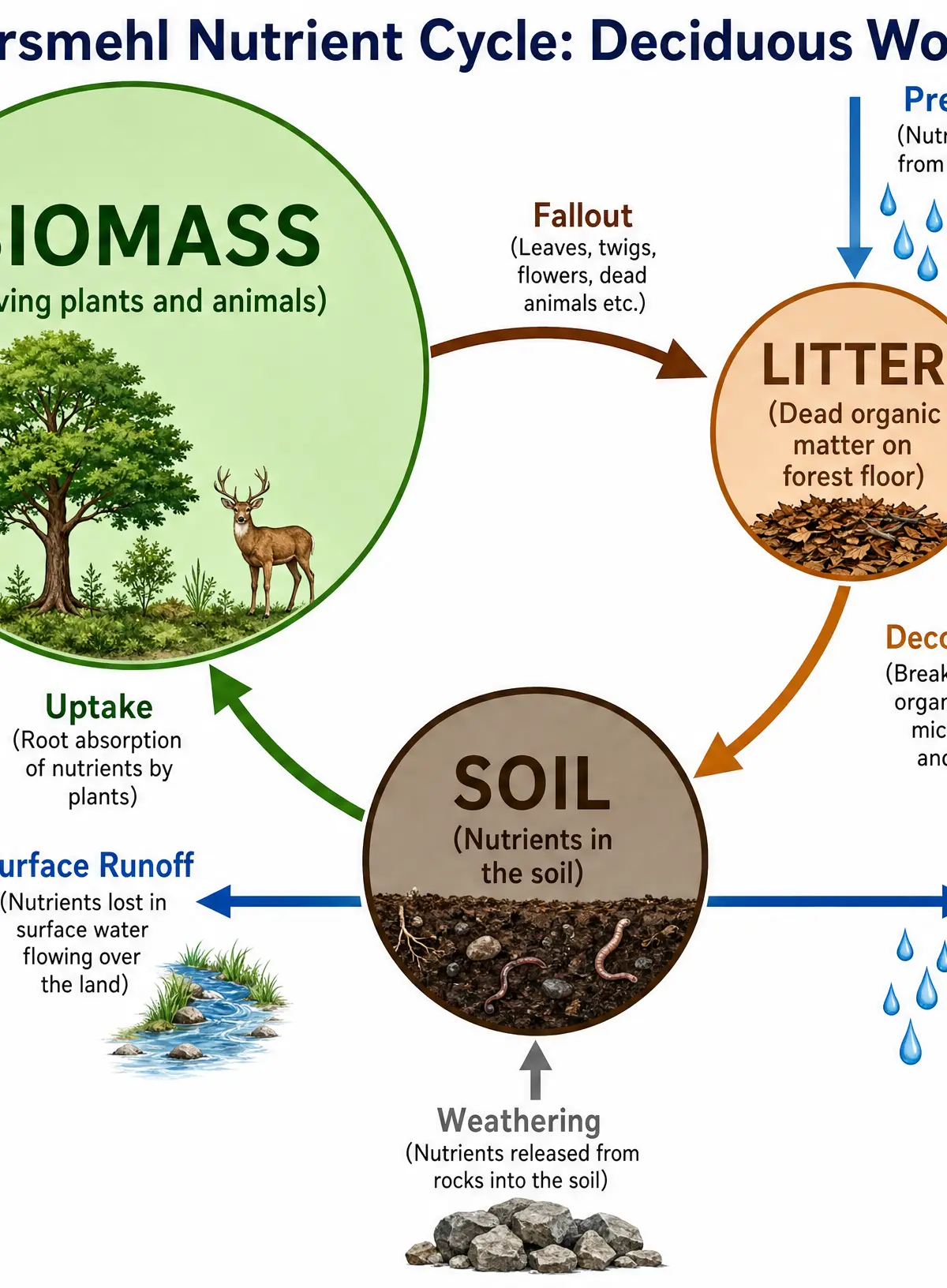
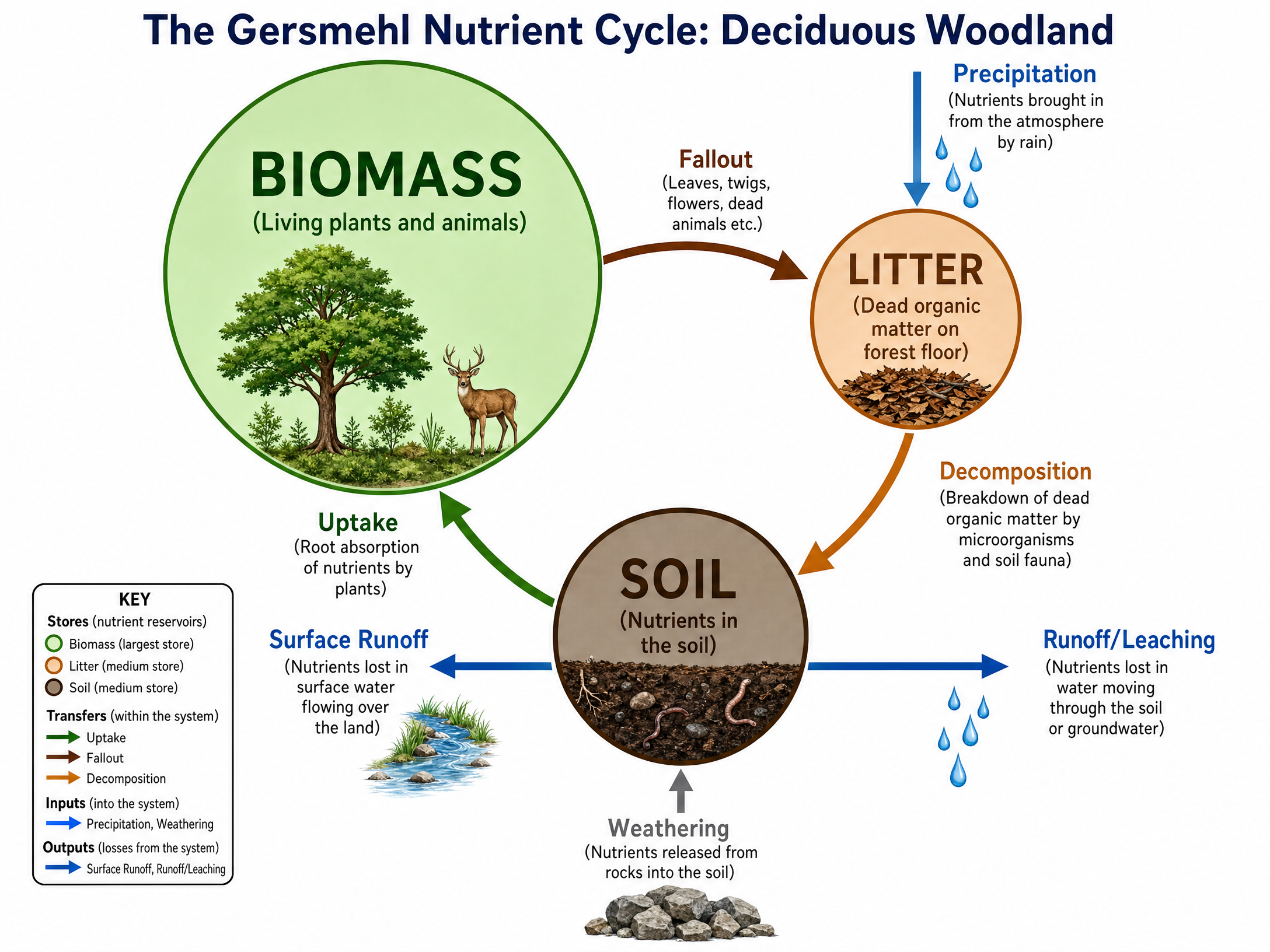
The Gersmehl model illustrates how nutrients move between three main stores in an ecosystem. For deciduous woodlands, examiners expect you to know the relative sizes of these stores and the transfers between them.
The Three Stores
- Biomass (Largest): Living plants and animals. Trees store vast amounts of nutrients in their trunks, branches, and roots.
- Soil (Medium): Nutrients held in the soil, enriched by rapid decomposition in summer.
- Litter (Medium/Small): Dead organic matter on the forest floor, replenished annually by autumn leaf fall.
Key Transfers
- Fallout: Leaves and dead material moving from Biomass to Litter.
- Decomposition: Microorganisms breaking down Litter into Soil nutrients.
- Uptake: Plant roots absorbing nutrients from Soil back into Biomass.
Plant and Animal Adaptations
Flora (Plants)
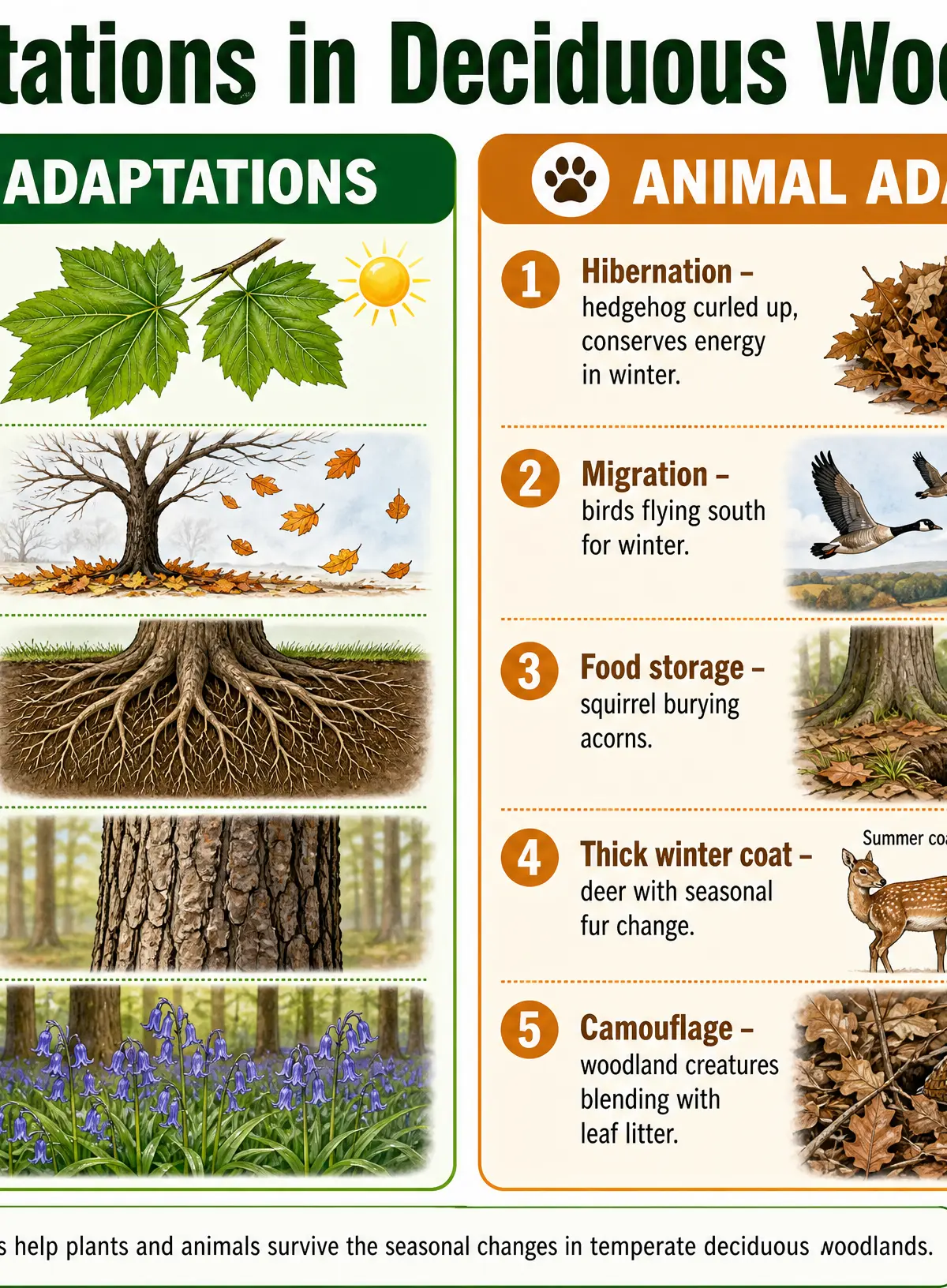
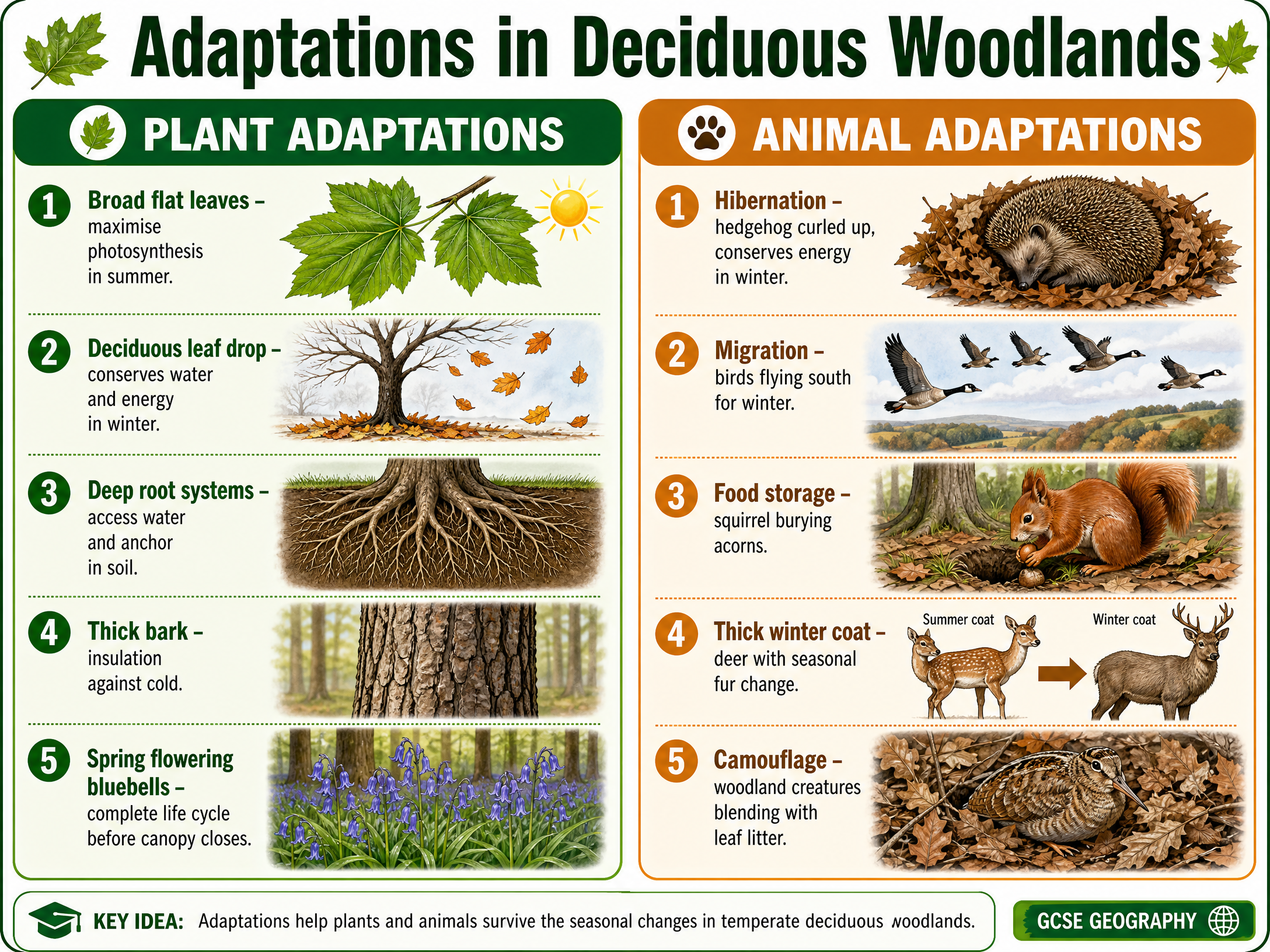
- Deciduous leaf drop: Trees shed leaves in autumn to reduce transpiration (water loss) and conserve energy during winter when low light and cold temperatures make photosynthesis inefficient.
- Broad, flat leaves: Maximise surface area to capture abundant sunlight during the summer growing season.
- Deep root systems: Anchor large trees against strong winter winds and access deep soil moisture and nutrients.
- Spring ephemerals: Plants like bluebells flower early in spring to complete their life cycle before the tree canopy fully develops and blocks the sunlight.
Fauna (Animals)
- Hibernation: Hedgehogs and dormice lower their metabolic rate to survive winter when food is scarce.
- Migration: Many bird species (e.g., swallows) fly south to warmer climates in winter to find food.
- Food storage: Squirrels and jays bury nuts and seeds in autumn to provide a food source during winter.
Threats and Sustainable Management
Human and Environmental Threats
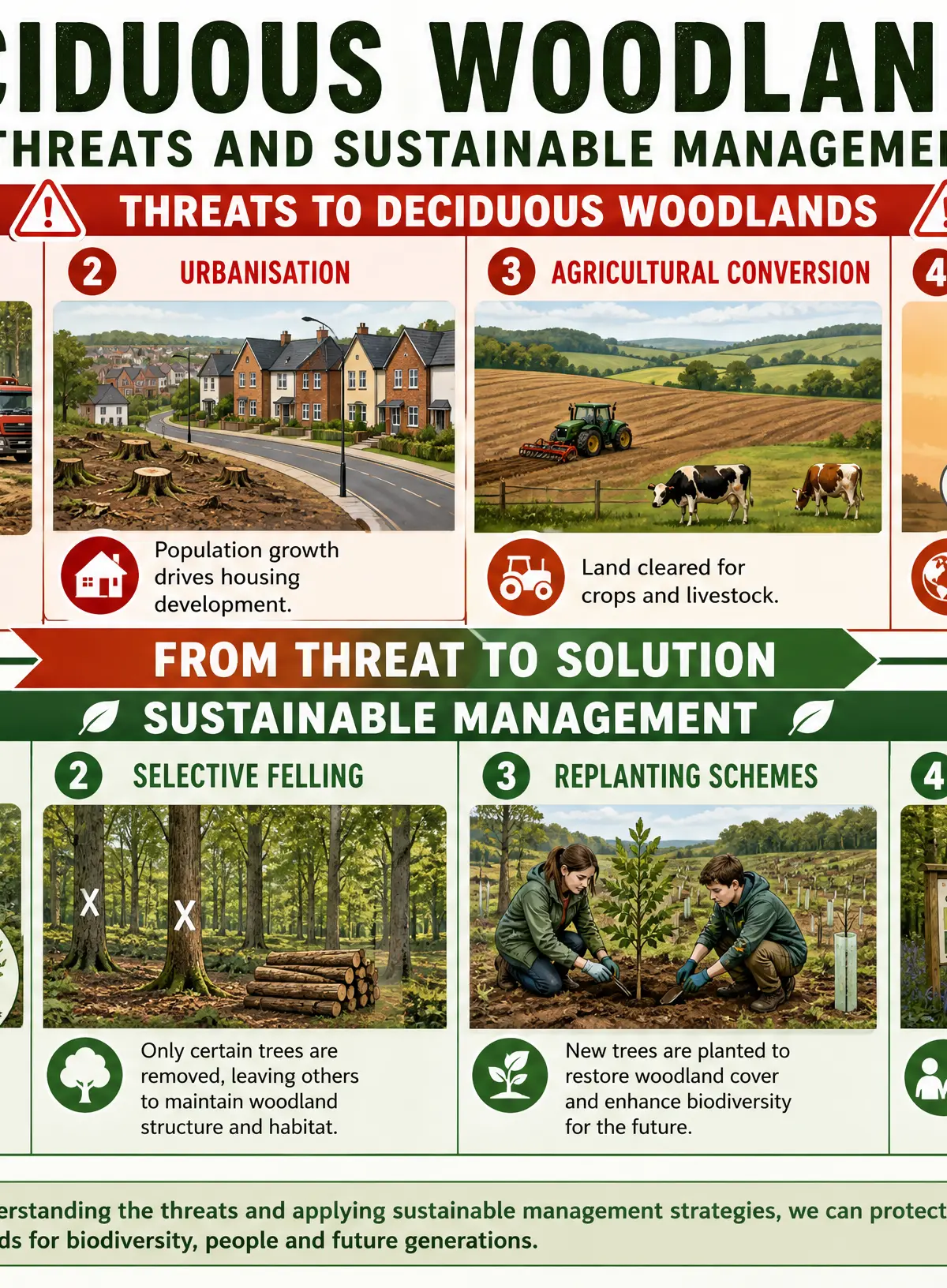
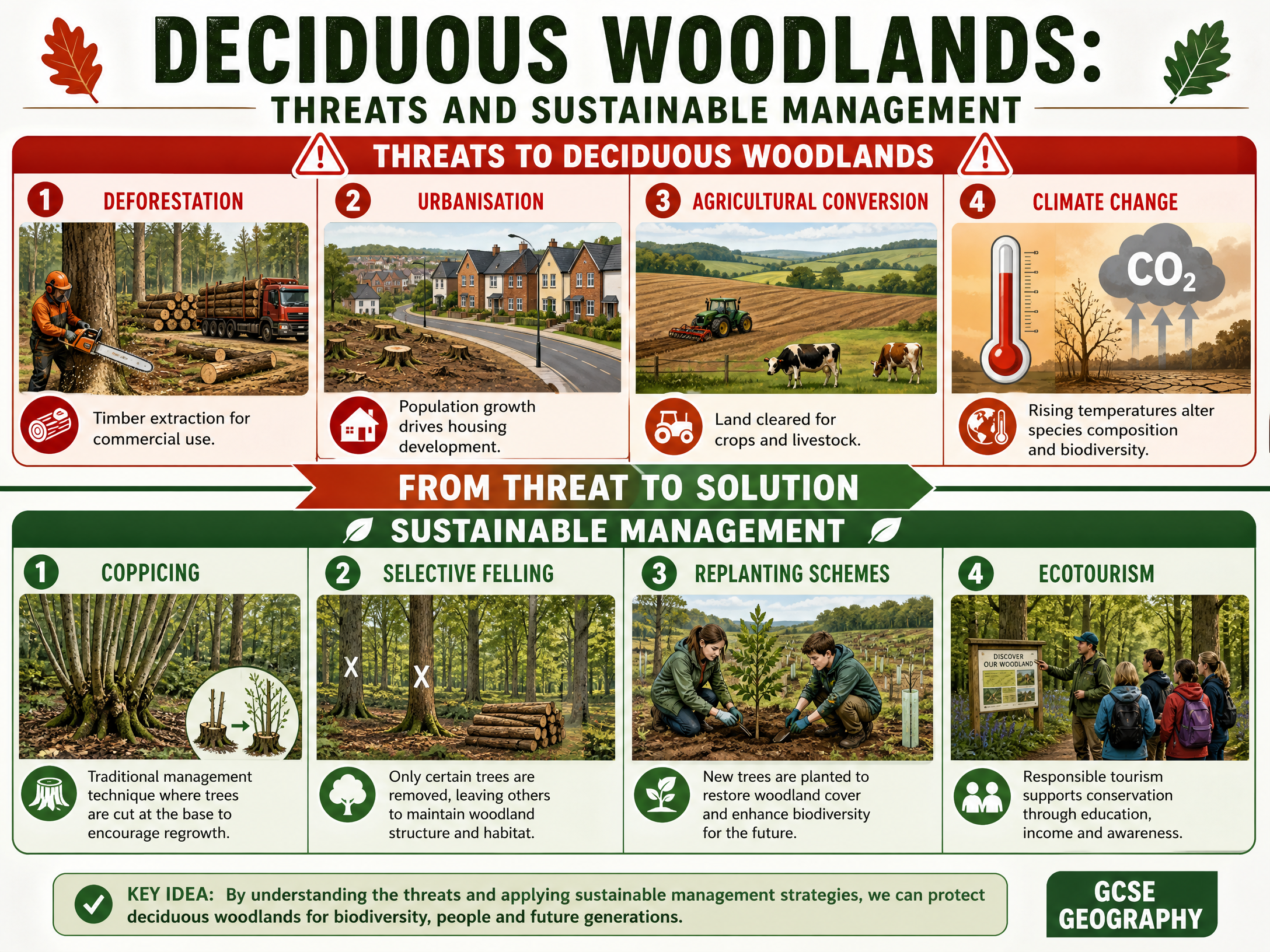
- Deforestation: Driven by economic needs such as timber extraction and agricultural expansion.
- Urbanisation: Population growth leads to habitat fragmentation as woodlands are cleared for housing and infrastructure.
- Climate Change: Rising temperatures can cause phenological mismatch (e.g., caterpillars hatching before migrating birds arrive to eat them) and alter species distribution.
Sustainable Management (Case Study: Epping Forest)
Examiners require a named example when discussing management. Epping Forest in Essex is an excellent case study.
- Coppicing: Cutting trees to their base to encourage new shoots. This traditional method provides sustainable timber and creates diverse habitats.
- Pollarding: Similar to coppicing but cut higher up to prevent grazing animals from eating new shoots.
- Recreation Management: Designated paths and visitor centres prevent trampling of the herb layer while allowing public access.
- Selective Felling: Removing individual diseased or mature trees rather than clear-cutting, preserving the overall woodland structure.
Visual Resources
3 diagrams and illustrations
Interactive Diagrams
1 interactive diagram to visualise key concepts
Conceptual Flow Outline
Flowchart showing the impact of climate change (phenological mismatch) on woodland food webs.
Worked Examples
3 worked examples — open one to explore the question and available guidance.
Practice Questions
Test your understanding — click to reveal model answers
Describe the climate of a temperate deciduous woodland. (2 marks)
Hint: Think about temperature, rainfall, and seasons.
Explain how two animal species are adapted to survive in a deciduous woodland. (4 marks)
Hint: Name the animal, state the adaptation, and explain how it helps them survive the winter.
To what extent is climate change the greatest threat to deciduous woodlands? (9 marks)
Hint: Compare climate change with other threats like deforestation or urbanisation. Provide a conclusion.
Explain the role of the litter store in the nutrient cycle of a deciduous woodland. (3 marks)
Hint: Where does it come from? What happens to it?
Describe one way in which deciduous woodlands provide economic benefits. (2 marks)
Hint: Think about what can be sold or how money is made.