Pearson Edexcel · GCSE · Geography
Global climate is now changing as a result of human activity
This study guide covers the crucial topic of human-induced climate change, exploring how industry, transport, and agriculture are intensifying the natural greenhouse effect. It breaks down both the environmental and social impacts globally, providing the specific named examples and clear causal links that examiners reward.
- 6 min read
- 3 worked examples
- 5 practice questions
- 6 key terms
Study Notes
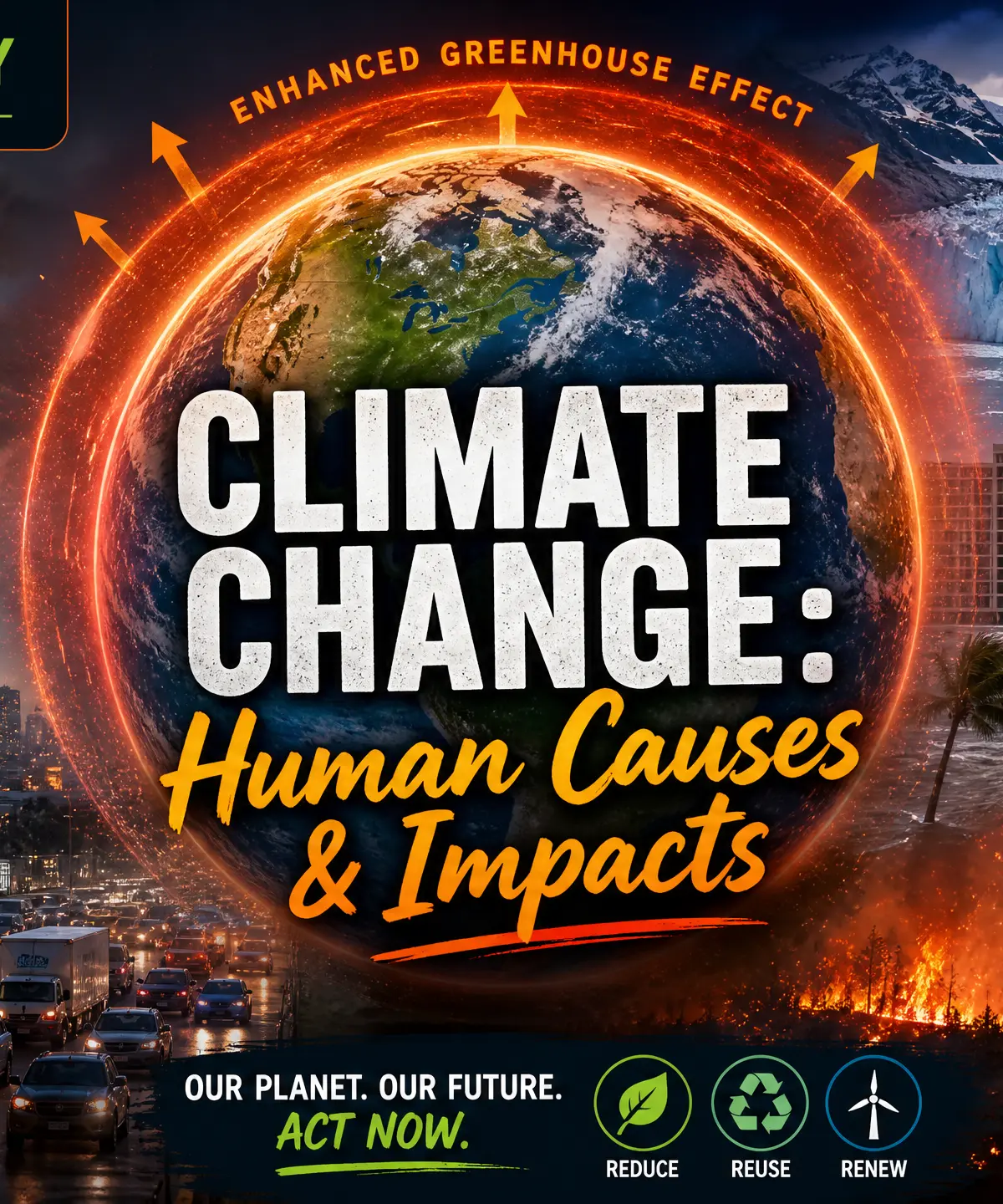
Overview
Human-induced climate change is one of the most significant and defining geographical issues of the 21st century. While the natural greenhouse effect is essential for keeping Earth warm enough to support life, human activities since the Industrial Revolution have dramatically increased the concentration of greenhouse gases in the atmosphere. This has led to the enhanced greenhouse effect, trapping more outgoing infrared radiation and causing global temperatures to rise rapidly.
Examiners consistently test this topic because it connects physical processes (atmospheric systems) with human geography (industry, agriculture, transport). To achieve high marks, candidates must be able to distinguish clearly between the natural and enhanced greenhouse effect, link specific human activities to the production of specific greenhouse gases (like carbon dioxide and methane), and evaluate both the environmental and social impacts of climate change using precise named examples.
Core Concepts
The Natural vs Enhanced Greenhouse Effect
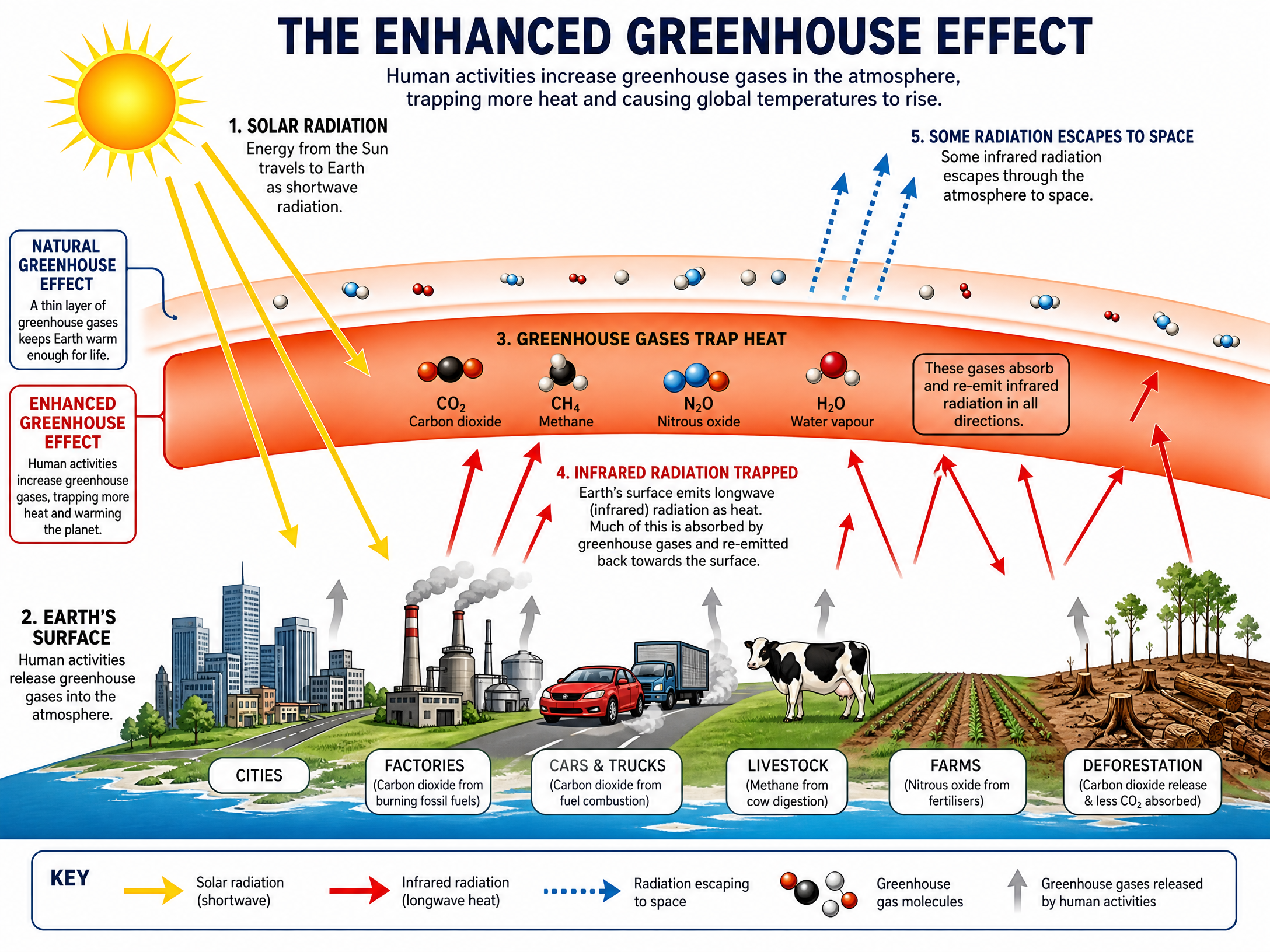
The natural greenhouse effect is a vital process. Shortwave solar radiation from the Sun passes through the atmosphere and warms the Earth's surface. The Earth re-emits this energy as longwave infrared radiation (heat). Greenhouse gases naturally present in the atmosphere absorb some of this heat and re-radiate it back to the surface, keeping the planet about 30°C warmer than it would otherwise be.
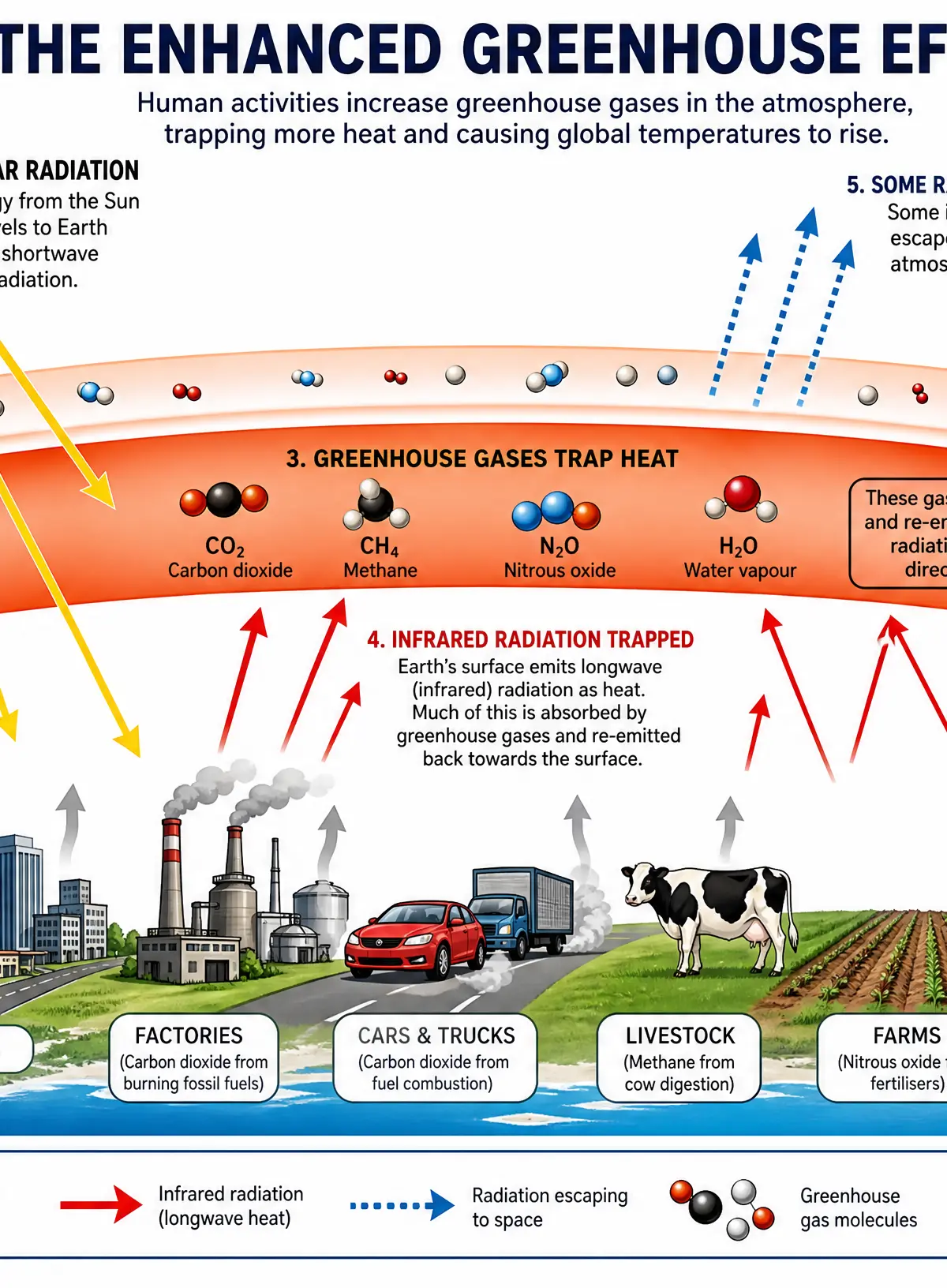
The enhanced greenhouse effect is the human-caused intensification of this process. By adding extra greenhouse gases to the atmosphere, humans are thickening this 'blanket', causing more infrared radiation to be trapped and resulting in global warming.
Human Causes of Climate Change
Industry and Energy Production
Key Gas: Carbon Dioxide (CO2)
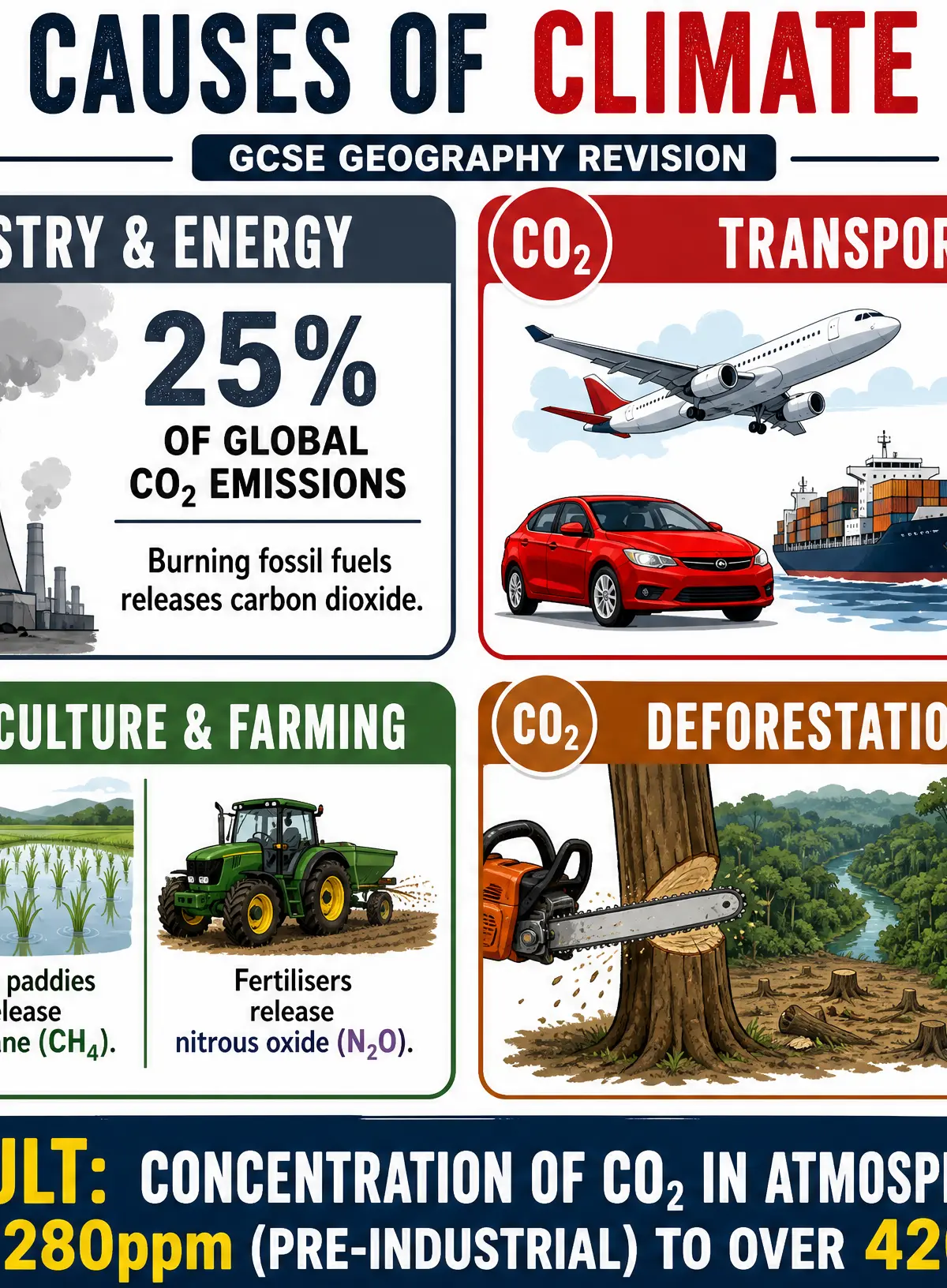
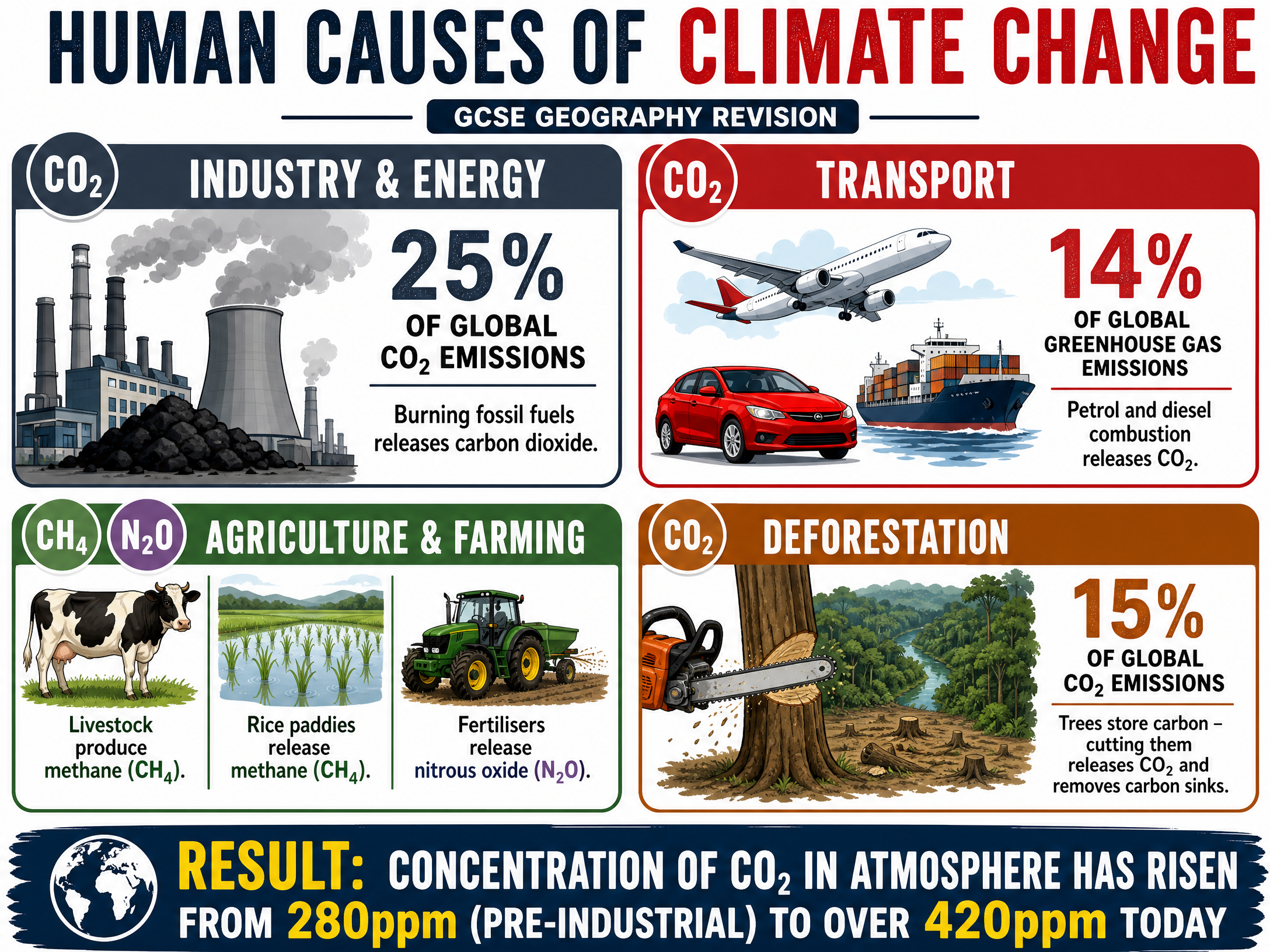
Mechanism: The burning of fossil fuels (coal, oil, and natural gas) in power stations to generate electricity, and in factories for manufacturing (like steel and cement production), releases vast amounts of carbon dioxide. This is the largest single contributor to global greenhouse gas emissions (approx. 25%).
Transport
Key Gas: Carbon Dioxide (CO2) and Nitrous Oxide (N2O)
Mechanism: Most cars, lorries, ships, and planes run on petroleum-based fuels (petrol, diesel, aviation fuel). The combustion of these fuels in engines releases carbon dioxide. As global wealth increases, car ownership and air travel are rising rapidly, making transport a growing source of emissions (approx. 14%).
Agriculture and Farming
Key Gas: Methane (CH4) and Nitrous Oxide (N2O)
Mechanism: Livestock farming, particularly cattle and sheep, produces large amounts of methane during digestion (enteric fermentation). Rice paddies also release methane as organic matter decays in flooded fields. Additionally, the use of artificial nitrogen-based fertilisers on crops releases nitrous oxide, a greenhouse gas 300 times more potent than CO2.
Deforestation
Key Gas: Carbon Dioxide (CO2)
Mechanism: Trees act as 'carbon sinks', absorbing CO2 during photosynthesis. When large areas of forest (such as the Amazon Rainforest) are cleared for logging, agriculture, or cattle ranching, two negative effects occur: the stored carbon is released back into the atmosphere (especially if the trees are burned), and there are fewer trees left to absorb future CO2 emissions.
Environmental Impacts
Rising Sea Levels
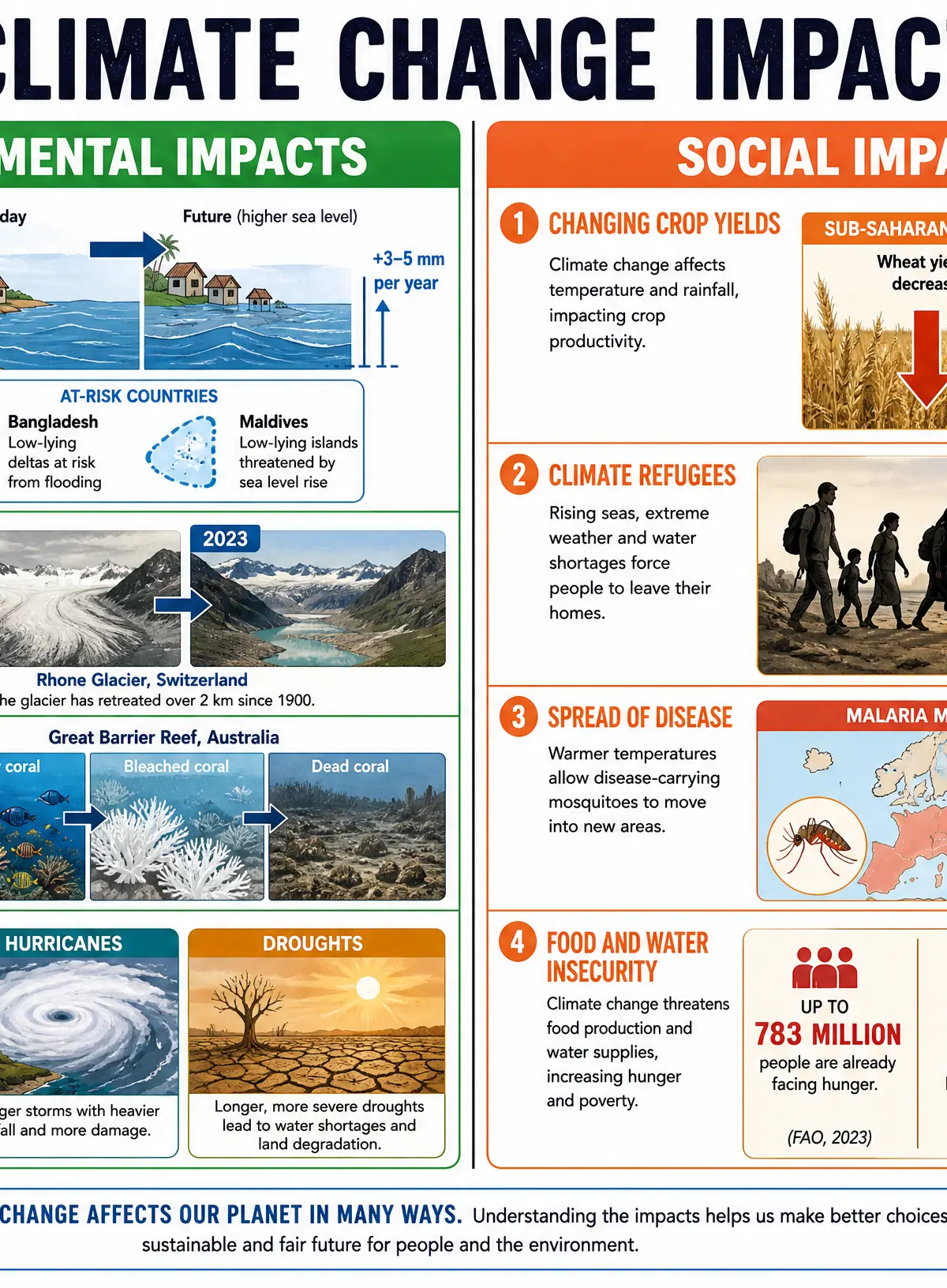
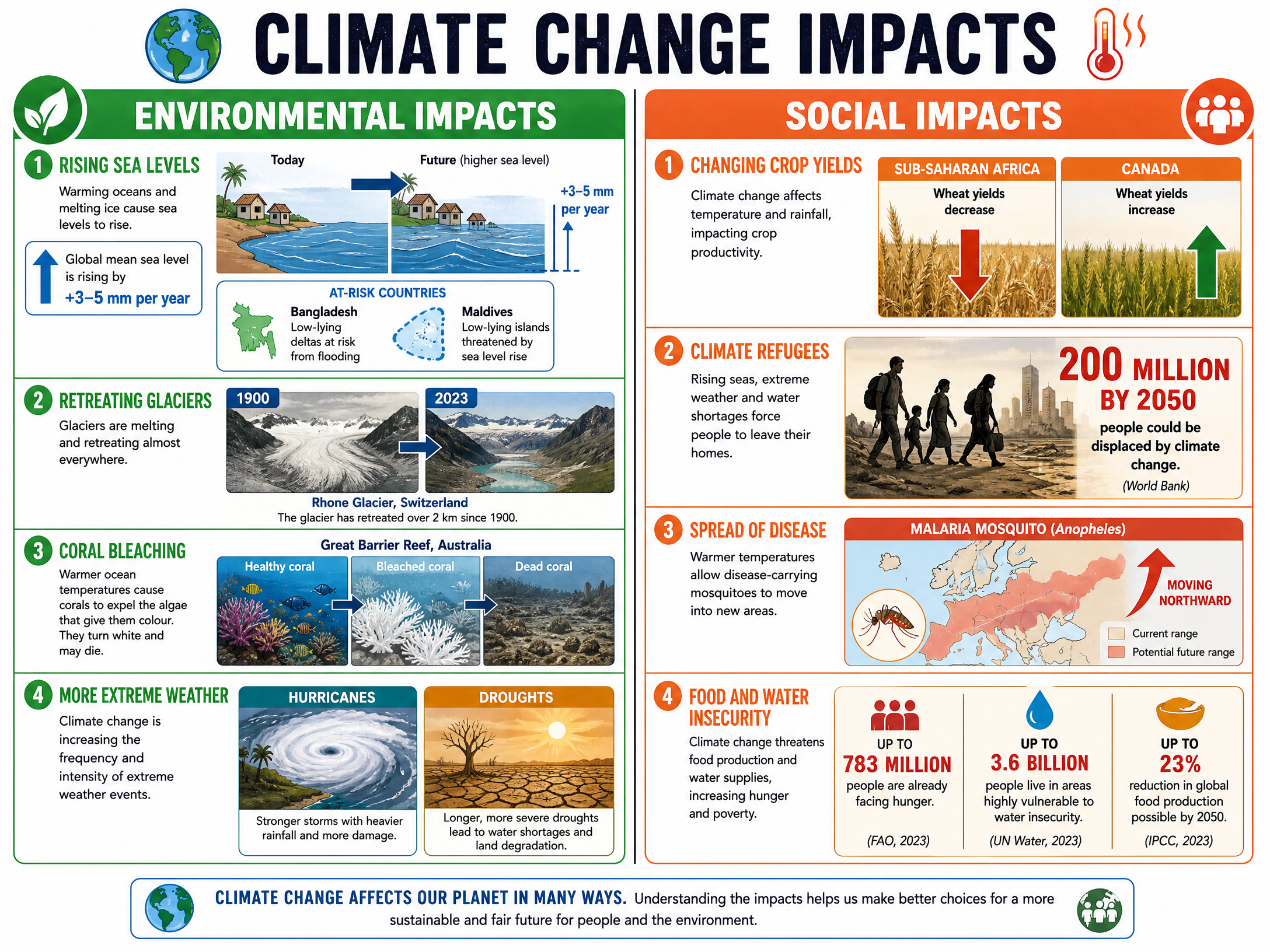
Mechanism: Global warming causes sea levels to rise through two main processes: thermal expansion (water expands as it warms) and the melting of land-based ice (glaciers and ice sheets). Sea levels are currently rising by 3-5mm per year.
Named Examples: Low-lying delta countries like Bangladesh face severe flooding, salinisation of farmland, and loss of coastal land. Island nations like the Maldives are at risk of becoming completely submerged.
Retreating Glaciers and Shrinking Ice Caps
Mechanism: Warmer global temperatures cause ice to melt faster than it accumulates from winter snowfall.
Named Examples: The Rhone Glacier in Switzerland has retreated by over 2km since 1900. Arctic sea ice extent is shrinking, threatening species like polar bears that rely on sea ice to hunt.
Extreme Weather Events
Mechanism: A warmer atmosphere holds more moisture and has more energy, leading to more frequent and intense extreme weather.
Named Examples: More severe droughts in regions like the Sahel in Africa; more intense tropical storms (hurricanes/typhoons) due to warmer ocean surface temperatures (e.g., Typhoon Haiyan in the Philippines).
Social Impacts
Changing Crop Yields and Food Insecurity
Mechanism: Changes in temperature and rainfall patterns affect agricultural productivity.
Named Examples: In Sub-Saharan Africa, increased drought and heat are reducing yields of staple crops like maize and wheat, leading to malnutrition. However, in higher latitudes like Canada and Russia, warmer temperatures may actually increase crop yields by extending the growing season (a key point for evaluation questions).
Climate Refugees and Displacement
Mechanism: As areas become uninhabitable due to sea-level rise, extreme heat, or prolonged drought, populations are forced to migrate.
Named Examples: The UN estimates up to 200 million people could be displaced by 2050. Residents of the Carteret Islands in Papua New Guinea have already had to relocate due to rising sea levels making their land unfarmable.
Spread of Disease
Mechanism: Warmer temperatures allow disease-carrying vectors (like mosquitoes) to survive in regions that were previously too cold.
Named Examples: The Anopheles mosquito, which transmits Malaria, is spreading to higher altitudes in parts of Africa and potentially towards southern Europe.

Visual Resources
3 diagrams and illustrations
Interactive Diagrams
1 interactive diagram to visualise key concepts
Conceptual Flow Outline
Flowchart showing the chain of cause and effect from human activities to climate impacts.
Worked Examples
3 worked examples — open one to explore the question and available guidance.
Practice Questions
Test your understanding — click to reveal model answers
Explain how two human activities have caused global temperatures to rise. (6 marks)
Hint: Name two specific activities, identify the gas they produce, and explain how that gas traps heat.
State one environmental impact of climate change. (1 mark)
Hint: Focus on physical geography, not human society.
Assess the severity of the social impacts of climate change compared to the environmental impacts. (9 marks)
Hint: You need a balanced argument discussing both, followed by a conclusion that answers 'which is more severe' with justification.
Explain why sea levels are rising as a result of global warming. (4 marks)
Hint: There are two distinct physical processes you need to mention.
Describe the evidence that human activity is causing climate change. (4 marks)
Hint: Use specific statistics comparing pre-industrial times to today.