Pearson Edexcel · GCSE · Geography
Human activities can lead to changes in coastal landscapes which affect people and the environment
This study explores the dynamic interaction between human activities and coastal landscapes. It is crucial for understanding how our actions, from urbanisation to coastal defences, shape the environment and the consequences this has for both communities and ecosystems.
- 7 min read
- 3 worked examples
- 5 practice questions
- 6 key terms
Study Notes
Overview
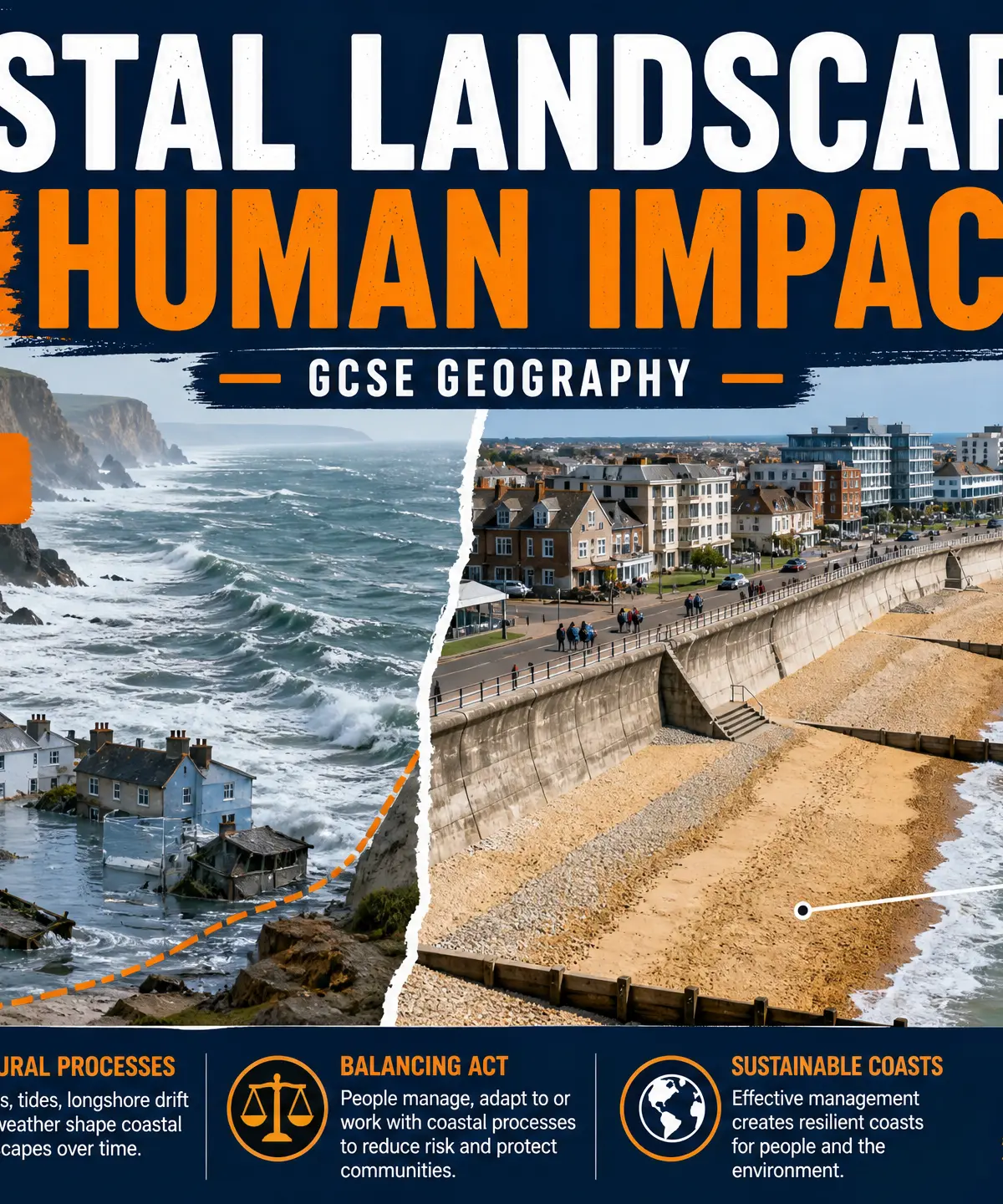
Coastlines are dynamic environments constantly shaped by physical processes like erosion, transportation, and deposition. However, human activities—such as urbanisation, agriculture, industry, and the construction of coastal defences—profoundly alter these landscapes. Understanding these interactions is essential for GCSE Geography. Examiners expect candidates to not only describe these changes but to explain the causal links between human actions and physical consequences, and to evaluate the effectiveness of various management strategies using specific case studies.
Listen to the revision podcast for a deep dive into these concepts:

Impact of Human Activities on Coastal Landscapes
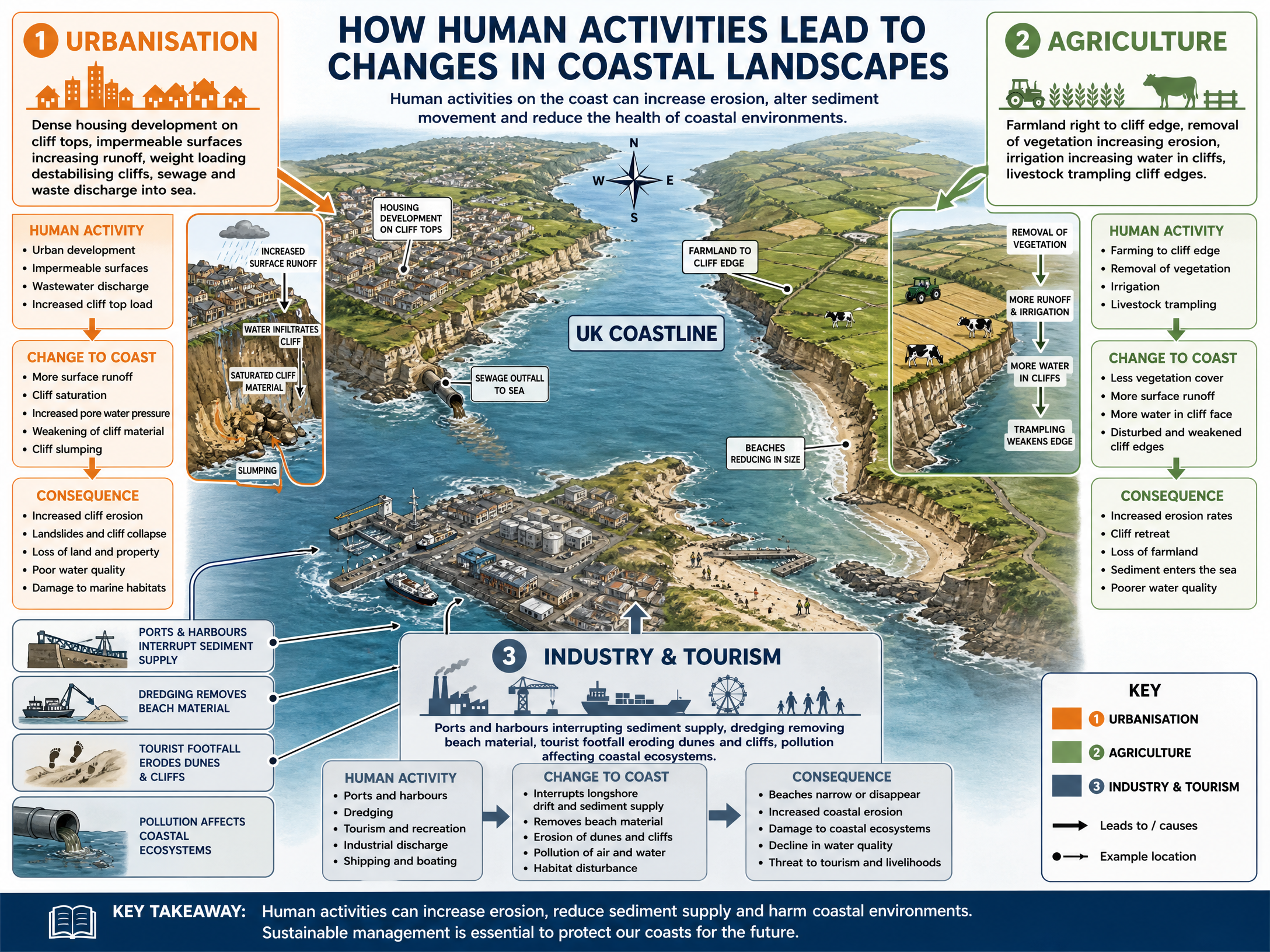
Human intervention at the coast often disrupts natural processes, accelerating erosion or altering sediment supply.
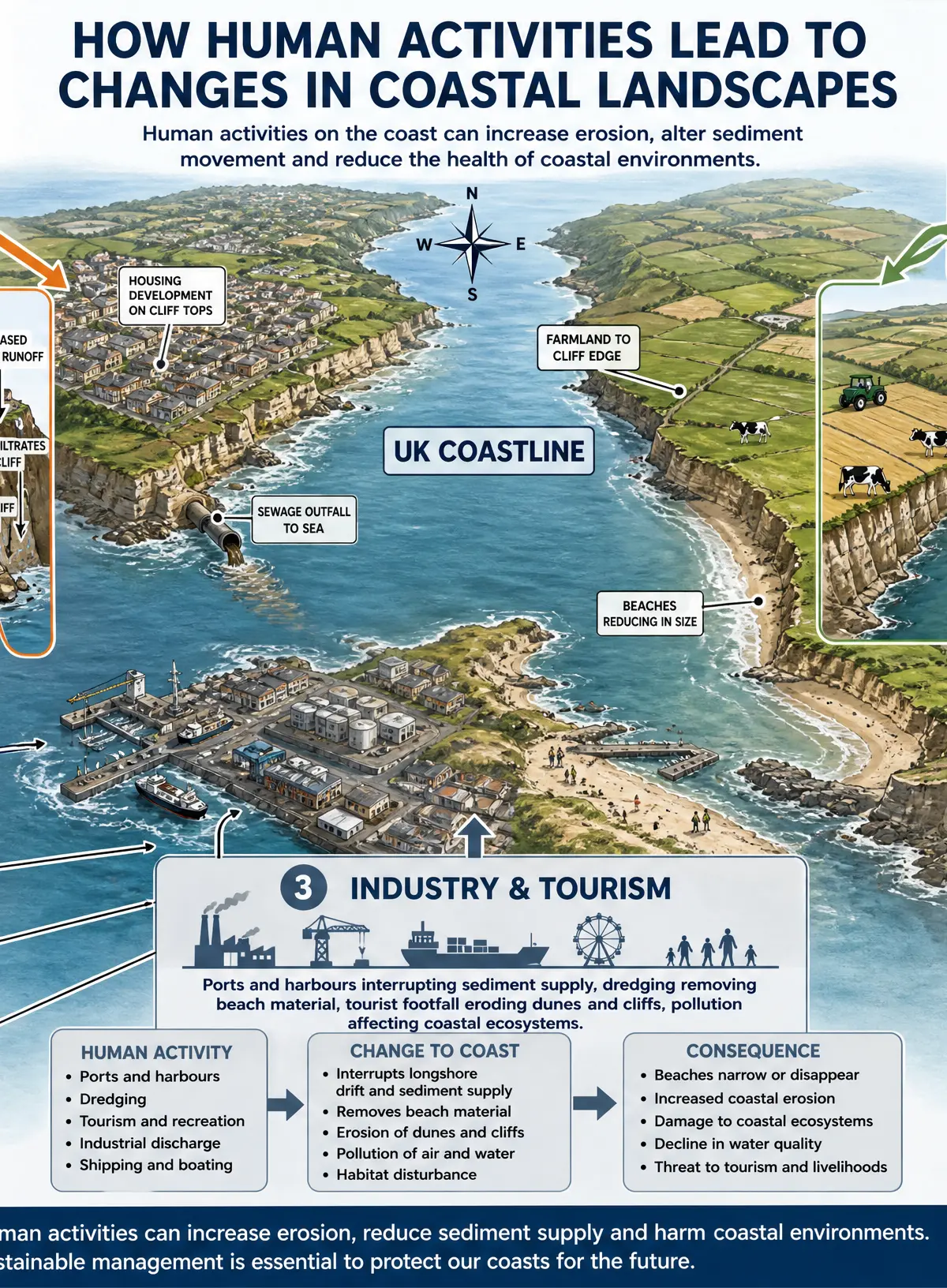
Urbanisation
Activity: Building towns, cities, and infrastructure on or near the coast.
Impact:
- Increased Runoff: Impermeable surfaces (tarmac, concrete) prevent infiltration. Water runs quickly into cliffs, saturating them and increasing pore water pressure.
- Weight Loading: The sheer weight of buildings on cliff tops adds stress to the rock structure.
Consequence: Accelerated rates of mass movement, such as rotational slumping and landslides, particularly on soft rock coastlines like the Holderness Coast.
Agriculture
Activity: Farming practices, including ploughing, grazing, and irrigation near cliff edges.
Impact:
- Vegetation Removal: Clearing natural vegetation removes roots that bind the soil together, making the cliff face more susceptible to sub-aerial weathering and wind erosion.
- Water Saturation: Irrigation increases the water content in the soil, leading to instability.
Consequence: Increased rates of coastal retreat and loss of valuable agricultural land.
Industry and Tourism
Activity: Construction of ports, harbours, dredging, and high tourist footfall.
Impact:
- Sediment Disruption: Harbours and piers interrupt longshore drift, trapping sediment and starving beaches further downdrift.
- Dredging: Removing sand and gravel from the seabed deepens the water, allowing larger, more destructive waves to reach the coast.
- Footpath Erosion: Tourists walking over sand dunes destroy marram grass, destabilising the dunes.
Consequence: Narrower beaches, increased cliff erosion, and degradation of coastal ecosystems.
Effects of Coastal Recession and Flooding
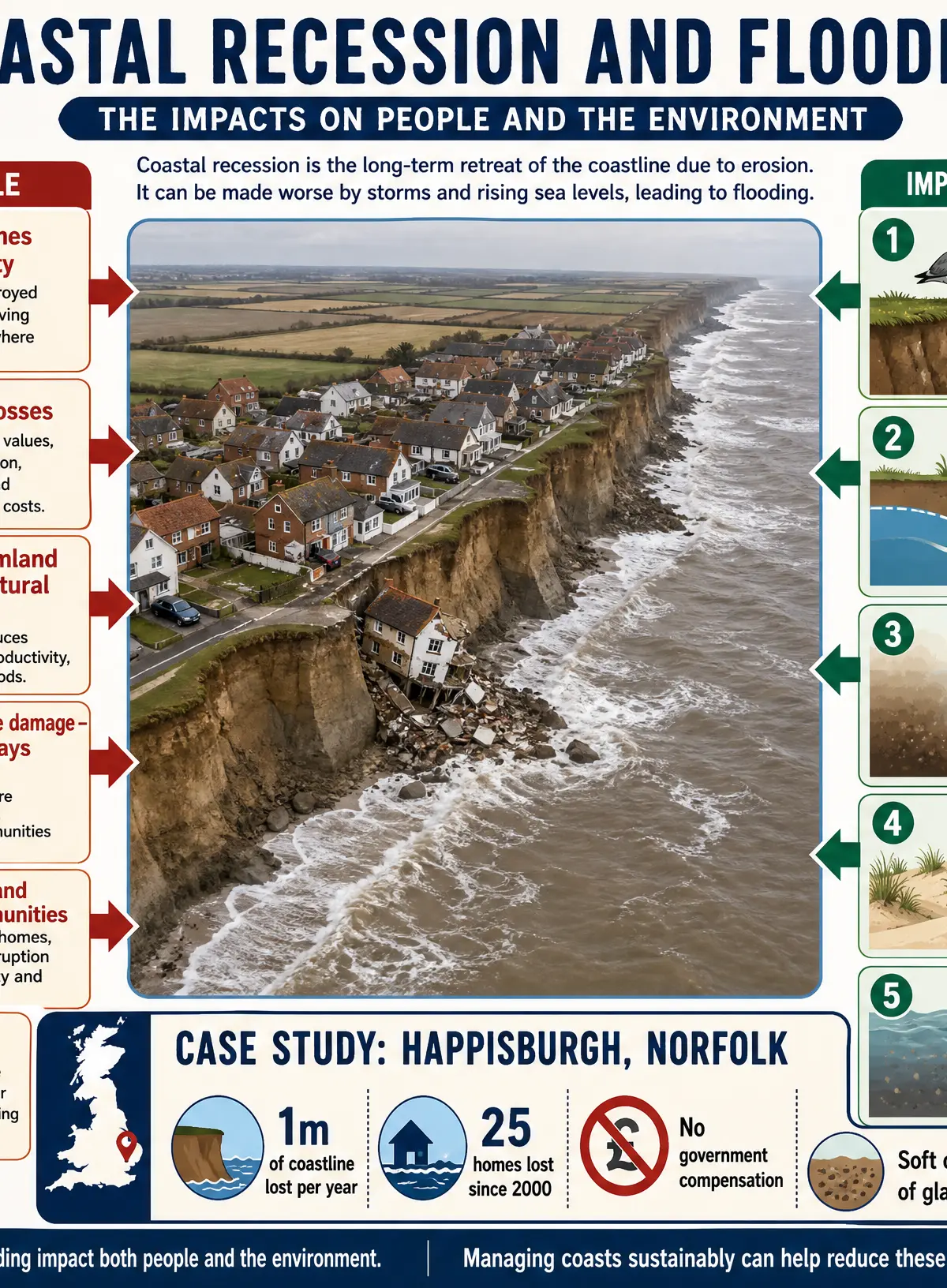
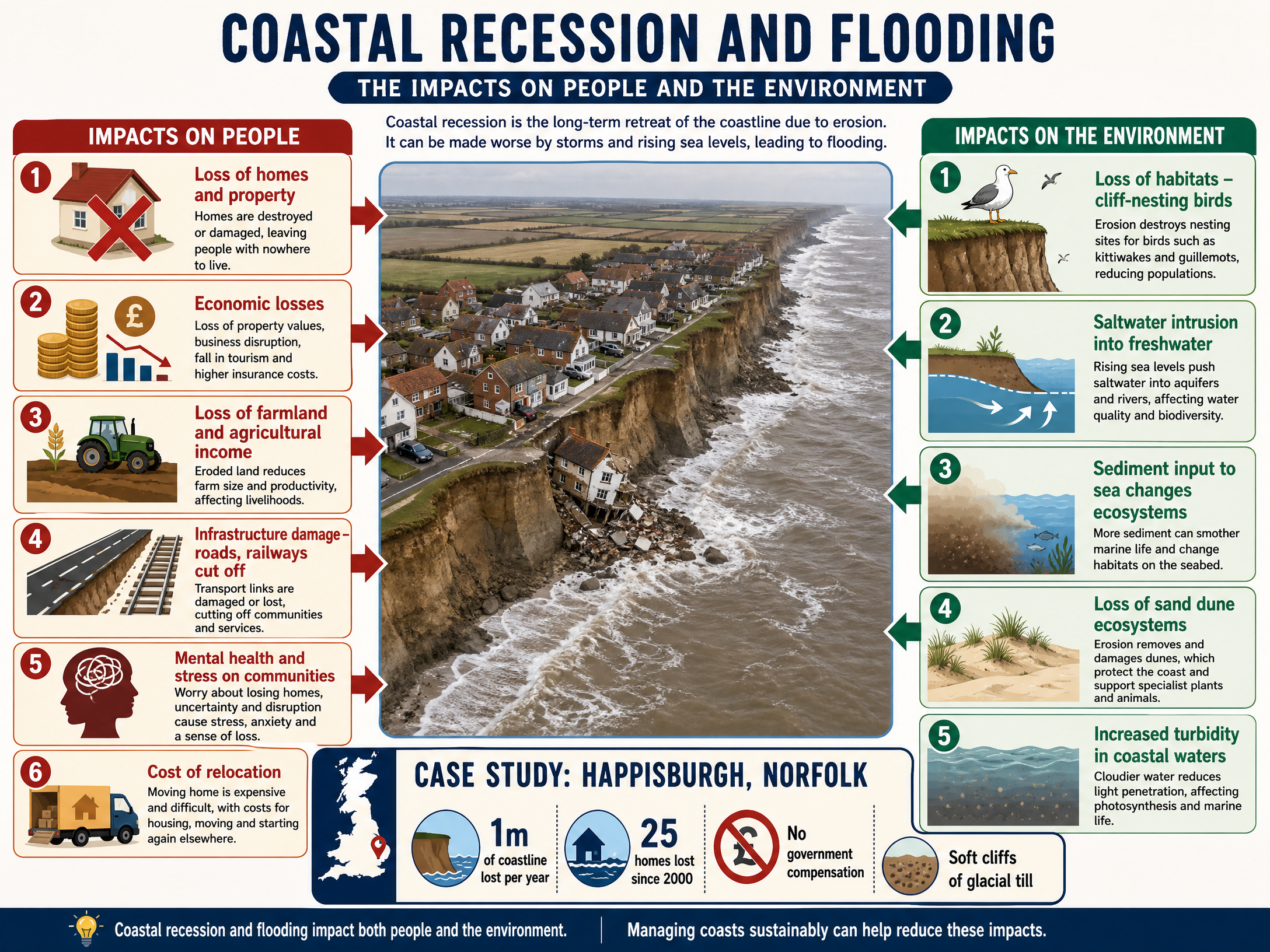
Coastal recession (the long-term retreat of the coastline) and flooding have devastating impacts on both human populations and the natural environment.
Impacts on People
- Loss of Property: Homes and businesses fall into the sea. At Happisburgh in Norfolk, over 25 homes have been lost since 2000.
- Economic Decline: Property values plummet, insurance becomes unobtainable, and local businesses suffer as tourism declines.
- Infrastructure Damage: Roads, railways, and utility lines are severed, isolating communities.
- Social and Psychological Stress: The constant threat of losing one's home causes significant anxiety and mental health issues for residents.
Impacts on the Environment
- Habitat Loss: Erosion destroys nesting sites for seabirds and habitats for specialist coastal plants.
- Ecosystem Disruption: Increased sediment in the water (turbidity) reduces light penetration, harming marine plant life.
- Saltwater Intrusion: Flooding by seawater contaminates freshwater ecosystems and aquifers.
- Positive Impacts: Natural erosion provides the sediment necessary to build beaches, spits, and salt marshes elsewhere along the coast, creating new habitats.
Coastal Management Strategies
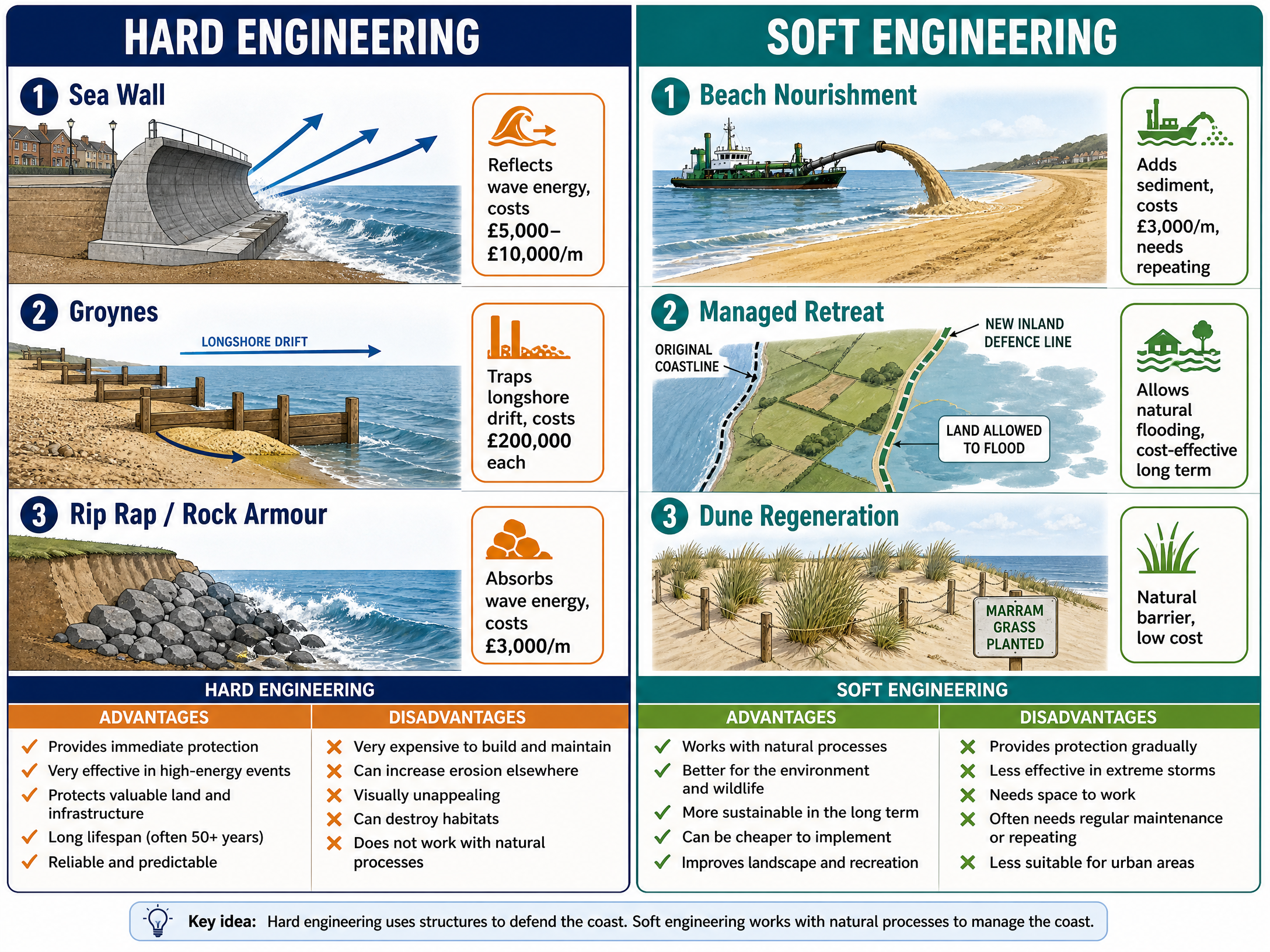
To mitigate these impacts, various coastal defence strategies are employed. Candidates must be able to evaluate the advantages and disadvantages of both hard and soft engineering approaches.
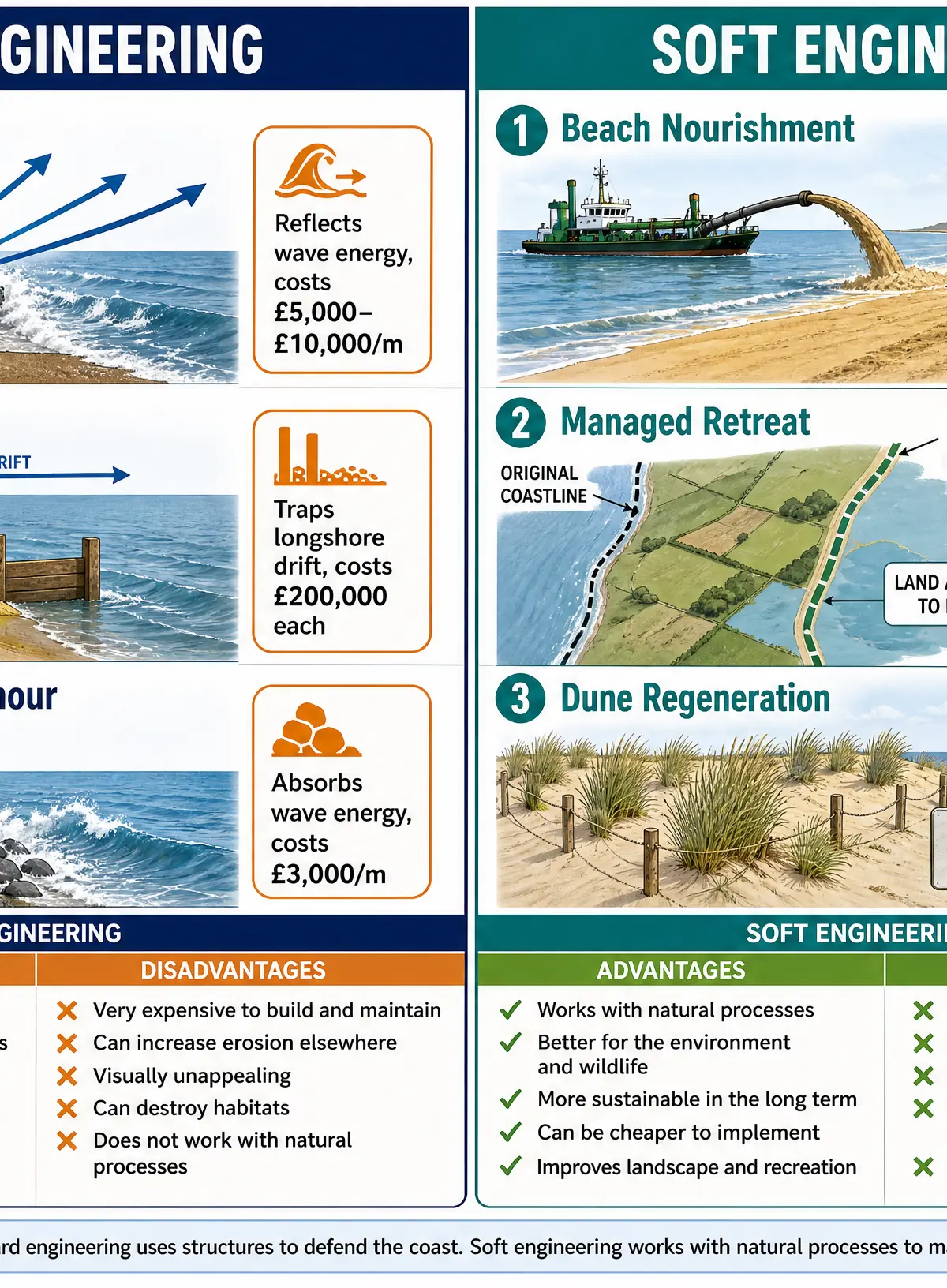
Hard Engineering
Using artificial, often concrete, structures to defend the coast.
1. Sea Walls
- What it is: Concrete walls, often curved, placed at the foot of cliffs or the top of a beach.
- Advantages: Highly effective at reflecting wave energy; provides a long-term solution (often 50+ years); can incorporate a promenade for tourists.
- Disadvantages: Extremely expensive (£5,000 - £10,000 per metre); visually intrusive; reflected waves can scour the beach, eventually undermining the wall.
2. Groynes
- What it is: Timber or rock structures built out into the sea at right angles to the coast.
- Advantages: Traps sediment moved by longshore drift, building a wider beach. A wider beach absorbs wave energy, protecting the cliffs behind. Relatively cost-effective (£200,000 each).
- Disadvantages: Causes terminal groyne syndrome—starving downdrift beaches of sediment, thereby increasing erosion further along the coast; requires regular maintenance.
3. Rip Rap (Rock Armour)
- What it is: Large boulders piled at the foot of a cliff or sea wall.
- Advantages: Absorbs and dissipates wave energy effectively; cheaper than sea walls (£3,000 per metre); looks more natural than concrete.
- Disadvantages: Rocks can be moved by severe storms; expensive to transport the boulders (often imported from Scandinavia); can impede access to the beach.
Soft Engineering
Working with natural physical processes to manage the coast, rather than trying to stop them entirely.
1. Beach Nourishment
- What it is: Adding sand or shingle to a beach to make it higher and wider.
- Advantages: Blends in perfectly with the natural landscape; increases the beach's ability to absorb wave energy; enhances the area for tourism (e.g., Bournemouth).
- Disadvantages: Needs constant maintenance and repeating every few years as sediment is continually washed away; expensive in the long term (£3,000 per metre).
2. Managed Retreat (Coastal Realignment)
- What it is: Allowing the sea to flood low-lying land, usually by breaching an existing, failing sea wall, to create a new salt marsh.
- Advantages: Cost-effective long-term solution; creates valuable intertidal habitats for wildlife; the new salt marsh naturally absorbs wave energy.
- Disadvantages: Land is lost to the sea (often agricultural land); requires compensation for landowners; can be highly unpopular with local communities who feel abandoned.
Synoptic Connections
Understanding how coastal management decisions are made requires linking physical processes (erosion, longshore drift) with human factors (economics, politics, social impacts). This is a classic geographical 'conflict of interest' scenario, often explored in 'Issue Evaluation' papers.
Visual Resources
3 diagrams and illustrations
Interactive Diagrams
1 interactive diagram to visualise key concepts
Conceptual Flow Outline
Flowchart showing how urbanisation leads to cliff instability.
Worked Examples
3 worked examples — open one to explore the question and available guidance.
Practice Questions
Test your understanding — click to reveal model answers
State one example of hard engineering used on the coast. (1 mark)
Hint: Think of an artificial structure built to stop the waves.
Explain one disadvantage of using groynes to protect the coast. (2 marks)
Hint: Think about what happens to the beach further down the coast.
Explain how agriculture can increase the risk of coastal erosion. (4 marks)
Hint: Think about vegetation removal and water use.
Evaluate the sustainability of soft engineering strategies compared to hard engineering strategies. (9 marks)
Hint: Define sustainability (long-term viability, environmental impact). Compare examples like managed retreat vs sea walls.
Assess the impacts of coastal flooding on people and the environment. Use a named example in your answer. (9 marks)
Hint: Use Happisburgh or a similar case study. Separate your paragraphs into impacts on people and impacts on the environment.