Pearson Edexcel · GCSE · Geography
Management and sustainable use of water resources are required at a range of spatial scales from local to international
Water is essential for life, yet global resources are under immense pressure from population growth, climate change, and economic development. This study guide explores how we can sustainably manage this vital resource across different scales, comparing strategies in developed and emerging nations.
- 5 min read
- 3 worked examples
- 5 practice questions
- 6 key terms
Study Notes
Overview
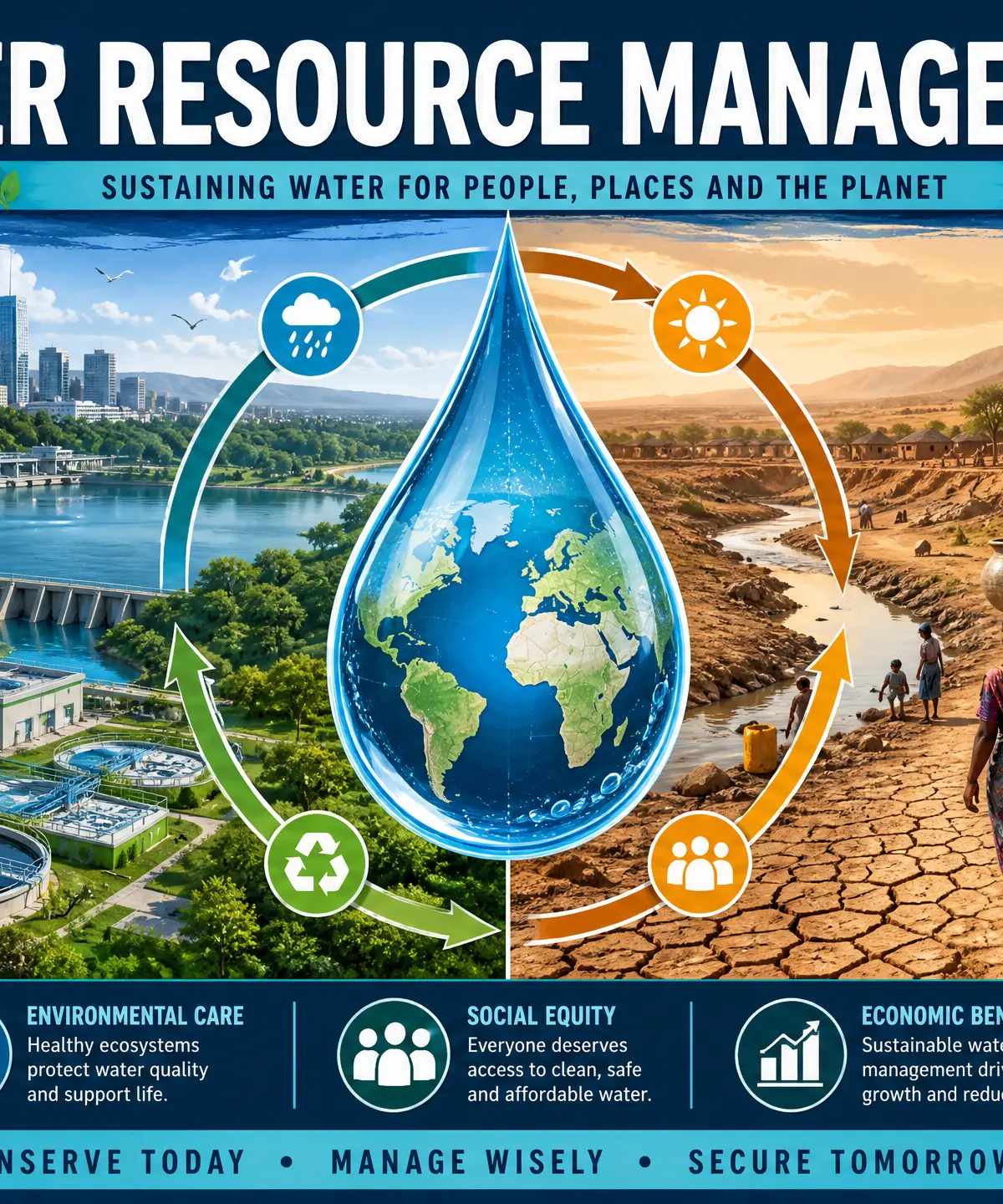
Water resource management is one of the most critical challenges of the 21st century. While water covers 71% of the Earth's surface, only about 1% is accessible freshwater. This topic explores why sustainable management is necessary, how different stakeholders view water use, and how strategies vary between developed countries (like the UK) and emerging/developing countries (like Jordan). Examiners expect you to understand the tension between increasing demand and limited supply, and to evaluate management strategies using the concept of sustainability.
Audio Revision: The Water Management Podcast
Listen to this 10-minute revision podcast covering the core concepts, stakeholder perspectives, and exam technique for this topic:

Why Water Needs Managing
Water insecurity occurs when there is a mismatch between water supply and demand. This pressure is increasing due to several factors:
Population Growth: The global population is projected to reach 9.7 billion by 2050, requiring significantly more water for drinking, sanitation, and food production.
Economic Development: As countries industrialise and living standards rise, per capita water consumption increases dramatically (e.g., more water-intensive diets, domestic appliances).
Urbanisation: Rapid growth of cities concentrates water demand in small areas, putting intense pressure on local resources and infrastructure.
Climate Change: Altered rainfall patterns lead to more frequent droughts in some regions and severe flooding in others, making water supply less predictable.
Stakeholder Perspectives
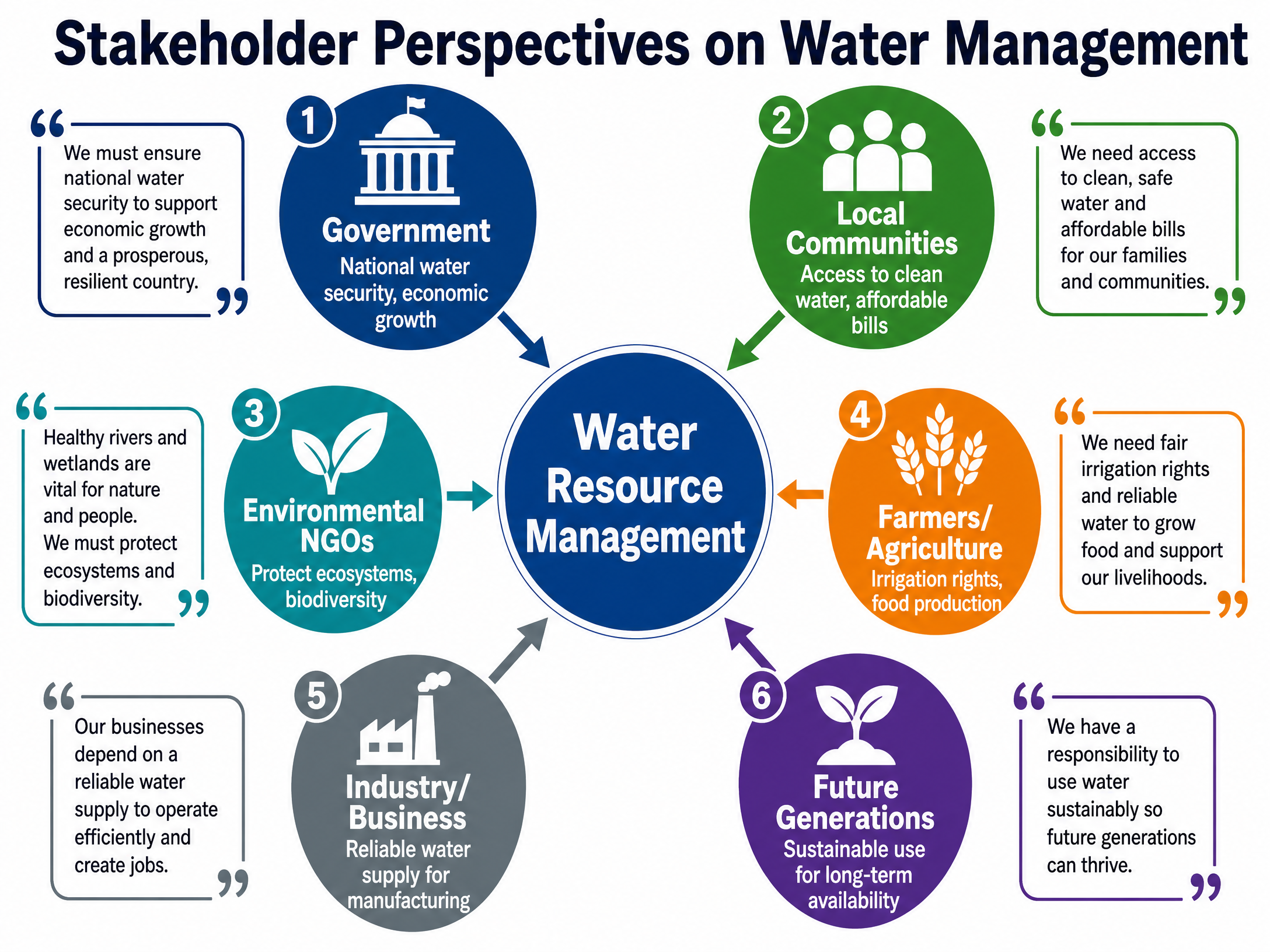
Examiners frequently ask you to evaluate management strategies from different viewpoints. Key stakeholders include:
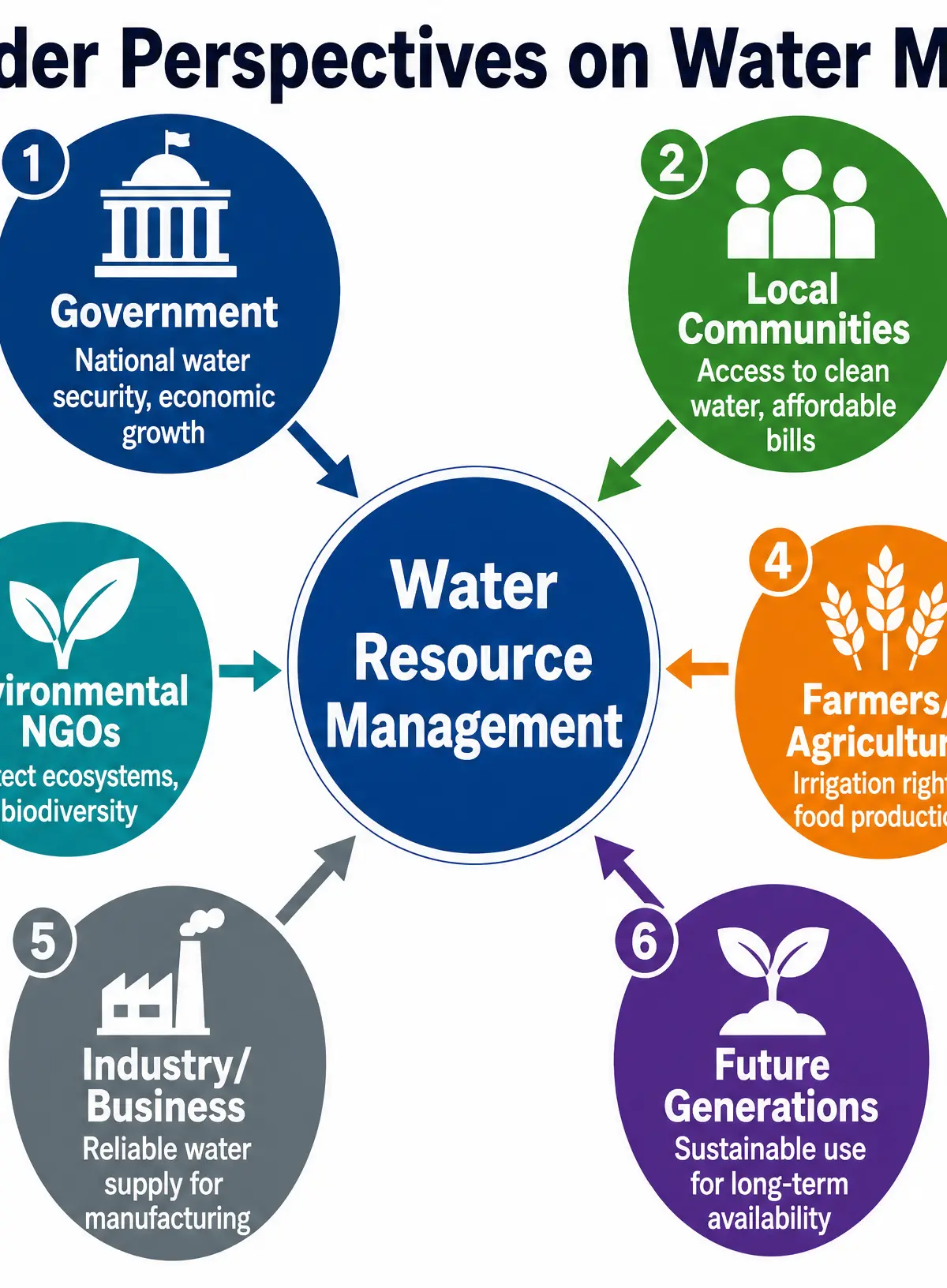
Governments: Focus on national water security and economic growth. Often favour large-scale infrastructure (supply-side) but must balance costs and public opinion.
Local Communities: Prioritise access to clean, affordable water. May oppose large dam projects if they cause displacement or environmental damage.
Environmental NGOs: Argue for protecting ecosystems, maintaining environmental flow in rivers, and preventing over-extraction of aquifers.
Agriculture: The largest global consumer of freshwater (approx. 70%). Needs reliable irrigation but often resists water pricing schemes.
Industry: Requires reliable water for manufacturing and cooling, but may face regulations on water use and wastewater discharge.
Sustainable Management Strategies
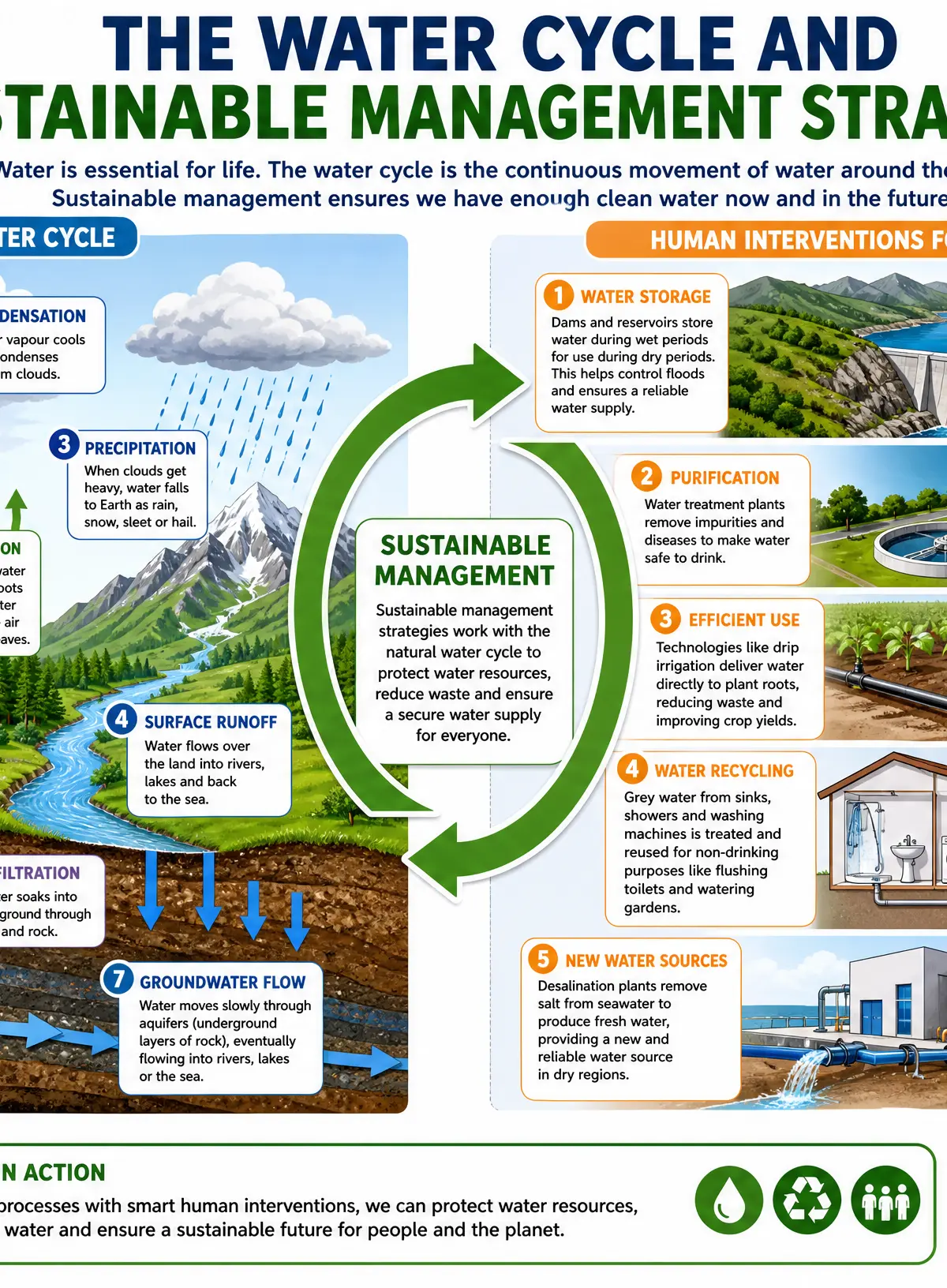
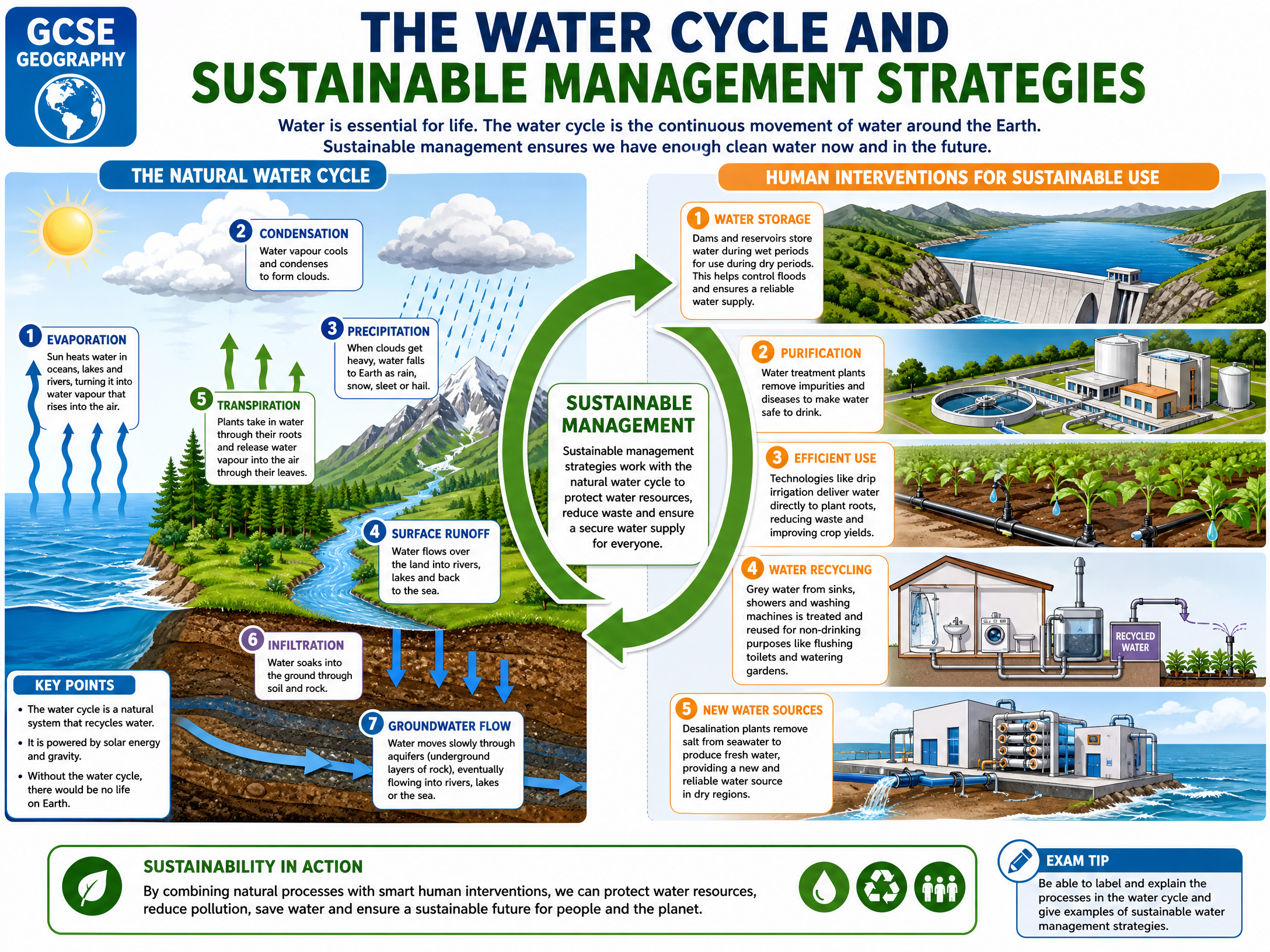
Sustainable management means meeting the needs of people today without compromising the ability of future generations to meet their own needs. Strategies are broadly divided into two categories:
Supply-side strategies (increasing the amount of water available):
- Building dams and reservoirs
- Water transfer schemes
- Desalination plants
- Groundwater abstraction
Demand-side strategies (reducing the amount of water used):
- Water metering and pricing
- Leakage reduction
- Water-efficient appliances
- Public education campaigns
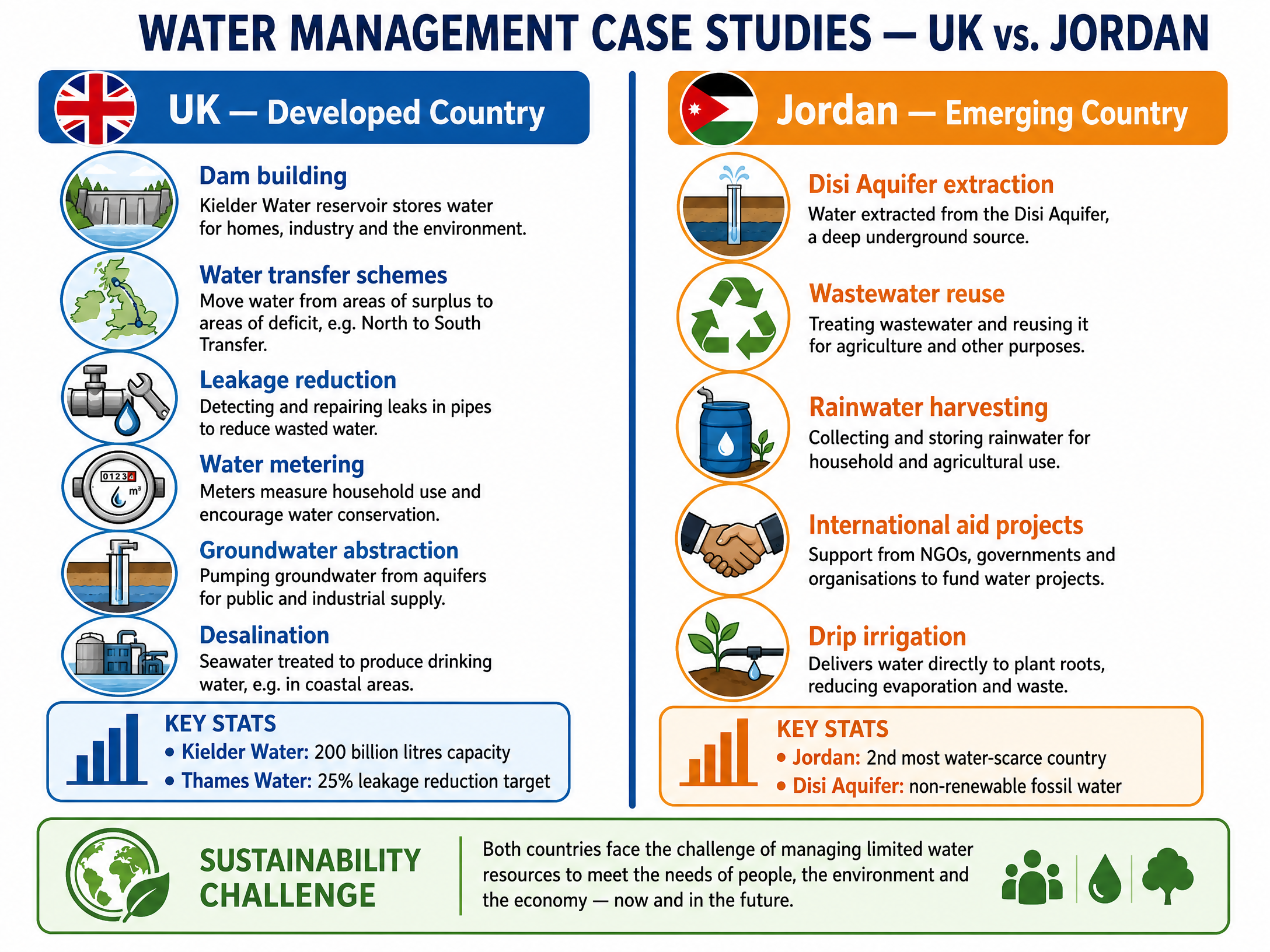
Case Study: United Kingdom (Developed Country)
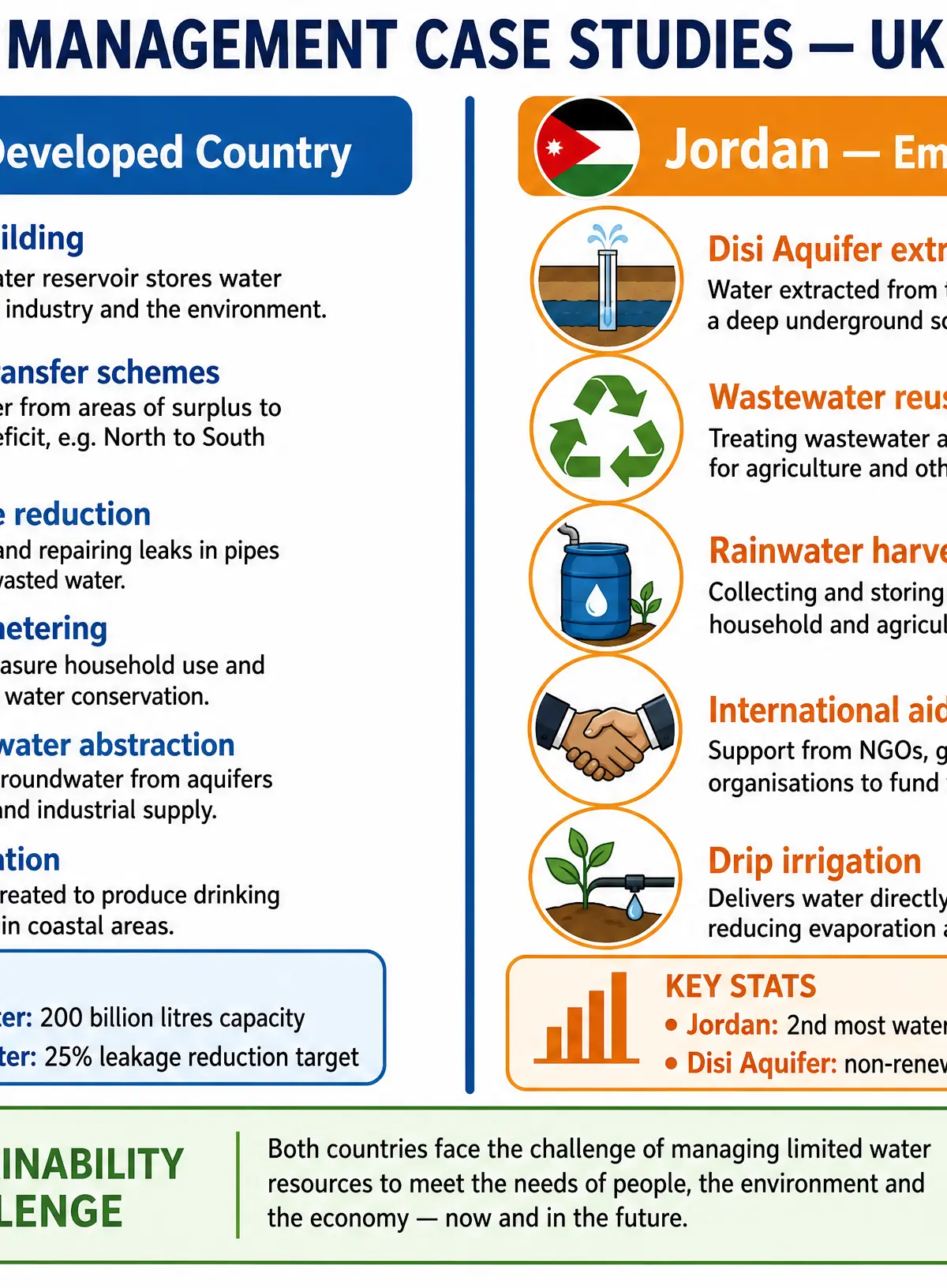
The UK faces regional water imbalances: the north and west have surplus water (high rainfall, low population), while the south and east face deficit (low rainfall, high population density).
Key Strategies:
- Kielder Water: The UK's largest artificial lake by volume (200 billion litres), located in Northumberland. It acts as a regional transfer scheme, moving water to industrial cities in the northeast.
- Leakage Reduction: Companies like Thames Water have set targets to reduce leakage by 25% by 2025, addressing the significant water lost through aging Victorian infrastructure.
- National Water Grid: Proposed transfer schemes to move water from the wet north to the dry south.
- Water Metering: Encouraging domestic conservation by charging households for the exact amount of water they use.
Case Study: Jordan (Emerging/Developing Country)
Jordan is ranked as the second most water-scarce country globally, with very limited rainfall (approx. 111mm/year in Amman) and a growing population exacerbated by refugee influxes.
Key Strategies:
- Disi Aquifer Extraction: A major pipeline (completed 2013) pumps 100 million cubic metres of fossil water annually to Amman. Sustainability concern: This is non-renewable and could be depleted within 50 years.
- Wastewater Reuse: Jordan treats and reuses approximately 90% of its wastewater, primarily for agricultural irrigation, freeing up freshwater for domestic use.
- Rainwater Harvesting: Widespread use of cisterns in rural areas to collect seasonal rainfall.
- International Aid: Significant funding from organisations like USAID to rehabilitate infrastructure and build treatment plants.
Visual Resources
3 diagrams and illustrations
Interactive Diagrams
1 interactive diagram to visualise key concepts
Conceptual Flow Outline
Flowchart showing pressures leading to water insecurity and management responses
Worked Examples
3 worked examples — open one to explore the question and available guidance.
Practice Questions
Test your understanding — click to reveal model answers
State two reasons why global demand for water is increasing. (2 marks)
Hint: Think about the PUCE acronym.
Describe one demand-side strategy for managing water resources. (2 marks)
Hint: Demand-side means reducing use, not increasing supply.
Explain why extracting water from the Disi Aquifer in Jordan may not be sustainable. (4 marks)
Hint: Define sustainability and apply it to the nature of this specific aquifer.
Using a named example of a developed country, evaluate the success of its water management strategies. (9 marks)
Hint: Use the UK. Discuss Kielder Water, Thames Water leakage, and weigh up their success.
Explain how climate change is increasing water insecurity globally. (4 marks)
Hint: Focus on changes to the water cycle and weather patterns.