Pearson Edexcel · GCSE · Geography
Rapid growth, within the chosen developing country or emerging country city, results in a number of challenges that need to be managed
Rapid urbanisation in developing and emerging world cities presents one of the greatest geographical challenges of the 21st century. This study guide explores the severe housing, infrastructure, employment, and environmental pressures created by rapid growth, and evaluates the top-down and bottom-up strategies used to manage them.
- 5 min read
- 3 worked examples
- 5 practice questions
- 6 key terms
Study Notes
Overview
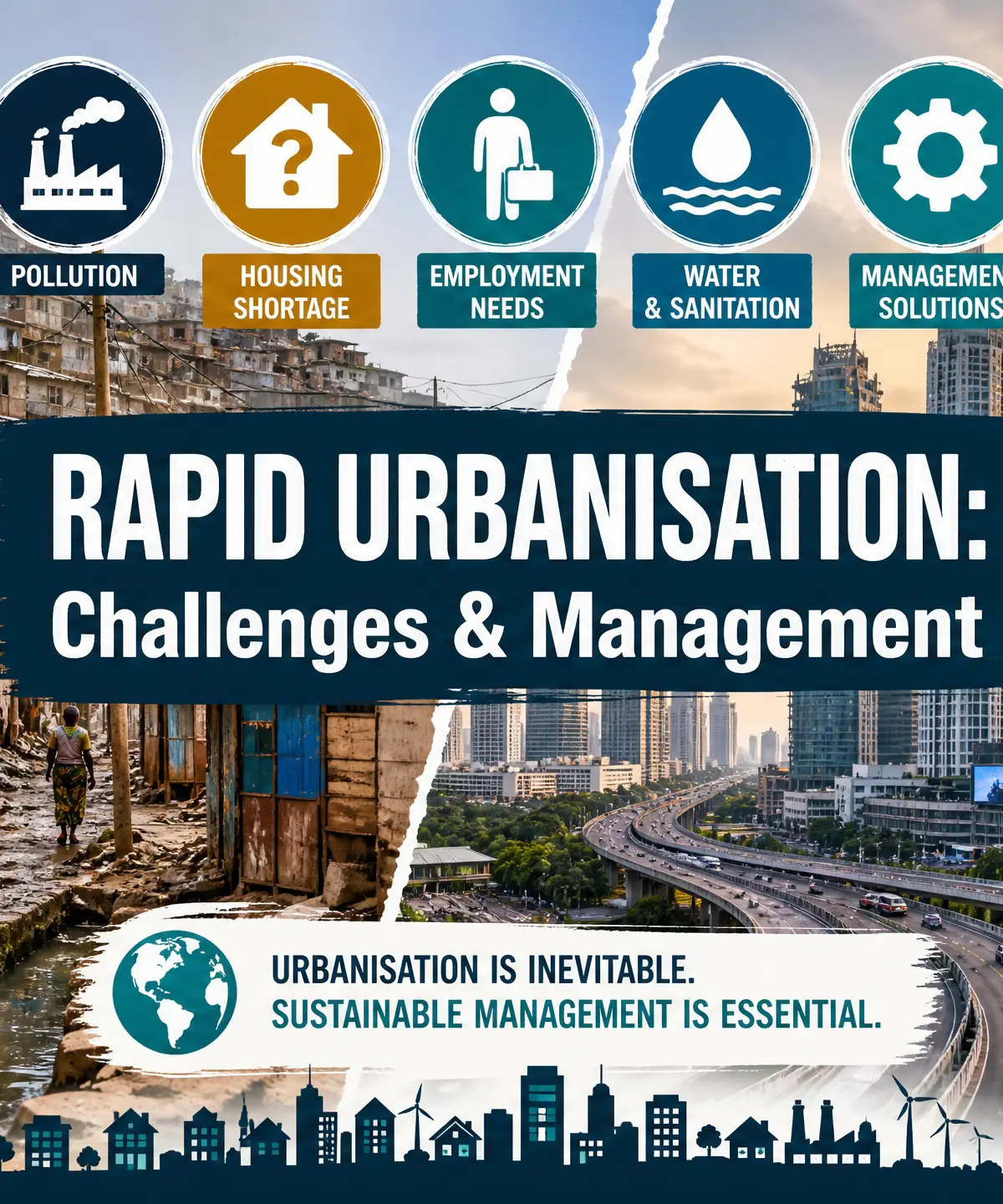
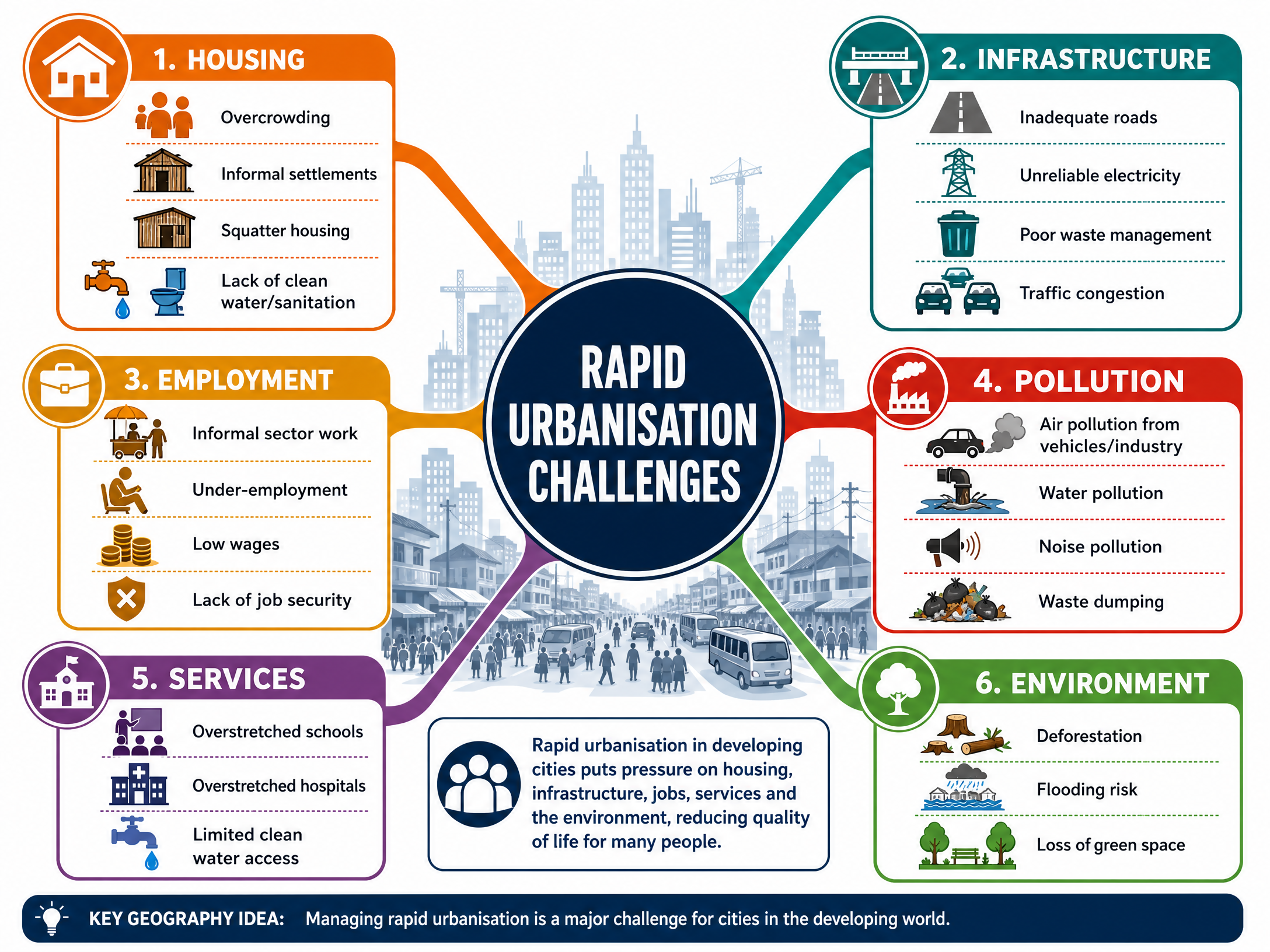
Rapid urbanisation in developing and emerging countries is transforming the global landscape. While urbanisation brings economic opportunities, the speed of this growth frequently outstrips the ability of city authorities to provide adequate housing, infrastructure, and services. This creates severe challenges, notably the expansion of informal settlements (squatter settlements or favelas), widespread under-employment in the informal sector, and intense environmental degradation. Examiners expect candidates to not only describe these challenges using specific located examples, but to critically evaluate the different approaches used to manage them. You must be able to weigh the advantages and disadvantages of large-scale, government-led 'top-down' strategies against community-led 'bottom-up' approaches.
Listen to our revision podcast for a deep dive into this topic:

The Challenges of Rapid Growth
Housing and Informal Settlements
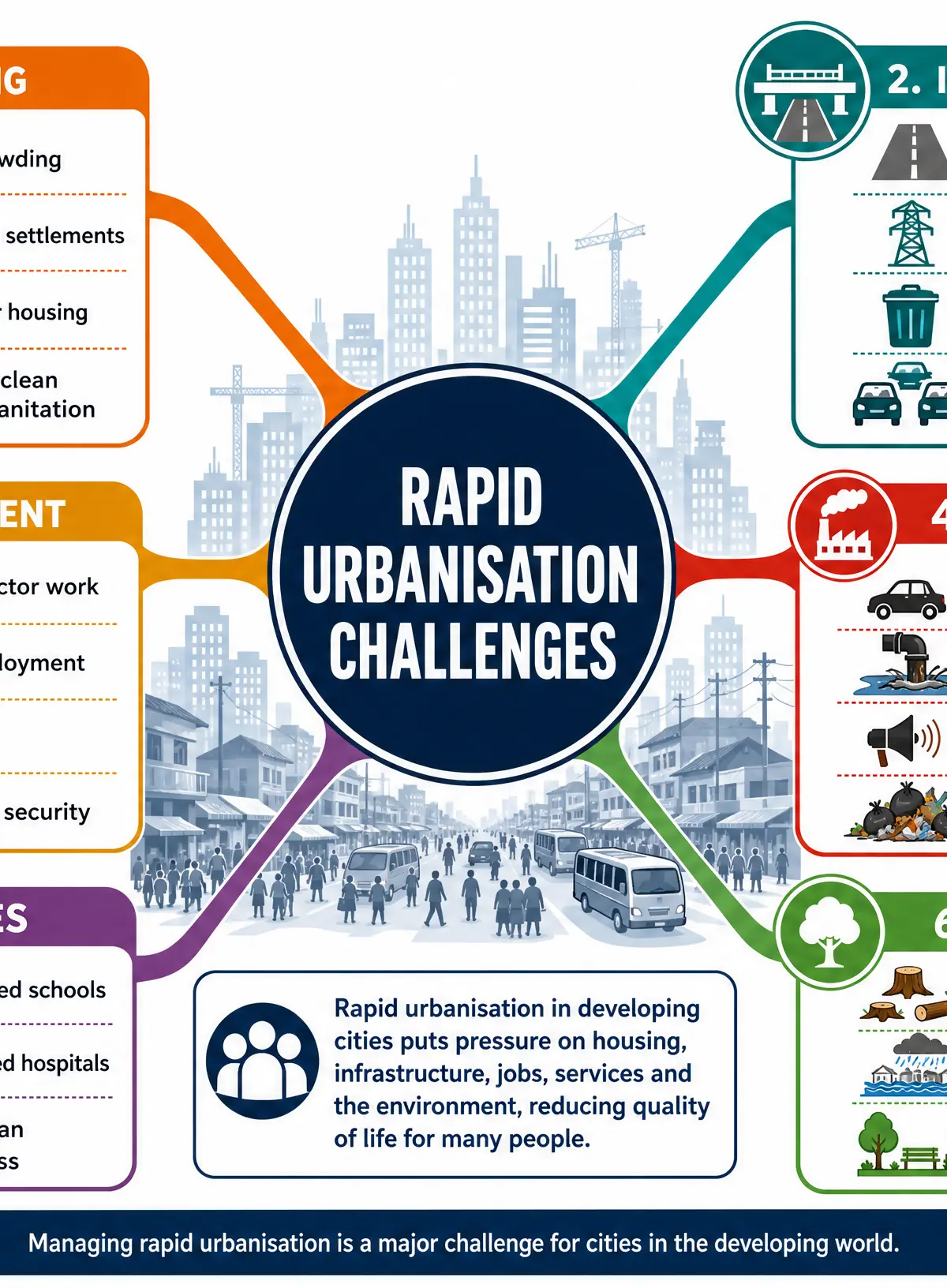
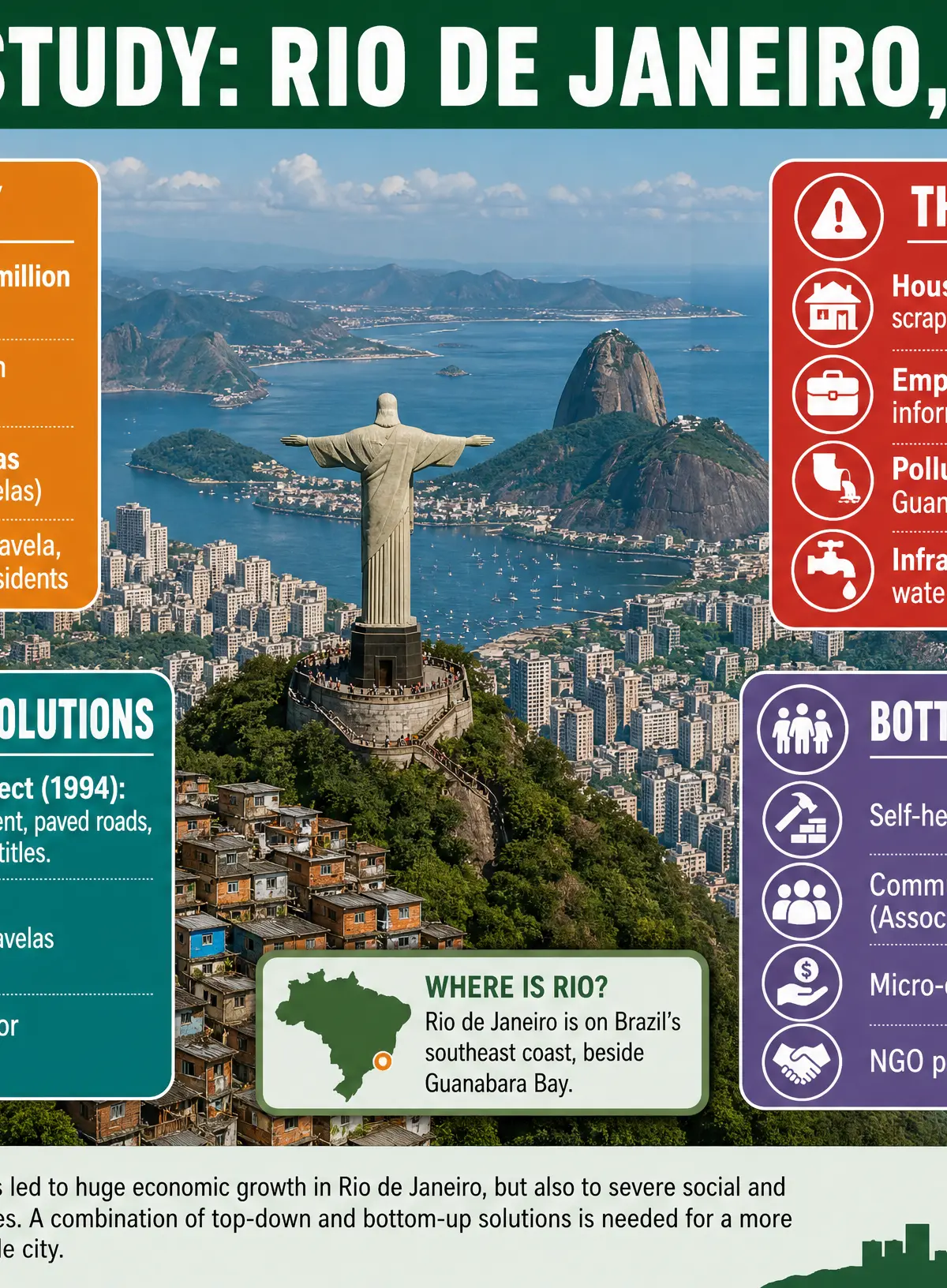
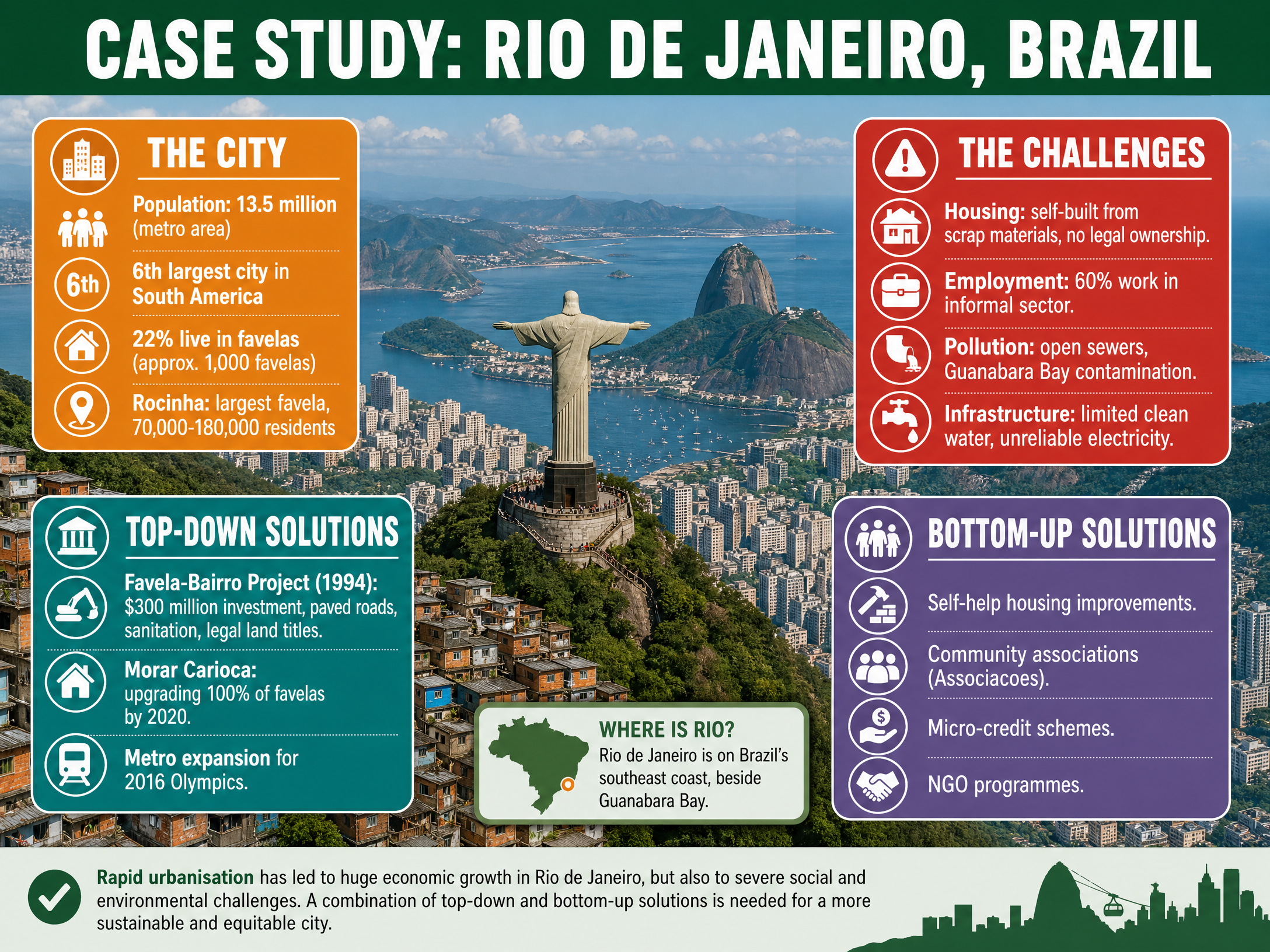
When rural-to-urban migration outpaces formal housing construction, millions are forced into informal settlements. In Rio de Janeiro, Brazil, approximately 22% of the population lives in favelas, such as Rocinha (home to up to 180,000 people). These areas are characterised by self-built housing constructed from scrap materials (wood, corrugated iron), severe overcrowding, and a lack of legal land tenure, leaving residents vulnerable to eviction.
Infrastructure Deficits
Rapid growth places immense strain on basic infrastructure. Many informal settlements lack piped clean water, leading to reliance on contaminated sources or expensive water vendors. Sanitation is a major issue; open sewers are common, increasing the risk of waterborne diseases like cholera. Electricity is often obtained illegally by tapping into the main supply, creating severe fire hazards. Transport networks become gridlocked, severely impacting economic productivity.
Employment and the Informal Economy
With formal job creation lagging behind population growth, the majority of migrants find work in the informal sector. In many developing cities, over 50% of the workforce is informally employed (e.g., street vending, waste picking, domestic work). This work is unregulated, untaxed, and offers no job security, sick pay, or health and safety protections, trapping millions in a cycle of poverty.
Environmental Pollution
Rapid urbanisation without adequate regulation leads to severe environmental degradation. Air pollution from unregulated industry and heavy traffic congestion causes respiratory illnesses. Water pollution is rampant due to untreated industrial effluent and domestic sewage being discharged directly into rivers and bays (e.g., Guanabara Bay in Rio). Solid waste management is often non-existent in informal settlements, leading to toxic waste accumulation.
Managing the Challenges
Top-Down Approaches
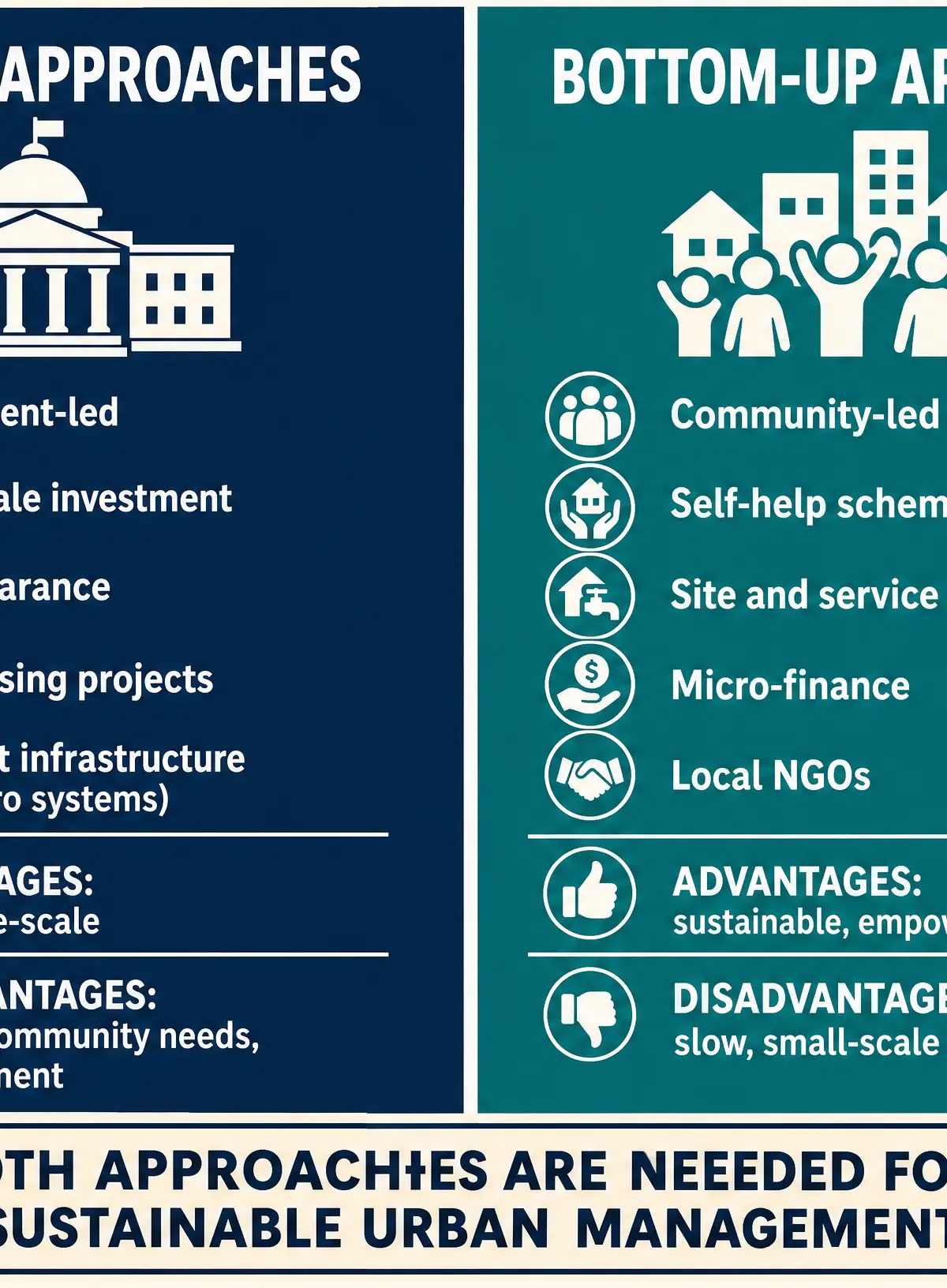
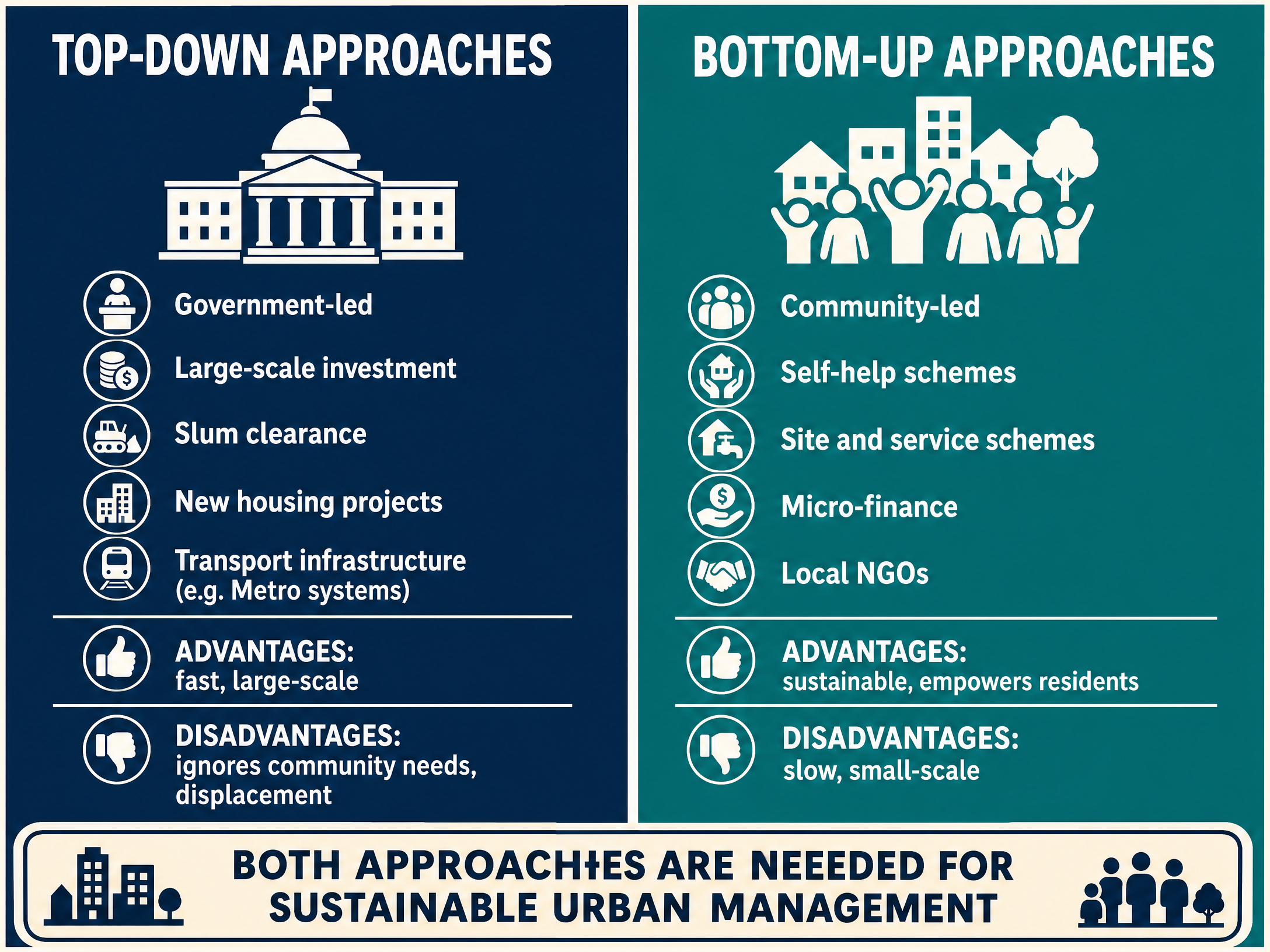
Top-down approaches are large-scale, expensive projects planned and managed by governments or international organisations (like the World Bank), imposed from above.
Example: The Favela-Bairro Project in Rio de Janeiro (started 1994).
Key Actions: A $300 million investment to upgrade infrastructure in favelas. It provided paved roads, proper sanitation systems, electricity, and legal land titles to residents.
Advantages: Can achieve large-scale, rapid improvements; tackles major infrastructure deficits that communities cannot afford.
Disadvantages: Often ignores specific community needs; top-down slum clearance programmes can forcibly displace residents, destroying established communities and simply moving the problem elsewhere.
Bottom-Up Approaches
Bottom-up approaches are small-scale, community-led initiatives that empower local residents to improve their own neighbourhoods, often supported by NGOs.
Example: Self-help schemes (Site and Service schemes) and micro-finance.
Key Actions: The government may provide basic land plots with water/electricity connections, and residents build their own homes. NGOs provide small loans (micro-finance) for home improvements or starting small businesses.
Advantages: Sustainable; empowers local people; tailored to the specific needs of the community; builds social cohesion.
Disadvantages: Small-scale and slow; relies heavily on community motivation; cannot provide city-wide infrastructure like major transport networks or reservoirs.
Visual Resources
3 diagrams and illustrations
Interactive Diagrams
1 interactive diagram to visualise key concepts
Conceptual Flow Outline
Flowchart showing how rapid migration leads to interconnected urban challenges.
Worked Examples
3 worked examples — open one to explore the question and available guidance.
Practice Questions
Test your understanding — click to reveal model answers
For a named developing or emerging country city, evaluate the strategies used to improve the quality of life for the urban poor. (9 marks + 3 SPaG)
Hint: You need to discuss both top-down and bottom-up strategies, provide specific facts about your named city, and come to a conclusion about which is most effective.
Explain two environmental challenges caused by rapid urban growth. (4 marks)
Hint: Identify two distinct environmental issues and explain HOW rapid growth causes them.
State one characteristic of employment in the informal sector. (1 mark)
Hint: Think about jobs like street vending - what legal protections do they have?
Explain how a site and service scheme works. (3 marks)
Hint: Break down the name: what is the 'site', what is the 'service', and who builds the house?
Suggest why bottom-up approaches to managing urban challenges are often considered more sustainable than top-down approaches. (3 marks)
Hint: Think about community involvement and long-term maintenance.