Pearson Edexcel · GCSE · Geography
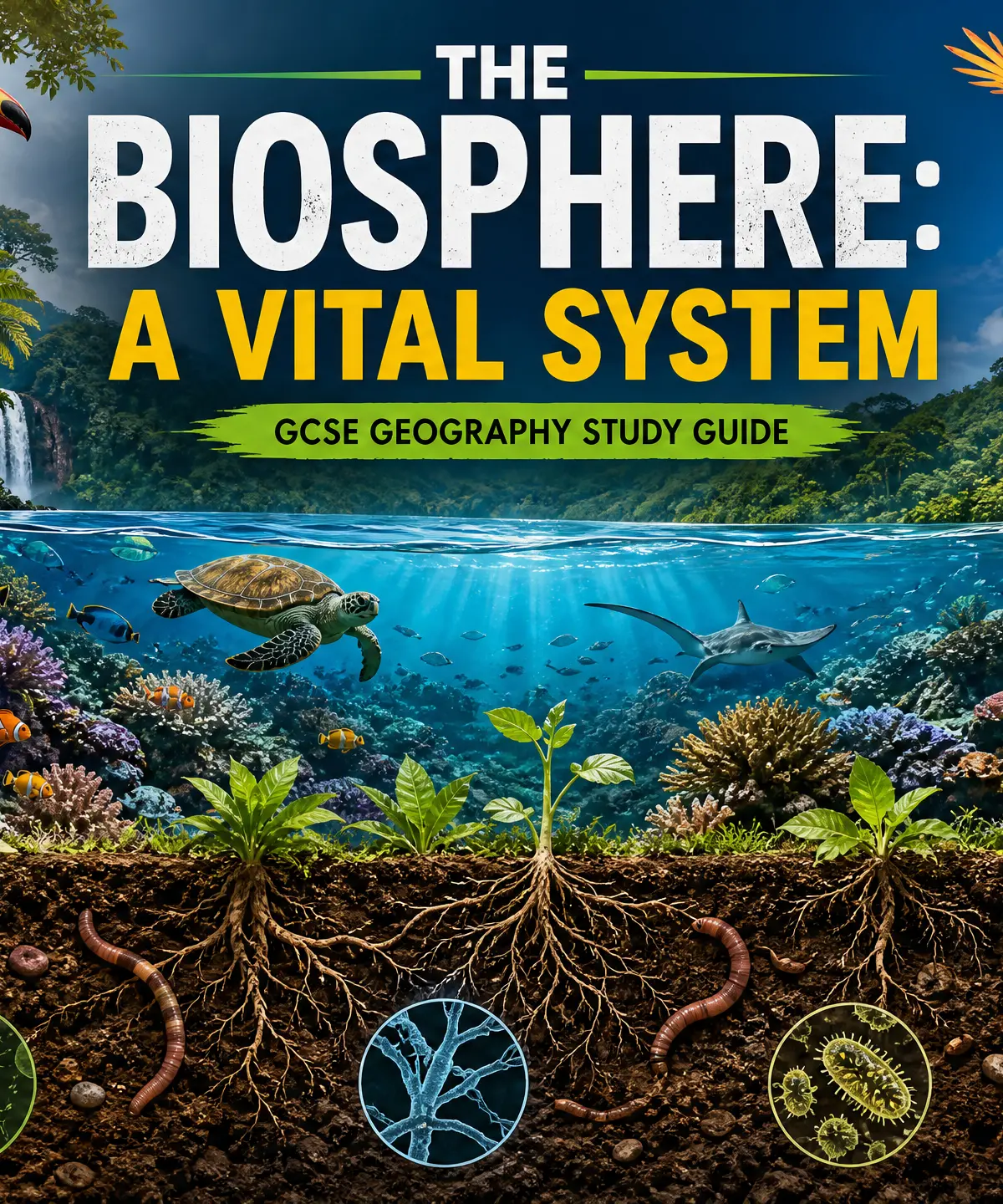
The biosphere is a vital system
The biosphere is the life-support system of our planet, providing everything humans need to survive. This topic is crucial for understanding the delicate balance between commercial exploitation and environmental sustainability.
- 4 min read
- 3 worked examples
- 5 practice questions
- 6 key terms
Study Notes
Overview
The biosphere is the zone of Earth where life exists, encompassing everything from the deepest oceans to the lower atmosphere. For GCSE Geography candidates, understanding the biosphere as a vital, interconnected system is essential. Examiners expect you to demonstrate knowledge of the resources it provides—such as food, medicine, building materials, and fuel—and how humans are commercially exploiting these resources for energy, water, and minerals. This topic is heavily assessed on AO1 (Knowledge of places) and AO2 (Understanding of concepts), requiring specific named examples and an appreciation of the balance between economic development and environmental conservation.
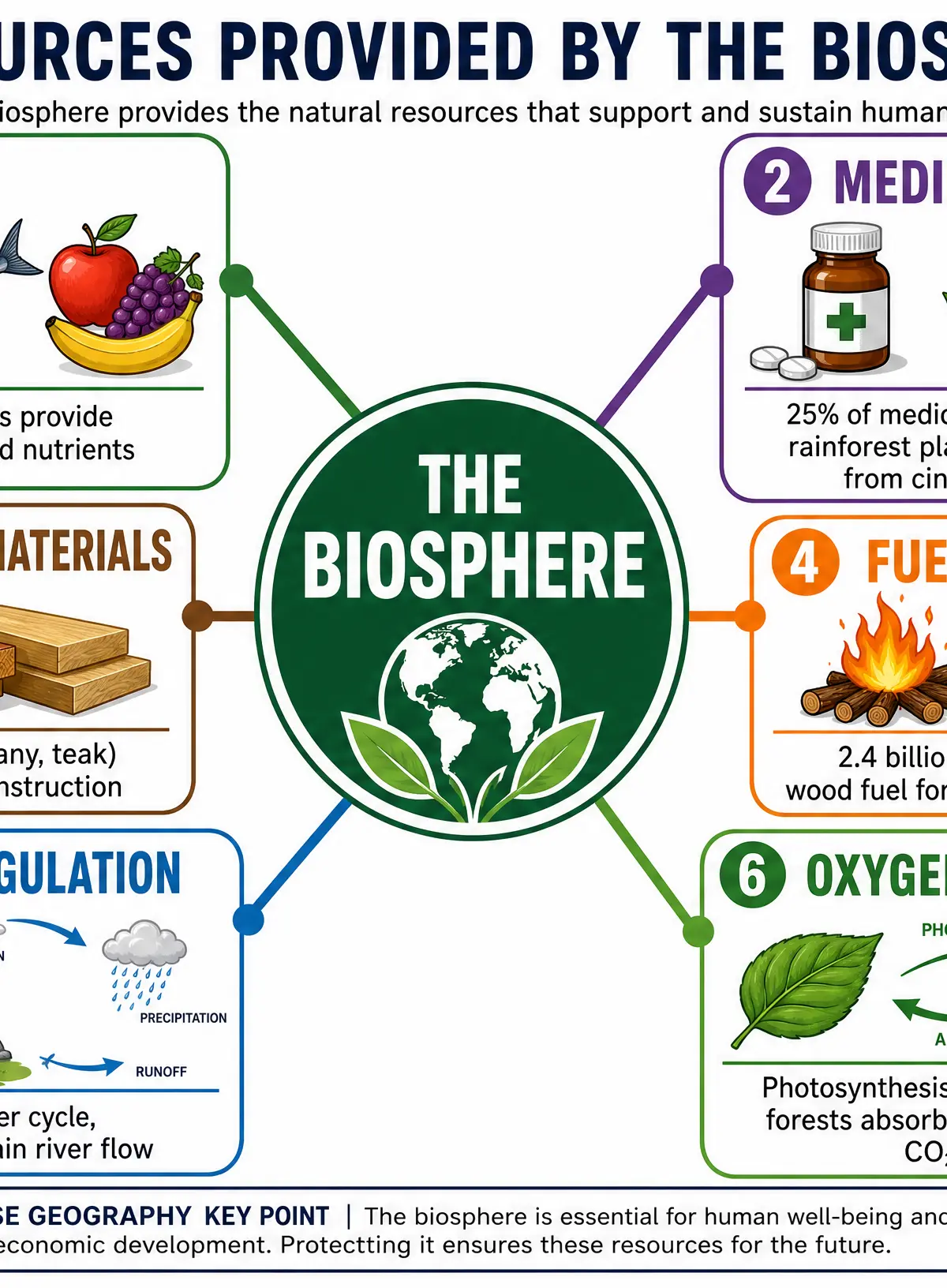
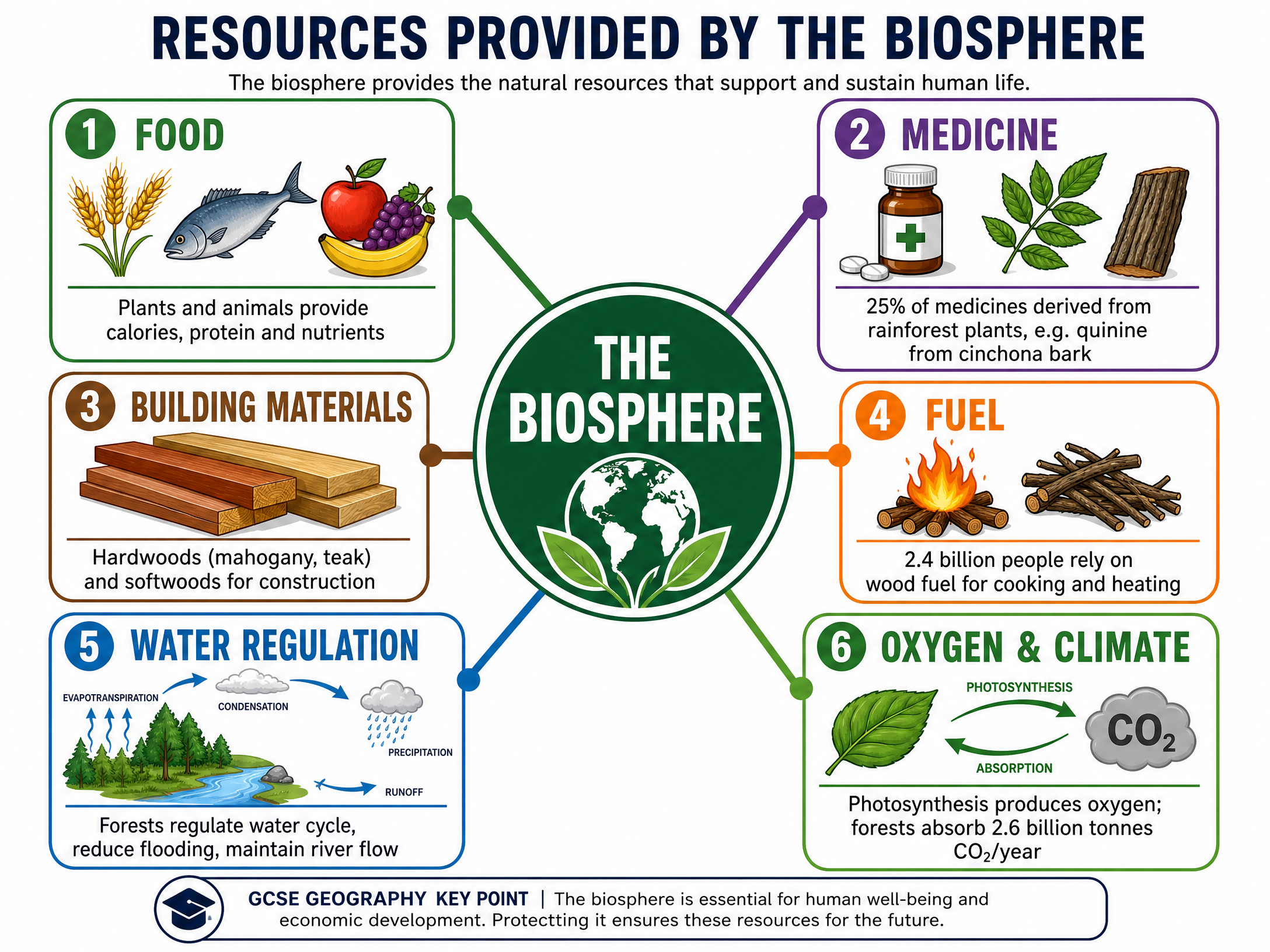
Resources Provided by the Biosphere
Food
What it provides: All calories, proteins, and nutrients for human survival.
Specific Knowledge: Global agriculture relies entirely on the biosphere. Over 50,000 edible plant species exist, though just 15 provide 90% of the world's food energy intake.
Exam Relevance: Often tested in short AO1 questions.
Medicine
What it provides: Natural compounds used to treat diseases.
Specific Knowledge: Approximately 25% of all modern medicines are derived from rainforest plants. For example, quinine from the cinchona tree bark is used to treat malaria.
Exam Relevance: A strong point to use in 'assess the value of the rainforest' questions.
Building Materials
What it provides: Timber for construction and manufacturing.
Specific Knowledge: Hardwoods like mahogany and teak are highly valued globally, driving deforestation in tropical regions.
Fuel
What it provides: Energy for cooking and heating.
Specific Knowledge: Around 2.4 billion people globally rely on wood fuel as their primary energy source, particularly in lower-income countries.
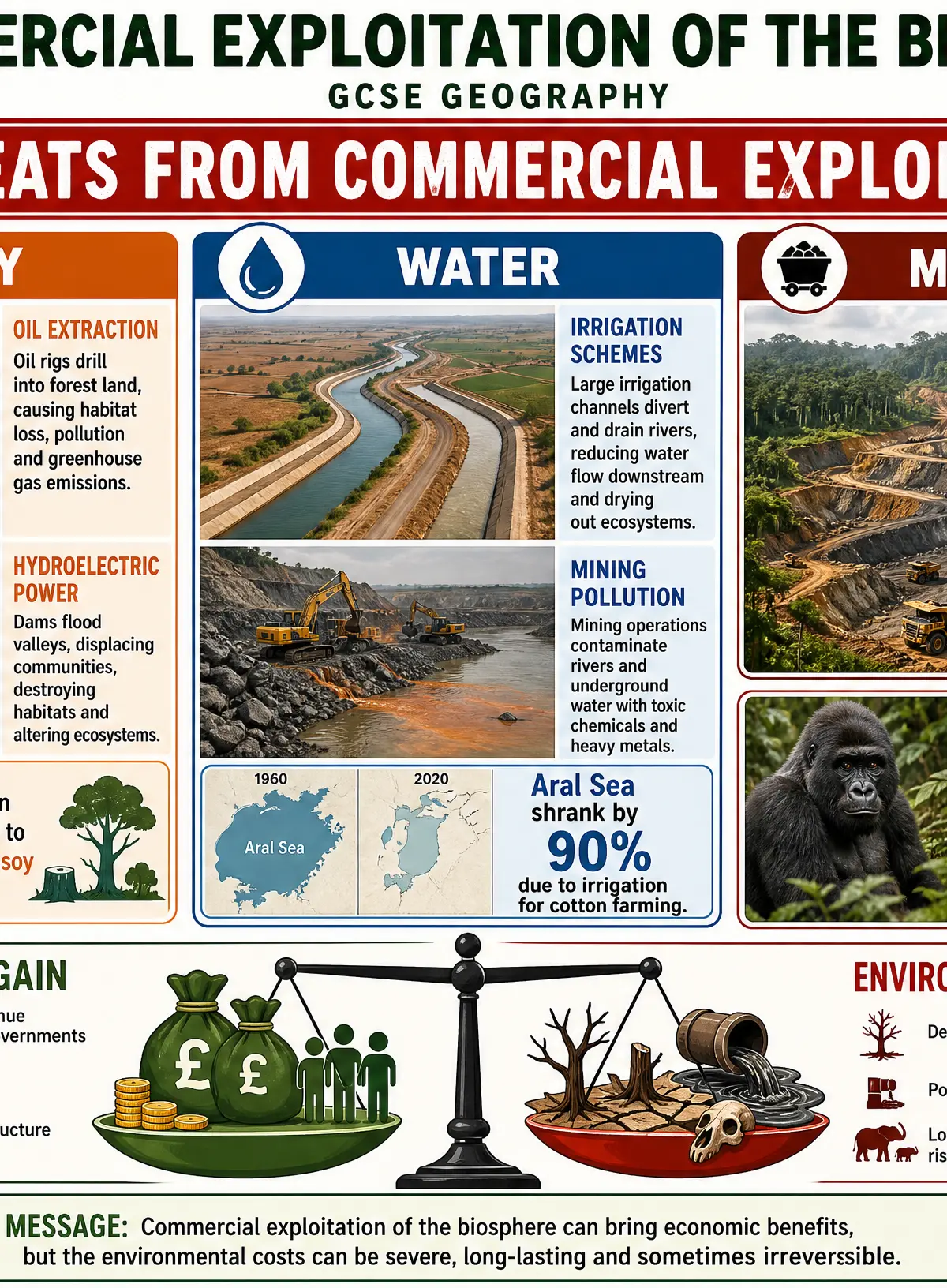
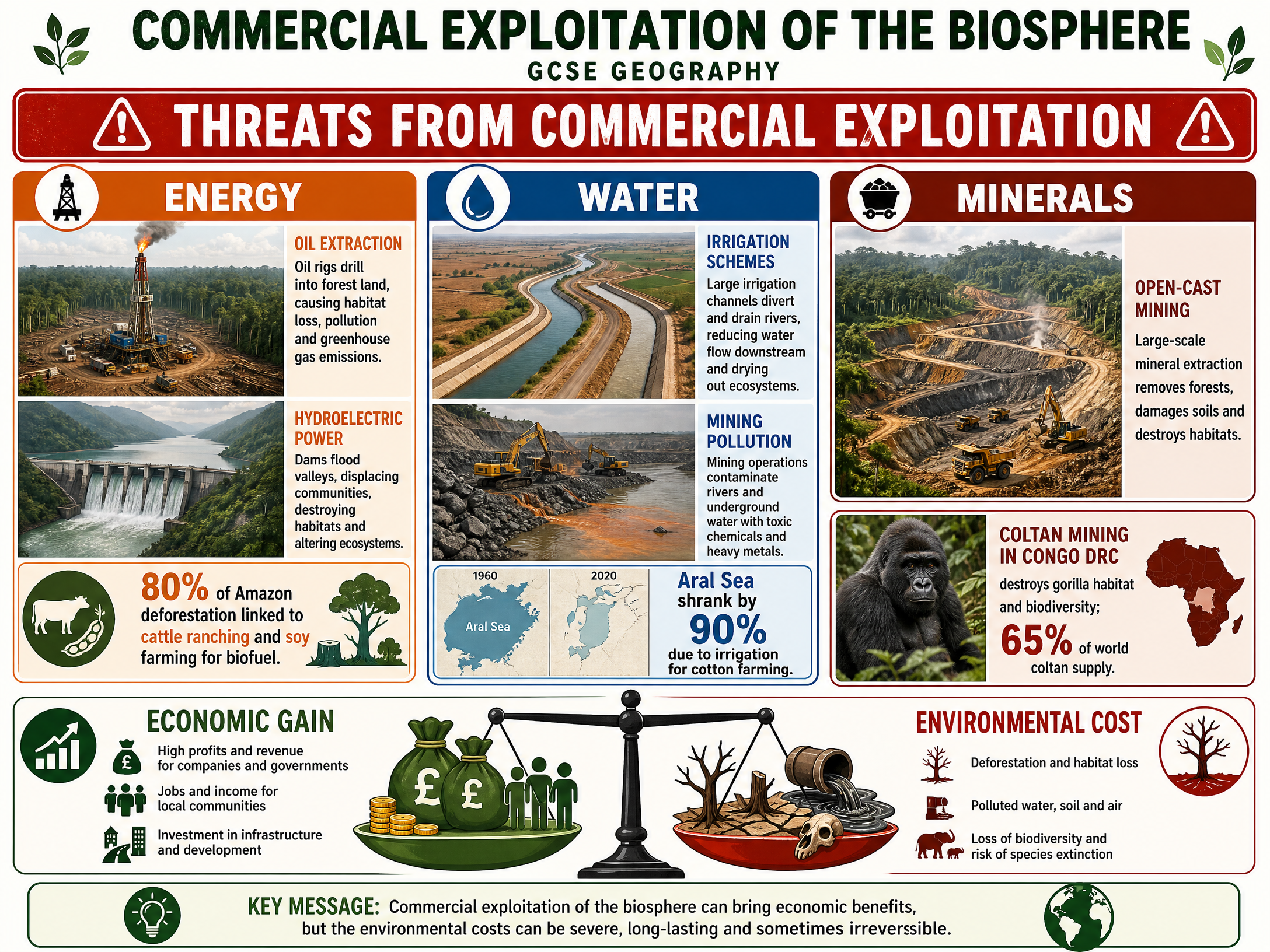
Commercial Exploitation
Energy Exploitation
What is happening: Extraction of fossil fuels and development of renewable energy infrastructure.
Specific Knowledge: In the Amazon, the Belo Monte Dam flooded over 500 km² of rainforest and displaced 20,000 indigenous people to generate hydroelectric power.
Water Exploitation
What is happening: Diversion of water sources for commercial agriculture and industry.
Specific Knowledge: The Aral Sea in Central Asia shrank by 90% between 1960 and 2010 due to Soviet irrigation schemes for cotton farming, destroying the local fishing industry and ecosystem.
Mineral Exploitation
What is happening: Mining for valuable minerals.
Specific Knowledge: The Democratic Republic of Congo supplies 65% of the world's coltan (used in electronics). Mining operations destroy critical habitats for endangered species like the eastern lowland gorilla.
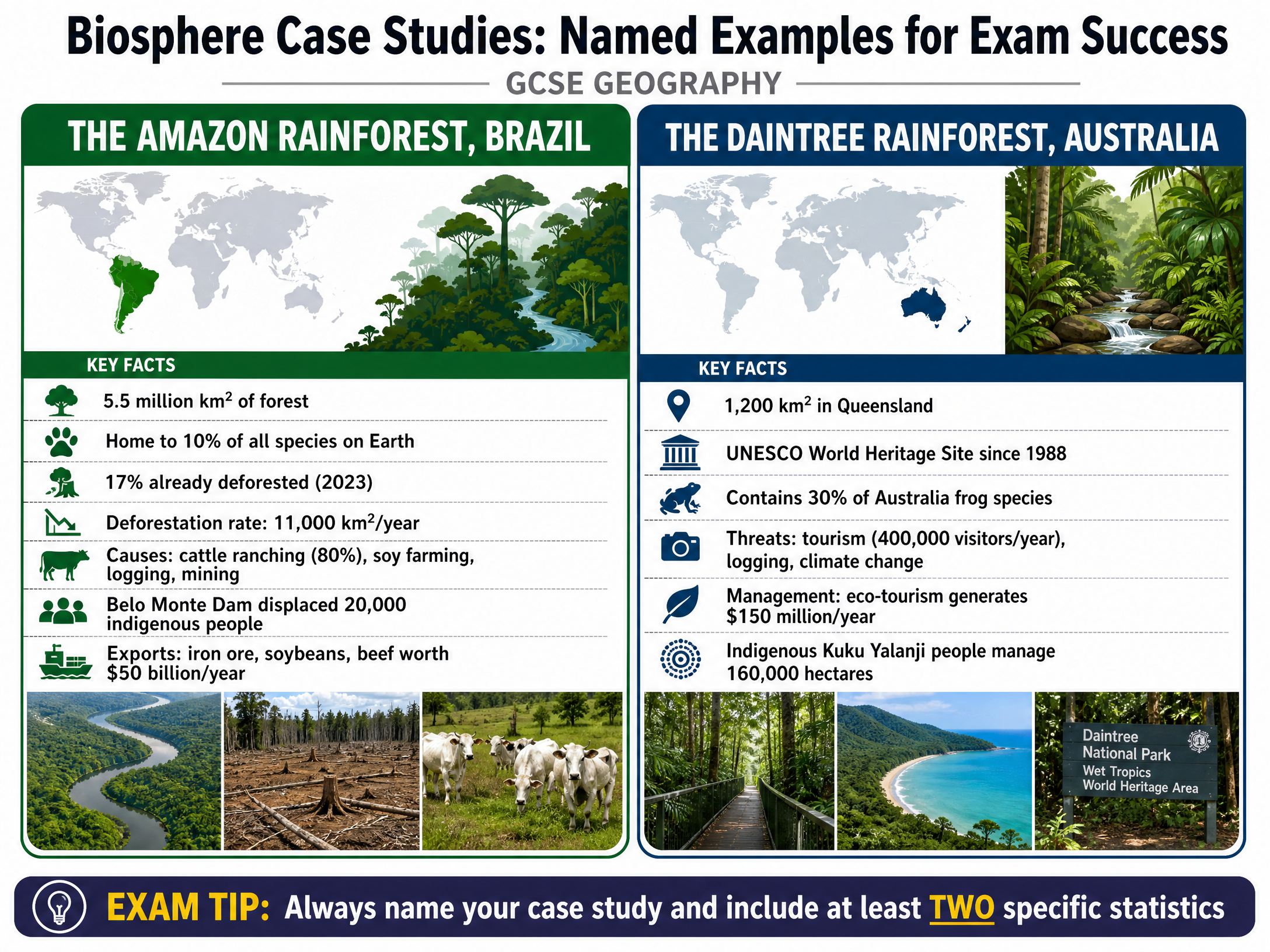
Case Studies
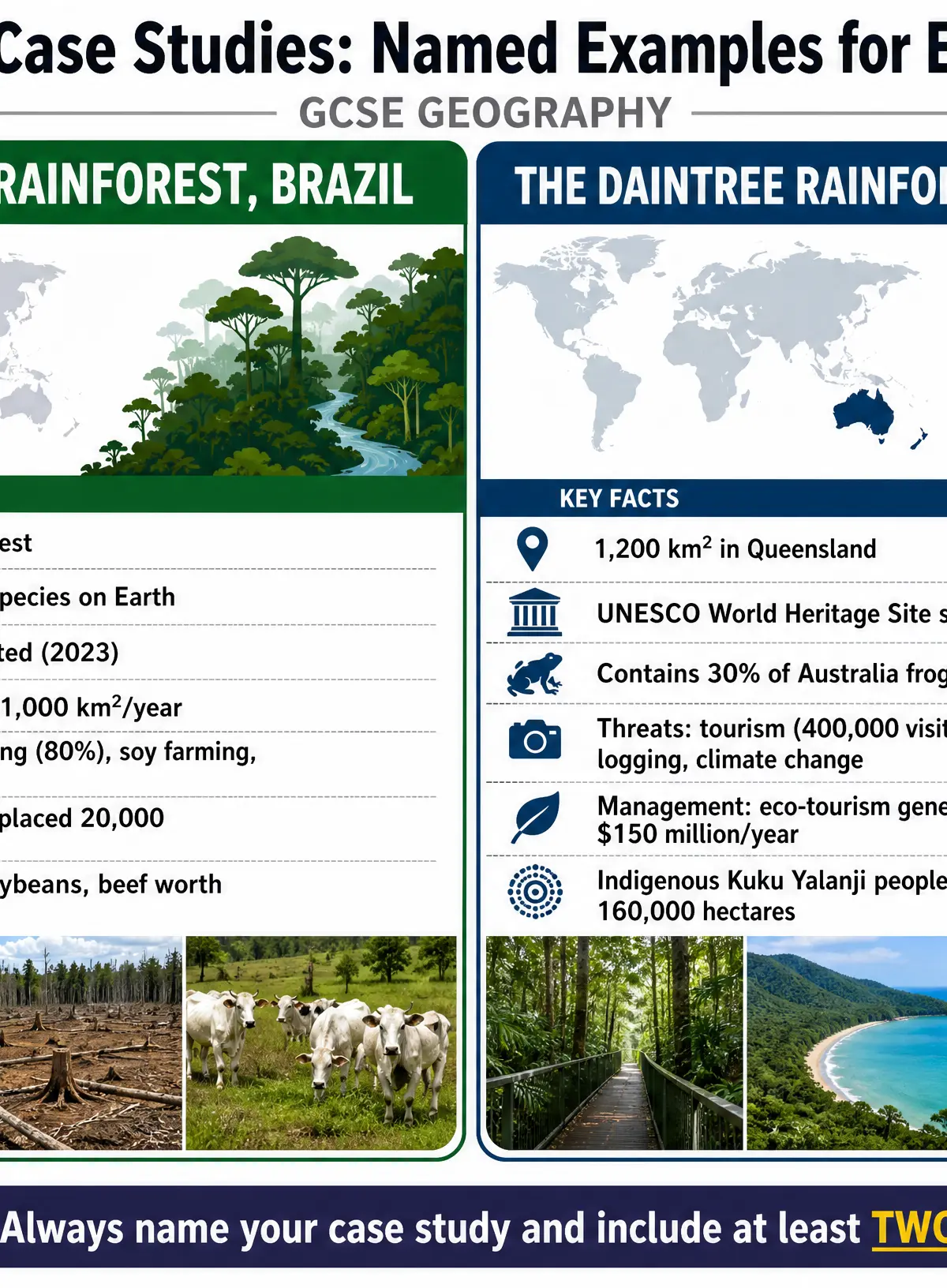
Examiners heavily reward the use of specific case studies. Ensure you know the Amazon Rainforest (Brazil) and the Daintree Rainforest (Australia) as contrasting examples of biosphere management and exploitation.
Podcast Revision
Listen to our comprehensive 10-minute revision podcast covering all key concepts, exam tips, and a quick-fire recall quiz:
Visual Resources
3 diagrams and illustrations
Interactive Diagrams
1 interactive diagram to visualise key concepts
Conceptual Flow Outline
Flowchart showing the impacts of commercial exploitation on the biosphere
Worked Examples
3 worked examples — open one to explore the question and available guidance.
Practice Questions
Test your understanding — click to reveal model answers
Explain why the biosphere is considered a vital system for human survival. (6 marks)
Hint: Think about the resources it provides (food, medicine, fuel) and how it regulates the environment.
Using a named example, describe the impacts of commercial water exploitation on the biosphere. (4 marks)
Hint: Use the Aral Sea case study and give specific figures.
To what extent is commercial exploitation the greatest threat to the biosphere? (9 marks + 3 SPaG)
Hint: Evaluate the impacts of commercial exploitation against other factors (like climate change), or weigh the economic benefits against environmental costs.
Outline one way the biosphere provides building materials. (2 marks)
Hint: Keep it brief but specific.
Explain how the exploitation of energy resources affects the biosphere. (4 marks)
Hint: Give two distinct impacts, linked to specific energy types.