Pearson Edexcel · GCSE · Geography
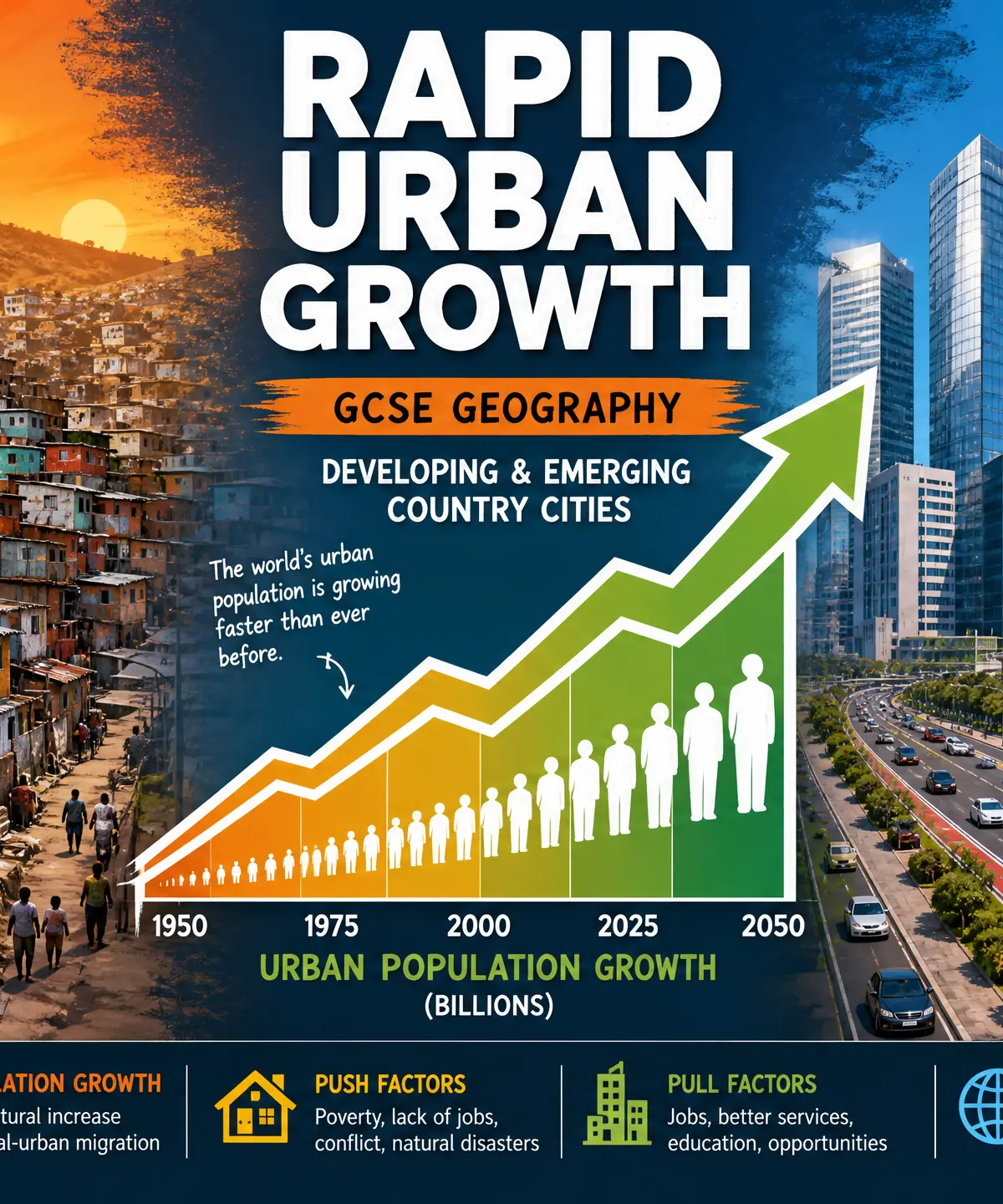
The character of the chosen developing country or emerging country city is influenced by its fast rate of growth
Master the dynamics of rapid urban growth in developing and emerging countries. Discover how natural increase and migration fuel explosive expansion, and learn to evaluate the top-down and bottom-up strategies used to tackle housing, infrastructure, and inequality.
- 6 min read
- 2 worked examples
- 5 practice questions
- 6 key terms
Study Notes
Overview
More than half the world's population now lives in urban areas, with the most dramatic growth occurring in developing and emerging countries. This topic explores the character of these rapidly expanding cities, focusing on the powerful forces of natural increase and rural-urban migration that drive their growth. Examiners expect you to understand not just why these cities are growing, but the profound consequences of this expansion: the stark contrasts between wealth and poverty, the strain on infrastructure, and the environmental degradation that often follows. Crucially, you must be able to evaluate the different management strategies—both top-down government projects and bottom-up community initiatives—used to improve the quality of life for urban residents. Using a specific named case study, such as Mumbai, is essential for achieving high marks.
Listen to the Podcast

Causes of Rapid Urban Growth
Natural Increase
What it is: When the birth rate is higher than the death rate, causing the population to grow naturally.
Why it happens: In many developing countries, improvements in healthcare, sanitation, and water supply have caused death rates to fall significantly. However, birth rates often remain high due to cultural factors, lack of access to contraception, and the economic value of children in some societies.
Exam Focus: Remember that cities have a high proportion of young adults (of childbearing age), which further drives up the birth rate.
Rural-Urban Migration
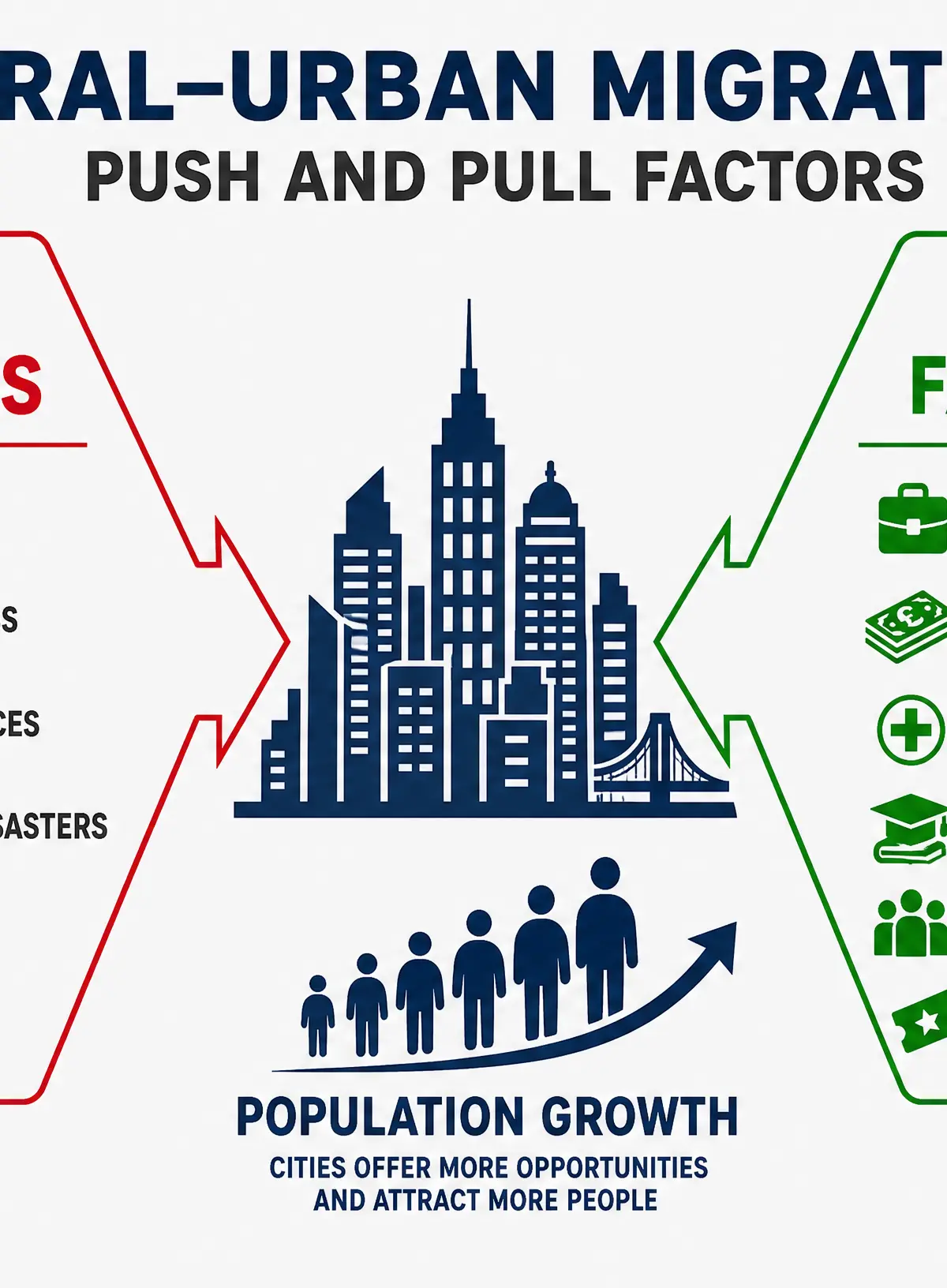
What it is: The movement of people from the countryside (rural areas) to towns and cities (urban areas).
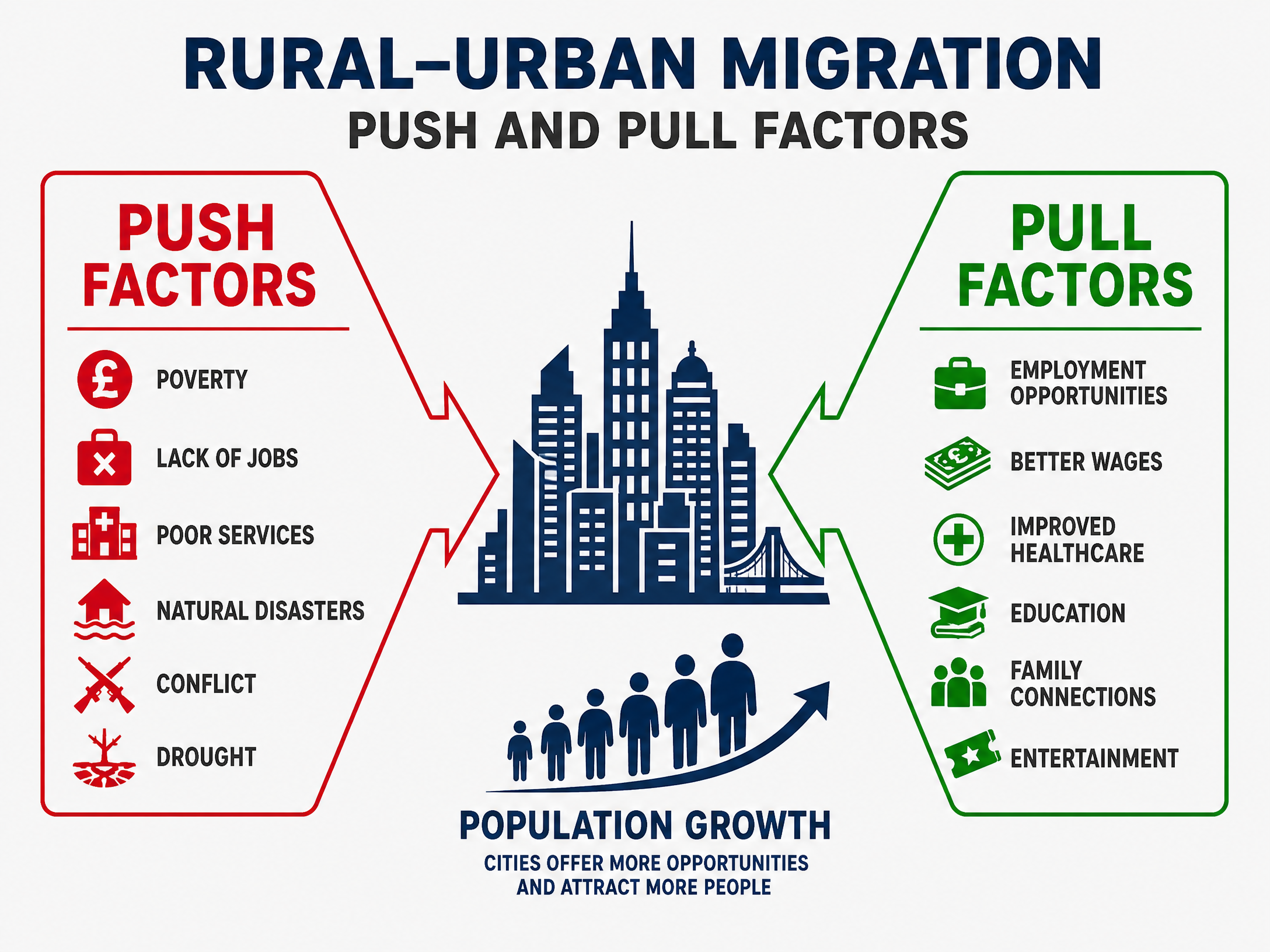
Push Factors: Negative aspects of rural areas that force people to leave. These include poverty, lack of jobs, poor education and healthcare, crop failure, drought, and sometimes conflict.
Pull Factors: Positive aspects of cities that attract people. These include better employment opportunities (both formal and informal), higher wages, improved services (schools, hospitals), and the perception of a better quality of life.
Impacts of Rapid Urban Growth
Social and Economic Impacts
Housing: The most visible impact is the rapid spread of informal settlements (slums, favelas, bustees). Millions live in overcrowded conditions in self-built housing with limited access to clean water, sanitation, and electricity.
Employment: Formal employment cannot keep pace with population growth. Consequently, a large percentage of the workforce relies on the informal economy (e.g., street vending, waste picking), which offers low wages, no job security, and no sick pay.
Inequality: Rapidly growing cities are often characterised by extreme inequality. Luxury high-rise apartments sit alongside sprawling informal settlements. This contrast between extreme wealth and severe poverty is a key geographical concept.
Environmental Impacts
Pollution: Increased traffic congestion leads to severe air pollution. Inadequate waste management and lack of sanitation mean rivers and coastal areas become heavily polluted with domestic and industrial waste.
Resource Pressure: The demand for water and energy outstrips supply, leading to shortages. Urban expansion also causes deforestation and the loss of green spaces.
Managing Urban Growth
Top-Down Strategies
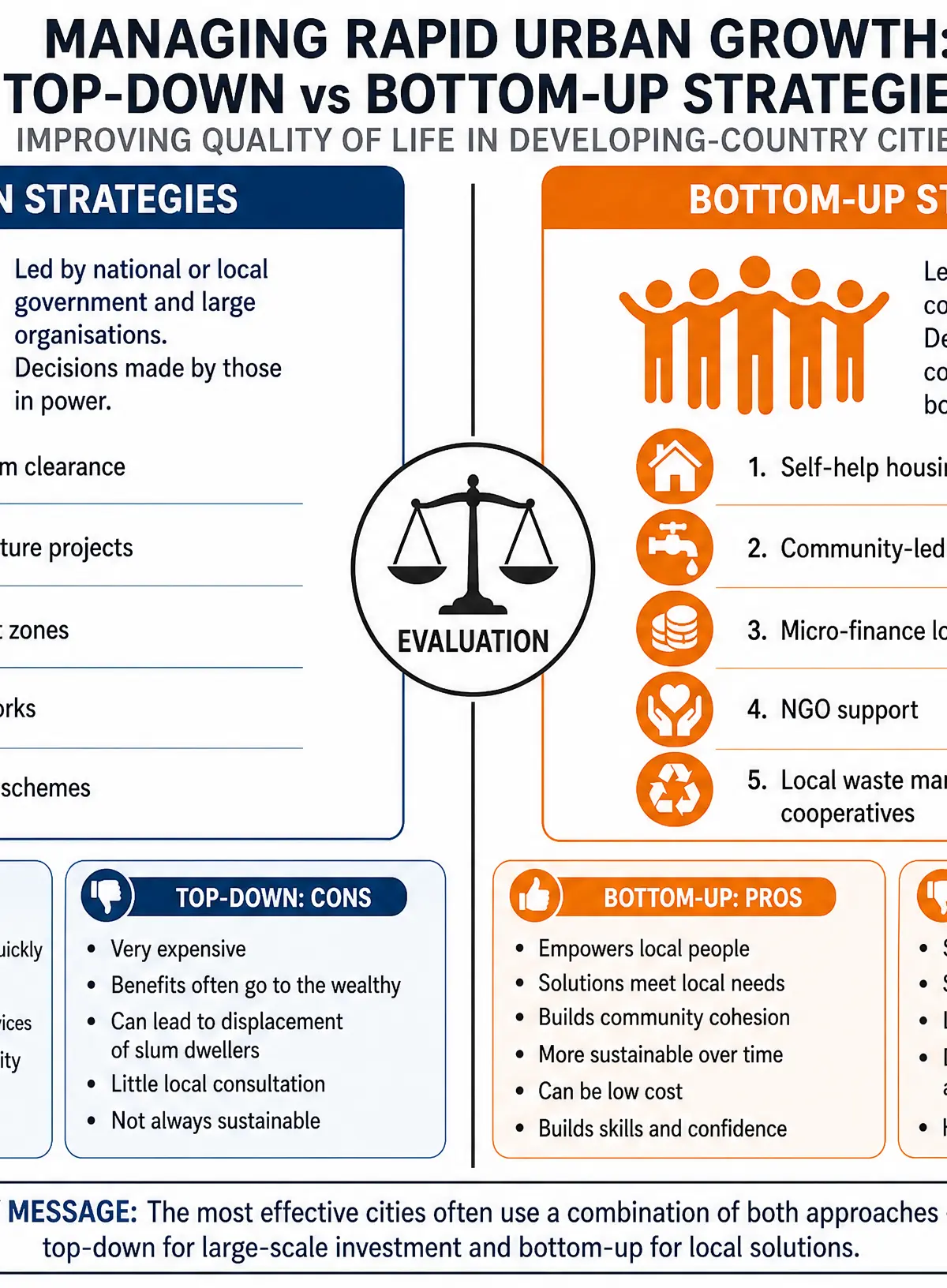
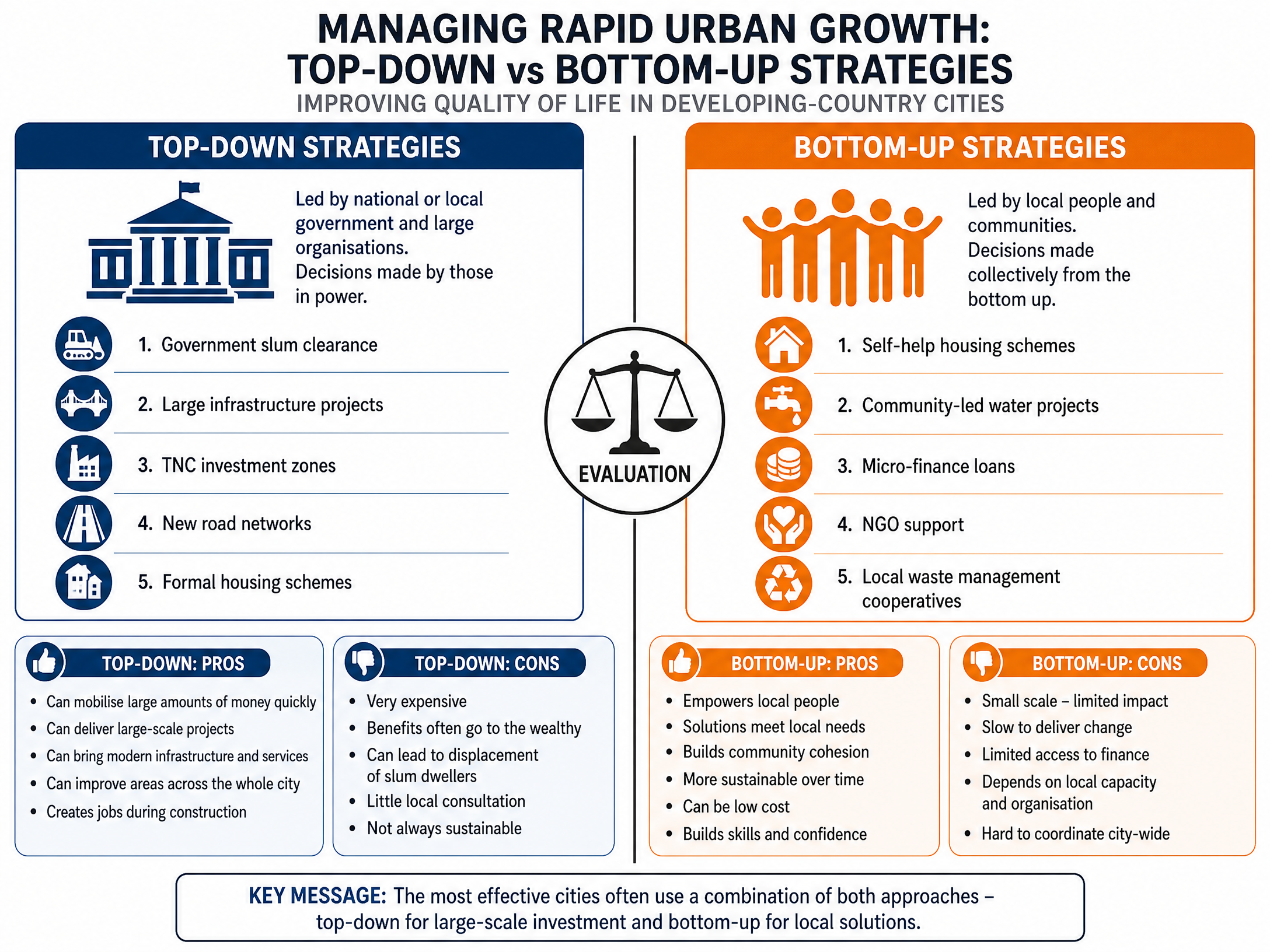
Characteristics: Led by national or local governments, often involving large-scale investment and infrastructure projects. Decisions are made by those in power, sometimes with little consultation with local residents.
Examples: Slum clearance and redevelopment (e.g., building high-rise apartments), mass transit systems (e.g., Metro networks), large-scale water treatment plants.
Evaluation: They can deliver significant, city-wide improvements and mobilise large funds. However, they are expensive, can displace vulnerable communities, and may not address the specific needs of the poorest residents.
Bottom-Up Strategies
Characteristics: Led by local communities, non-governmental organisations (NGOs), or charities. They are usually small-scale, lower cost, and directly involve the people they are trying to help.
Examples: Self-help housing schemes (where residents are given materials to improve their own homes), community-managed toilet blocks, micro-finance loans to start small businesses.
Evaluation: They are sustainable, empower local people, and directly address local needs. However, they are small in scale, rely on external funding or volunteer organisation, and cannot solve city-wide infrastructure issues like major transport networks.
Case Study: Mumbai, India
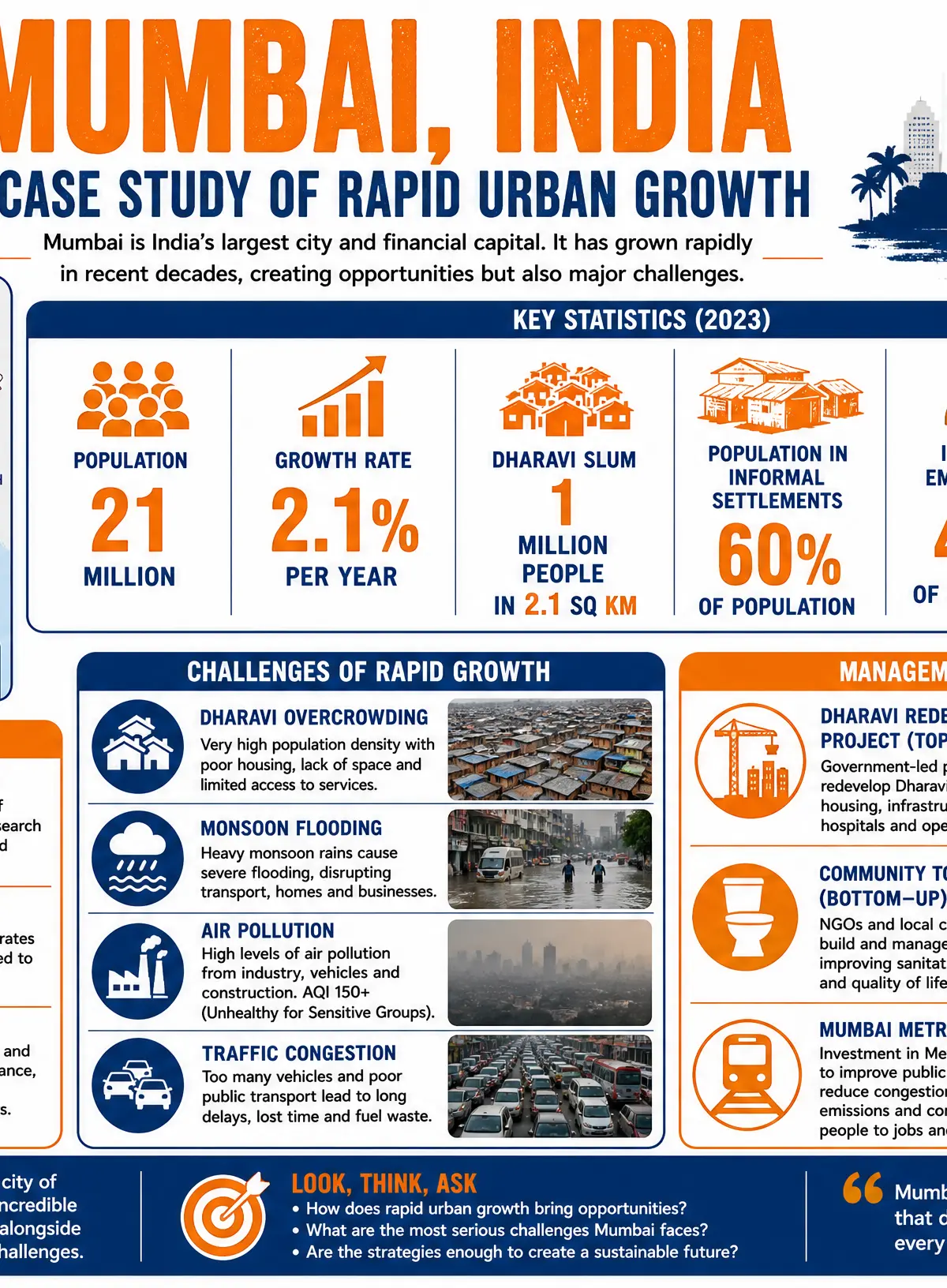
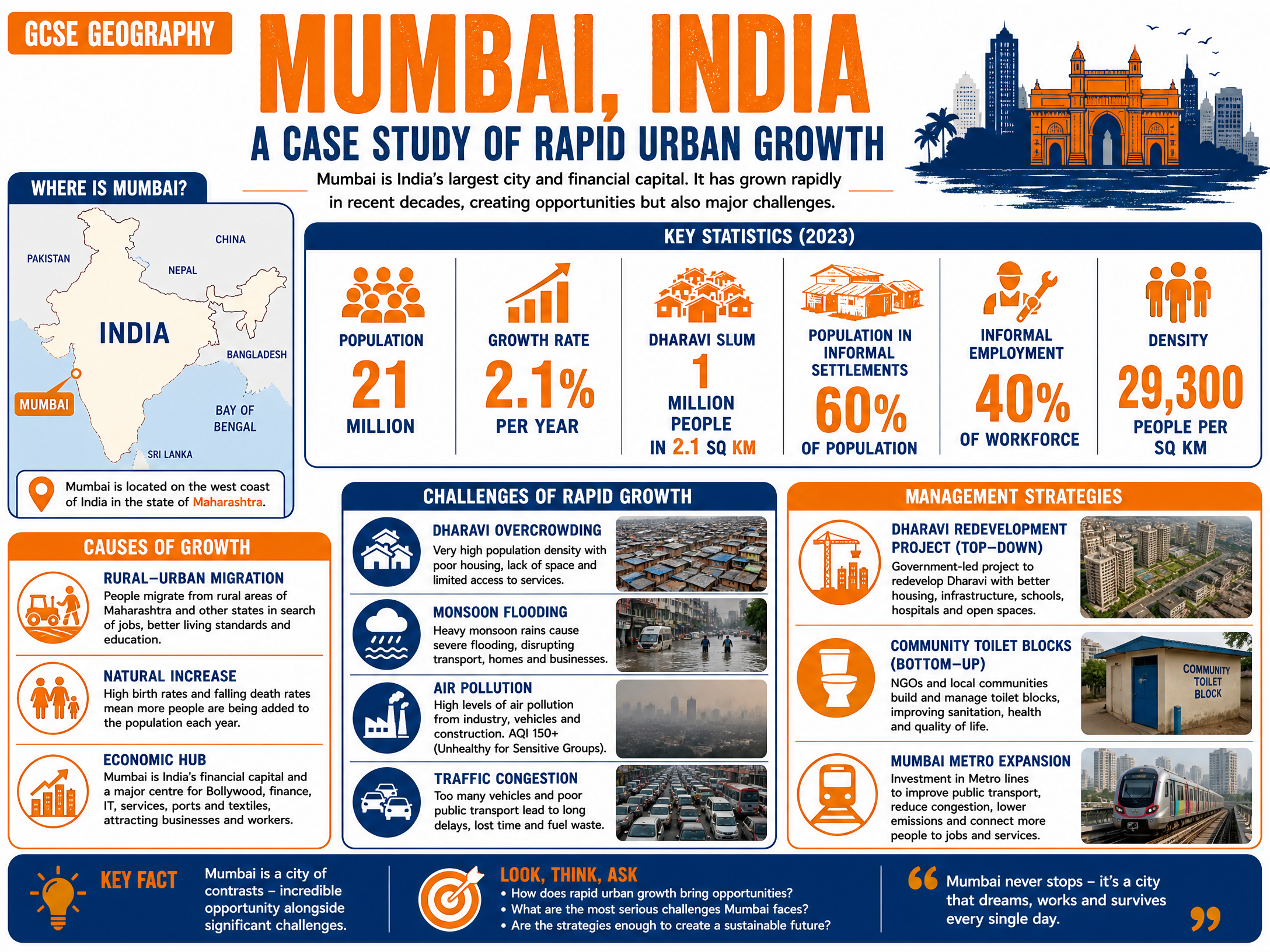
Context: Mumbai is India's financial capital, located on the west coast in the state of Maharashtra. Its population has grown to over 21 million.
Causes of Growth: Massive rural-urban migration from rural Maharashtra and other states, drawn by jobs in finance, IT, textiles, and the Bollywood film industry. Natural increase also plays a major role.
Challenges: Over 1 million people live in the Dharavi informal settlement. The city faces severe traffic congestion, air pollution, and seasonal flooding during the monsoon.
Management: The Dharavi Redevelopment Project is a top-down attempt to replace the slum with modern housing. Meanwhile, NGOs like Sulabh International support bottom-up community toilet blocks to improve sanitation.
Visual Resources
3 diagrams and illustrations
Interactive Diagrams
1 interactive diagram to visualise key concepts
Conceptual Flow Outline
Flowchart showing the causes and consequences of rapid urban growth.
Worked Examples
2 worked examples — open one to explore the question and available guidance.
Practice Questions
Test your understanding — click to reveal model answers
State two push factors that cause rural-urban migration. (2 marks)
Hint: Think about negative things in the countryside.
Explain one environmental challenge caused by rapid urban growth in a developing country. (3 marks)
Hint: State the challenge, explain what causes it, and give a consequence.
Describe the characteristics of an informal settlement. (4 marks)
Hint: Think about the materials used, the location, and the services available.
Explain how bottom-up strategies can improve the quality of life for people living in informal settlements. (6 marks)
Hint: Use a specific example and explain the direct benefits to the residents.
'Top-down strategies are the only effective way to manage rapid urban growth.' To what extent do you agree with this statement? (9 marks)
Hint: Evaluate the pros and cons of top-down, then contrast with bottom-up, and reach a conclusion.