Pearson Edexcel · GCSE · Geography
The UK's climate change challenges
This study guide covers the defining geographical challenge of our time: the impacts of and responses to climate change in the UK. Mastering this topic is crucial for GCSE Geography, as examiners frequently use it to test your ability to link physical processes with human decision-making and evaluate complex strategies.
- 6 min read
- 3 worked examples
- 5 practice questions
- 6 key terms
Study Notes
Overview
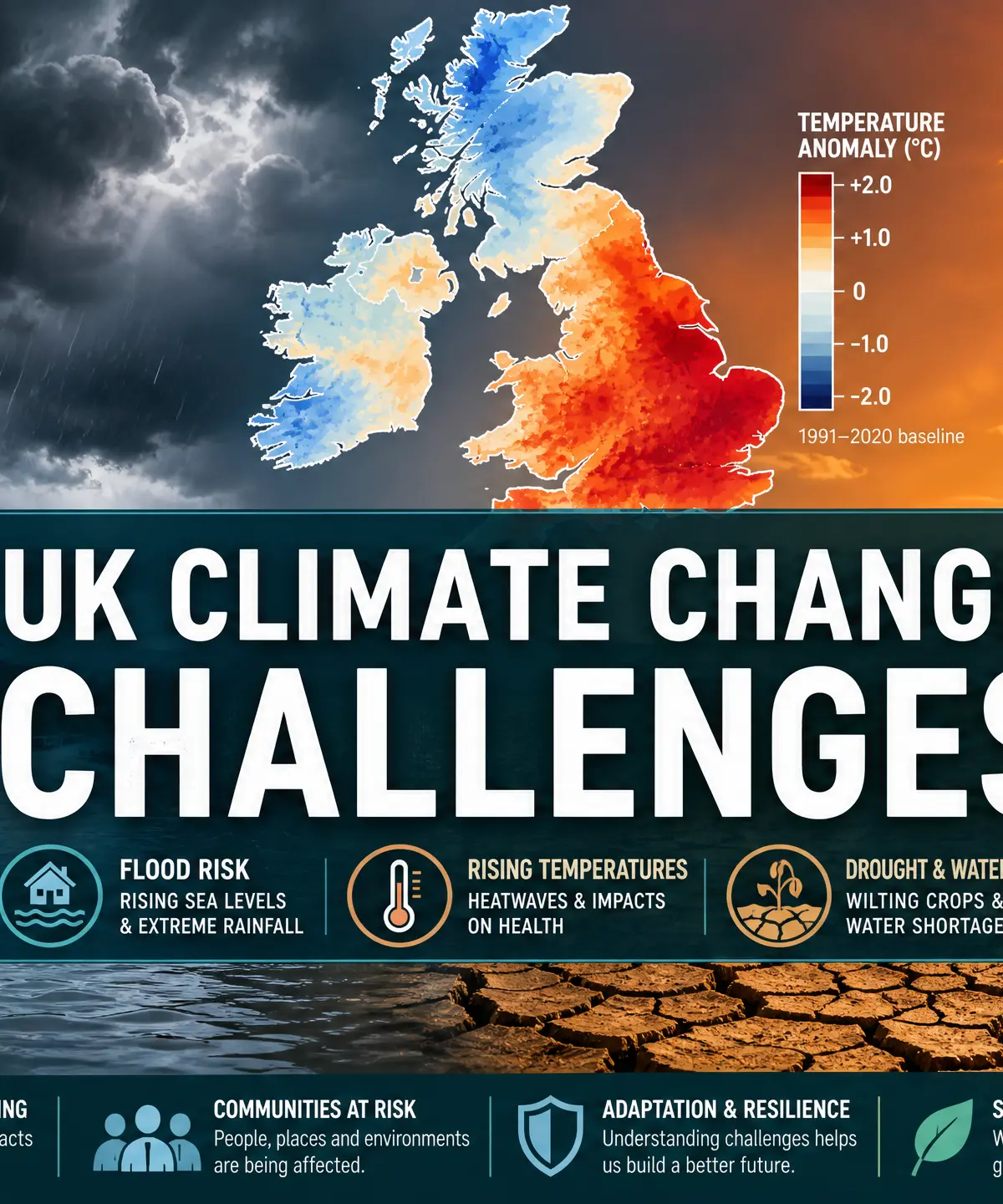
This study guide explores the multifaceted challenges climate change poses to the United Kingdom. As a temperate maritime nation, the UK is already experiencing the tangible effects of a warming world, from record-breaking heatwaves to devastating winter floods. Examiners expect candidates to move beyond general statements about global warming and demonstrate precise, place-specific knowledge of how climate change impacts the UK's people, economy, and landscapes. You will need to confidently distinguish between mitigation (tackling the causes) and adaptation (managing the effects), and be prepared to evaluate the effectiveness of local and national responses. Furthermore, higher-tier responses must acknowledge the inherent uncertainty in future climate projections, recognizing that outcomes depend heavily on global emissions trajectories.
Audio Lesson
Listen to the 10-minute podcast episode below for a comprehensive overview of this topic, including exam tips and a quick-fire recall quiz.

The UK's Changing Climate
Evidence for Change
Temperature: The UK's climate is warming. According to the Met Office, the UK has warmed by approximately 1.2°C since pre-industrial times. In July 2022, the UK recorded its highest ever temperature of 40.3°C at Coningsby, Lincolnshire.
Precipitation: While overall annual rainfall hasn't changed dramatically, the pattern is shifting. Winters are becoming wetter (increasing flood risk), while summers are becoming drier (increasing drought risk). Rainfall events are becoming more intense.
Sea Level: Sea levels around the UK are rising by approximately 3mm per year due to thermal expansion and melting ice caps, threatening coastal communities.
Future Uncertainty
Examiners reward candidates who understand that future climate impacts are uncertain. The UK Climate Projections (UKCP18) provide different scenarios based on future global greenhouse gas emissions.
- High emissions scenario: Summers could be up to 5°C warmer and 40% drier by 2070.
- Low emissions scenario: The changes will be much less severe.
The exact impacts depend on human decision-making today.
Impacts on UK People and Landscapes
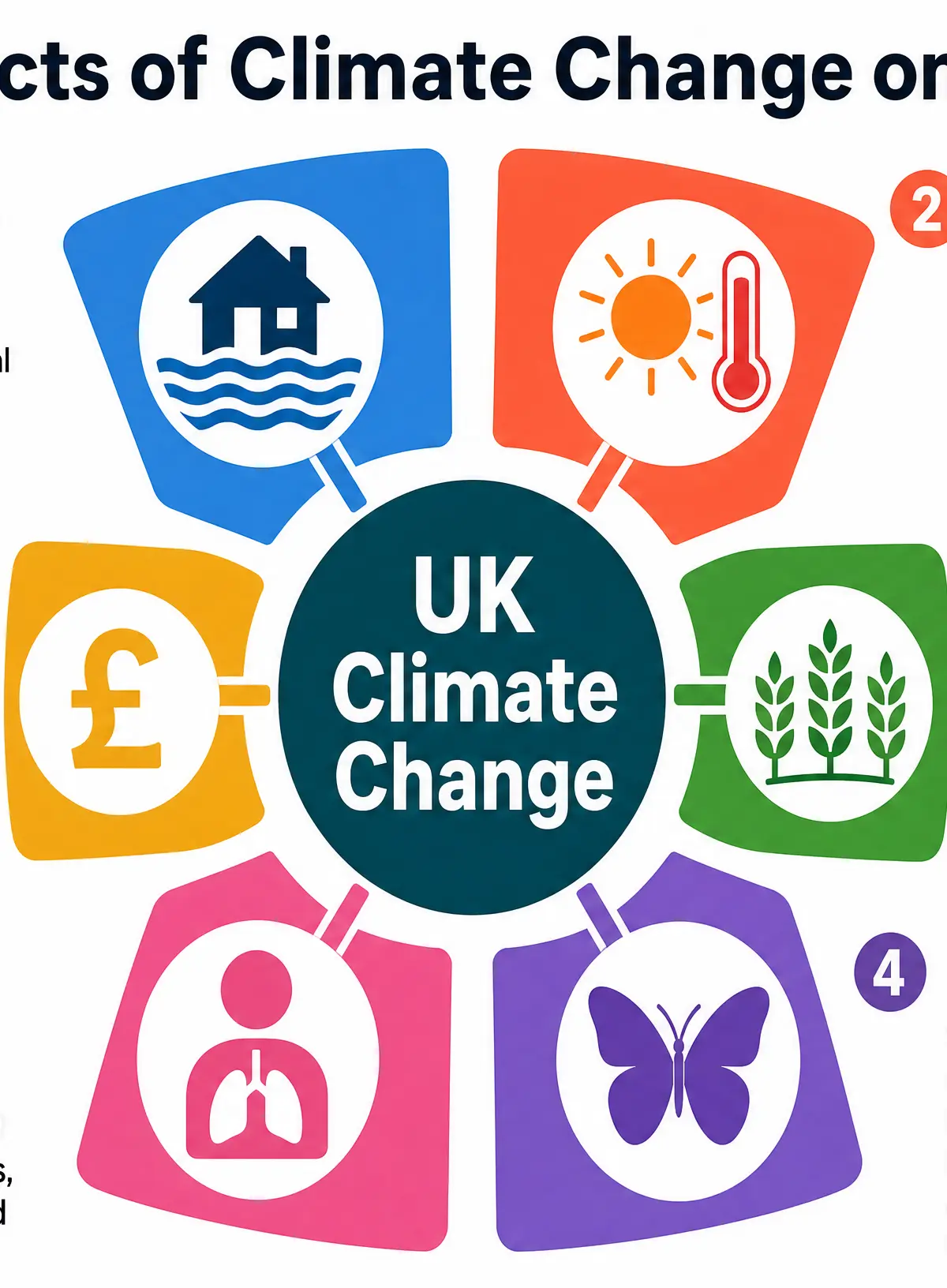
Flooding and Extreme Weather
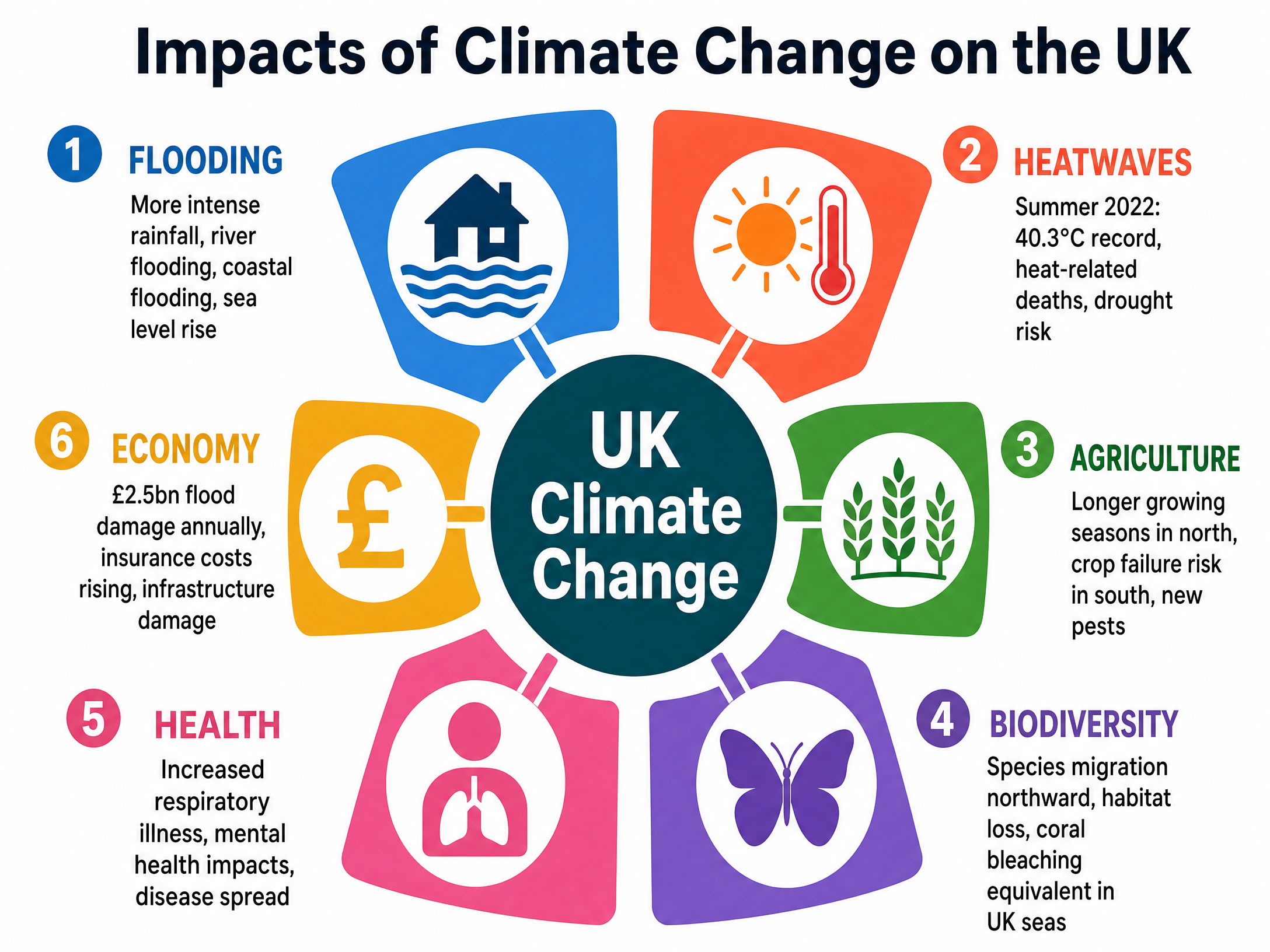
Impact: Increased frequency and intensity of river and coastal flooding. This is arguably the most significant climate threat to the UK.
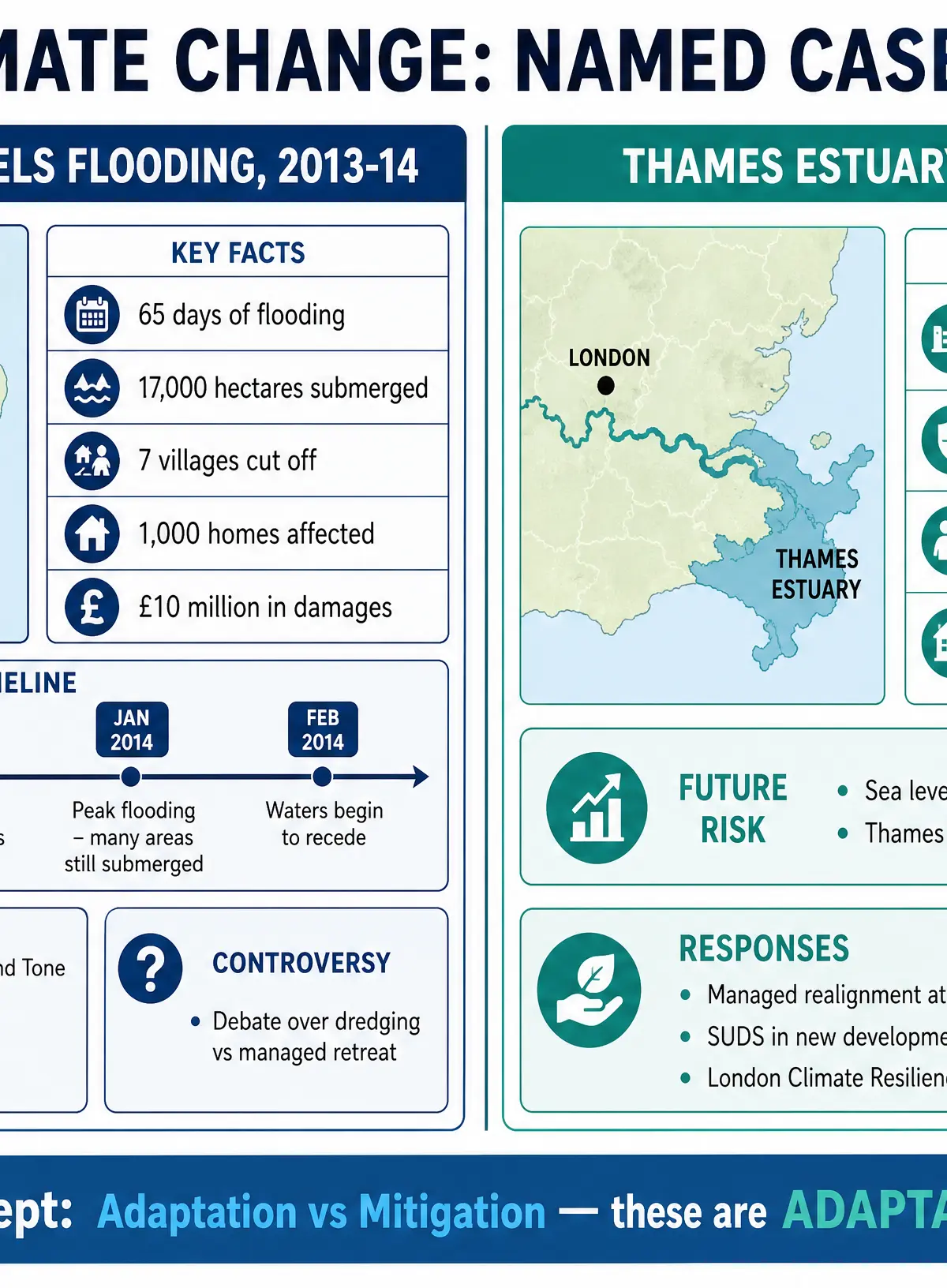
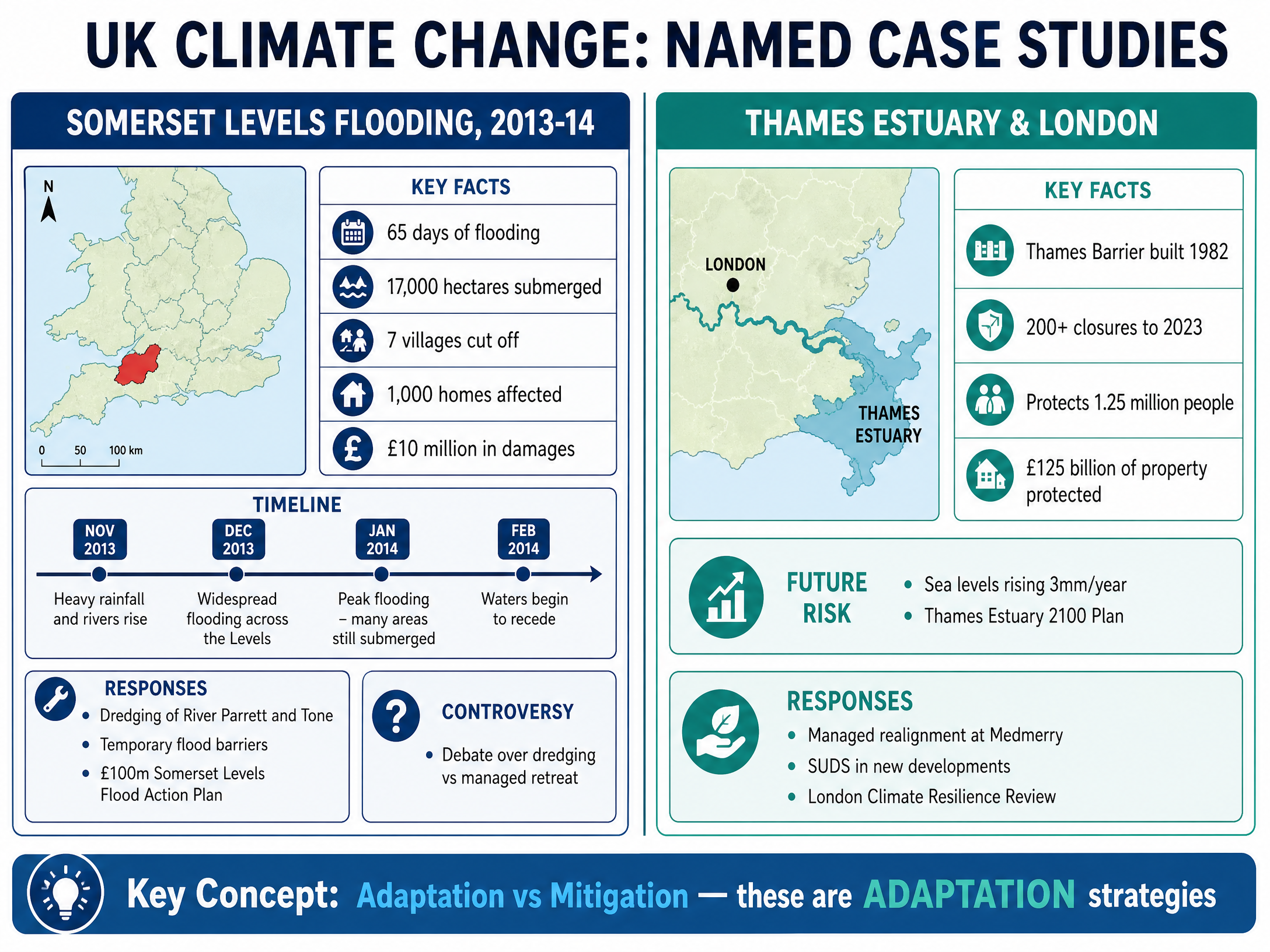
Specific Knowledge: The Somerset Levels flooding (2013-14) is a key case study. 65 days of flooding submerged 17,000 hectares of land, cut off 7 villages, affected 1,000 homes, and caused £10 million in damages.
Agriculture and Food Security
Impact: A mixed picture. In northern UK, warmer temperatures may lengthen the growing season and increase yields. In southern and eastern England, increased drought risk and water stress threaten traditional crops like wheat and potatoes. New pests and diseases are also migrating northwards.
Health and Wellbeing
Impact: Heatwaves pose a severe risk to vulnerable populations (the elderly and those with respiratory conditions). The 2022 heatwave resulted in over 2,000 excess deaths. However, milder winters may reduce cold-related winter mortality.
Biodiversity and Ecosystems
Impact: Species are shifting their ranges. Cold-water species are moving further north, while new species are arriving from southern Europe (e.g., the comma butterfly). Coastal habitats like saltmarshes face 'coastal squeeze' as sea levels rise against fixed flood defences.
Responses to Climate Change in the UK
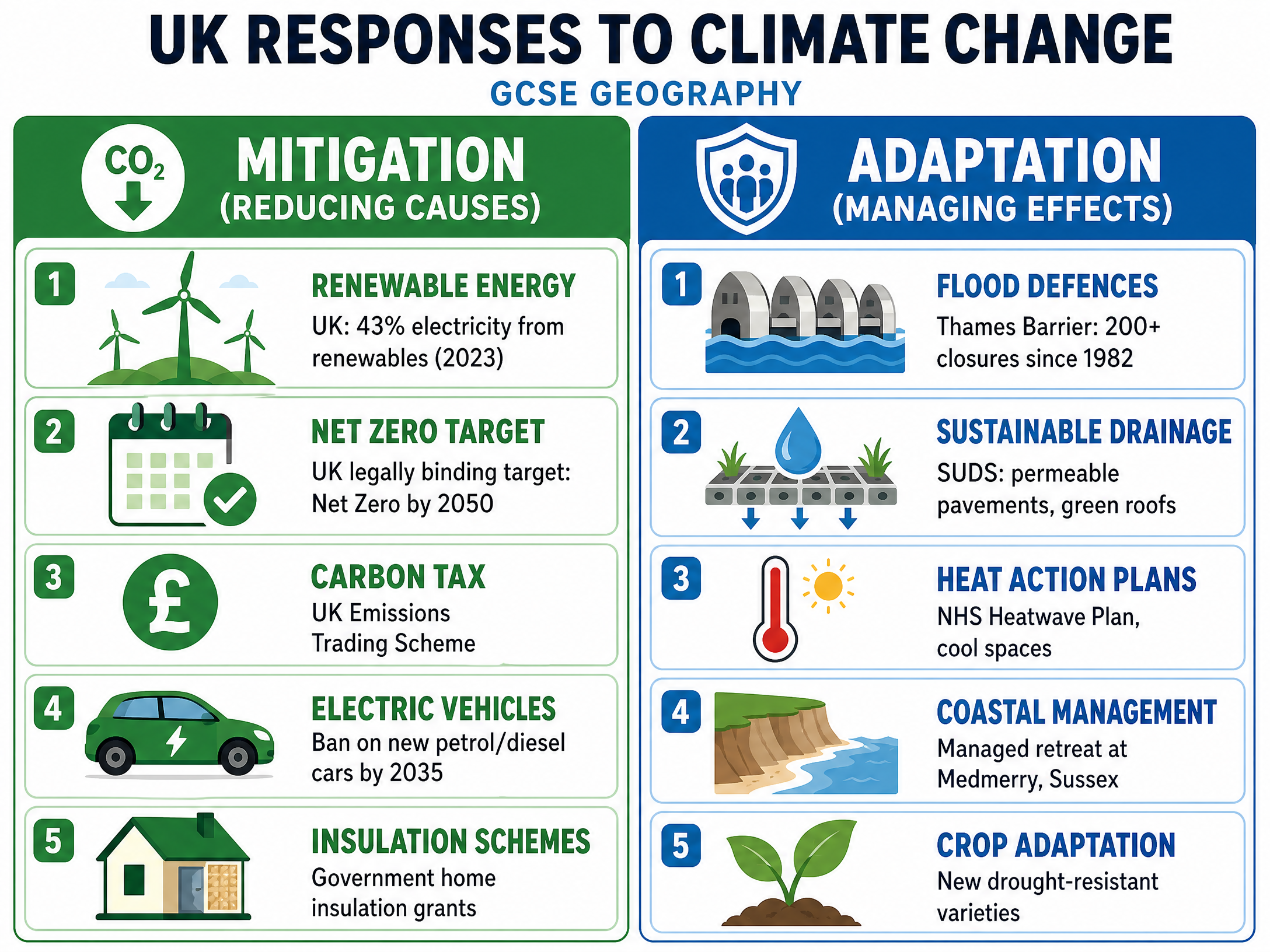
Candidates MUST be able to distinguish between Mitigation and Adaptation.
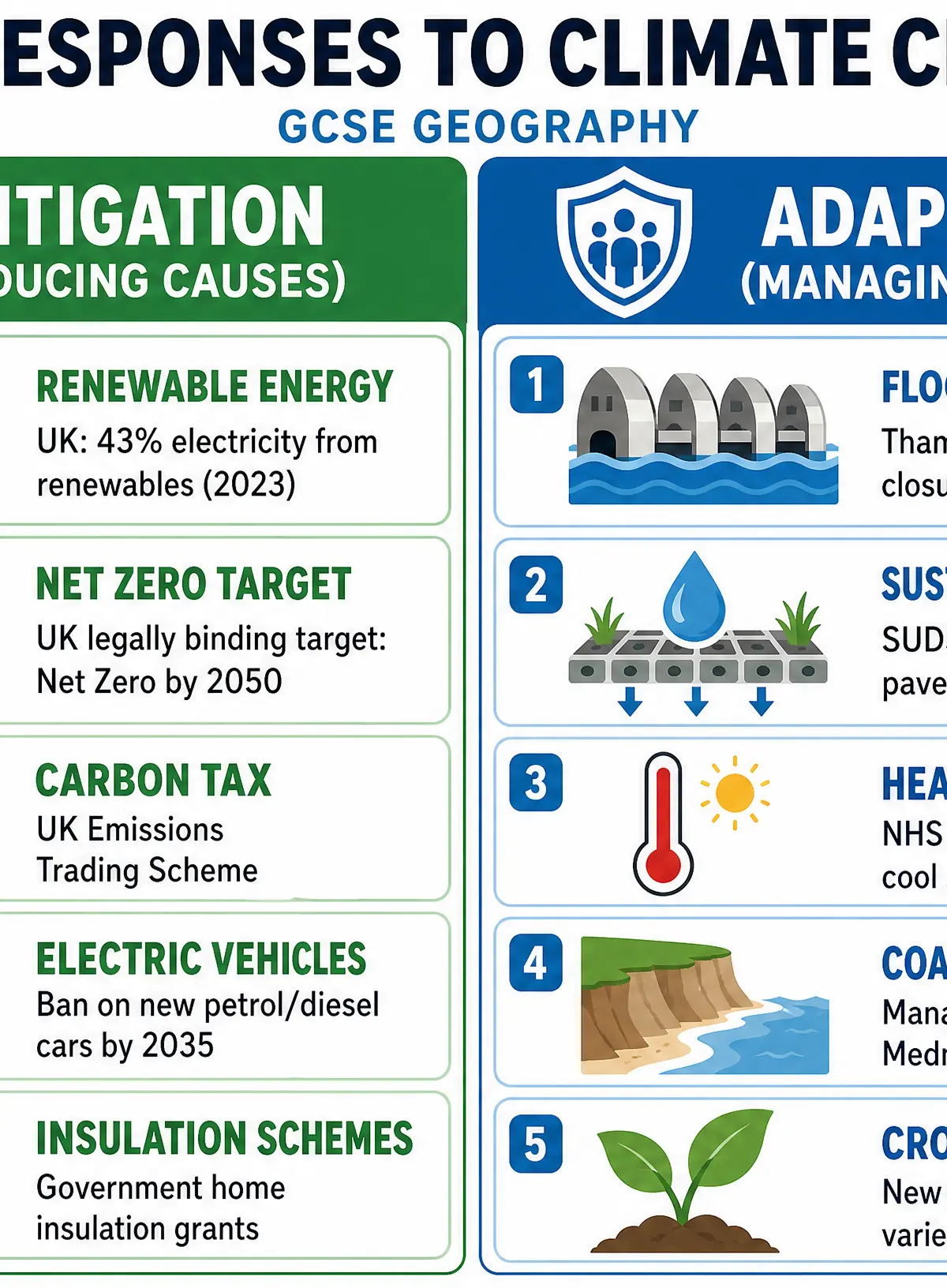
Mitigation (Reducing Causes)
Mitigation strategies aim to reduce greenhouse gas emissions to limit future warming.
National Level:
- Net Zero Target: The UK is legally bound to achieve Net Zero carbon emissions by 2050.
- Renewable Energy: Significant investment in offshore wind. In 2023, renewables generated ~43% of UK electricity.
- Transport: Ban on the sale of new petrol and diesel cars from 2035.
Adaptation (Managing Effects)
Adaptation strategies aim to manage the impacts of climate change that are already happening or are inevitable.
National and Local Level:
- Flood Defences: The Thames Barrier protects 1.25 million people in London. However, it was designed for sea levels projected up to 2030, necessitating the Thames Estuary 2100 Plan for future upgrades.
- Sustainable Urban Drainage Systems (SUDS): Local planning requirement for new developments to use permeable surfaces and green roofs to reduce rapid surface runoff.
- Managed Retreat: Allowing the coast to flood naturally to create new intertidal habitats that act as natural buffers, e.g., Medmerry in West Sussex.
Second-Order Concepts
Causation
Climate change in the UK is driven by global anthropogenic greenhouse gas emissions, but the specific local impacts (e.g., flooding in Somerset) are caused by a combination of changing weather patterns (increased winter rainfall) and local physical/human geography (low-lying land, lack of river dredging).
Consequence
The consequences of climate change are unevenly distributed. Coastal and river-adjacent communities face immediate physical threats, while the agricultural sector faces complex economic and operational shifts. The economic consequences include rising insurance premiums and infrastructure repair costs.
Evaluation (Significance)
When evaluating responses, mitigation is globally significant but requires international cooperation to be truly effective. Adaptation is locally significant and provides immediate protection, but it can be extremely expensive (e.g., Thames Barrier upgrades) and may eventually be overwhelmed if mitigation fails.
Visual Resources
3 diagrams and illustrations
Interactive Diagrams
1 interactive diagram to visualise key concepts
Conceptual Flow Outline
Causation flow chart: How changing precipitation patterns lead to multi-sector impacts.
Worked Examples
3 worked examples — open one to explore the question and available guidance.
Practice Questions
Test your understanding — click to reveal model answers
State one piece of evidence that the UK's climate is changing. (1 mark)
Hint: Think about temperature records or sea levels.
Explain how climate change might affect agriculture in the UK. (4 marks)
Hint: Try to give one positive and one negative effect.
Using a named example, describe the social and economic impacts of a recent extreme weather event in the UK. (6 marks)
Hint: Use the Somerset Levels flooding case study. Make sure you separate social (people) and economic (money/jobs) impacts.
Explain why there is uncertainty about the future impacts of climate change in the UK. (4 marks)
Hint: Think about human behaviour and emissions scenarios.
'Local adaptation strategies are the best way for the UK to manage the challenges of climate change.' Evaluate this statement. (9 marks)
Hint: Evaluate means look at the pros and cons of local adaptation, and compare it to national mitigation.