Pearson Edexcel · GCSE · Geography
The UK's resource consumption and environmental sustainability challenge
This topic is crucial for understanding how the UK balances the needs of a growing population with the urgent necessity of environmental sustainability. It explores the tension between increasing resource demands, the pressures placed on delicate UK ecosystems, and the national strategies required to move towards sustainable transport, providing vital context for the challenges the UK faces over the next 50 years.
- 6 min read
- 3 worked examples
- 5 practice questions
- 6 key terms
Study Notes
Overview
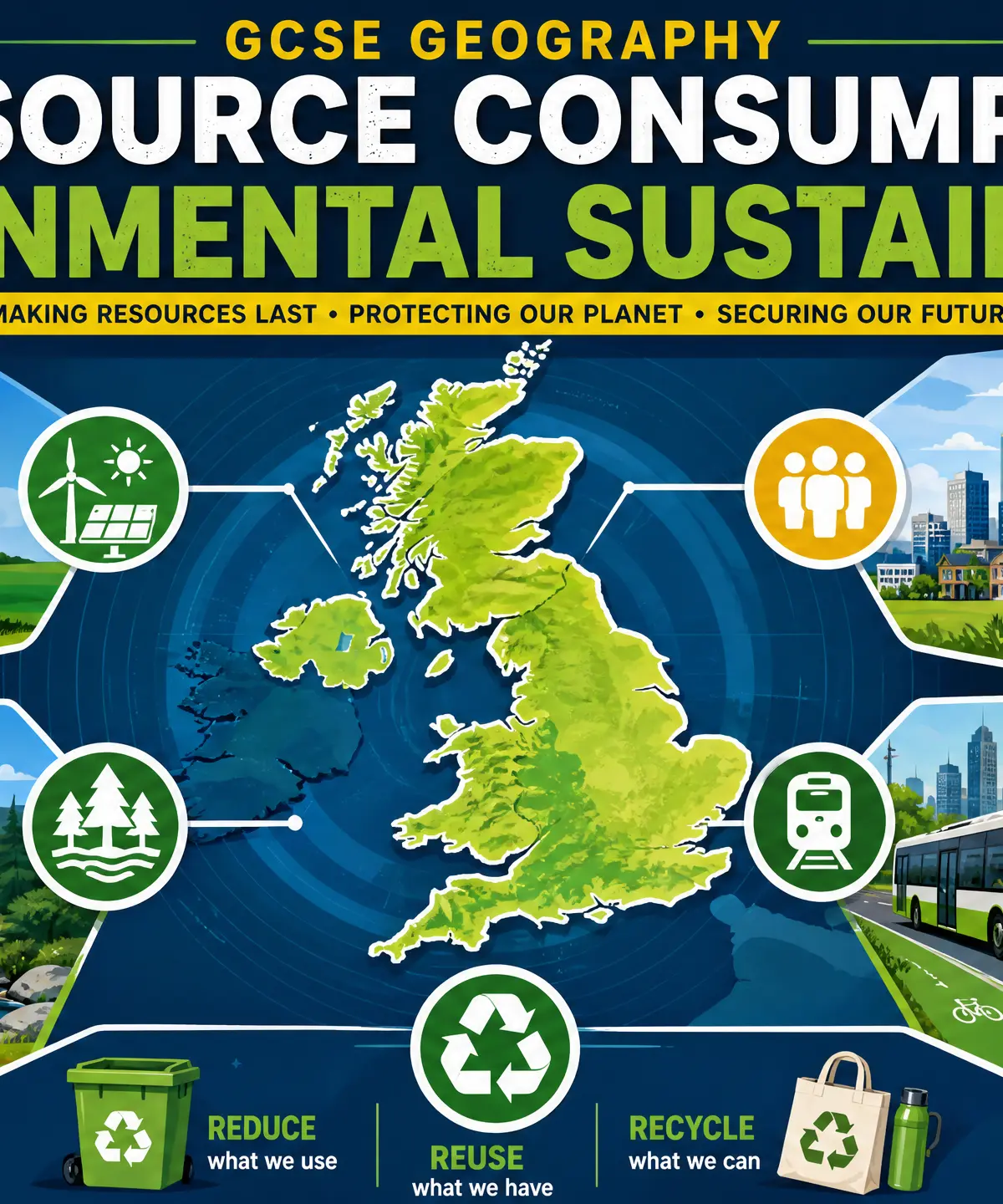
This study guide covers the critical challenge of the UK's resource consumption and environmental sustainability. As a GCSE Geography candidate, you must understand the trajectory of the UK population over the next 50 years and how this demographic shift acts as a multiplier on resource demand. Examiners expect you to trace the causal chain from population growth directly to specific pressures on UK ecosystems, using named examples to demonstrate specific knowledge. Furthermore, you will need to evaluate national-scale sustainable transport options, weighing their advantages against their economic and social costs. This topic is frequently assessed through extended writing and evaluation questions, requiring you to demonstrate a balanced understanding of competing needs and sustainable management strategies.
Key Concepts & Drivers
UK Population Projections (2024-2074)
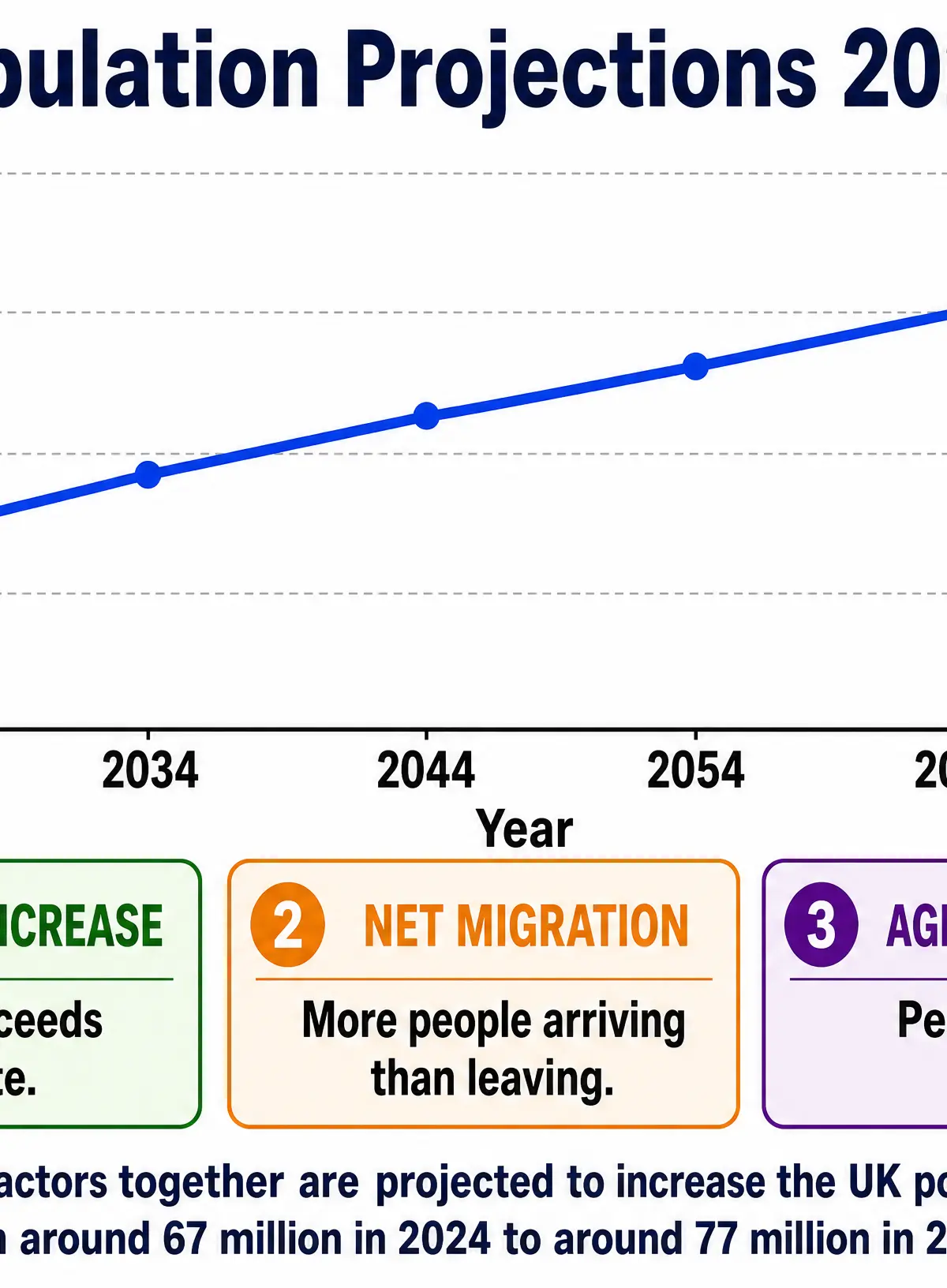
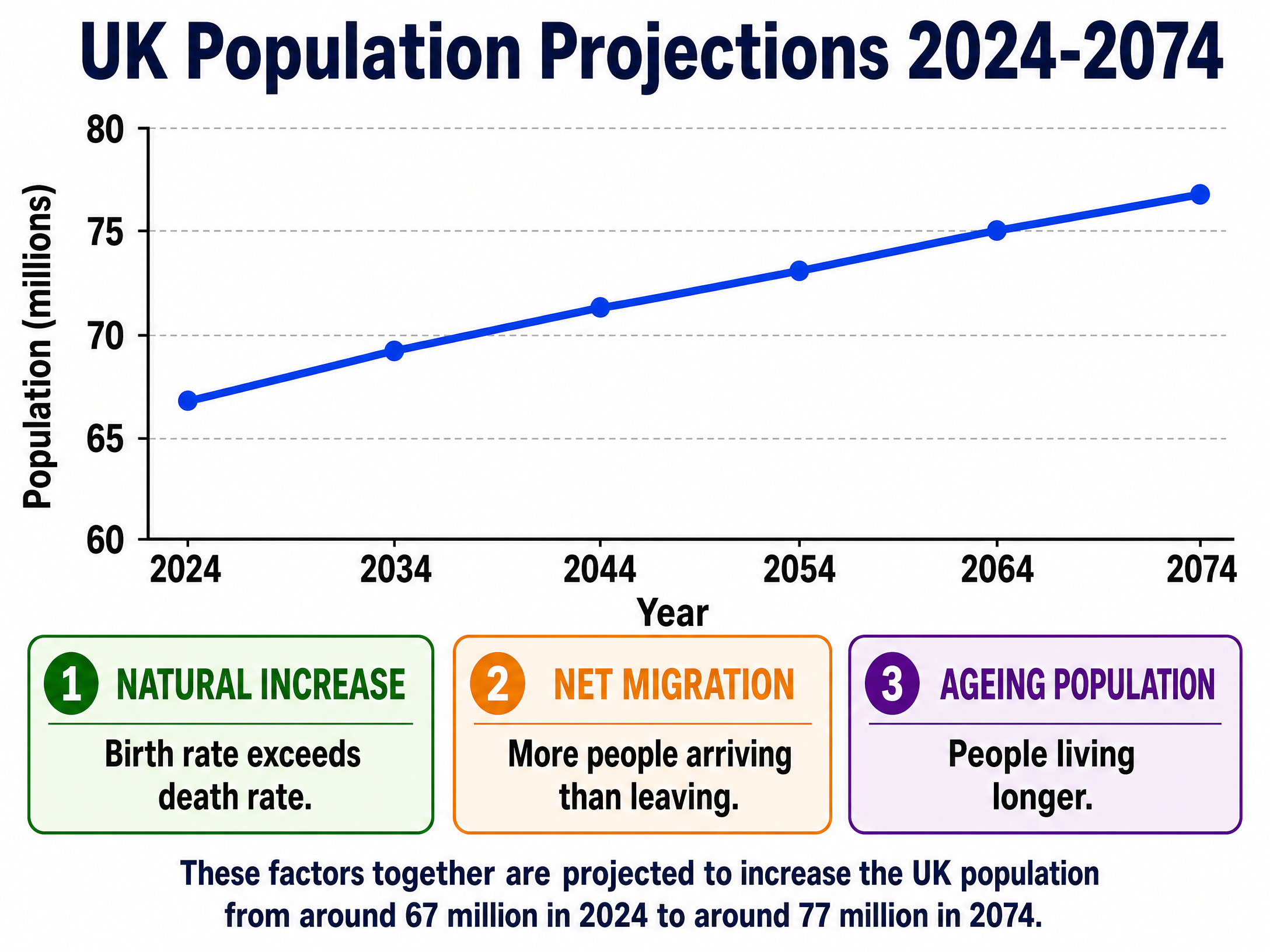
Data & Trends: The UK population is projected to grow from approximately 67 million in 2024 to around 77 million by 2074.
Drivers of Change: This growth is driven by three main factors:
- Natural Increase: The birth rate exceeding the death rate.
- Net Migration: More people arriving in the UK than leaving.
- Ageing Population: Increased life expectancy due to advances in healthcare and living standards.
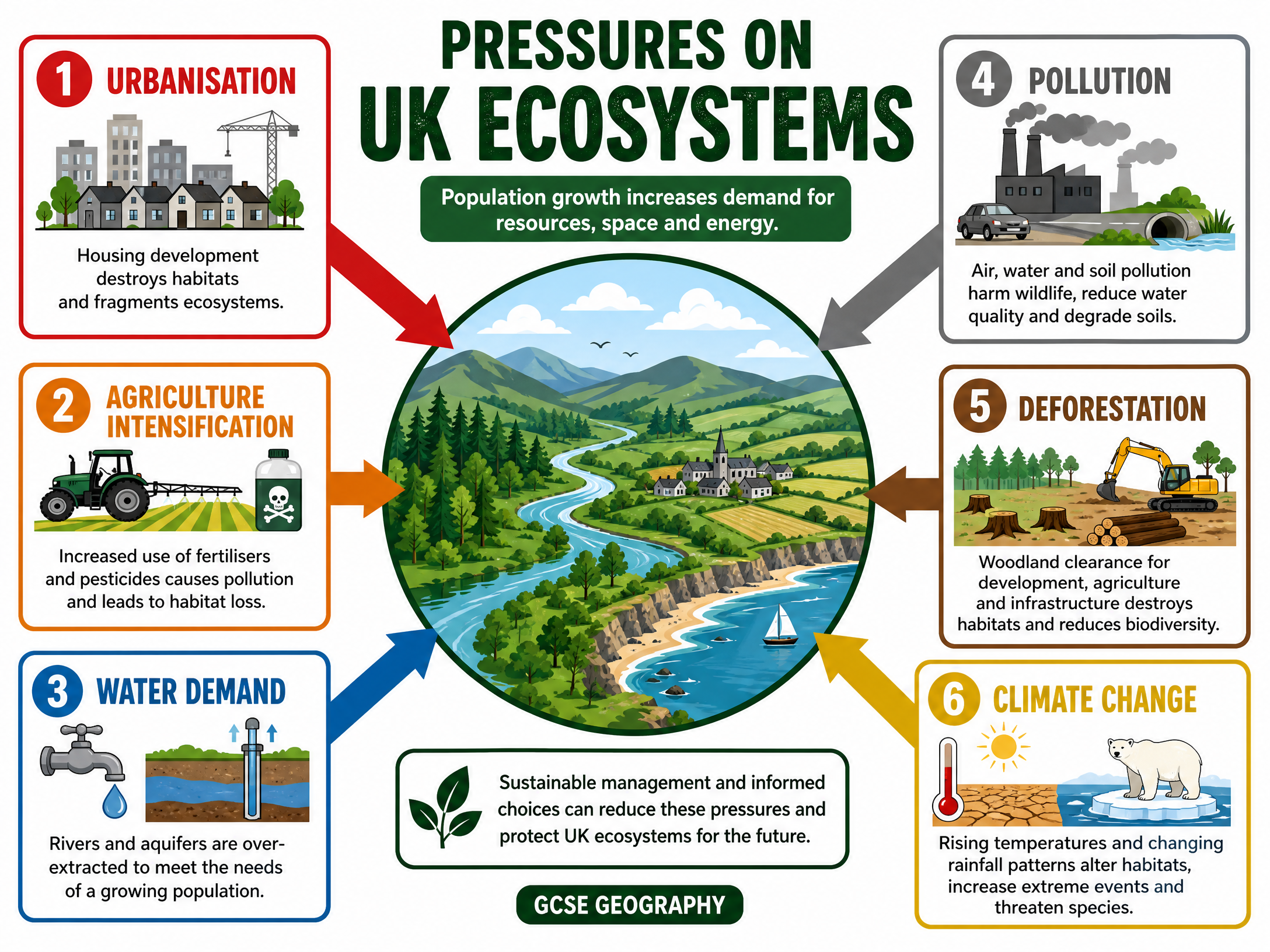
Significance: A growing population acts as the primary multiplier for resource consumption. Every additional person increases the national demand for food, water, energy, and housing, thereby expanding the UK's ecological footprint.
Implications for Resource Consumption
Energy Demand: The UK requires vast amounts of energy for domestic use, industry, and transport. As the population grows, transitioning to renewable sources while meeting increased demand is a significant challenge.
Water Stress: The UK is not uniformly water-rich. The South East of England, which experiences high population density and growth, is classified as seriously water-stressed. Increased extraction from rivers and aquifers threatens aquatic ecosystems.
Housing and Land Use: The UK government targets the construction of hundreds of thousands of new homes annually. This requires land (often encroaching on greenbelt or agricultural land) and energy-intensive building materials.
Pressures on UK Ecosystems
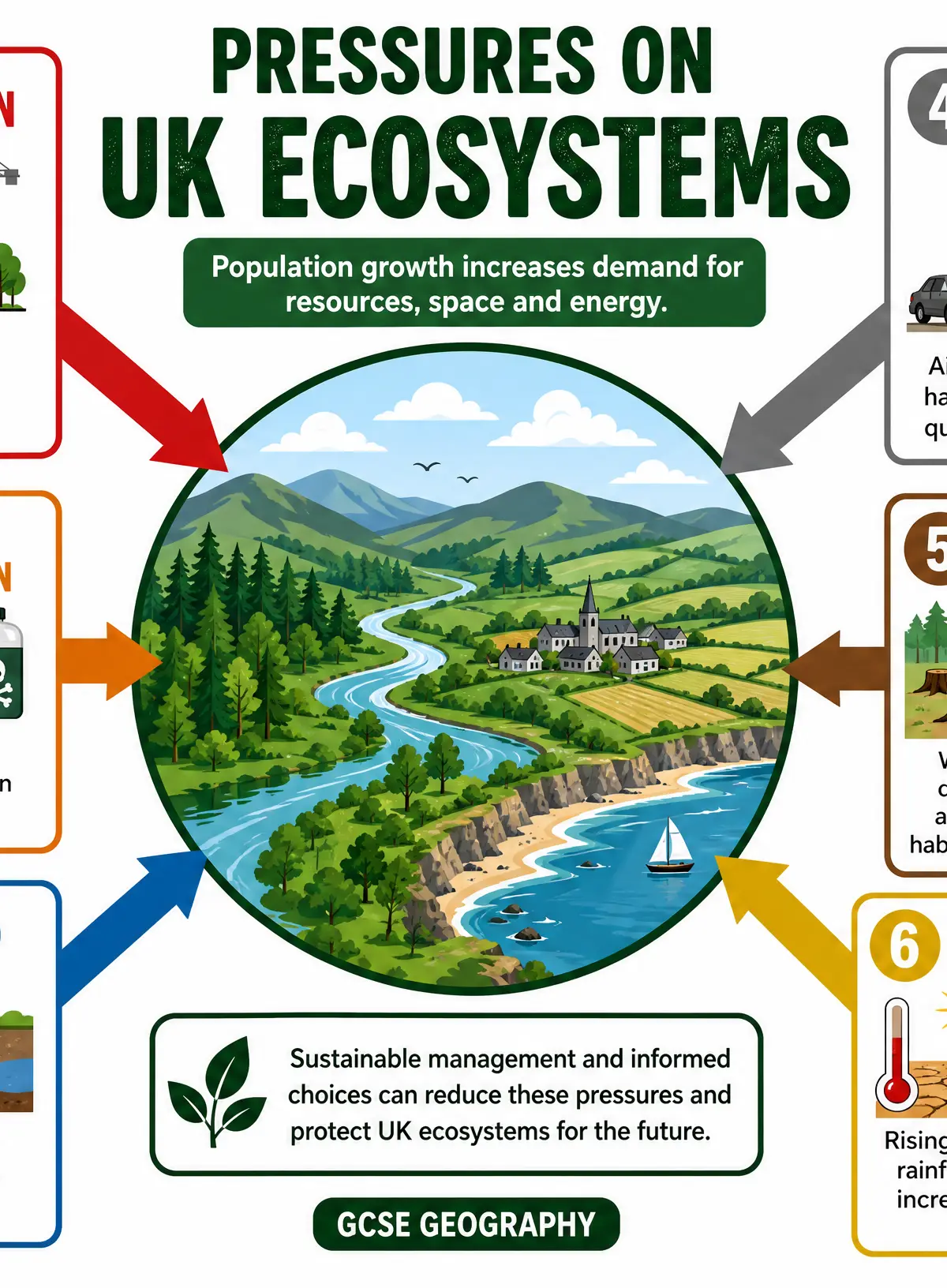
Examiners look for specific links between human activity and ecosystem degradation.
Urbanisation and Habitat Fragmentation
Mechanism: As cities and towns expand to accommodate population growth, natural habitats are destroyed or fragmented.
Impact: This isolates wildlife populations, reduces biodiversity corridors, and increases surface runoff, leading to a higher risk of localized flooding.
Agricultural Intensification
Mechanism: To feed a growing population, farming becomes more intensive, utilizing higher quantities of chemical fertilizers and pesticides.
Impact: Runoff from these chemicals enters river systems causing eutrophication—a process where excess nutrients trigger algal blooms that deplete oxygen in the water, killing fish and aquatic plants.
Named UK Ecosystem Examples
- The New Forest (Hampshire): An ancient woodland ecosystem facing severe pressure from both high visitor numbers (tourism) and housing development on its periphery, threatening its unique biodiversity.
- The Somerset Levels: A wetland ecosystem where upstream land-use changes and agricultural practices have altered natural drainage, increasing vulnerability to severe flooding events.
- The Peak District: An upland ecosystem facing pressure from recreational overuse, which causes footpath erosion, and agricultural intensification which degrades natural habitats.
National Sustainable Transport Options
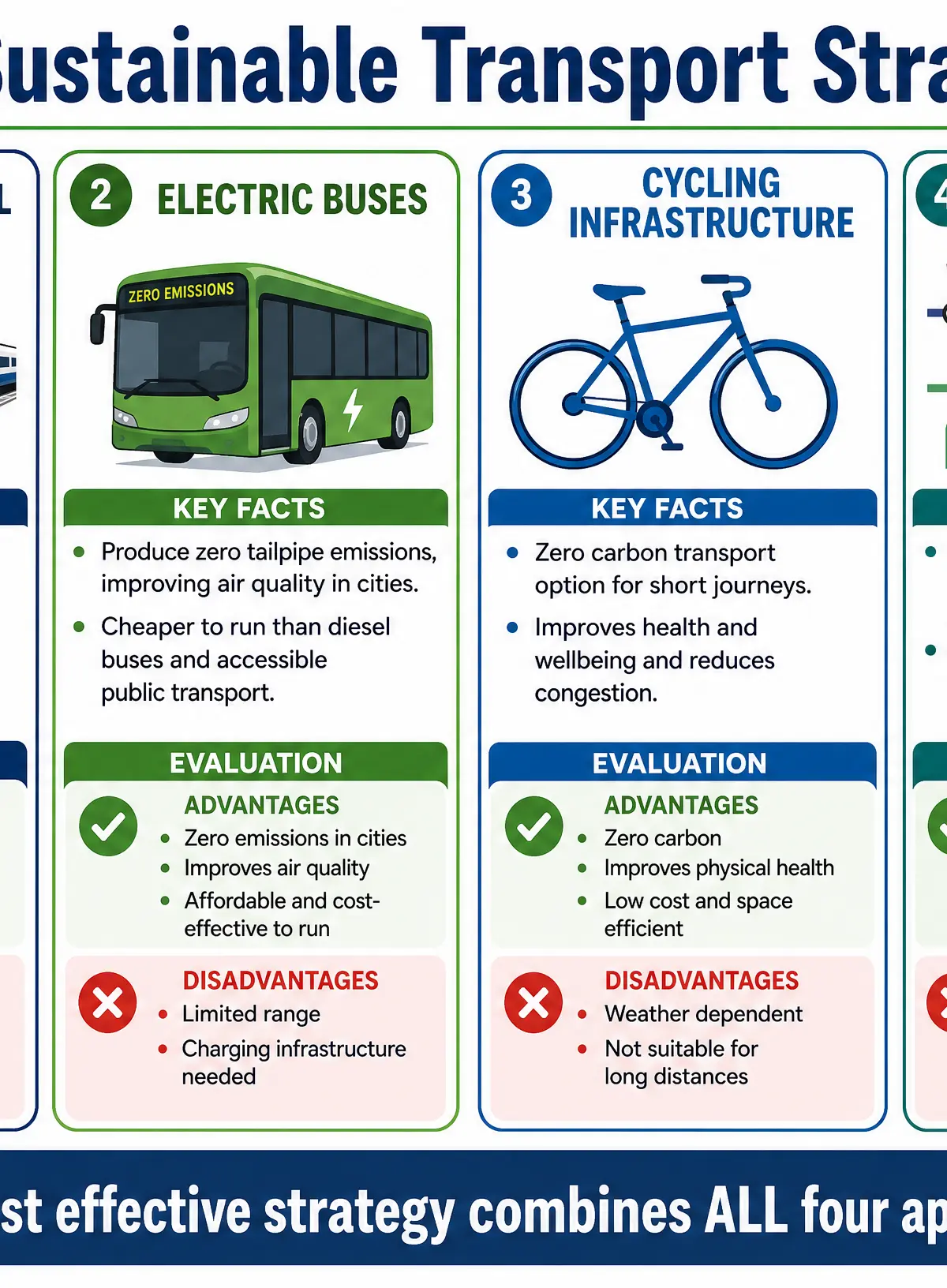
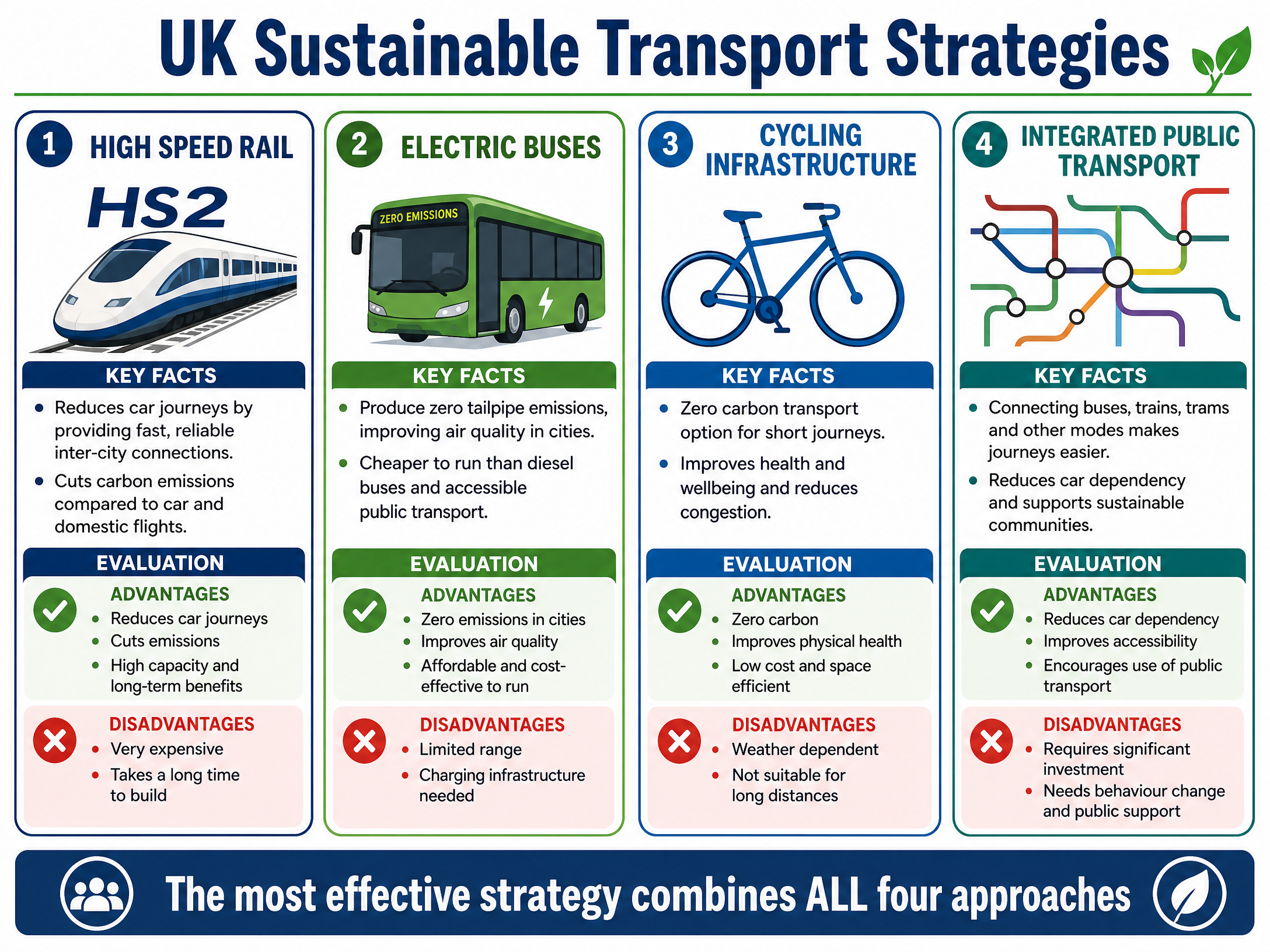
Transport is the largest emitting sector of greenhouse gases in the UK. Evaluating sustainable transport strategies is a common requirement in GCSE Geography.
High Speed Rail (HS2)
Strategy: A major infrastructure project designed to provide high-speed rail links between major UK cities (e.g., London and Birmingham).
Evaluation:
- Advantages: Significantly reduces carbon emissions per passenger compared to cars and domestic flights; increases capacity on existing rail networks for freight, removing lorries from roads.
- Disadvantages: Extremely high economic cost (exceeding £100 billion); construction destroys ancient woodlands and habitats; the northern legs were cancelled in 2023, reducing its overall national impact.
Electric Vehicles (EVs) and Infrastructure
Strategy: Government mandate to end the sale of new petrol and diesel cars by 2035, supported by the rollout of charging networks.
Evaluation:
- Advantages: Zero tailpipe emissions, significantly improving urban air quality.
- Disadvantages: Sustainability depends entirely on the energy mix used to generate the electricity; manufacturing batteries requires resource-intensive mining; charging infrastructure remains unevenly distributed, particularly in rural areas.
Integrated Public Transport
Strategy: Creating seamless networks combining buses, trams, and trains with unified ticketing (e.g., Transport for London or Greater Manchester's Bee Network).
Evaluation:
- Advantages: Highly effective at reducing car dependency in dense urban areas; improves social mobility and access to services.
- Disadvantages: Difficult and expensive to implement in rural areas; requires significant upfront capital investment and long-term behavioral change from the public.

Listen to the GCSE Geography revision podcast above for an in-depth review of these topics, exam technique tips, and a quick-fire recall quiz.
Visual Resources
3 diagrams and illustrations
Interactive Diagrams
1 interactive diagram to visualise key concepts
Conceptual Flow Outline
The causal chain from population growth to ecosystem pressure
Worked Examples
3 worked examples — open one to explore the question and available guidance.
Practice Questions
Test your understanding — click to reveal model answers
State two reasons why the UK population is projected to increase over the next 50 years. (2 marks)
Hint: Think about the balance of births and deaths, and people moving in versus moving out.
Explain how agricultural intensification can damage aquatic ecosystems in the UK. (4 marks)
Hint: Use the term 'eutrophication' and explain the step-by-step process starting from the farm field.
Using a named UK example, describe how recreational use puts pressure on an ecosystem. (3 marks)
Hint: Name a specific National Park or woodland and state exactly what tourists do that causes damage.
Evaluate the success of policies to promote electric vehicles (EVs) in the UK. (6 marks)
Hint: Provide both the environmental benefits of EVs and the practical/geographical challenges of implementing them nationwide.
'Technological solutions alone cannot solve the UK's sustainable transport challenge; behavioral change is required.' To what extent do you agree with this statement? (9 marks)
Hint: Compare technological fixes (like EVs and HS2) with strategies that require people to change their habits (like cycling, walking, and using public transport).