Pearson Edexcel · GCSE · Geography
The UK settlement, population and economic challenges
This study guide tackles the critical issues of the UK's 'two-speed economy', the debates over greenfield versus brownfield development, and the complexities of net migration. Understanding these contemporary geographical challenges is essential for explaining how human and economic processes are reshaping the UK landscape.
- 4 min read
- 3 worked examples
- 5 practice questions
- 6 key terms
Study Notes
Overview
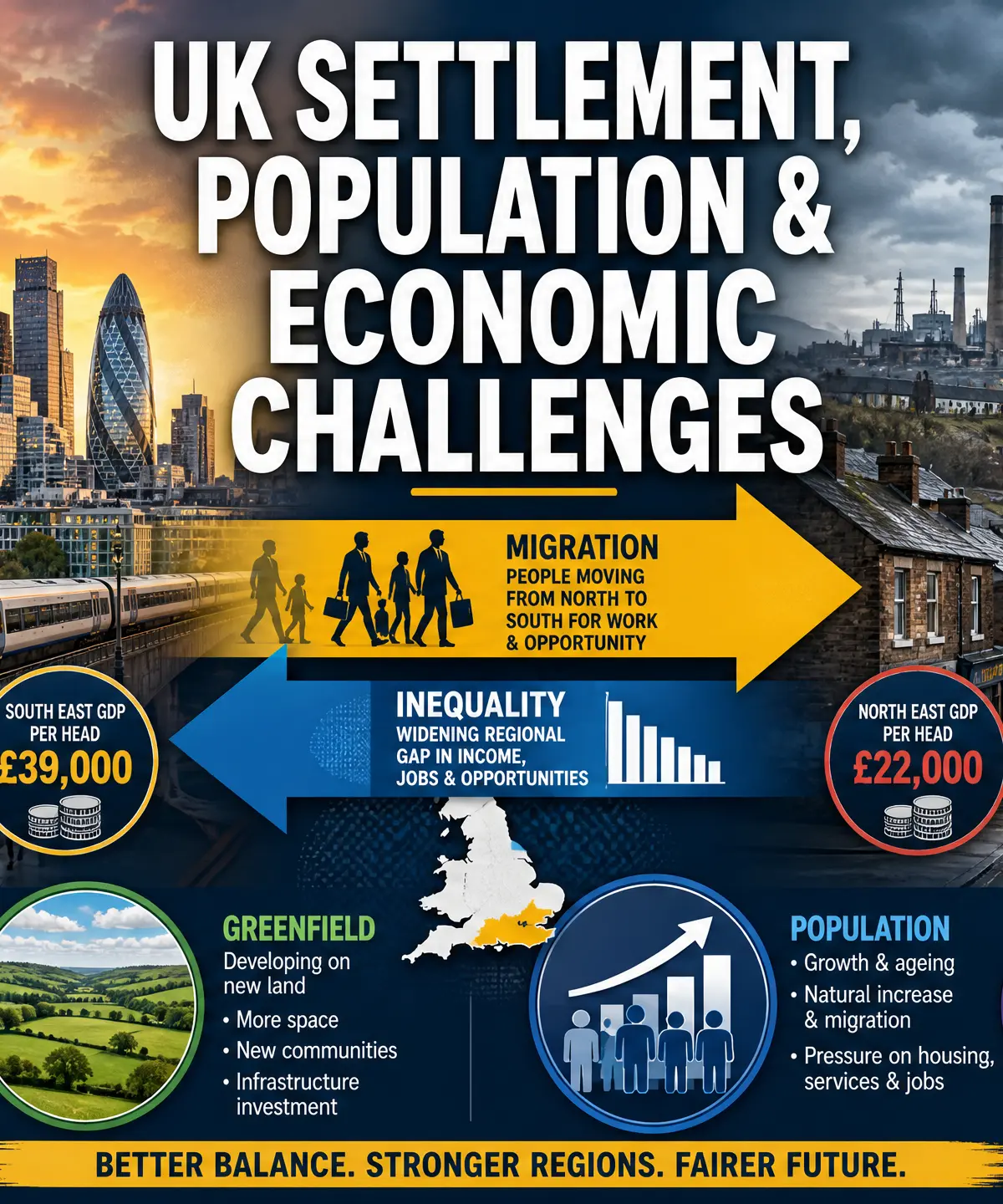
This topic explores the significant economic and demographic challenges facing the UK today. Examiners expect candidates to demonstrate a clear understanding of the 'two-speed economy'—the widening gap in wealth, employment, and opportunities between the prosperous South East and other regions, particularly the North. You will need to evaluate the strategies designed to bridge this gap, such as the Northern Powerhouse and HS2.
Furthermore, the topic covers the environmental and economic trade-offs involved in urban planning, specifically the debate between developing on greenfield versus brownfield sites. Finally, you must analyse UK net migration statistics, understanding not only the trends but also why the data may be unreliable, and evaluate the diverse attitudes of different stakeholders towards migration. Precision is key: use specific data, name UK regions, and identify specific stakeholder groups to achieve the highest marks.
Key Concepts & Challenges
The Two-Speed Economy
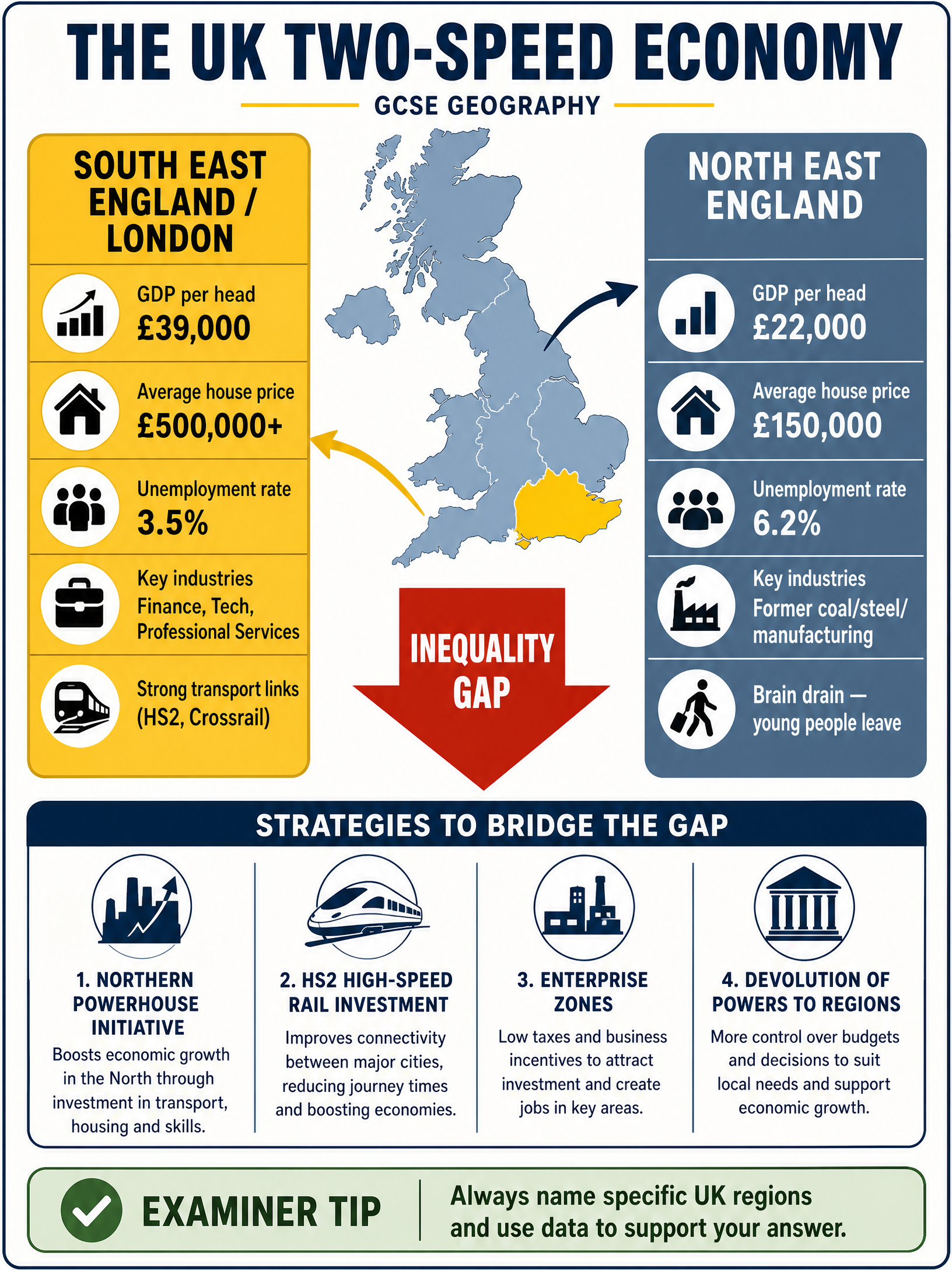
What it is: The economic disparity between the rapidly growing South East (particularly London) and slower-growing regions like the North East and North West.
Why it matters: It highlights regional inequality in income, housing, and life chances. Examiners reward candidates who can explain the historical context (deindustrialisation in the North) and the modern drivers (growth of the service sector in the South East).
Specific Knowledge:
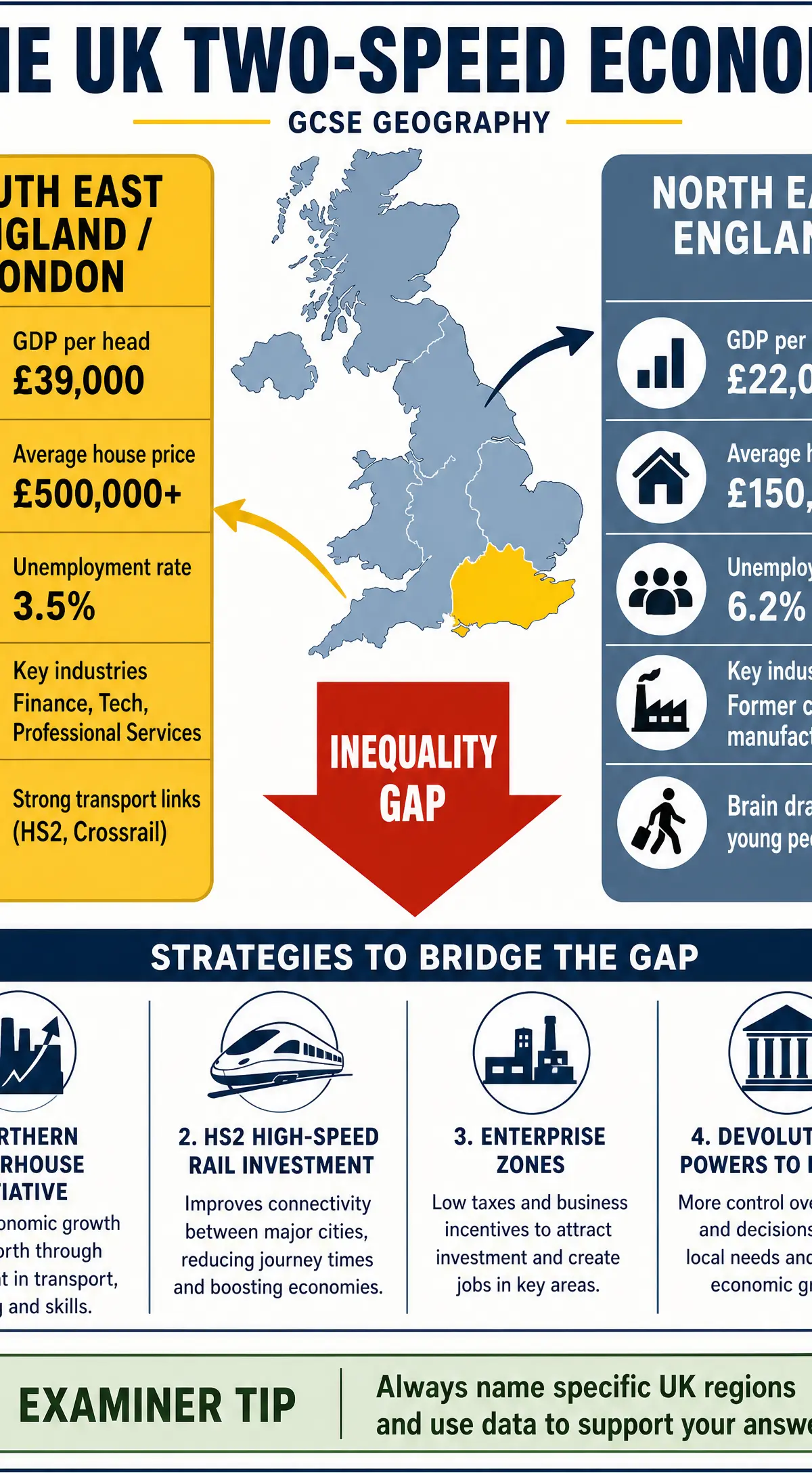
- South East GDP per head: ~£39,000
- North East GDP per head: ~£22,000
- Key strategies to bridge the gap: Northern Powerhouse, HS2, Enterprise Zones, Devolution.
Greenfield vs Brownfield Development
What it is: The debate over where to build new housing and infrastructure to meet growing population demands.
Why it matters: It involves a direct conflict between economic development and environmental conservation. Examiners expect you to balance the arguments for both types of land use.
Specific Knowledge:
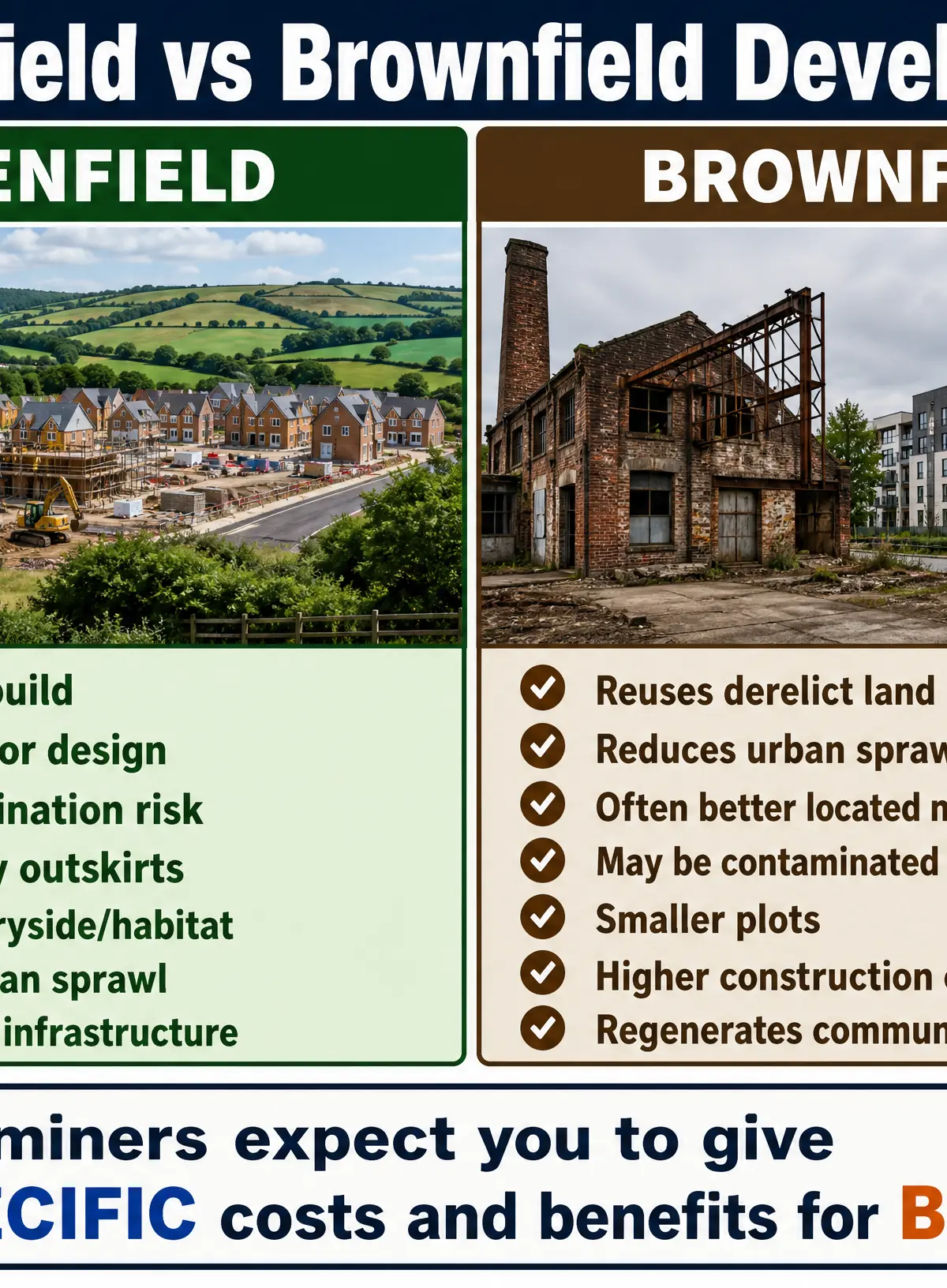
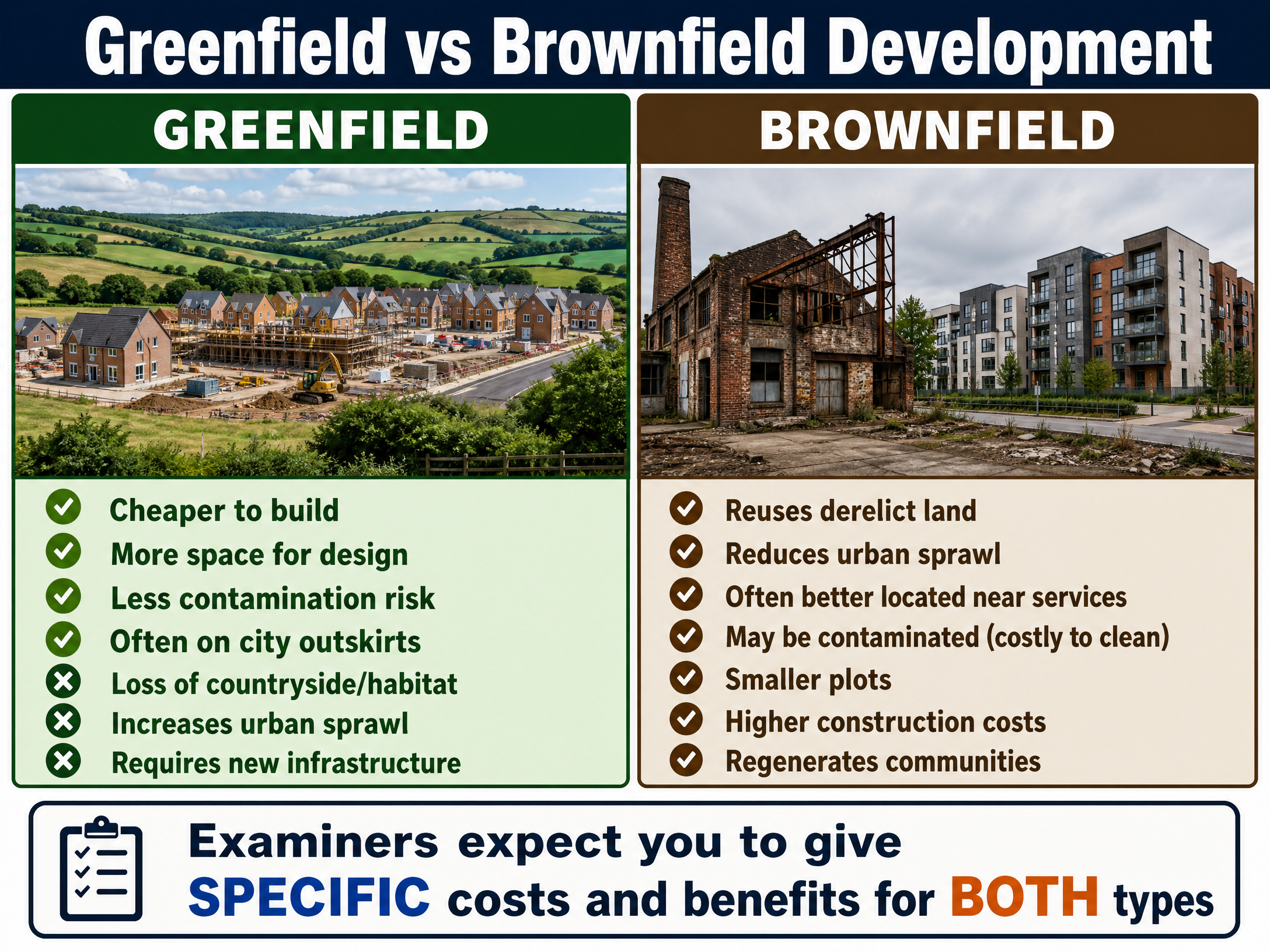
- Greenfield: Cheaper to build, more space, but causes habitat loss and urban sprawl.
- Brownfield: Reuses derelict land, regenerates communities, but can be expensive to clean up contamination.
UK Net Migration
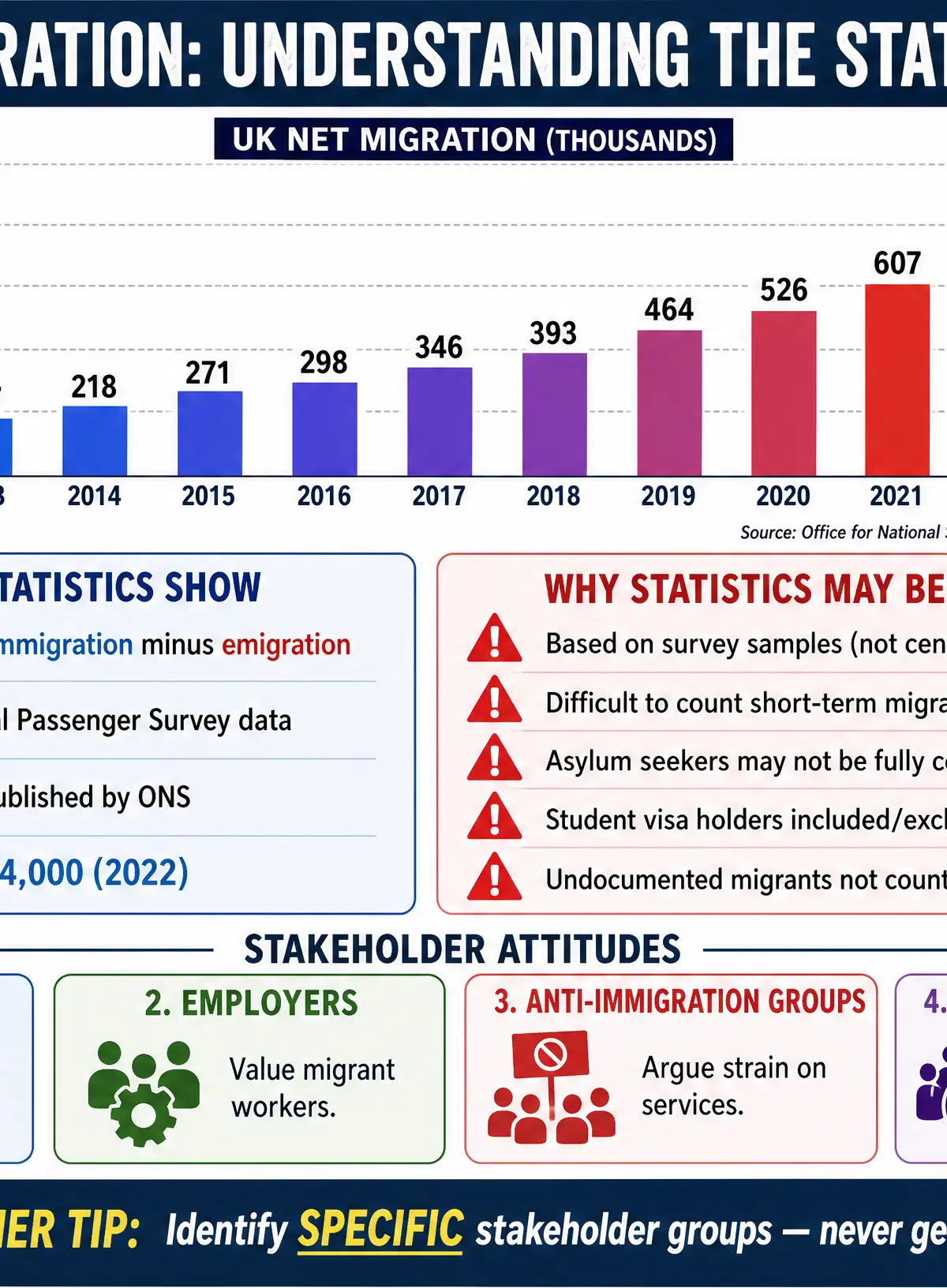
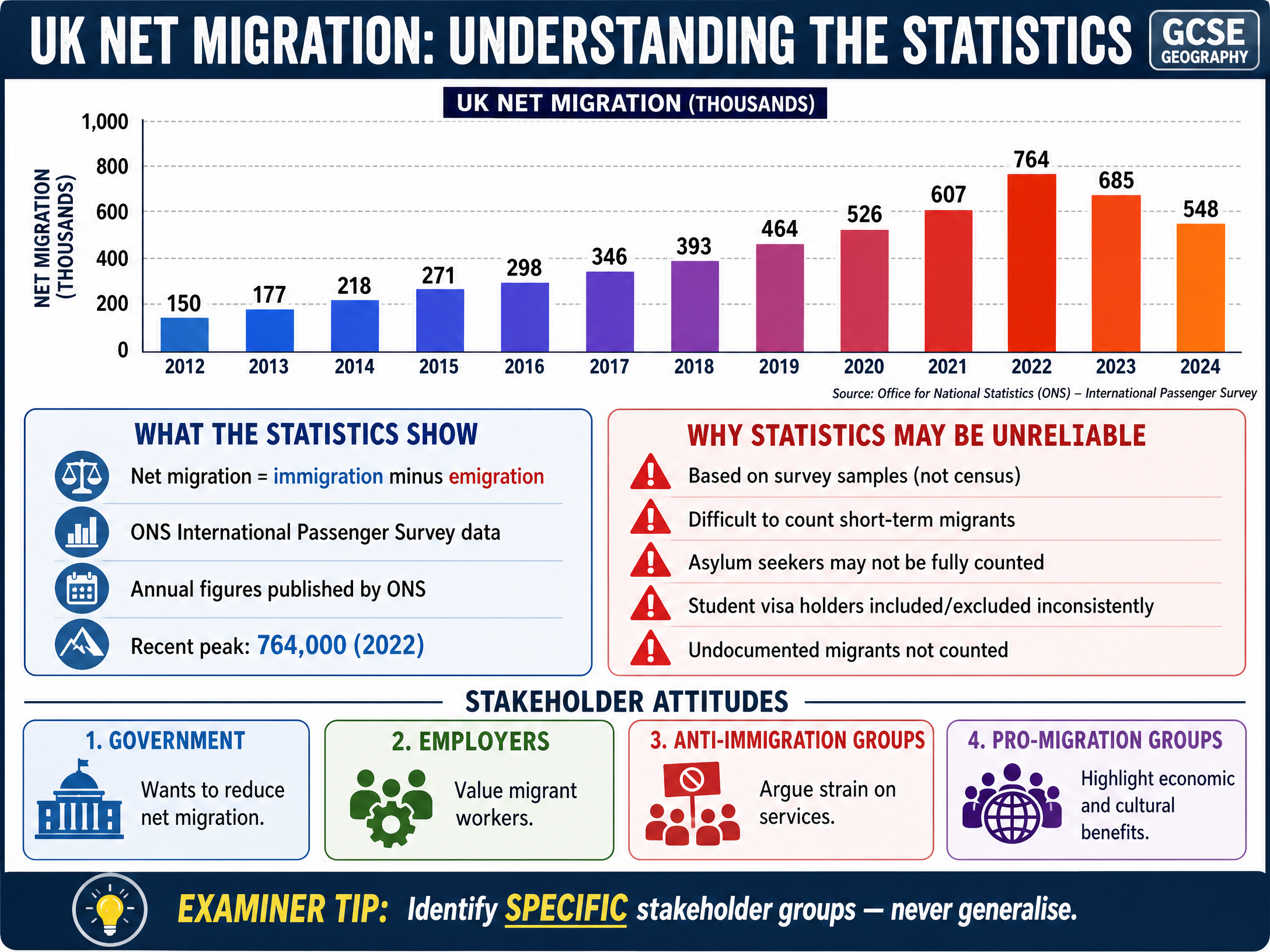
What it is: The difference between immigration (people moving into the UK) and emigration (people leaving).
Why it matters: Migration impacts population size, economic growth, and pressure on services. You must understand both the statistics and the varied stakeholder attitudes towards them.
Specific Knowledge:
- Recent peak net migration: ~764,000 in 2022.
- Reliability issues: Data is often based on the International Passenger Survey (a sample, not a full count), making it difficult to track short-term or undocumented migrants.
- Stakeholders: Employers (value skills), Government (often aim to control/reduce), Anti-immigration groups (cite pressure on services), Pro-migration groups (cite economic/cultural benefits).
Podcast Revision
Listen to this 10-minute podcast episode for a deep dive into the core concepts, examiner tips, and a quick-fire recall quiz.

Visual Resources
3 diagrams and illustrations
Interactive Diagrams
1 interactive diagram to visualise key concepts
Conceptual Flow Outline
Flowchart showing the causes of the Two-Speed Economy
Worked Examples
3 worked examples — open one to explore the question and available guidance.
Practice Questions
Test your understanding — click to reveal model answers
State two reasons why brownfield sites are often more expensive to develop than greenfield sites. (2 marks)
Hint: Think about what the land was used for previously and the shape of the land.
Explain how the Northern Powerhouse initiative aims to reduce regional inequality in the UK. (4 marks)
Hint: Focus on investment, connectivity, and skills.
Using a named example, explain one cost and one benefit of greenfield development. (4 marks)
Hint: Ensure you explicitly name a place or project.
To what extent do you agree that the benefits of high net migration to the UK outweigh the challenges? (9 marks)
Hint: You must present arguments for both sides (benefits and challenges) before reaching a conclusion.
Outline two reasons why different stakeholder groups have conflicting views on UK migration. (4 marks)
Hint: Name specific groups and contrast their priorities (e.g., economy vs. public services).