OCR · A-Level · Psychology
Course version: H567 · Version from Sept 2015
Core studies: Core studies in their pairs: How the two studies are…
Full specification wording
Section A: Core studies: Core studies in their pairs: How the two studies are similar. How the two studies are different. To what extent the contemporary study changes our understanding of the key theme. To what extent the contemporary study changes our understanding of individual, social and cultural diversity.
The newer study in each pairing tests whether the classic claim survives a modern method, a different culture or a different measure.
- Point 12 of 14
- 3 key terms
Study notes
From the teaching notes for this specification point.
The idea
The newer study in each pairing tests whether the classic claim survives a modern method, a different culture or a different measure. Milgram (1963) found that 26 of his 40 men went to the last switch on a generator marked 450 volts. Bocchiaro, Zimbardo and Van Lange (2012) gave Dutch students the further option of reporting the researcher, finding that most complied, only a small minority blew the whistle, and a separate group asked to predict their own behaviour badly overestimated their courage. Similarity and difference are key; harder marks come from arguing how far the newer evidence changes our understanding of the key theme, and what it tells us about individual, social and cultural diversity beyond male, American or student samples.
What earns the marks
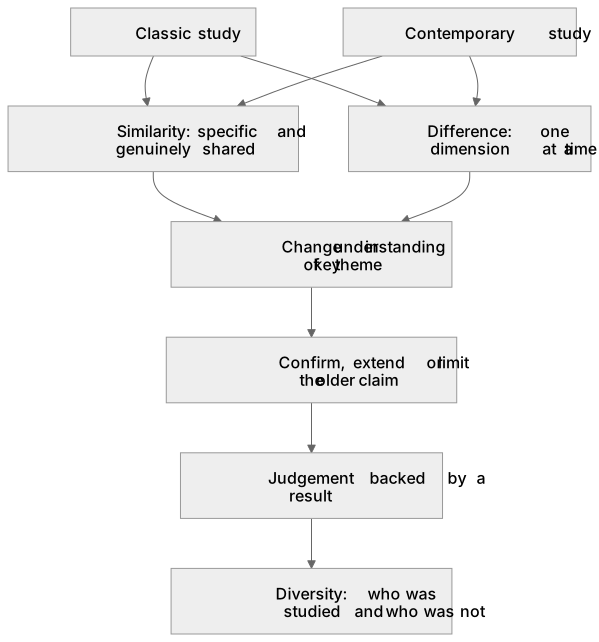
- A similarity scores when it is specific and genuinely shared, for example that both used a deceptive cover story in a laboratory setting, not that both studied behaviour.
- Differences are best taken one dimension at a time, such as sample and culture, then type of data, then ethics, with a detail from each study under each heading.
- For the change in understanding, take a position and support it: the newer study may confirm, extend or limit the older claim, and the mark is for a judgement backed by a result.
- Diversity marks come from naming who was studied and who was not, for example that an all-male American sample says little about women or about cultures with different norms of authority.
Common mistakes and how to put them right
Listing everything both studies did instead of selecting comparable features, which produces two descriptions and no comparison at all.
Answering the change in understanding with more description of the newer study, when the question is about the theme rather than about the study.
Treating diversity as one closing sentence about generalisability, when the mark is for naming a group the finding may not hold for and saying why.
Exam tips
- Plan two similarities and two differences before you begin writing to ensure a structured and balanced comparison.
- Use signposts such as 'whereas' and 'by contrast', because the examiner needs to see the two studies held against each other inside the same sentence.
Try the lesson
The start of the Section A: Core studies: Core studies in their pairs: How the two studies are similar. How the two studies are different. To what extent the contemporary study changes our understanding of the key theme. To what extent the contemporary study changes our understanding of individual, social and cultural diversity. lesson, made from teaching notes for this specification point.
Have a go first
In what way are the samples used in the studies by Milgram (1963) and Bocchiaro et al. (2012) similar?
Listen
The newer study in each pairing tests whether the classic claim survives a modern method, a different culture or a different measure. Milgram (1963) found that 26 of his 40 men went to the last switch on a generator marked 450 volts. Bocchiaro, Zimbardo and Van Lange (2012) gave Dutch students the further option of reporting the researcher, finding that most complied, only a small minority blew the whistle, and a separate group asked to predict their own behaviour badly overestimated their courage. Similarity and difference are key; harder marks come from arguing how far the newer evidence changes our understanding of the key theme, and what it tells us about individual, social and cultural diversity beyond male, American or student samples. A strong answer earns marks for these points. A similarity scores when it is specific and genuinely shared, for example that both used a deceptive cover story in a laboratory setting, not that both studied behaviour. Differences are best taken one dimension at a time, such as sample and culture, then type of data, then ethics, with a detail from each study under each heading. For the change in understanding, take a position and support it: the newer study may confirm, extend or limit the older claim, and the mark is for a judgement backed by a result. Diversity marks come from naming who was studied and who was not, for example that an all-male American sample says little about women or about cultures with different norms of authority. Exam tip: Plan two similarities and two differences before you begin writing to ensure a structured and balanced comparison.
See it
Key words
Say what each word means before you turn the card.
paired comparison
Try answering aloud or in your head before turning the card.
development of a key theme
Try answering aloud or in your head before turning the card.
individual, social and cultural diversity
Try answering aloud or in your head before turning the card.
See every definition
- paired comparison
- Holding the two core studies in a pair against each other to identify how they are similar and how they are different.
- development of a key theme
- Arguing how far the contemporary study changes our understanding of the key theme, taking a position on whether it confirms, extends or limits the older claim.
- individual, social and cultural diversity
- Naming who was studied and who was not, for example that an all-male American sample says little about women or about cultures with different norms of authority.
Label the diagram
Some boxes have lost their names. Pick the right name for each number.
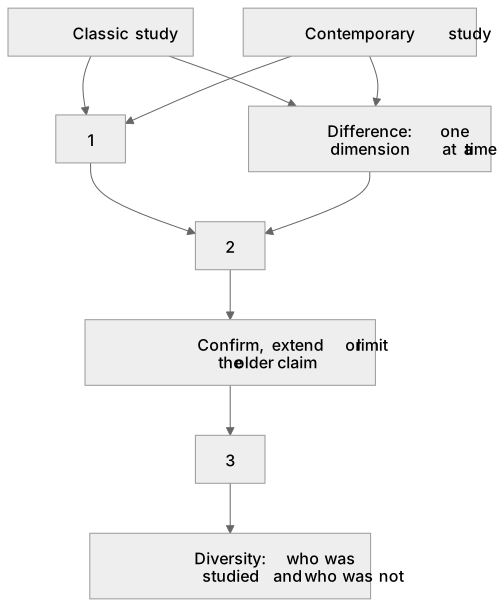
1Box 1
2Box 2
3Box 3
There is more to this lesson
The full lesson goes on to check your understanding and help you earn the marks. Create a free account to carry on, with your progress saved.
A week of Premium from your first lesson · Then the free plan continues · No card, no charge
Test your understanding of Section A: Core studies: Core studies in their pairs: How the two studies are similar. How the two studies are different. To what extent the contemporary study changes our understanding of the key theme. To what extent the contemporary study changes our understanding of individual, social and cultural diversity.
Active recall beats re-reading. Take an instant quiz now to test what you’ve learned and lock it into long-term memory.
A week of Premium from your first lesson · Then the free plan continues · No card, no charge