OCR · A-Level · Psychology
Course version: H567 · Version from Sept 2015
Core studies: Individual studies: ‘Tell the story’ of each core study in…
Full specification wording
Section A: Core studies: Individual studies: ‘Tell the story’ of each core study in terms of: background; method: design, sample, materials/apparatus, procedure; results; conclusions.
The board is saying that a study is remembered as a sequence rather than as a headline.
- Point 11 of 14
- 4 key terms
Study notes
From the teaching notes for this specification point.
The idea
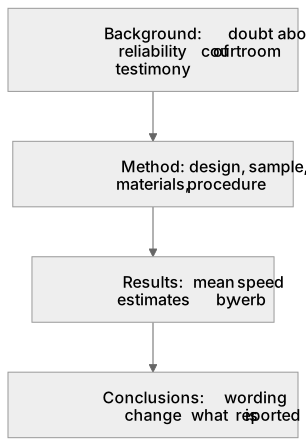
The board is saying that a study is remembered as a sequence rather than as a headline. The account runs from the problem the researcher inherited, through the decisions that turned it into a testable procedure, to the numbers and what those numbers licensed anyone to claim. Loftus and Palmer (1974) is the model to practise on: students watched short films of traffic accidents, were asked how fast the cars were going when they hit, smashed, collided, bumped or contacted each other, and gave mean estimates running from about forty one miles per hour for smashed down to just under thirty two for contacted, and a week later sixteen of the fifty given smashed reported broken glass that was never in the film. Every link in that chain carries marks, and the headline about leading questions carries none.
What earns the marks
- Design credit comes from naming it and showing how it worked, for example independent measures with each participant hearing only one verb, rather than the word independent on its own.
- A sample scores when it carries a number and a source, such as forty five students in the first experiment, because the later point about generalising rests on it.
- Results need a figure and a direction, so give the means for two named conditions and say which was higher, then save interpretation for the conclusion.
- A conclusion earns marks when it answers the aim, for example that the wording of a question can change what is reported and may alter the stored memory itself.
Common mistakes and how to put them right
Putting the conclusion into the results, so the answer says the verb changed the memory when the mark was for the mean speed estimates.
Giving the background as a topic, such as this study was about memory, instead of the problem behind it, such as doubt about the reliability of courtroom testimony.
Describing materials vaguely as videos, when the marks are for the film clips of traffic accidents taken from driver safety films.
Exam tips
- Component two asks about a named part of a named study, so practise saying each procedure in three or four sentences that a stranger could follow.
- Where a question says outline the method, the marks are spread across design, sample, materials and procedure, so give a sentence to each rather than four sentences on procedure.
- If asked to explain a conclusion, tie it to a specific result, because a conclusion with no number behind it is marked as assertion.
Try the lesson
The start of the Section A: Core studies: Individual studies: ‘Tell the story’ of each core study in terms of: background; method: design, sample, materials/apparatus, procedure; results; conclusions. lesson, made from teaching notes for this specification point.
Have a go first
What was the composition of the sample in Bandura et al.'s (1961) study on the transmission of aggression?
Listen
The board is saying that a study is remembered as a sequence rather than as a headline. The account runs from the problem the researcher inherited, through the decisions that turned it into a testable procedure, to the numbers and what those numbers licensed anyone to claim. Loftus and Palmer (1974) is the model to practise on: students watched short films of traffic accidents, were asked how fast the cars were going when they hit, smashed, collided, bumped or contacted each other, and gave mean estimates running from about forty one miles per hour for smashed down to just under thirty two for contacted, and a week later sixteen of the fifty given smashed reported broken glass that was never in the film. Every link in that chain carries marks, and the headline about leading questions carries none. A strong answer earns marks for these points. Design credit comes from naming it and showing how it worked, for example independent measures with each participant hearing only one verb, rather than the word independent on its own. A sample scores when it carries a number and a source, such as forty five students in the first experiment, because the later point about generalising rests on it. Results need a figure and a direction, so give the means for two named conditions and say which was higher, then save interpretation for the conclusion. A conclusion earns marks when it answers the aim, for example that the wording of a question can change what is reported and may alter the stored memory itself. Exam tip: Component two asks about a named part of a named study, so practise saying each procedure in three or four sentences that a stranger could follow.
See it
Put it in order
Put these steps in the order they happen.
- 1. Results: mean speed estimates by verb
- 2. Conclusions: wording can change what is reported
- 3. Method: design, sample, materials, procedure
- 4. Background: doubt about reliability of courtroom testimony
Key words
Say what each word means before you turn the card.
background and aims
Try answering aloud or in your head before turning the card.
procedure and replication
Try answering aloud or in your head before turning the card.
results before interpretation
Try answering aloud or in your head before turning the card.
study anatomy
Try answering aloud or in your head before turning the card.
See every definition
- background and aims
- The problem the researcher inherited, which the study was designed to address, rather than a topic such as memory.
- procedure and replication
- The decisions that turned the problem into a testable procedure, described in three or four sentences that a stranger could follow.
- results before interpretation
- Giving a figure and a direction, such as the means for two named conditions and which was higher, and saving interpretation for the conclusion.
- study anatomy
- The sequence of background, method, results and conclusions through which each core study is told as a story rather than as a headline.
Label the diagram
Some boxes have lost their names. Pick the right name for each number.
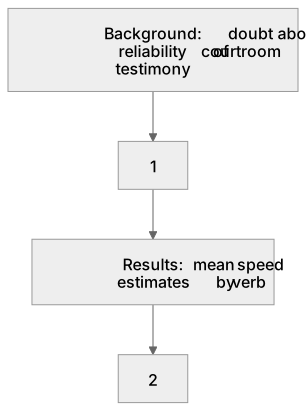
1Box 1
2Box 2
There is more to this lesson
The full lesson goes on to check your understanding and help you earn the marks. Create a free account to carry on, with your progress saved.
A week of Premium from your first lesson · Then the free plan continues · No card, no charge
Test your understanding of Section A: Core studies: Individual studies: ‘Tell the story’ of each core study in terms of: background; method: design, sample, materials/apparatus, procedure; results; conclusions.
Active recall beats re-reading. Take an instant quiz now to test what you’ve learned and lock it into long-term memory.
A week of Premium from your first lesson · Then the free plan continues · No card, no charge