AQA · GCSE · Religious Studies
Course version: 8062 · Version from Sept 2018
Hinduism - 3.1.4.2 Practices: Kumbh Mela.
Kumbh Mela is the largest religious gathering in the world and a vital Hindu pilgrimage (yatra) that takes place every twelve years.
- Point 23 of 26
Study notes
From the teaching notes for this specification point.
The idea
Kumbh Mela is the largest religious gathering in the world and a vital Hindu pilgrimage (yatra) that takes place every twelve years. Millions of Hindus travel to one of four sacred river locations in India, most notably Prayagraj, where the Ganges, Yamuna, and mythical Saraswati rivers meet. The central practice is ritual bathing in the sacred waters, which Hindus believe cleanses them of accumulated sins and bad karma, bringing them closer to moksha (liberation from the cycle of rebirth). Beyond purification, the festival offers a profound opportunity for spiritual renewal, seeking blessings from revered sadhus (holy men), and experiencing a powerful sense of global Hindu community and devotion.
What earns the marks
- Identify Kumbh Mela as a major Hindu pilgrimage (yatra) occurring every 12 years.
- Explain the central practice of ritual bathing in sacred rivers, particularly the Ganges.
- Connect the practice of bathing to the removal of bad karma and the pursuit of moksha.
- Recognise the social and spiritual importance of gathering with millions of devotees and seeking guidance from holy men (sadhus).
Common mistakes and how to put them right
Confusing Kumbh Mela with Diwali or Holi.
Put it right: Kumbh Mela is a pilgrimage festival focused on river bathing, not a festival of light or colours.
Stating that bathing in the Ganges guarantees moksha immediately.
Put it right: Explain that it cleanses bad karma, which aids spiritual progress towards moksha, rather than acting as an instant guarantee.
Believing Kumbh Mela happens every year at the same place.
Put it right: Note that the Maha Kumbh Mela happens every 12 years and rotates between four specific sacred river sites in India.
Exam tips
- Use the term 'yatra' when discussing Kumbh Mela to demonstrate strong subject vocabulary for pilgrimage.
- Link the physical act of bathing to the spiritual concept of karma purification in evaluation questions.
- Mention the role of sadhus (holy men) to show understanding of the community aspect of the pilgrimage.
Try the lesson
The start of the Hinduism - 3.1.4.2 Practices: Kumbh Mela. lesson, made from teaching notes for this specification point.
Have a go first
What is the Kumbh Mela in the context of Hindu religious practices?
Listen
Kumbh Mela is the largest religious gathering in the world and a vital Hindu pilgrimage (yatra) that takes place every twelve years. Millions of Hindus travel to one of four sacred river locations in India, most notably Prayagraj, where the Ganges, Yamuna, and mythical Saraswati rivers meet. The central practice is ritual bathing in the sacred waters, which Hindus believe cleanses them of accumulated sins and bad karma, bringing them closer to moksha (liberation from the cycle of rebirth). Beyond purification, the festival offers a profound opportunity for spiritual renewal, seeking blessings from revered sadhus (holy men), and experiencing a powerful sense of global Hindu community and devotion. A strong answer earns marks for these points. Identify Kumbh Mela as a major Hindu pilgrimage (yatra) occurring every 12 years. Explain the central practice of ritual bathing in sacred rivers, particularly the Ganges. Connect the practice of bathing to the removal of bad karma and the pursuit of moksha. Recognise the social and spiritual importance of gathering with millions of devotees and seeking guidance from holy men (sadhus). A common slip: Confusing Kumbh Mela with Diwali or Holi. Instead, Kumbh Mela is a pilgrimage festival focused on river bathing, not a festival of light or colours. Exam tip: Use the term 'yatra' when discussing Kumbh Mela to demonstrate strong subject vocabulary for pilgrimage.
See it
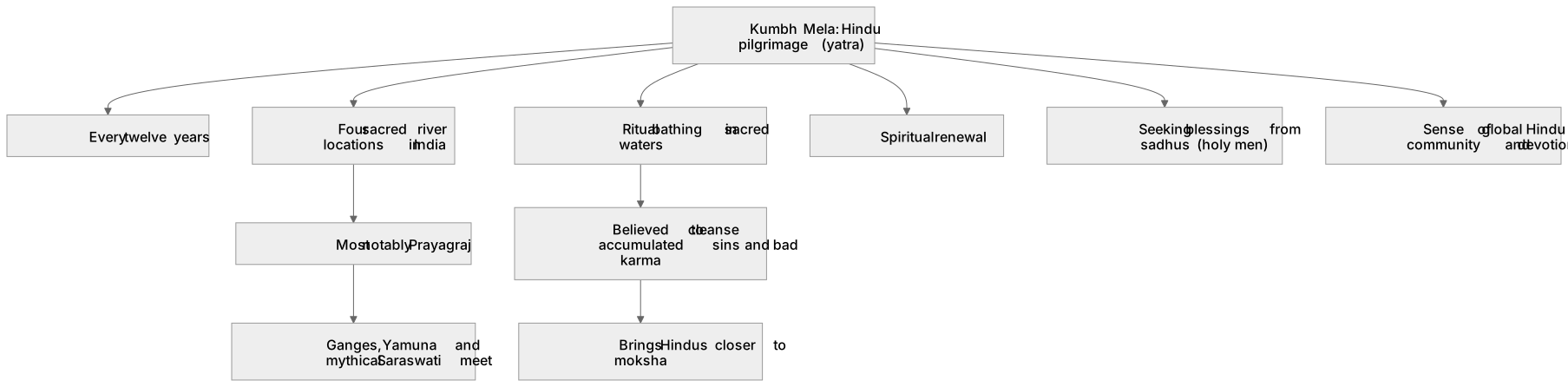
Label the diagram
Some boxes have lost their names. Pick the right name for each number.
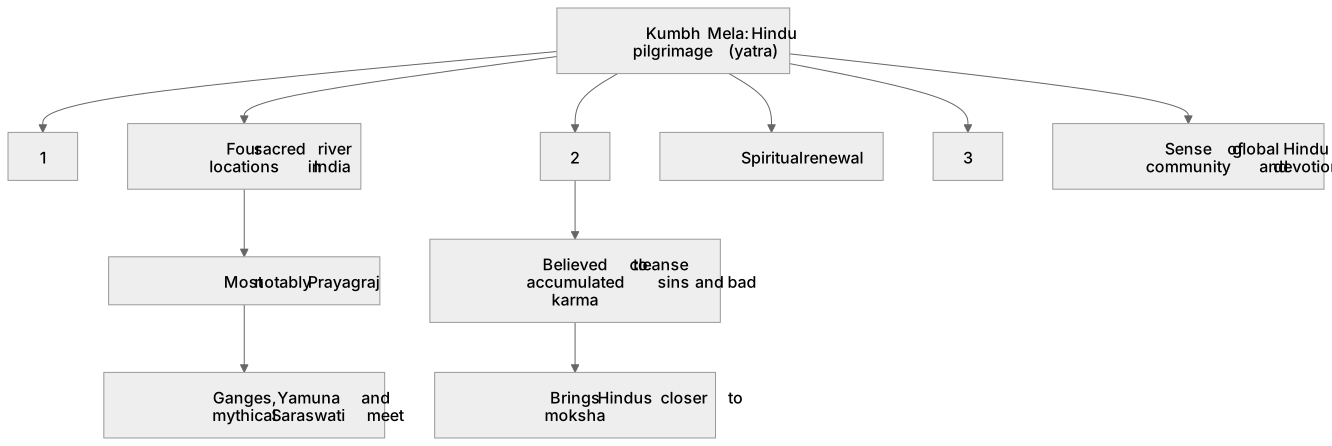
1Box 1
2Box 2
3Box 3
There is more to this lesson
The full lesson goes on to check your understanding and help you earn the marks. Create a free account to carry on, with your progress saved.
A week of Premium from your first lesson · Then the free plan continues · No card, no charge
Test your understanding of Hinduism - 3.1.4.2 Practices: Kumbh Mela.
Active recall beats re-reading. Take an instant quiz now to test what you’ve learned and lock it into long-term memory.
A week of Premium from your first lesson · Then the free plan continues · No card, no charge