AQA · GCSE · Religious Studies
Course version: 8062 · Version from Sept 2018
Hinduism - 3.1.4.2 Practices: Lifestyle
In Hinduism, a believer's lifestyle is deeply shaped by core principles such as dharma (duty) and ahimsa (non-violence).
- Point 13 of 26
- 4 key terms
Study notes
From the teaching notes for this specification point.
The idea
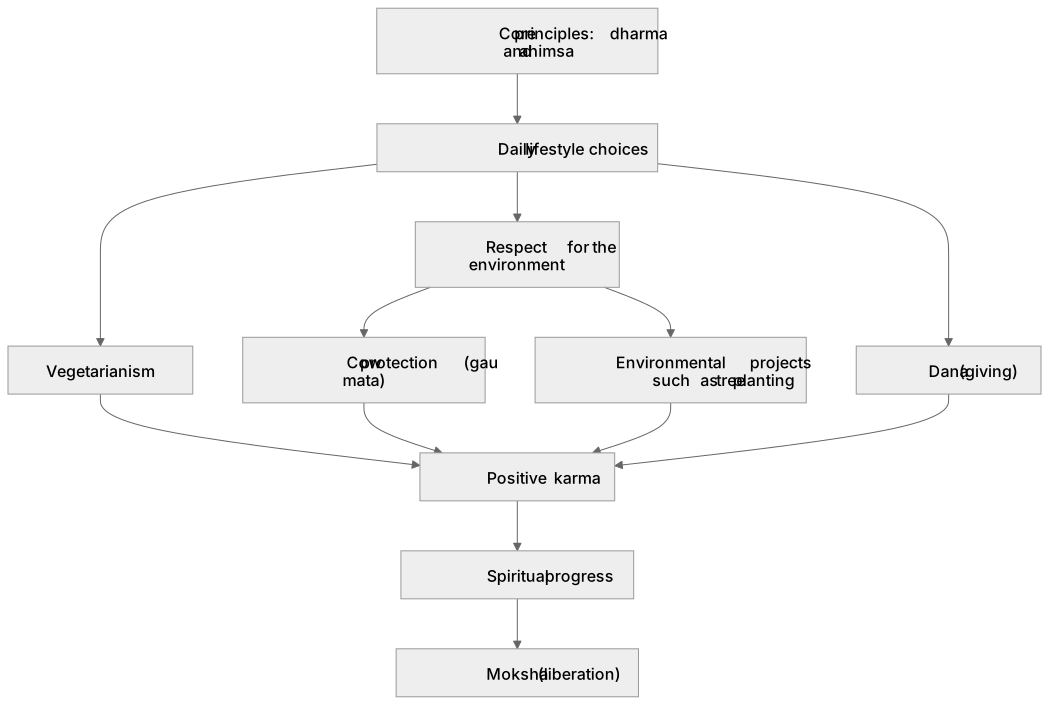
In Hinduism, a believer's lifestyle is deeply shaped by core principles such as dharma (duty) and ahimsa (non-violence). These concepts dictate daily choices, most notably the widespread practice of vegetarianism, as harming animals generates negative karma. A Hindu's lifestyle also involves active respect for the environment, often demonstrated through cow protection (gau mata) and participating in environmental projects like tree planting. Furthermore, the concept of dana (giving) encourages charitable acts as a daily duty. By aligning their everyday actions with Sanatana Dharma, Hindus aim to accumulate positive karma, progress spiritually, and ultimately move closer to achieving moksha (liberation).
What earns the marks
- Explain how the principle of ahimsa influences dietary choices, specifically the practice of vegetarianism.
- Describe the role of dana (charity) as a daily duty in a Hindu's lifestyle.
- Explain how the belief in the divine presence in all living things leads to environmental protection, such as cow protection.
- Link daily lifestyle choices to the accumulation of positive karma and the ultimate goal of moksha.
Common mistakes and how to put them right
Stating that all Hindus must be vegetarian.
Put it right: Clarify that while vegetarianism is highly encouraged due to ahimsa, it is not strictly mandatory for all Hindus.
Confusing lifestyle choices with formal worship (puja).
Put it right: Distinguish between daily ethical living (lifestyle) and specific ritualistic practices, though both generate positive karma.
Assuming cow protection means Hindus worship cows as gods.
Put it right: Explain that cows are respected as a symbol of life and motherhood, not worshipped as deities themselves.
Exam tips
- Use specific Sanskrit terms like ahimsa and dana when discussing daily lifestyle choices to demonstrate subject knowledge.
- Link lifestyle practices directly to core beliefs such as karma and moksha to build a cohesive evaluation.
- Provide concrete examples of environmental lifestyle choices, such as supporting cow sanctuaries (goshalas).
Try the lesson
The start of the Hinduism - 3.1.4.2 Practices: Lifestyle lesson, made from teaching notes for this specification point.
Have a go first
Which of the following dietary choices is adopted by many Hindus as a direct result of the ethical principle of ahimsa (non-violence)?
Listen
In Hinduism, a believer's lifestyle is deeply shaped by core principles such as dharma (duty) and ahimsa (non-violence). These concepts dictate daily choices, most notably the widespread practice of vegetarianism, as harming animals generates negative karma. A Hindu's lifestyle also involves active respect for the environment, often demonstrated through cow protection (gau mata) and participating in environmental projects like tree planting. Furthermore, the concept of dana (giving) encourages charitable acts as a daily duty. By aligning their everyday actions with Sanatana Dharma, Hindus aim to accumulate positive karma, progress spiritually, and ultimately move closer to achieving moksha (liberation). A strong answer earns marks for these points. Explain how the principle of ahimsa influences dietary choices, specifically the practice of vegetarianism. Describe the role of dana (charity) as a daily duty in a Hindu's lifestyle. Explain how the belief in the divine presence in all living things leads to environmental protection, such as cow protection. Link daily lifestyle choices to the accumulation of positive karma and the ultimate goal of moksha. A common slip: Stating that all Hindus must be vegetarian. Instead, Clarify that while vegetarianism is highly encouraged due to ahimsa, it is not strictly mandatory for all Hindus. Exam tip: Use specific Sanskrit terms like ahimsa and dana when discussing daily lifestyle choices to demonstrate subject knowledge.
See it
Key words
Say what each word means before you turn the card.
Ahimsa
Try answering aloud or in your head before turning the card.
Karma
Try answering aloud or in your head before turning the card.
Dharma
Try answering aloud or in your head before turning the card.
Environmentalism
Try answering aloud or in your head before turning the card.
See every definition
- Ahimsa
- A core principle of non-violence that shapes daily choices, most notably the widespread practice of vegetarianism.
- Karma
- Positive or negative results generated by actions, so that harming animals generates negative results while aligned actions accumulate positive ones.
- Dharma
- Duty, a core principle that deeply shapes a believer's lifestyle and daily choices.
- Environmentalism
- Active respect for the environment, often demonstrated through cow protection and participating in environmental projects like tree planting.
Label the diagram
Some boxes have lost their names. Pick the right name for each number.
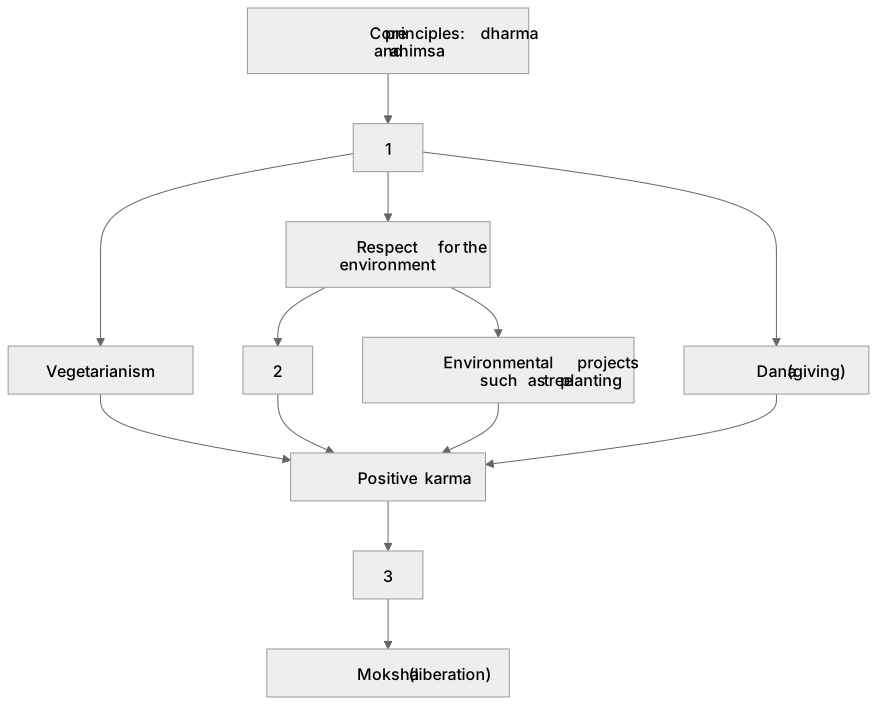
1Box 1
2Box 2
3Box 3
There is more to this lesson
The full lesson goes on to check your understanding and help you earn the marks. Create a free account to carry on, with your progress saved.
A week of Premium from your first lesson · Then the free plan continues · No card, no charge
Test your understanding of Hinduism - 3.1.4.2 Practices: Lifestyle
Active recall beats re-reading. Take an instant quiz now to test what you’ve learned and lock it into long-term memory.
A week of Premium from your first lesson · Then the free plan continues · No card, no charge