AQA · GCSE · Religious Studies
Course version: 8062 · Version from Sept 2018
The four paths towards yoga (union with the divine), their differences and…
Full specification wording
Hinduism - 3.1.4.2 Practices: The four paths towards yoga (union with the divine), their differences and their importance:
The four paths of yoga offer Hindus different routes to achieve union with the divine and attain moksha.
- Point 14 of 26
- 4 key terms
Study notes
From the teaching notes for this specification point.
The idea
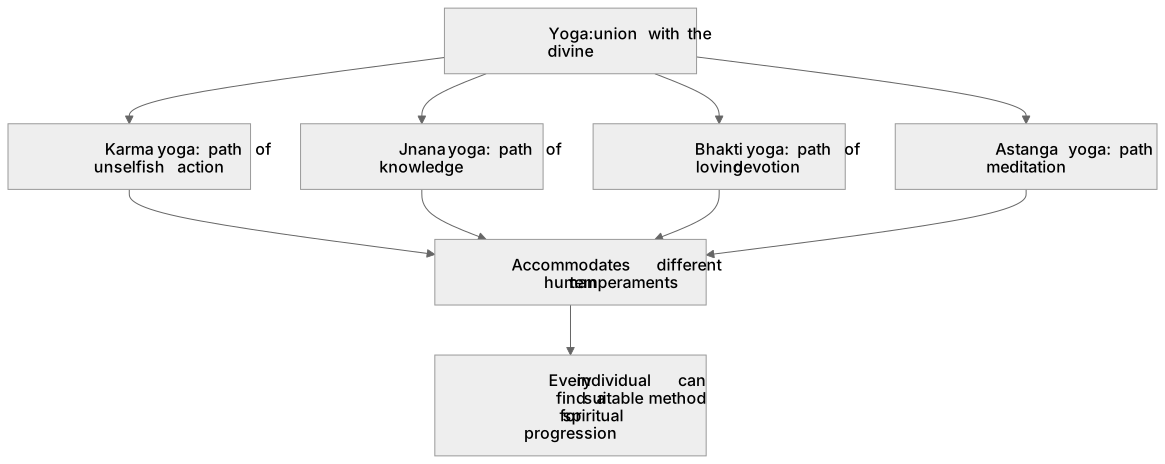
The four paths of yoga offer Hindus different routes to achieve union with the divine and attain moksha. Karma yoga is the path of unselfish action, performing duties without attachment to rewards. Jnana yoga is the path of knowledge, requiring intense scriptural study to understand the oneness of Brahman and Atman. Bhakti yoga focuses on loving devotion to a personal deity through worship. Finally, Astanga yoga is the path of meditation, involving strict physical and mental discipline. These paths are important because they accommodate different human temperaments, ensuring every individual can find a suitable method for spiritual progression, regardless of their personal strengths or life circumstances.
What earns the marks
- Define Karma yoga as the path of selfless action and fulfilling dharma without seeking personal gain.
- Describe Jnana yoga as the intellectual path of attaining liberation through scriptural study and wisdom.
- Explain Bhakti yoga as the path of loving devotion to a specific deity, often expressed through puja.
- Outline Astanga yoga as the path of rigorous mental and physical meditation to achieve spiritual focus.
- Explain that the importance of having four paths is to cater to different personality types and abilities.
Common mistakes and how to put them right
Confusing the physical exercise of modern yoga with the Hindu spiritual paths of yoga.
Put it right: Emphasise that in Hinduism, yoga means 'union with the divine' and encompasses devotion, knowledge, and action, not just physical postures.
Stating that a Hindu can only follow one path of yoga.
Put it right: Clarify that these paths are not mutually exclusive, and many Hindus combine elements of Bhakti, Karma, and Jnana yoga in their lives.
Misidentifying Jnana yoga as just general education.
Put it right: Specify that Jnana yoga refers specifically to spiritual knowledge and the deep understanding of the relationship between Atman and Brahman.
Exam tips
- Memorise the specific focus of each path: action (Karma), knowledge (Jnana), devotion (Bhakti), and meditation (Astanga).
- When evaluating the 'best' path, argue that Bhakti yoga is often considered the most accessible for the average person.
- Use the literal translation of yoga ('union') to explain the ultimate goal of all four paths.
Try the lesson
The start of the Hinduism - 3.1.4.2 Practices: The four paths towards yoga (union with the divine), their differences and their importance: lesson, made from teaching notes for this specification point.
Have a go first
In Hinduism, what is the ultimate goal of the four paths of yoga?
Listen
The four paths of yoga offer Hindus different routes to achieve union with the divine and attain moksha. Karma yoga is the path of unselfish action, performing duties without attachment to rewards. Jnana yoga is the path of knowledge, requiring intense scriptural study to understand the oneness of Brahman and Atman. Bhakti yoga focuses on loving devotion to a personal deity through worship. Finally, Astanga yoga is the path of meditation, involving strict physical and mental discipline. These paths are important because they accommodate different human temperaments, ensuring every individual can find a suitable method for spiritual progression, regardless of their personal strengths or life circumstances. A strong answer earns marks for these points. Define Karma yoga as the path of selfless action and fulfilling dharma without seeking personal gain. Describe Jnana yoga as the intellectual path of attaining liberation through scriptural study and wisdom. Explain Bhakti yoga as the path of loving devotion to a specific deity, often expressed through puja. Outline Astanga yoga as the path of rigorous mental and physical meditation to achieve spiritual focus. A common slip: Confusing the physical exercise of modern yoga with the Hindu spiritual paths of yoga. Instead, Emphasise that in Hinduism, yoga means 'union with the divine' and encompasses devotion, knowledge, and action, not just physical postures. Exam tip: Memorise the specific focus of each path: action (Karma), knowledge (Jnana), devotion (Bhakti), and meditation (Astanga).
See it
Key words
Say what each word means before you turn the card.
Moksha
Try answering aloud or in your head before turning the card.
Devotion
Try answering aloud or in your head before turning the card.
Duty
Try answering aloud or in your head before turning the card.
Spiritual Discipline
Try answering aloud or in your head before turning the card.
See every definition
- Moksha
- The goal attained through union with the divine by following one of the four paths of yoga.
- Devotion
- Loving worship of a personal deity, which is the focus of Bhakti yoga.
- Duty
- Unselfish action performed without attachment to rewards, which is the path of Karma yoga.
- Spiritual Discipline
- Strict physical and mental meditation, which is the path of Astanga yoga.
Label the diagram
Some boxes have lost their names. Pick the right name for each number.
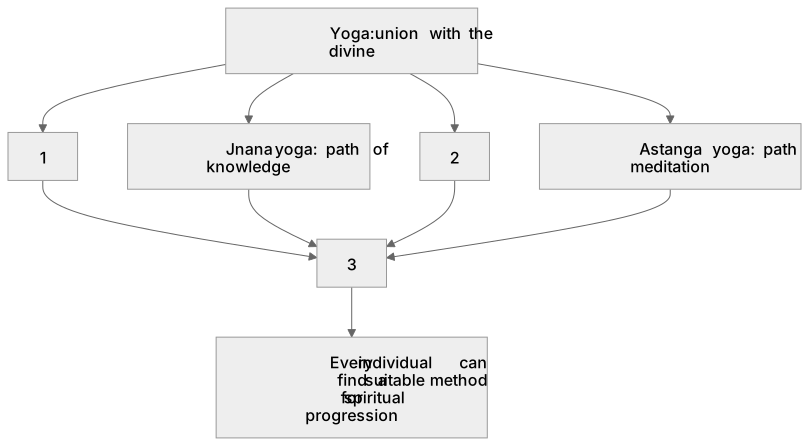
1Box 1
2Box 2
3Box 3
There is more to this lesson
The full lesson goes on to check your understanding and help you earn the marks. Create a free account to carry on, with your progress saved.
A week of Premium from your first lesson · Then the free plan continues · No card, no charge
Test your understanding of Hinduism - 3.1.4.2 Practices: The four paths towards yoga (union with the divine), their differences and their importance:
Active recall beats re-reading. Take an instant quiz now to test what you’ve learned and lock it into long-term memory.
A week of Premium from your first lesson · Then the free plan continues · No card, no charge