AQA · GCSE · Religious Studies
Course version: 8062 · Version from Sept 2018
Judaism - 3.1.6.1 Beliefs and teachings: God as Creator
Judaism teaches that God is the sole Creator of the universe, having formed everything out of nothing.
- Point 4 of 15
- 3 key terms
Study notes
From the teaching notes for this specification point.
The idea
Judaism teaches that God is the sole Creator of the universe, having formed everything out of nothing. The Torah, specifically the book of Genesis, outlines that God purposefully designed the world and declared it good. This belief establishes God's absolute authority and ownership over all creation. Because God rested on the seventh day, Jews observe Shabbat as a weekly day of rest, directly linking their religious practice to the creation narrative. Furthermore, viewing God as the Creator instils a sense of responsibility in humanity to act as stewards of the earth. Jews believe they are partners with God in maintaining and repairing the world, a duty often connected to the principle of tikkun olam or healing the world.
What earns the marks
- State that God created the universe out of nothing as described in the book of Genesis.
- Explain that God's role as Creator gives Him absolute authority and ownership over the world.
- Connect the creation narrative to the observance of Shabbat, commemorating God resting on the seventh day.
- Discuss the human responsibility of stewardship and tikkun olam (repairing the world) arising from God's creation.
Common mistakes and how to put them right
Claiming that all Jews interpret the Genesis creation story literally.
Put it right: Note that many Jews view the Genesis account metaphorically and accept scientific explanations like the Big Bang alongside God as the initiator.
Disconnecting the belief in creation from daily practice.
Put it right: Link the belief in God as Creator to the weekly observance of Shabbat.
Using Christian terminology for creation without acknowledging the Jewish context.
Put it right: Focus on Jewish concepts such as Shabbat and tikkun olam when discussing the implications of creation.
Exam tips
- Reference the book of Genesis to support explanations of God's role as the Creator.
- Explain how the belief in God as Creator directly impacts Jewish actions today, such as environmental stewardship.
- Contrast Orthodox literal interpretations of creation with Reform metaphorical interpretations if evaluating different Jewish perspectives.
Try the lesson
The start of the Judaism - 3.1.6.1 Beliefs and teachings: God as Creator lesson, made from teaching notes for this specification point.
Have a go first
According to Jewish teaching, how did the universe come into existence?
Listen
Judaism teaches that God is the sole Creator of the universe, having formed everything out of nothing. The Torah, specifically the book of Genesis, outlines that God purposefully designed the world and declared it good. This belief establishes God's absolute authority and ownership over all creation. Because God rested on the seventh day, Jews observe Shabbat as a weekly day of rest, directly linking their religious practice to the creation narrative. Furthermore, viewing God as the Creator instils a sense of responsibility in humanity to act as stewards of the earth. Jews believe they are partners with God in maintaining and repairing the world, a duty often connected to the principle of tikkun olam or healing the world. A strong answer earns marks for these points. State that God created the universe out of nothing as described in the book of Genesis. Explain that God's role as Creator gives Him absolute authority and ownership over the world. Connect the creation narrative to the observance of Shabbat, commemorating God resting on the seventh day. Discuss the human responsibility of stewardship and tikkun olam (repairing the world) arising from God's creation. A common slip: Claiming that all Jews interpret the Genesis creation story literally. Instead, Note that many Jews view the Genesis account metaphorically and accept scientific explanations like the Big Bang alongside God as the initiator. Exam tip: Reference the book of Genesis to support explanations of God's role as the Creator.
See it
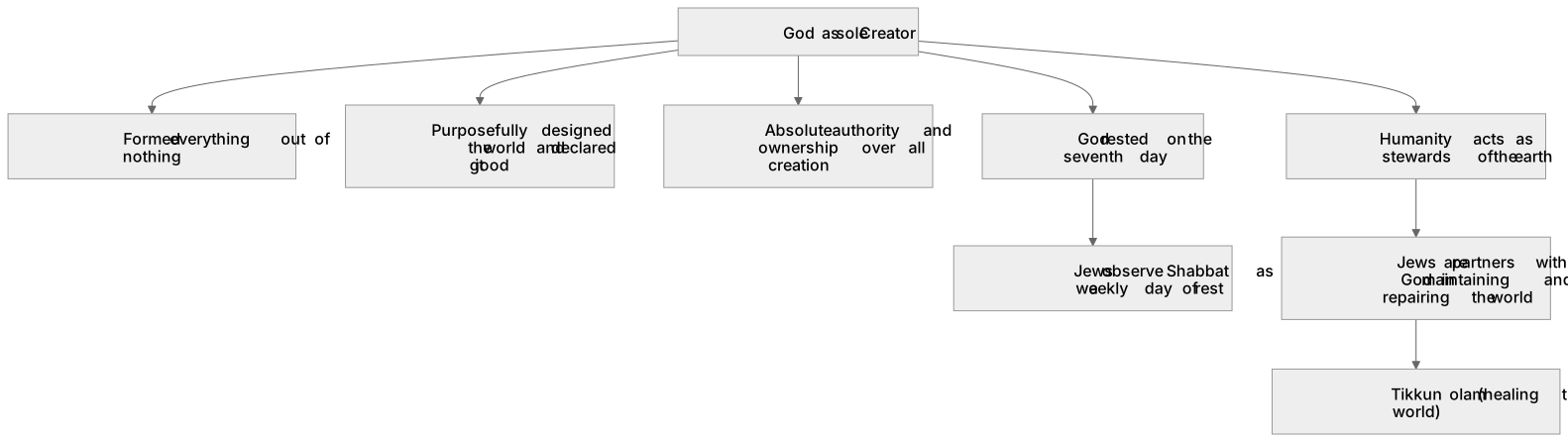
Key words
Say what each word means before you turn the card.
Creation
Try answering aloud or in your head before turning the card.
Shabbat
Try answering aloud or in your head before turning the card.
Stewardship
Try answering aloud or in your head before turning the card.
See every definition
- Creation
- Judaism teaches that God is the sole Creator of the universe, having formed everything out of nothing.
- Shabbat
- A weekly day of rest observed by Jews because God rested on the seventh day, directly linking their religious practice to the creation narrative.
- Stewardship
- Viewing God as the Creator instils a sense of responsibility in humanity to act as stewards of the earth.
Label the diagram
Some boxes have lost their names. Pick the right name for each number.
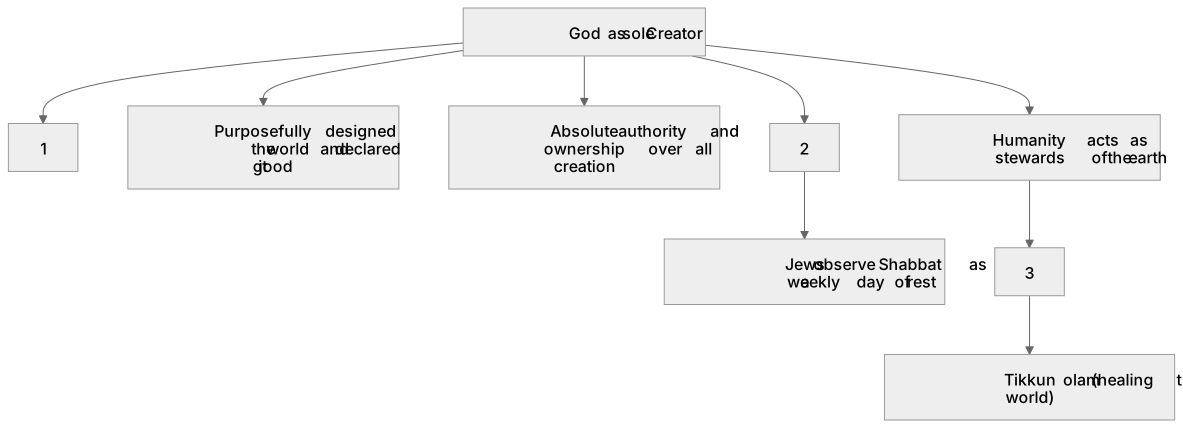
1Box 1
2Box 2
3Box 3
There is more to this lesson
The full lesson goes on to check your understanding and help you earn the marks. Create a free account to carry on, with your progress saved.
A week of Premium from your first lesson · Then the free plan continues · No card, no charge
Test your understanding of Judaism - 3.1.6.1 Beliefs and teachings: God as Creator
Active recall beats re-reading. Take an instant quiz now to test what you’ve learned and lock it into long-term memory.
A week of Premium from your first lesson · Then the free plan continues · No card, no charge