AQA · GCSE · Religious Studies
Course version: 8062 · Version from Sept 2018
God as Law-Giver and Judge, loving and merciful.
Full specification wording
Judaism - 3.1.6.1 Beliefs and teachings: God as Law-Giver and Judge, loving and merciful.
Judaism teaches that God is the ultimate Law-Giver, providing the 613 mitzvot in the Torah to guide Jewish life.
- Point 5 of 15
- 4 key terms
Study notes
From the teaching notes for this specification point.
The idea
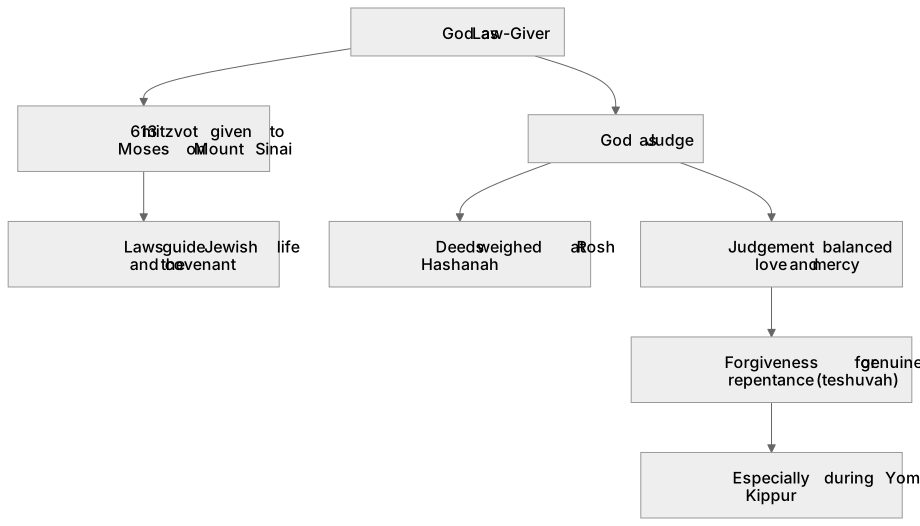
Judaism teaches that God is the ultimate Law-Giver, providing the 613 mitzvot in the Torah to guide Jewish life. These laws form the covenant, establishing how Jews should worship and treat others. Consequently, God is also the Judge who evaluates how well individuals follow these laws, particularly during Rosh Hashanah when deeds are weighed. However, this judgement is balanced by God being loving and merciful. God's love is shown through the gift of the Torah and creation itself. His mercy is evident in His willingness to forgive those who genuinely repent, especially during Yom Kippur (the Day of Atonement). This dual nature ensures that divine justice is always tempered with profound compassion and the opportunity for redemption.
What earns the marks
- God gave the 613 mitzvot to Moses on Mount Sinai, establishing the rules for Jewish living.
- God judges all people based on their actions and adherence to the mitzvot, particularly during the festival of Rosh Hashanah.
- God's loving nature is demonstrated through the creation of the universe and the ongoing care for humanity.
- God's mercy is shown through the forgiveness of sins when a person demonstrates genuine repentance (teshuvah), especially during Yom Kippur.
Common mistakes and how to put them right
Claiming God's judgement is harsh and unforgiving.
Put it right: Explain that God's judgement is always perfectly balanced with His mercy and willingness to forgive genuine repentance.
Stating that God only judges Jews.
Put it right: Clarify that Jewish tradition teaches God judges all of humanity, not just the Jewish people.
Confusing the roles of Law-Giver and Judge as contradictory.
Put it right: Describe them as complementary; God provides the laws out of love and judges fairly based on those specific laws.
Exam tips
- Use the festivals of Rosh Hashanah and Yom Kippur as concrete examples to illustrate God's roles as Judge and merciful forgiver.
- Link the concept of God as Law-Giver directly to the giving of the Torah and the 613 mitzvot at Mount Sinai.
- When evaluating a statement about God's nature, contrast the strictness of divine law with the compassion of divine mercy to build a balanced argument.
Try the lesson
The start of the Judaism - 3.1.6.1 Beliefs and teachings: God as Law-Giver and Judge, loving and merciful. lesson, made from teaching notes for this specification point.
Have a go first
In Judaism, which of the following best describes the belief in God as the 'Law-Giver'?
Listen
Judaism teaches that God is the ultimate Law-Giver, providing the 613 mitzvot in the Torah to guide Jewish life. These laws form the covenant, establishing how Jews should worship and treat others. Consequently, God is also the Judge who evaluates how well individuals follow these laws, particularly during Rosh Hashanah when deeds are weighed. However, this judgement is balanced by God being loving and merciful. God's love is shown through the gift of the Torah and creation itself. His mercy is evident in His willingness to forgive those who genuinely repent, especially during Yom Kippur (the Day of Atonement). This dual nature ensures that divine justice is always tempered with profound compassion and the opportunity for redemption. A strong answer earns marks for these points. God gave the 613 mitzvot to Moses on Mount Sinai, establishing the rules for Jewish living. God judges all people based on their actions and adherence to the mitzvot, particularly during the festival of Rosh Hashanah. God's loving nature is demonstrated through the creation of the universe and the ongoing care for humanity. God's mercy is shown through the forgiveness of sins when a person demonstrates genuine repentance (teshuvah), especially during Yom Kippur. A common slip: Claiming God's judgement is harsh and unforgiving. Instead, Explain that God's judgement is always perfectly balanced with His mercy and willingness to forgive genuine repentance. Exam tip: Use the festivals of Rosh Hashanah and Yom Kippur as concrete examples to illustrate God's roles as Judge and merciful forgiver.
See it
Key words
Say what each word means before you turn the card.
Divine justice
Try answering aloud or in your head before turning the card.
Mercy and forgiveness
Try answering aloud or in your head before turning the card.
The Covenant
Try answering aloud or in your head before turning the card.
Mitzvot
Try answering aloud or in your head before turning the card.
See every definition
- Divine justice
- God evaluates how well individuals follow the laws, particularly during Rosh Hashanah when deeds are weighed, and this is always tempered with profound compassion.
- Mercy and forgiveness
- God's willingness to forgive those who genuinely repent, especially during Yom Kippur, the Day of Atonement.
- The Covenant
- The laws given by God establish how Jews should worship and treat others.
- Mitzvot
- The 613 laws provided in the Torah to guide Jewish life.
Label the diagram
Some boxes have lost their names. Pick the right name for each number.
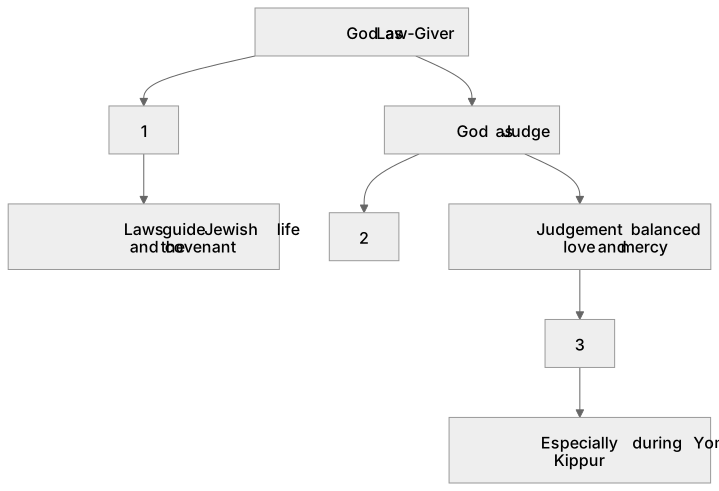
1Box 1
2Box 2
3Box 3
There is more to this lesson
The full lesson goes on to check your understanding and help you earn the marks. Create a free account to carry on, with your progress saved.
A week of Premium from your first lesson · Then the free plan continues · No card, no charge
Test your understanding of Judaism - 3.1.6.1 Beliefs and teachings: God as Law-Giver and Judge, loving and merciful.
Active recall beats re-reading. Take an instant quiz now to test what you’ve learned and lock it into long-term memory.
A week of Premium from your first lesson · Then the free plan continues · No card, no charge