AQA · GCSE · Religious Studies
Course version: 8062 · Version from Sept 2018
The importance of being gurmukh (God-centred) rather than manmukh…
Full specification wording
Sikhism - 3.1.7.1 Beliefs and teachings: The importance of being gurmukh (God-centred) rather than manmukh (man-centred) and the elimination of pride or ego (haumai).
In Sikhism, spiritual progress depends on moving from being manmukh (self-centred or man-centred) to becoming gurmukh (God-centred).
Checked against the AQA 8062 specification (opens in a new tab) on .
- Point 9 of 16
- 4 key terms
Study notes
From the checked teaching notes for this specification point.
The idea
In Sikhism, spiritual progress depends on moving from being manmukh (self-centred or man-centred) to becoming gurmukh (God-centred). A manmukh is driven by worldly attachments and material desires, which keeps them trapped in the cycle of samsara (rebirth). Conversely, a gurmukh focuses entirely on God, living according to the Guru's teachings through prayer, honest work, and selfless service (sewa). The central barrier to becoming gurmukh is haumai, meaning pride or ego. Haumai creates a false sense of separation from God and others. Sikhs strive to eliminate haumai by meditating on God's name (Nam Japna) and serving the community, which destroys arrogance and aligns their will with God's will (hukam), ultimately leading to mukti.
What earns the marks
- Define gurmukh as being God-centred and focused on spiritual devotion and the Guru's teachings.
- Define manmukh as being self-centred, driven by material wealth, lust, anger, and worldly attachments.
- Explain that haumai (ego or pride) is the root cause of being manmukh and separates humans from God.
- Describe how eliminating haumai through sewa (selfless service) and Nam Japna (meditation) helps a Sikh become gurmukh and achieve mukti.
Common mistakes and how to put them right
Confusing the terms gurmukh and manmukh.
Put it right: 'gur' relates to Guru or God, while 'man' relates to the mind or self.
Assuming haumai only means boasting.
Put it right: It actually refers to the deep-seated ego and self-reliance that creates a barrier between the soul and God.
Stating that manmukh individuals are inherently evil.
Put it right: Correct this to explain they are simply spiritually ignorant and distracted by worldly illusions (maya).
Exam tips
- Use the exact Punjabi terms (gurmukh, manmukh, haumai) in your answers to demonstrate precise subject knowledge.
- Link the elimination of haumai directly to the practice of sewa (selfless service) when evaluating how Sikhs overcome ego.
- Contrast the outcomes of both states: explain that being manmukh leads to continued rebirth, whereas being gurmukh leads to mukti (liberation).
Try the lesson
The start of the Sikhism - 3.1.7.1 Beliefs and teachings: The importance of being gurmukh (God-centred) rather than manmukh (man-centred) and the elimination of pride or ego (haumai). lesson, made from checked teaching notes for this specification point.
Have a go first
In Sikhism, what does it mean for a person to be described as 'gurmukh'?
Listen
In Sikhism, spiritual progress depends on moving from being manmukh (self-centred or man-centred) to becoming gurmukh (God-centred). A manmukh is driven by worldly attachments and material desires, which keeps them trapped in the cycle of samsara (rebirth). Conversely, a gurmukh focuses entirely on God, living according to the Guru's teachings through prayer, honest work, and selfless service (sewa). The central barrier to becoming gurmukh is haumai, meaning pride or ego. Haumai creates a false sense of separation from God and others. Sikhs strive to eliminate haumai by meditating on God's name (Nam Japna) and serving the community, which destroys arrogance and aligns their will with God's will (hukam), ultimately leading to mukti. A strong answer earns marks for these points. Define gurmukh as being God-centred and focused on spiritual devotion and the Guru's teachings. Define manmukh as being self-centred, driven by material wealth, lust, anger, and worldly attachments. Explain that haumai (ego or pride) is the root cause of being manmukh and separates humans from God. Describe how eliminating haumai through sewa (selfless service) and Nam Japna (meditation) helps a Sikh become gurmukh and achieve mukti. Exam tip: Use the exact Punjabi terms (gurmukh, manmukh, haumai) in your answers to demonstrate precise subject knowledge.
See it
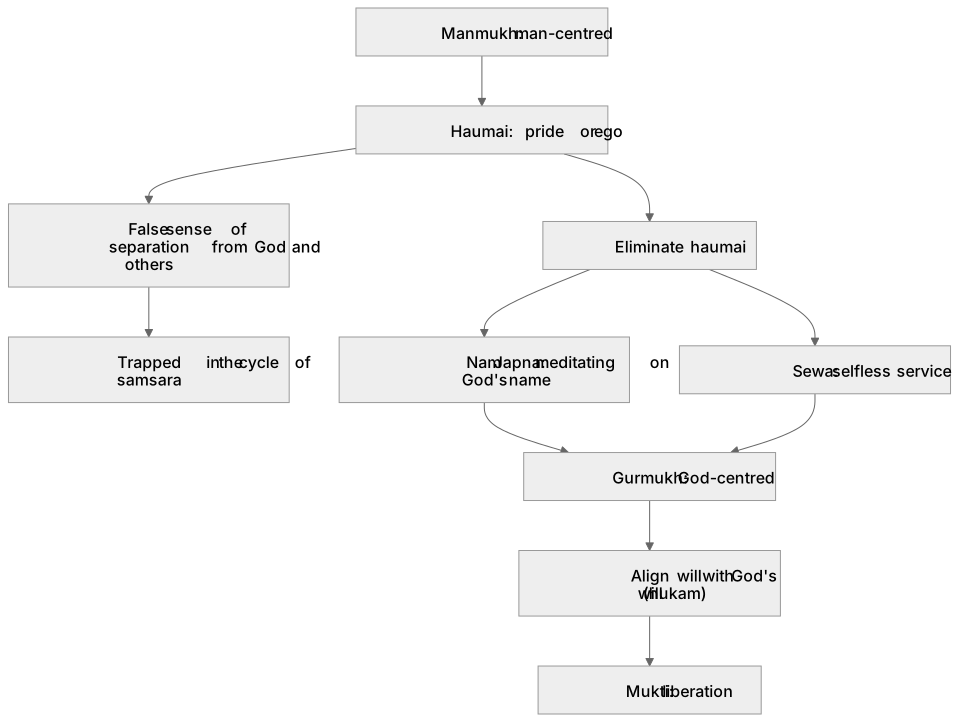
Key words
Say what each word means before you turn the card.
Gurmukh
Try answering aloud or in your head before turning the card.
Manmukh
Try answering aloud or in your head before turning the card.
Haumai
Try answering aloud or in your head before turning the card.
Sewa
Try answering aloud or in your head before turning the card.
See every definition
- Gurmukh
- Being God-centred and focused on spiritual devotion and the Guru's teachings.
- Manmukh
- Being self-centred, driven by material wealth, lust, anger, and worldly attachments.
- Haumai
- Pride or ego, the root cause of being manmukh, which creates a false sense of separation from God and others.
- Sewa
- Selfless service, through which Sikhs strive to eliminate haumai and align their will with God's will.
Label the diagram
Some boxes have lost their names. Pick the right name for each number.
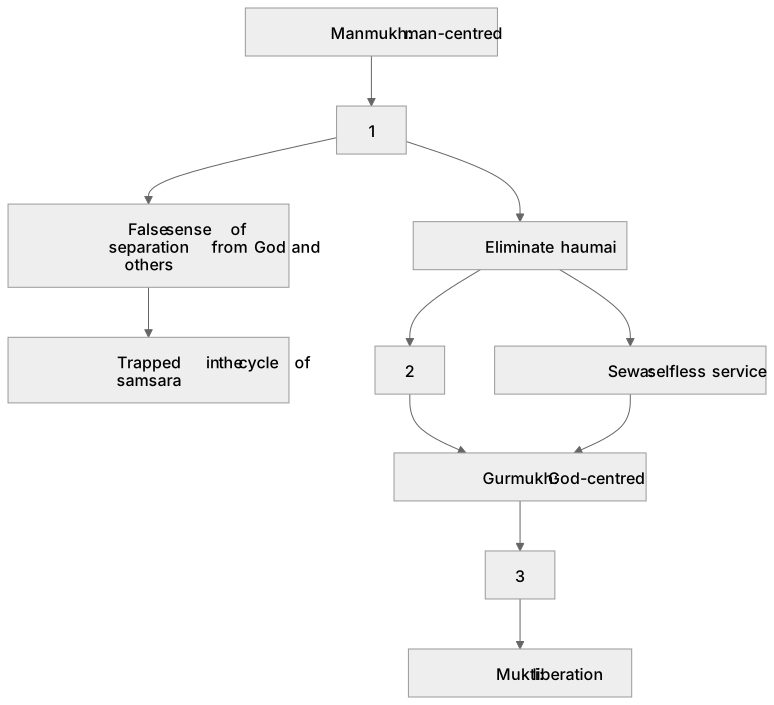
1Box 1
2Box 2
3Box 3
There is more to this lesson
The full lesson goes on to check your understanding and help you earn the marks. Create a free account to carry on, with your progress saved.
A week of Premium from your first lesson · Then the free plan continues · No card, no charge
Test your understanding of Sikhism - 3.1.7.1 Beliefs and teachings: The importance of being gurmukh (God-centred) rather than manmukh (man-centred) and the elimination of pride or ego (haumai).
Active recall beats re-reading. Take an instant quiz now to test what you’ve learned and lock it into long-term memory.
A week of Premium from your first lesson · Then the free plan continues · No card, no charge