AQA · GCSE · Religious Studies
Course version: 8062 · Version from Sept 2018
Religion, human rights and social justice: Freedom of religious expression.
Full specification wording
Theme F: Religion, human rights and social justice: Freedom of religious expression.
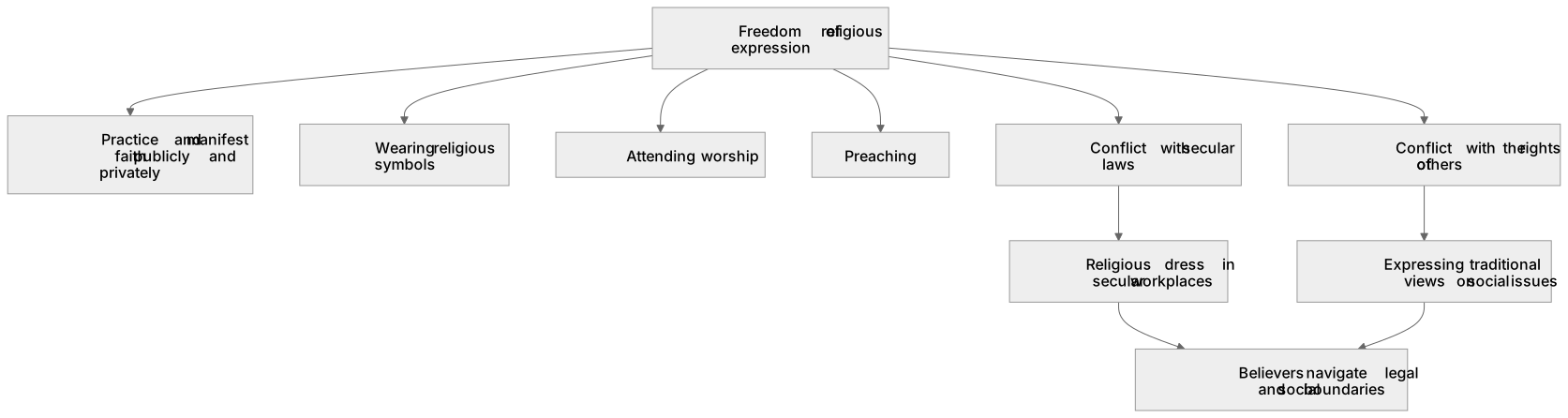
Freedom of religious expression is a fundamental human right, allowing individuals to practice and manifest their faith publicly and privately without persecution.
- Point 6 of 23
Study notes
From the teaching notes for this specification point.
The idea
Freedom of religious expression is a fundamental human right, allowing individuals to practice and manifest their faith publicly and privately without persecution. This includes wearing religious symbols, attending worship, and preaching. Religions strongly support this freedom, viewing faith as a core part of human identity. However, religious expression can sometimes conflict with secular laws or the rights of others. For example, debates arise over wearing religious dress in secular workplaces or expressing traditional views on social issues that others may find discriminatory. Believers must navigate advocating for their right to express their faith while respecting the legal and social boundaries of a diverse, multi-faith society.
What earns the marks
- Define freedom of religious expression as the right to practice, manifest, and share one's faith openly.
- Give examples of religious expression, such as wearing specific clothing, public prayer, and evangelism.
- Explain why religious believers value this freedom, linking it to the Universal Declaration of Human Rights and divine commands to share their faith.
- Evaluate situations where religious expression might be limited, such as when it infringes upon the rights of others or conflicts with equality laws.
Common mistakes and how to put them right
Confusing freedom of belief with freedom of expression.
Put it right: Clarify that while belief is absolute, the outward expression of that belief can sometimes be legally restricted.
Assuming religious expression only means preaching.
Put it right: Include other forms of expression such as wearing a hijab or a cross.
Claiming that religious freedom allows believers to break any law.
Put it right: Explain that religious expression must still operate within the legal framework of the country.
Exam tips
- Use contemporary examples, such as legal cases regarding the wearing of religious symbols at work, to illustrate the complexities of religious expression.
- When evaluating, ensure you present arguments for protecting religious expression alongside arguments for why it might sometimes need to be restricted in a secular society.
Try the lesson
The start of the Theme F: Religion, human rights and social justice: Freedom of religious expression. lesson, made from teaching notes for this specification point.
Have a go first
What does the term 'freedom of religious expression' mean in the context of human rights?
Listen
Freedom of religious expression is a fundamental human right, allowing individuals to practice and manifest their faith publicly and privately without persecution. This includes wearing religious symbols, attending worship, and preaching. Religions strongly support this freedom, viewing faith as a core part of human identity. However, religious expression can sometimes conflict with secular laws or the rights of others. For example, debates arise over wearing religious dress in secular workplaces or expressing traditional views on social issues that others may find discriminatory. Believers must navigate advocating for their right to express their faith while respecting the legal and social boundaries of a diverse, multi-faith society. A strong answer earns marks for these points. Define freedom of religious expression as the right to practice, manifest, and share one's faith openly. Give examples of religious expression, such as wearing specific clothing, public prayer, and evangelism. Explain why religious believers value this freedom, linking it to the Universal Declaration of Human Rights and divine commands to share their faith. Evaluate situations where religious expression might be limited, such as when it infringes upon the rights of others or conflicts with equality laws. A common slip: Confusing freedom of belief with freedom of expression. Instead, clarify that while belief is absolute, the outward expression of that belief can sometimes be legally restricted. Exam tip: Use contemporary examples, such as legal cases regarding the wearing of religious symbols at work, to illustrate the complexities of religious expression.
See it
Label the diagram
Some boxes have lost their names. Pick the right name for each number.
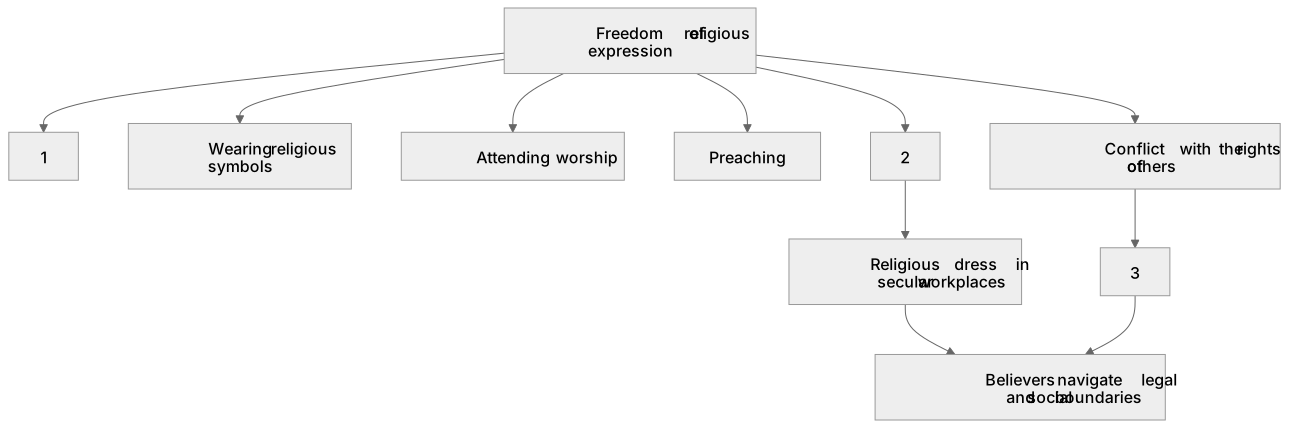
1Box 1
2Box 2
3Box 3
There is more to this lesson
The full lesson goes on to check your understanding and help you earn the marks. Create a free account to carry on, with your progress saved.
A week of Premium from your first lesson · Then the free plan continues · No card, no charge
Test your understanding of Theme F: Religion, human rights and social justice: Freedom of religious expression.
Active recall beats re-reading. Take an instant quiz now to test what you’ve learned and lock it into long-term memory.
A week of Premium from your first lesson · Then the free plan continues · No card, no charge