AQA · GCSE · Religious Studies
Course version: 8062 · Version from Sept 2018
Theme F: Religion, human rights and social justice: The uses of wealth.
In religious traditions, wealth is rarely viewed as inherently evil; the moral focus is placed on the uses of wealth.
- Point 5 of 23
- 4 key terms
Study notes
From the teaching notes for this specification point.
The idea
In religious traditions, wealth is rarely viewed as inherently evil; the moral focus is placed on the uses of wealth. Believers are taught that wealth is a blessing or a loan from God, carrying a strict responsibility to use it for others. A primary use of wealth is providing for one's family. Beyond this, religions mandate using surplus wealth to alleviate poverty and support social justice. For example, in Islam, Muslims must pay Zakah, giving a set percentage of their wealth to support the poor. Similarly, Christians are encouraged to give to charity, inspired by Jesus' teachings on helping the marginalised. This demonstrates that wealth should serve humanity and promote equality, rather than being hoarded to encourage selfish greed.
What earns the marks
- Explain that wealth is often seen as a gift from God, meaning humans are stewards who must use it responsibly.
- Identify providing for one's family and dependents as a fundamental and righteous use of wealth.
- Describe the religious obligation to use wealth to help the poor, such as through charitable giving or tithing.
- Contrast the positive uses of wealth with the negative consequences of hoarding wealth or using it for selfish, greedy purposes.
Common mistakes and how to put them right
Stating that religions teach money is evil.
Put it right: Clarify that the love of money or the misuse of wealth is condemned, not the wealth itself.
Claiming that religious believers must give away all their money.
Put it right: Explain that providing for one's family is a primary duty before giving surplus wealth to charity.
Confusing the methods of giving between religions.
Put it right: Accurately attribute specific practices, such as Zakah to Islam and tithing to Christianity.
Exam tips
- Always link the use of wealth to the concept of stewardship and the belief that God is the ultimate owner of everything.
- Use specific religious teachings or quotes, such as the Parable of the Sheep and the Goats, to support points about helping the poor.
- When evaluating whether wealth is a good thing, contrast its potential to cause greed with its potential to alleviate suffering.
Try the lesson
The start of the Theme F: Religion, human rights and social justice: The uses of wealth. lesson, made from teaching notes for this specification point.
Have a go first
In Islam, which term refers to the compulsory giving of a set proportion of one's qualifying wealth to charity each year?
Listen
In religious traditions, wealth is rarely viewed as inherently evil; the moral focus is placed on the uses of wealth. Believers are taught that wealth is a blessing or a loan from God, carrying a strict responsibility to use it for others. A primary use of wealth is providing for one's family. Beyond this, religions mandate using surplus wealth to alleviate poverty and support social justice. For example, in Islam, Muslims must pay Zakah, giving a set percentage of their wealth to support the poor. Similarly, Christians are encouraged to give to charity, inspired by Jesus' teachings on helping the marginalised. This demonstrates that wealth should serve humanity and promote equality, rather than being hoarded to encourage selfish greed. A strong answer earns marks for these points. Explain that wealth is often seen as a gift from God, meaning humans are stewards who must use it responsibly. Identify providing for one's family and dependents as a fundamental and righteous use of wealth. Describe the religious obligation to use wealth to help the poor, such as through charitable giving or tithing. Contrast the positive uses of wealth with the negative consequences of hoarding wealth or using it for selfish, greedy purposes. A common slip: Stating that religions teach money is evil. Instead, clarify that the love of money or the misuse of wealth is condemned, not the wealth itself. Exam tip: Always link the use of wealth to the concept of stewardship and the belief that God is the ultimate owner of everything.
See it
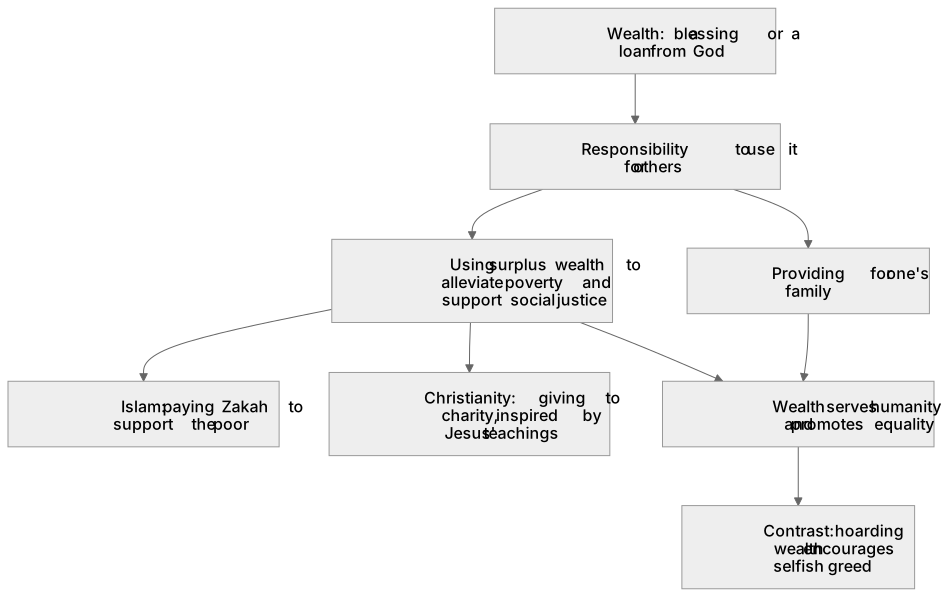
Key words
Say what each word means before you turn the card.
Stewardship
Try answering aloud or in your head before turning the card.
Charity
Try answering aloud or in your head before turning the card.
Social justice
Try answering aloud or in your head before turning the card.
Greed
Try answering aloud or in your head before turning the card.
See every definition
- Stewardship
- The belief that wealth is a blessing or a loan from God, carrying a strict responsibility to use it for others.
- Charity
- Giving to support the poor, which Christians are encouraged to do, inspired by Jesus' teachings on helping the marginalised.
- Social justice
- Using surplus wealth to alleviate poverty and support equality, so that wealth serves humanity rather than being hoarded.
- Greed
- Selfish hoarding of wealth, which religions contrast with the positive uses of wealth.
Label the diagram
Some boxes have lost their names. Pick the right name for each number.
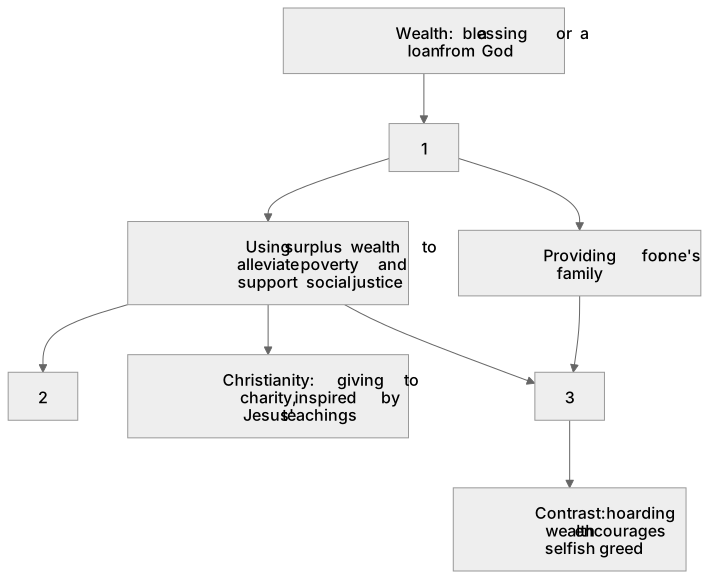
1Box 1
2Box 2
3Box 3
There is more to this lesson
The full lesson goes on to check your understanding and help you earn the marks. Create a free account to carry on, with your progress saved.
A week of Premium from your first lesson · Then the free plan continues · No card, no charge
Test your understanding of Theme F: Religion, human rights and social justice: The uses of wealth.
Active recall beats re-reading. Take an instant quiz now to test what you’ve learned and lock it into long-term memory.
A week of Premium from your first lesson · Then the free plan continues · No card, no charge