AQA · GCSE · Religious Studies
Course version: 8062 · Version from Sept 2018
Religion, human rights and social justice: Status of women in religion.
Full specification wording
Theme F: Religion, human rights and social justice: Status of women in religion.
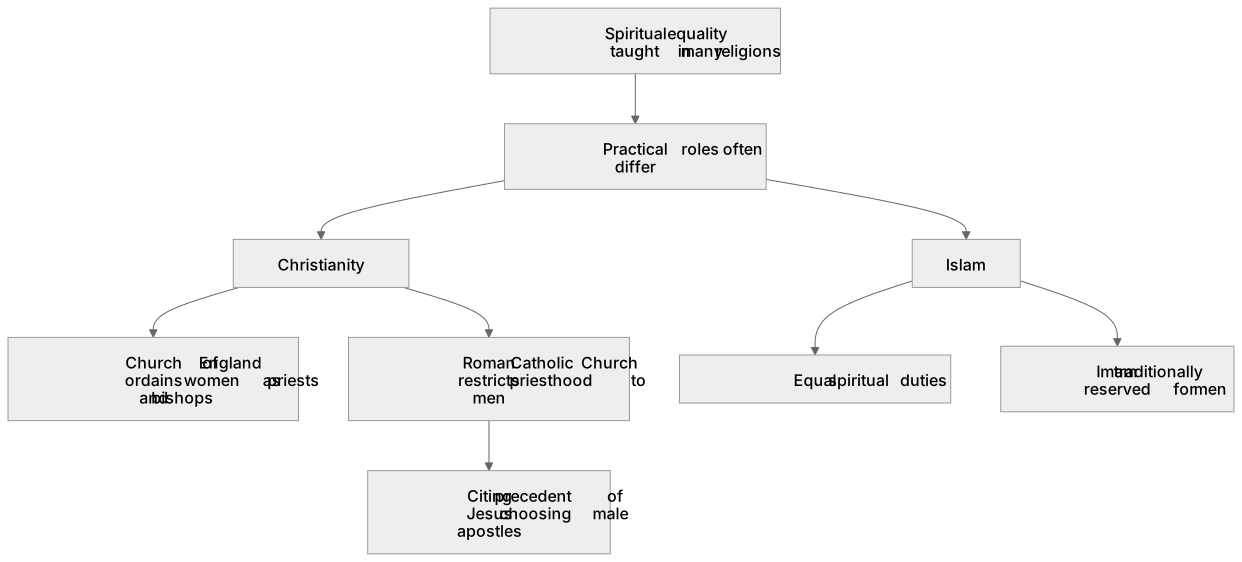
While many religions teach that men and women are spiritually equal before God, their practical roles often differ.
- Point 3 of 23
Study notes
From the teaching notes for this specification point.
The idea
While many religions teach that men and women are spiritually equal before God, their practical roles often differ. For example, within Christianity, the Church of England ordains women as priests and bishops, reflecting a belief in gender equality in leadership. In contrast, the Roman Catholic Church restricts the priesthood to men, citing the precedent of Jesus choosing male apostles.
What earns the marks
- Explain the concept of spiritual equality between genders found in many sacred texts (e.g., Galatians 3:28).
- Describe specific religious practices where the status of women differs from men, such as seating arrangements during worship.
- Analyse contrasting views on female ordination or religious leadership within Christianity (e.g., Catholic versus Anglican views).
- Explain the status and roles of women in a second religious tradition, highlighting both spiritual equality and distinct practical duties.
Common mistakes and how to put them right
Confusing the status of women in secular society with their status in religion.
Put it right by focusing on religious leadership, worship, and theology.
Claiming that all Christians oppose female leadership.
Put it right by distinguishing between denominations like the Roman Catholic Church and the Church of England.
Stating that religions view women as inferior.
Put it right by explaining the concept of 'equal but different' roles (complementarianism) held by many traditional believers.
Exam tips
- Learn a specific quote supporting gender equality, such as 'There is neither male nor female, for you are all one in Christ Jesus'.
- Use the term 'ordination' when discussing whether women can become priests or religious leaders.
- Clearly distinguish between spiritual equality (which most religions affirm) and equality of roles (which is often debated).
Try the lesson
The start of the Theme F: Religion, human rights and social justice: Status of women in religion. lesson, made from teaching notes for this specification point.
Have a go first
Which of the following best describes the traditional Roman Catholic teaching regarding the ordination of women?
Listen
While many religions teach that men and women are spiritually equal before God, their practical roles often differ. For example, within Christianity, the Church of England ordains women as priests and bishops, reflecting a belief in gender equality in leadership. In contrast, the Roman Catholic Church restricts the priesthood to men, citing the precedent of Jesus choosing male apostles. A strong answer earns marks for these points. Explain the concept of spiritual equality between genders found in many sacred texts (e.g., Galatians 3:28). Describe specific religious practices where the status of women differs from men, such as seating arrangements during worship. Analyse contrasting views on female ordination or religious leadership within Christianity (e.g., Catholic versus Anglican views). Explain the status and roles of women in a second religious tradition, highlighting both spiritual equality and distinct practical duties. A common slip: Confusing the status of women in secular society with their status in religion. Instead, focusing on religious leadership, worship, and theology. Exam tip: Learn a specific quote supporting gender equality, such as 'There is neither male nor female, for you are all one in Christ Jesus'.
See it
Label the diagram
Some boxes have lost their names. Pick the right name for each number.
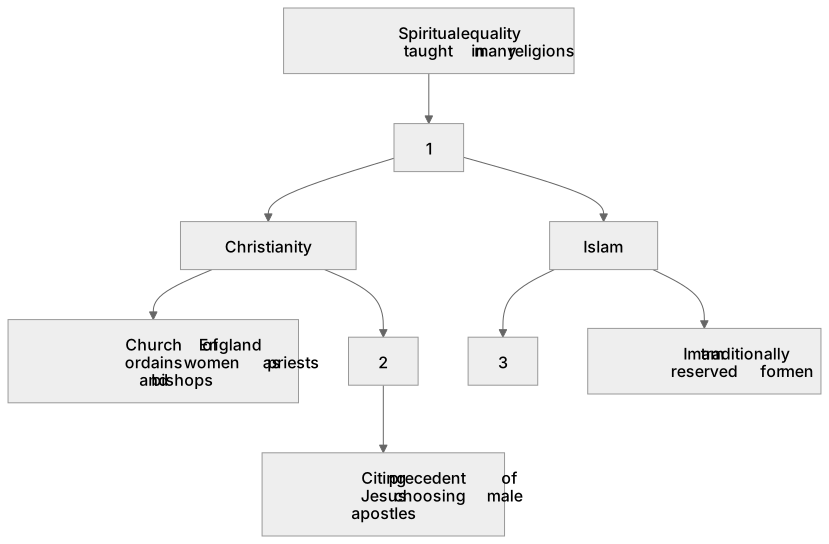
1Box 1
2Box 2
3Box 3
There is more to this lesson
The full lesson goes on to check your understanding and help you earn the marks. Create a free account to carry on, with your progress saved.
A week of Premium from your first lesson · Then the free plan continues · No card, no charge
Test your understanding of Theme F: Religion, human rights and social justice: Status of women in religion.
Active recall beats re-reading. Take an instant quiz now to test what you’ve learned and lock it into long-term memory.
A week of Premium from your first lesson · Then the free plan continues · No card, no charge