Pearson Edexcel · A-Level · Religious Studies
Islam – Practices that shape and express religious identity: The Five Pillars and the ummah
This study guide explores the Five Pillars of Islam and the concept of the Ummah, essential frameworks for Muslim identity and practice. You'll master the core duties, understand the critical role of intention (Niyyah), and examine how Sunni and Shi'a traditions interpret these practices differently.
- 5 min read
- 3 worked examples
- 5 practice questions
- 6 key terms
Study Notes
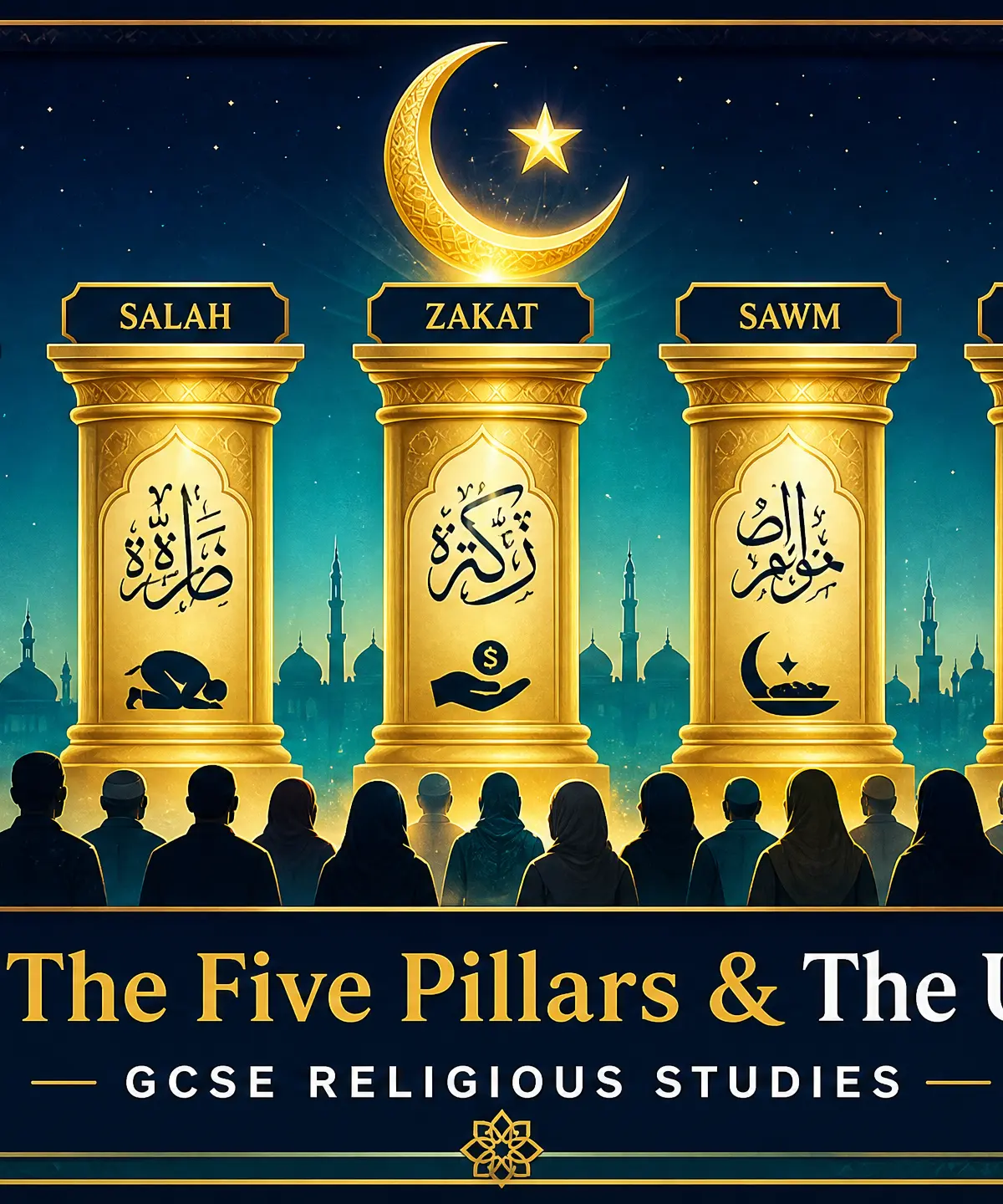
Overview
This topic covers the central practices that shape and express Islamic religious identity: the Five Pillars and the concept of the Ummah. Examiners expect you to understand not just what these practices are, but why they matter—specifically, how they demonstrate submission to the will of Allah. You must also be able to explain the concept of Niyyah (intention) and distinguish between Sunni and Shi'a interpretations of these practices and leadership. Mastering this topic requires linking individual rituals to the broader global community (the Ummah) and showing how historical events, like the Hijra in 622 CE, shaped contemporary Muslim life.
The Five Pillars of Islam
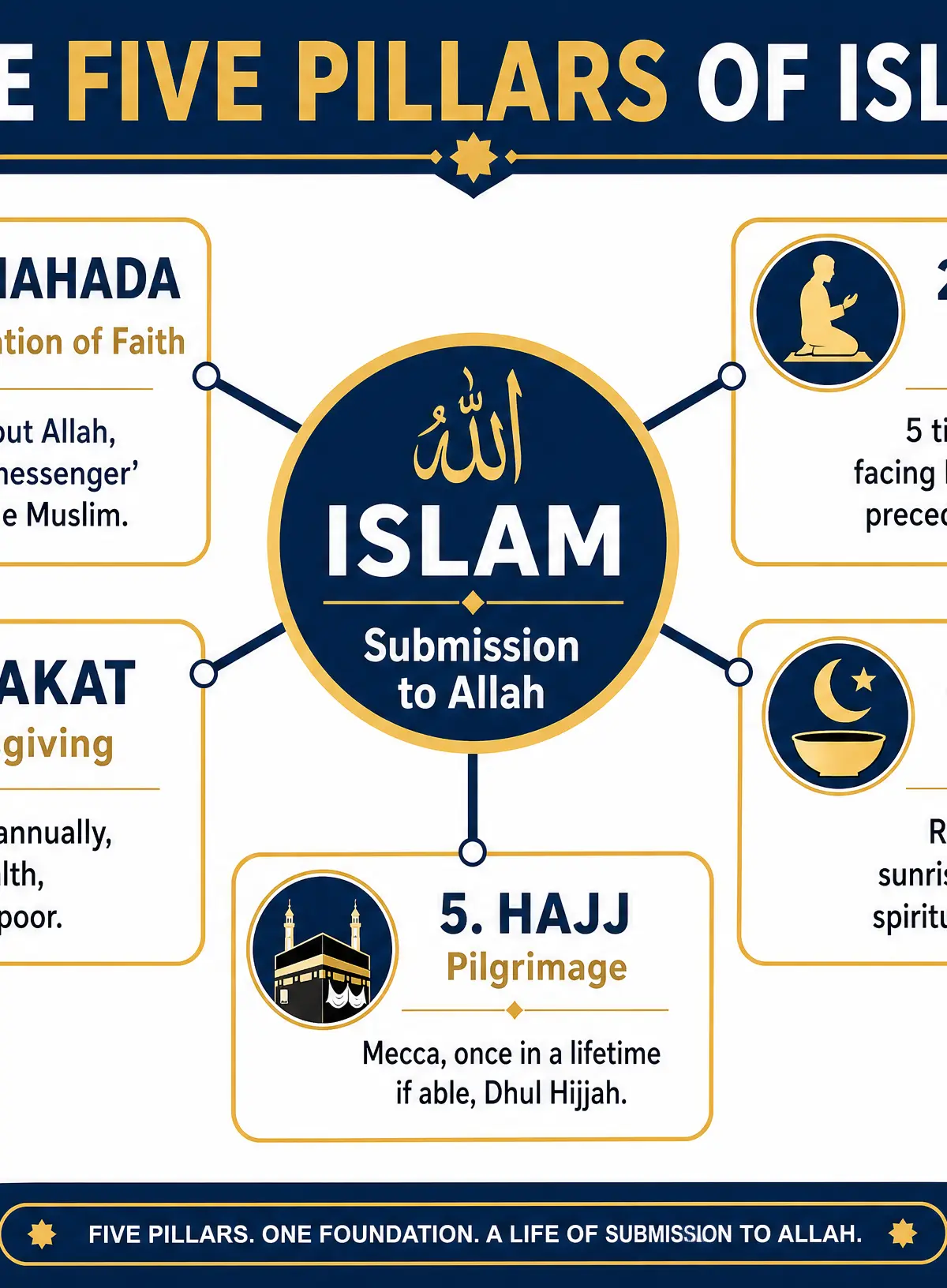
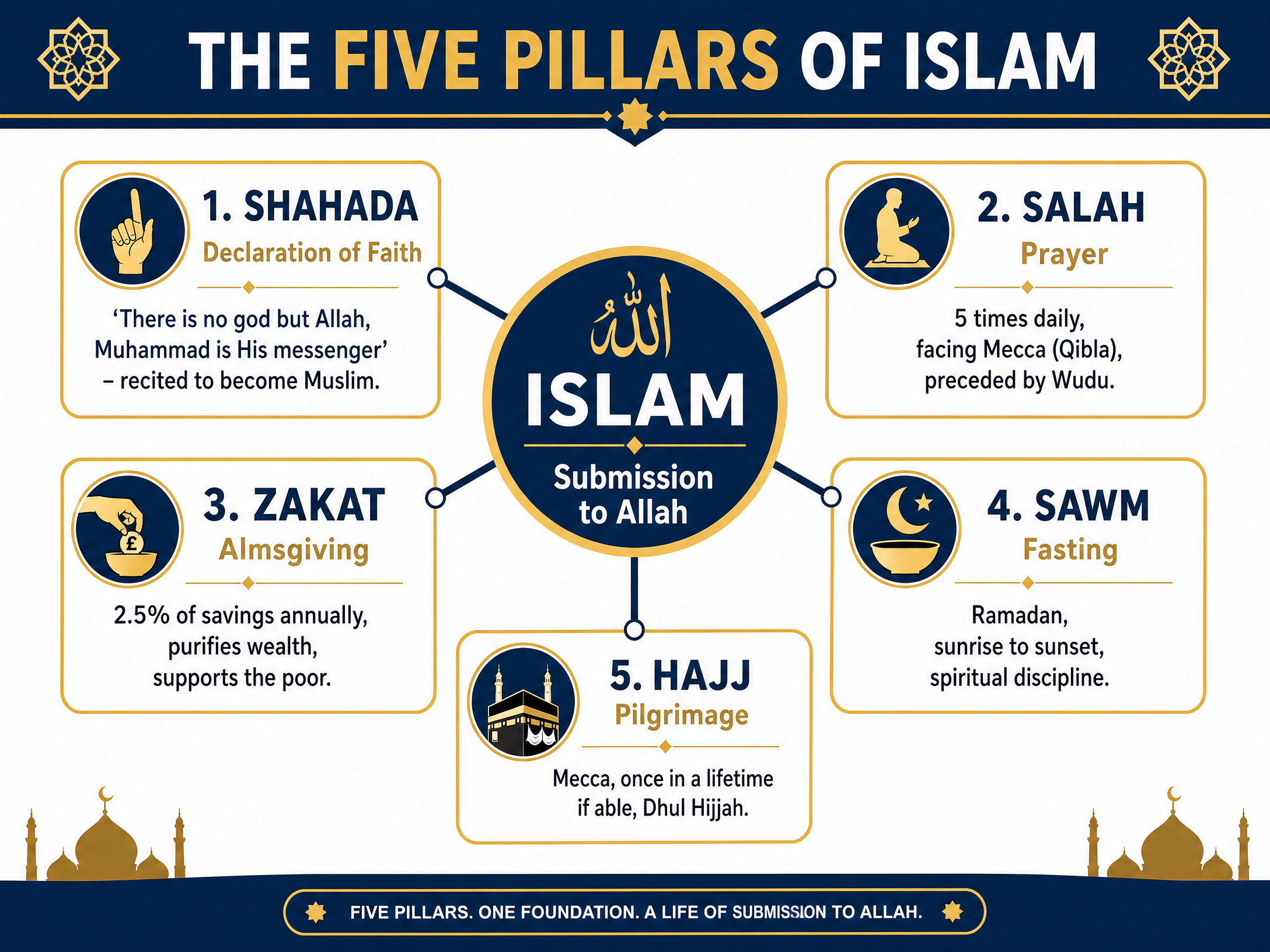
The Five Pillars (Arkan al-Islam) are the foundation of Muslim life, primarily in Sunni Islam, though observed by Shi'a Muslims as well. They represent a unified system of submission to Allah.
1. Shahada (Declaration of Faith)
What it is: The core declaration: 'There is no god but Allah, and Muhammad is His messenger.'
Why it matters: It is the foundation of Islamic belief (Tawhid) and the entry point into the faith. It is recited daily in prayer (Salah), whispered to newborns, and is ideally a Muslim's last words.
Specific Knowledge: In Arabic: La ilaha illa Allah, Muhammadun rasul Allah. Shi'a Muslims often add 'and Ali is the friend of God' (Aliun wali Allah).
2. Salah (Prayer)
What it is: Ritual prayer performed five times daily facing Mecca (the Qibla).
Why it matters: It structures the day around remembrance of Allah, demonstrating continuous submission. It unites the Ummah, as all Muslims pray in the same direction simultaneously.
Specific Knowledge: Requires ritual washing (Wudu) beforehand. Friday midday congregational prayer is called Jumu'ah.
3. Zakat (Almsgiving)
What it is: Obligatory charitable giving of 2.5% of a Muslim's annual savings above a certain threshold (Nisab).
Why it matters: It purifies wealth, reduces inequality within the Ummah, and acknowledges that all wealth ultimately belongs to Allah.
Specific Knowledge: Distinct from voluntary charity (Sadaqah). Shi'a Muslims also pay Khums (a 20% tax on certain income).
4. Sawm (Fasting)
What it is: Fasting from dawn to sunset during the holy month of Ramadan.
Why it matters: Develops self-discipline (muttaqi), empathy for the poor, and spiritual focus. It is a deeply communal experience ending with the festival of Eid ul-Fitr.
Specific Knowledge: Exemptions exist for the sick, pregnant, elderly, and travellers, showing Islam's compassion.
5. Hajj (Pilgrimage)
What it is: Annual pilgrimage to Mecca, required once in a lifetime for those physically and financially able.
Why it matters: The ultimate physical expression of the Ummah. Millions gather in equality before Allah, stripping away worldly status.
Specific Knowledge: Takes place in the month of Dhul Hijjah. Key rituals include Tawaf (circling the Kaaba) and standing at Arafat.
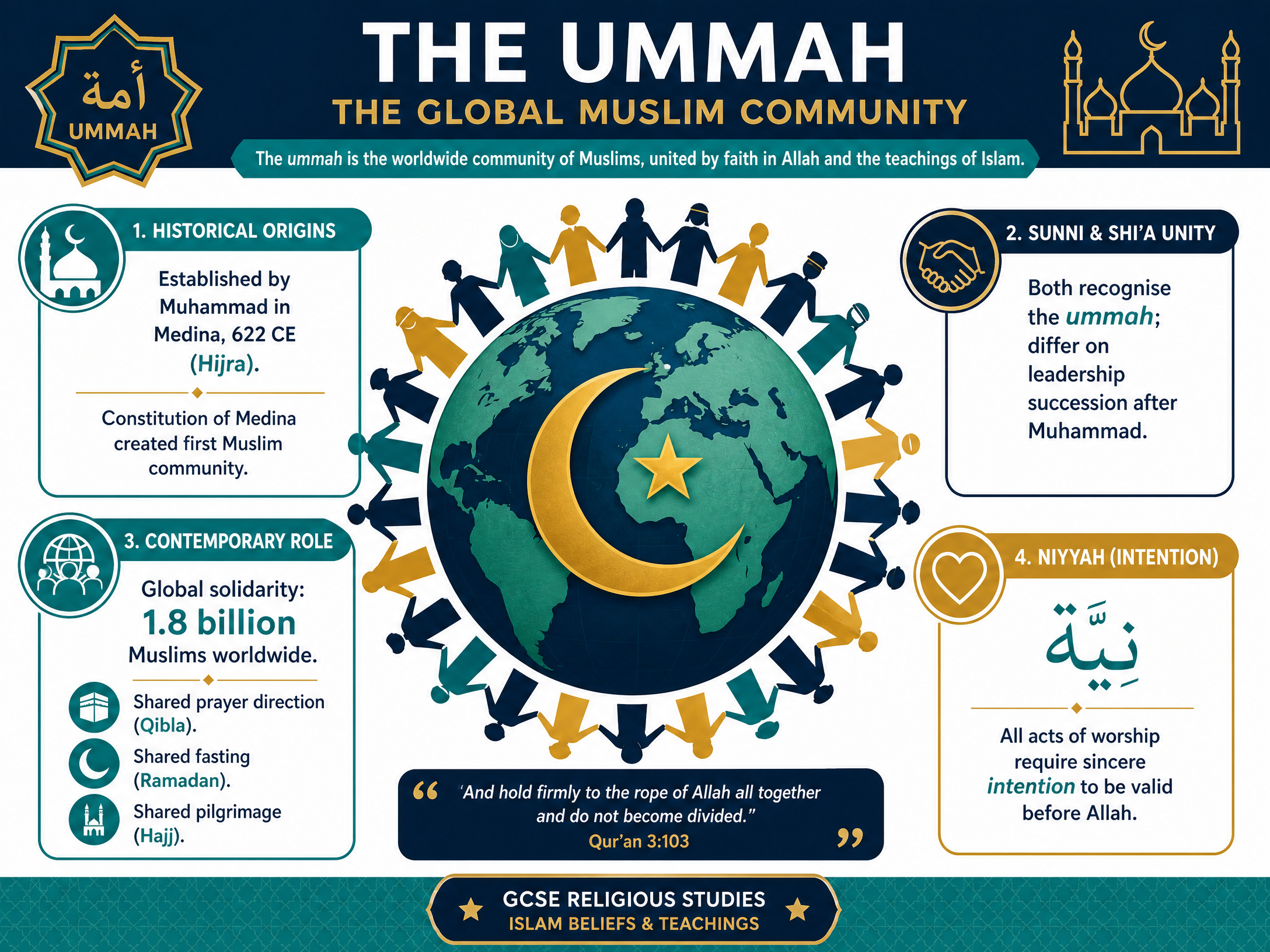
The Ummah (Global Community)
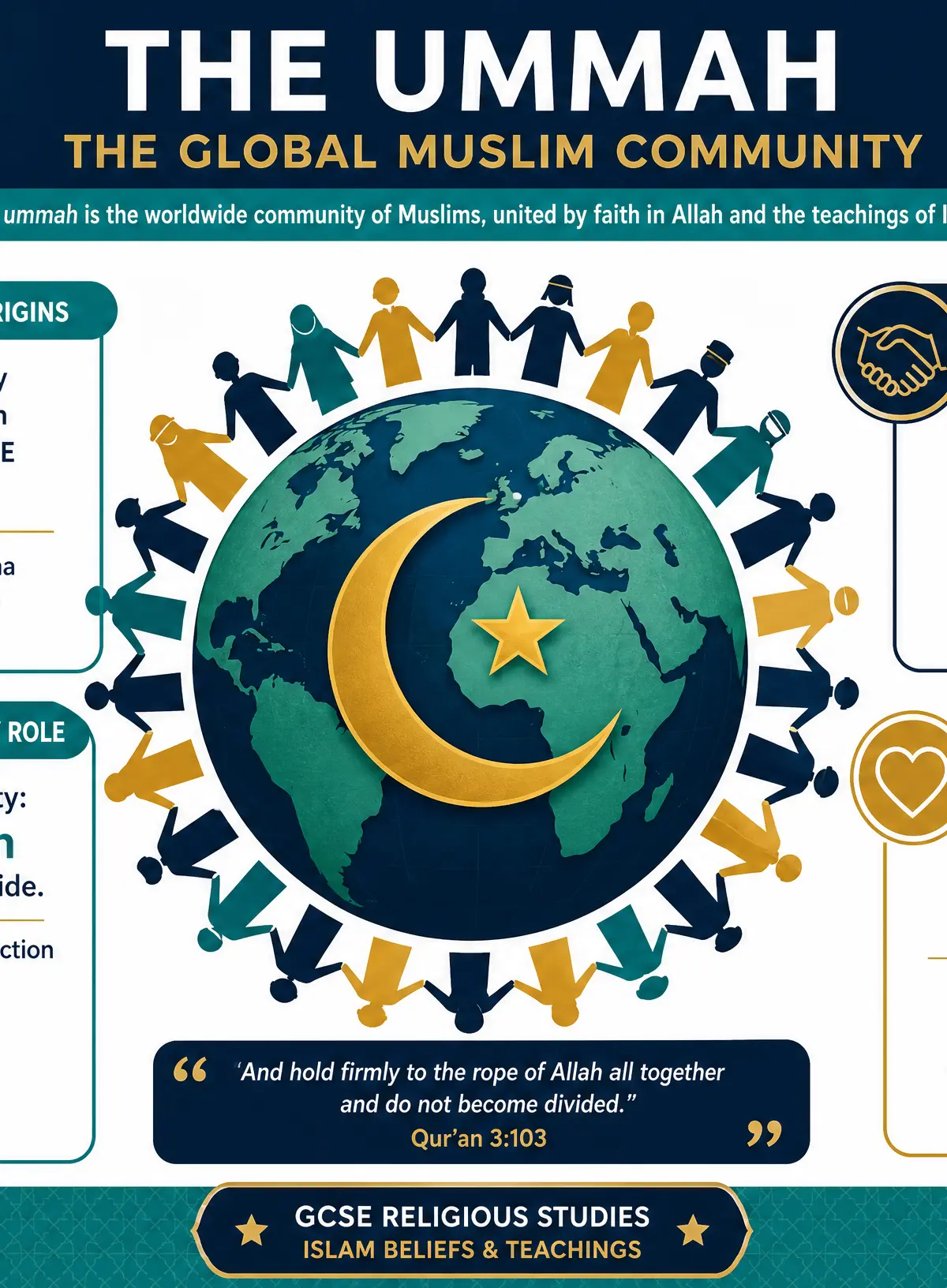
Historical Development
Date: 622 CE (The Hijra)
What happened: Prophet Muhammad migrated from Mecca to Medina, establishing the first formal Muslim community via the Constitution of Medina.
Why it matters: This marked the transition of Islam from a persecuted group to an organized political and religious community.
Contemporary Role
The Ummah today consists of roughly 1.8 billion Muslims. It provides global solidarity, shared practices (praying towards the same Qibla, fasting in Ramadan), and mutual support (e.g., international charities like Islamic Relief).
Niyyah (Intention)
What it is: The sincere intention required before any act of worship.
Why it matters: Without Niyyah, rituals are empty actions. 'Actions are judged by intentions' (Hadith). Examiners highly reward candidates who link practices to Niyyah.
Sunni vs Shi'a Islam
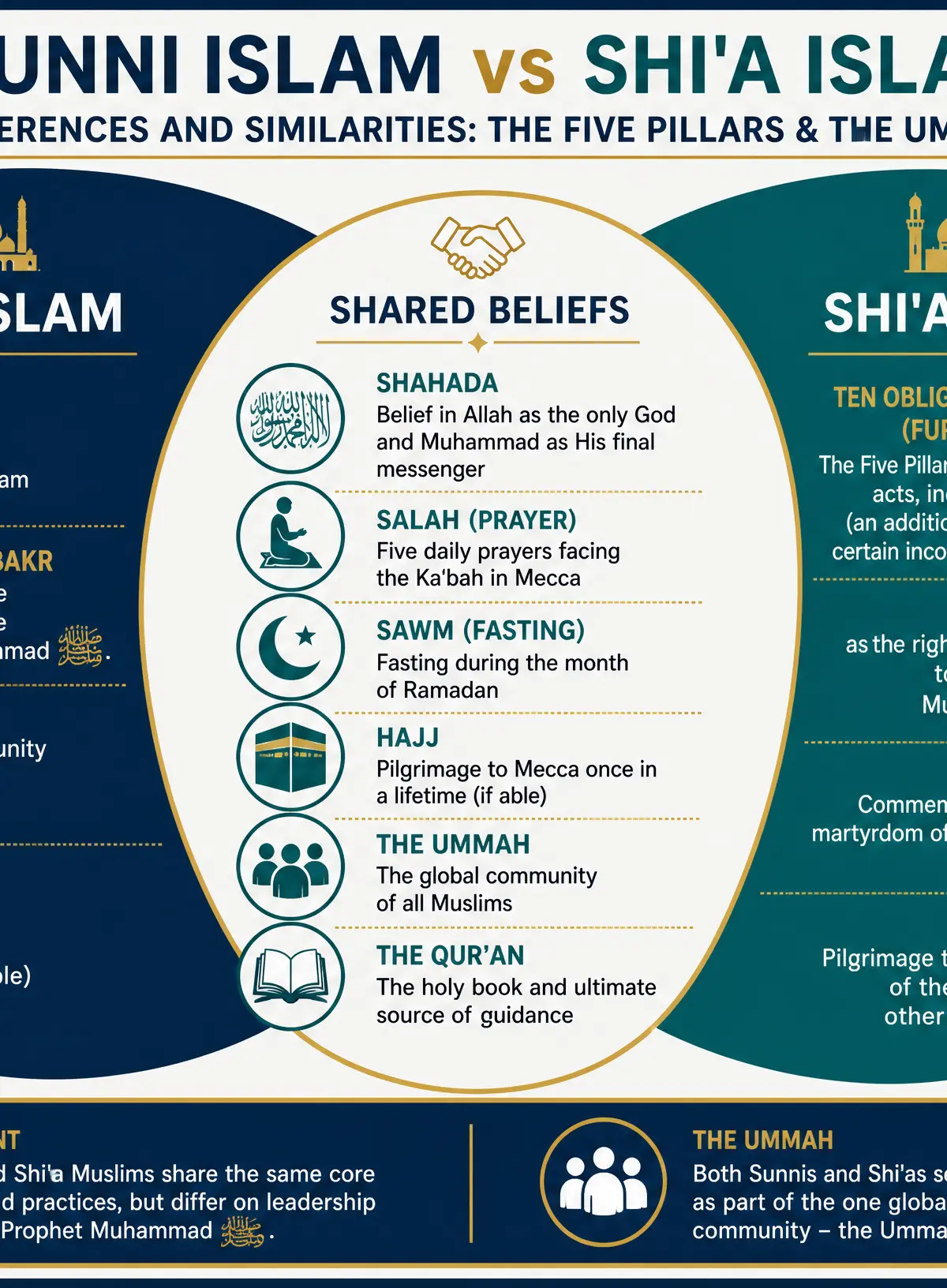
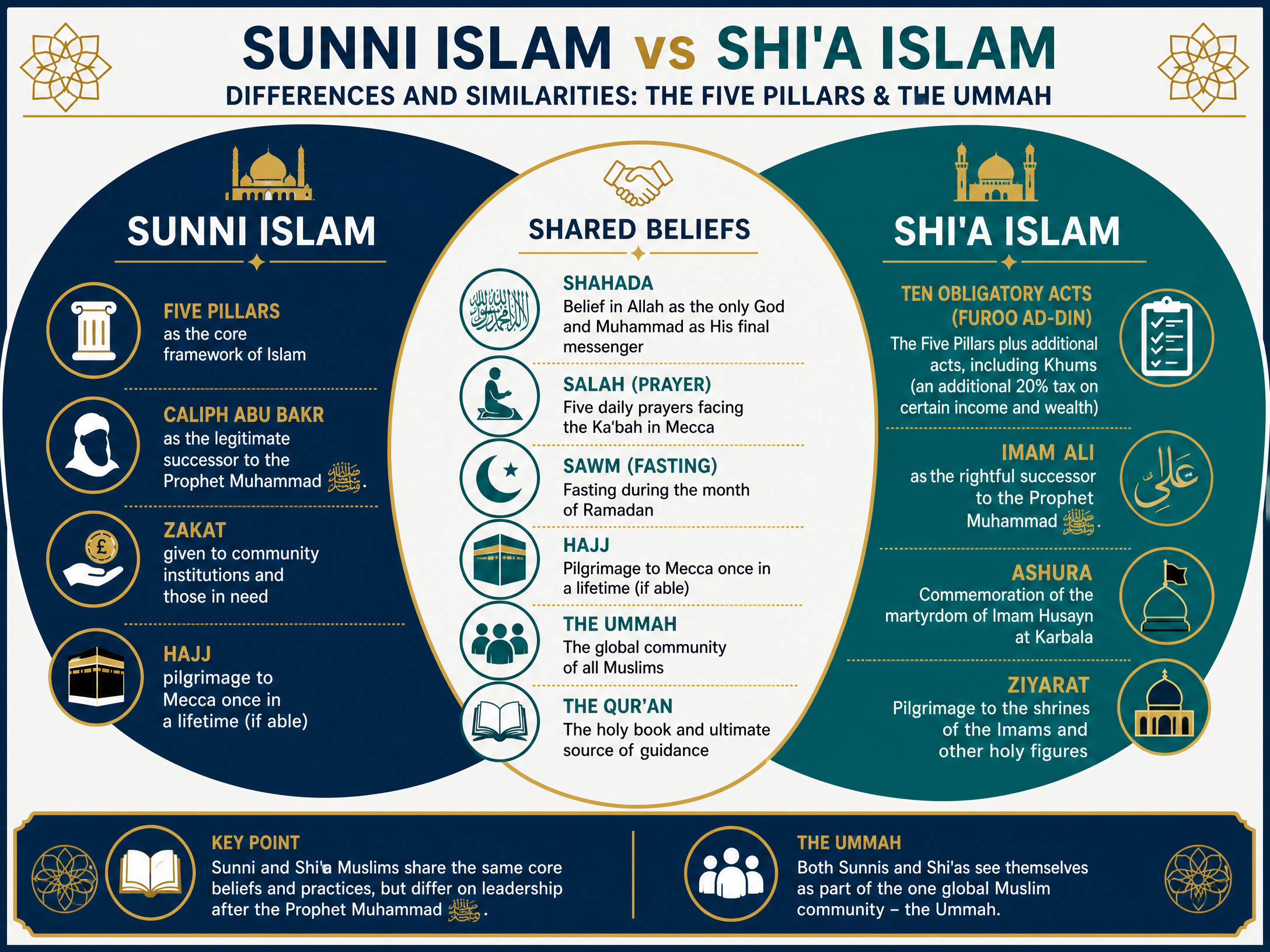
While both share the core beliefs, the historical split over leadership following Muhammad's death in 632 CE led to differences in practice.
- Sunni: Follow the Five Pillars as the core framework. Accepted Abu Bakr as the first Caliph.
- Shi'a: Follow the Ten Obligatory Acts (Furoo ad-Din), which include the Five Pillars plus Khums (20% tax), Jihad, and others. Believe Ali was the rightful successor. Observe Ashura to commemorate Imam Husayn's martyrdom.

Visual Resources
3 diagrams and illustrations
Interactive Diagrams
1 interactive diagram to visualise key concepts
Conceptual Flow Outline
The Five Pillars as expressions of Submission
Worked Examples
3 worked examples — open one to explore the question and available guidance.
Practice Questions
Test your understanding — click to reveal model answers
Explain two reasons why the Ummah is important to Muslims. (5 marks)
Hint: Think about global unity and how Muslims support each other financially.
Explain two ways in which Shi'a practices differ from Sunni practices regarding the Pillars. (4 marks)
Hint: Think about Khums and the Ten Obligatory Acts.
Describe the practice of Zakat. (5 marks)
Hint: Mention the percentage, who pays it, and what it is used for.
Explain the significance of Niyyah in Islamic worship. (4 marks)
Hint: Focus on intention and why outward actions aren't enough on their own.
'Hajj is the most important practice for a Muslim.' Evaluate this statement. (12 marks)
Hint: Compare Hajj to the Shahada and Salah. Remember Hajj is only required once.