Pearson Edexcel · A-Level · Religious Studies
Scientific and historical-critical challenges, faith and history, and ethical living
This topic tackles the ultimate tension in Religious Studies: how modern scientific and historical criticism challenges the resurrection, and how Jesus' radical ethics apply today. Mastering this will allow you to confidently evaluate scholars like Bultmann and Morison while applying Luke's Gospel to modern social justice.
- 6 min read
- 3 worked examples
- 5 practice questions
- 6 key terms
Study Notes

Overview
This topic lies at the absolute heart of Christian theology and modern religious debate. It asks you to grapple with the tension between faith and reason: Can a modern person, aware of science and history, still believe in the resurrection of Jesus? And how do the radical ethical teachings of a first-century Jewish rabbi apply to the complexities of modern living?
Examiners are looking for your ability to critically evaluate different scholarly approaches to the resurrection. You must distinguish clearly between scientific challenges (which argue miracles are impossible) and historical-critical challenges (which argue the Gospel accounts are unreliable or mythological). Furthermore, you must be able to analyse Jesus' ethical teachings, specifically the Sermon on the Plain, and evaluate their impact on contemporary Christian codes of living regarding equality and pluralism. Precise use of named scholars (Hume, Bultmann, Morison, Wilson) and specific biblical references (Luke 6) will elevate your answers into the highest mark bands.
🎧 Listen to the Podcast
Listen to this 10-minute audio guide covering all key concepts, exam tips, and a quick-fire recall quiz.

Key Concepts & Challenges
1. The Scientific Challenge to the Resurrection
What it is: The argument that the resurrection is impossible because it violates the established laws of biology and physics.
Key Thinker: David Hume (18th Century)
- Hume argued that a miracle is a "violation of the laws of nature."
- Because the laws of nature are supported by overwhelming, uniform human experience, it is always more probable that the person reporting the miracle is mistaken or lying than that the miracle actually occurred.
- Therefore, the scientific worldview rejects the resurrection as a literal, physical event.
Why it matters: Examiners want to see you articulate that science challenges the mechanism of the resurrection (how it could happen physically).
2. The Historical-Critical Challenge
What it is: The argument that the Gospel accounts are not reliable historical records, but rather theological documents written decades after the events by biased followers.
Key Thinker: Rudolf Bultmann (20th Century)
- Demythologisation: Bultmann argued that the New Testament worldview is mythological (e.g., a three-tiered universe of heaven, earth, hell). Modern people cannot accept this.
- He argued we must strip away the myth to find the kerygma (the core message).
- For Bultmann, the resurrection is not a historical event in the past, but a spiritual event that happens in the heart of the believer today. The empty tomb is irrelevant.
Why it matters: This challenges the nature of the text. It suggests the resurrection is symbolic narrative, not history.
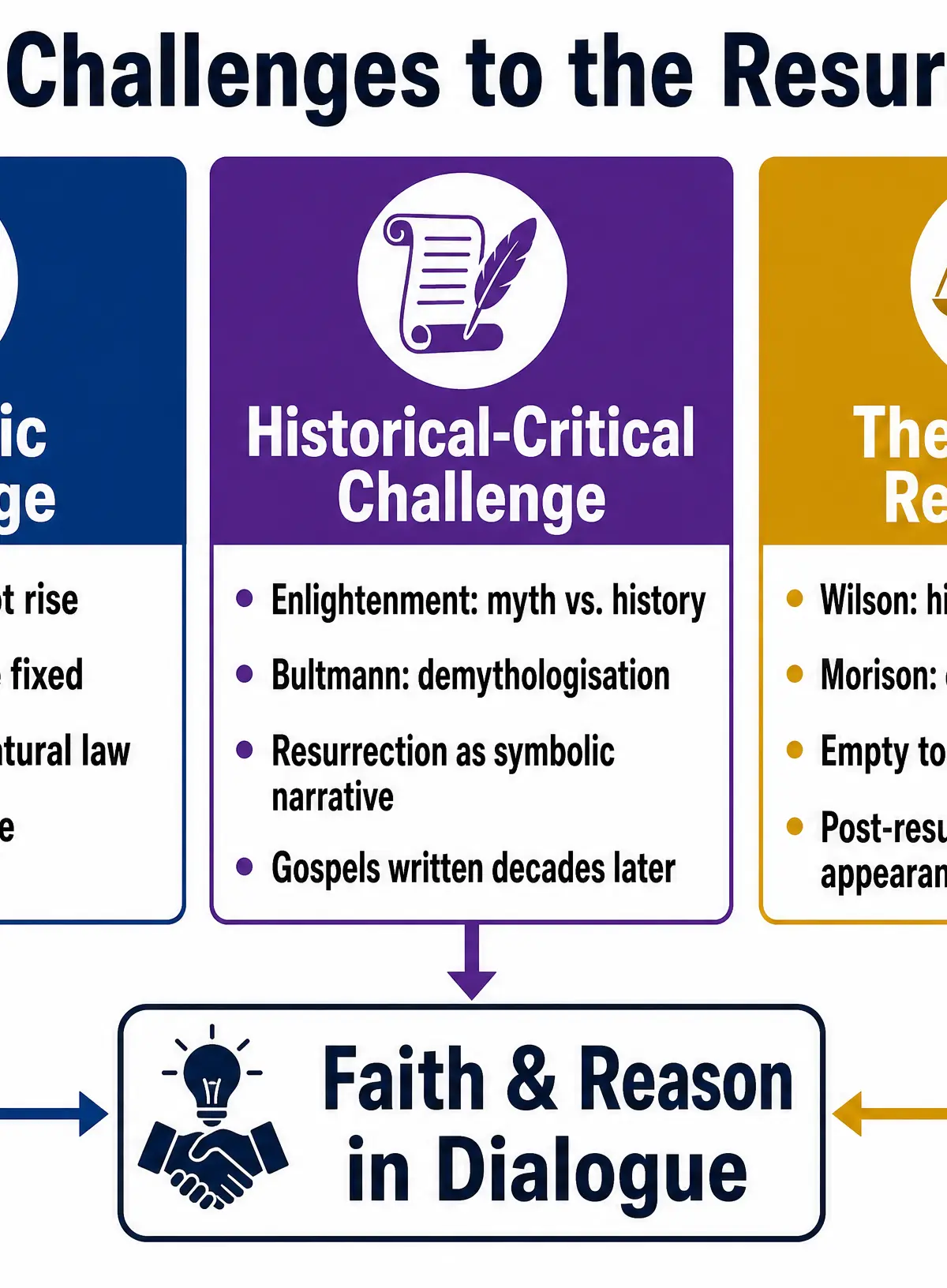
3. The Theological/Historical Response
What it is: The counter-argument that the resurrection is the most rational explanation for the historical evidence available.
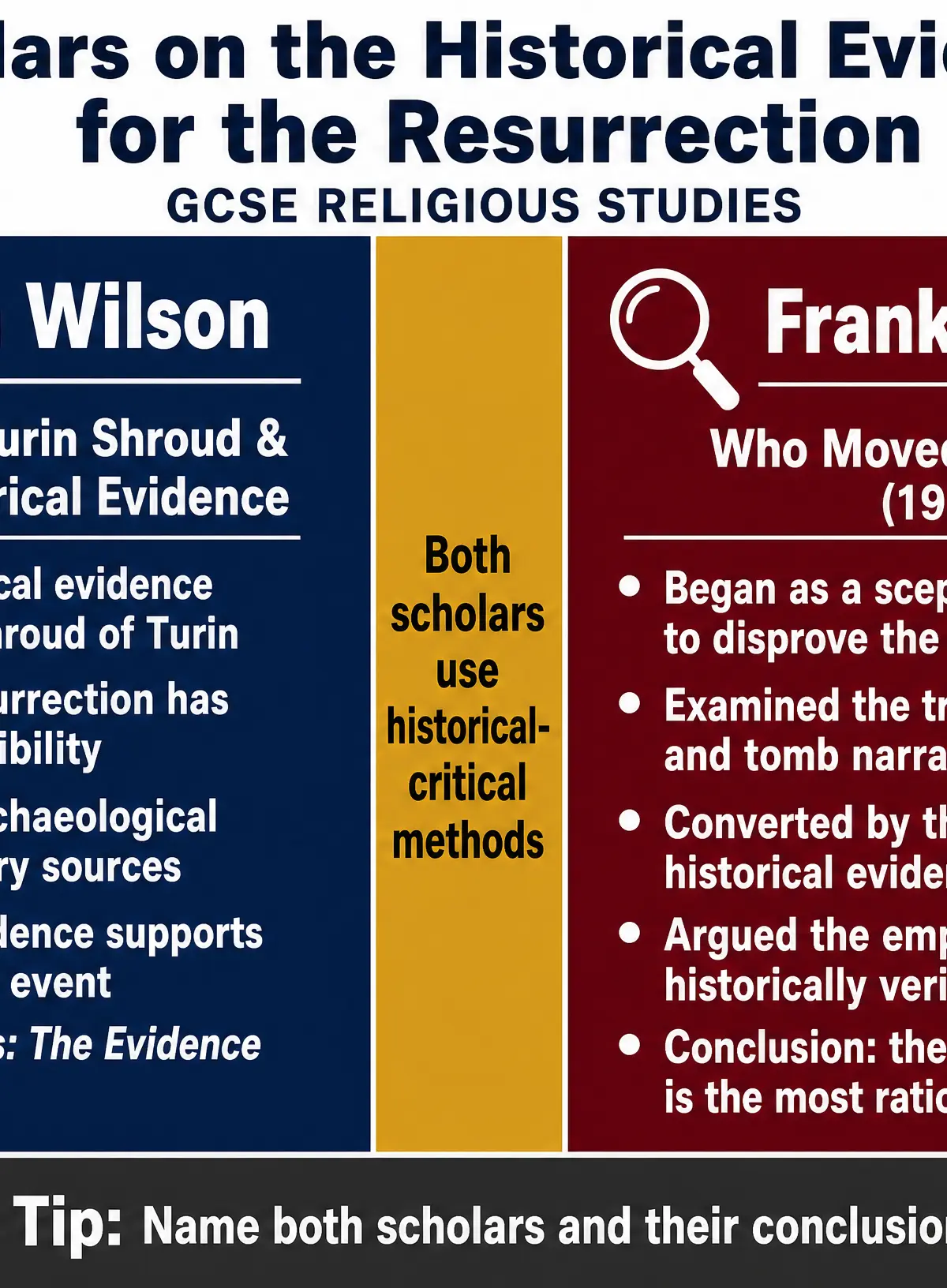
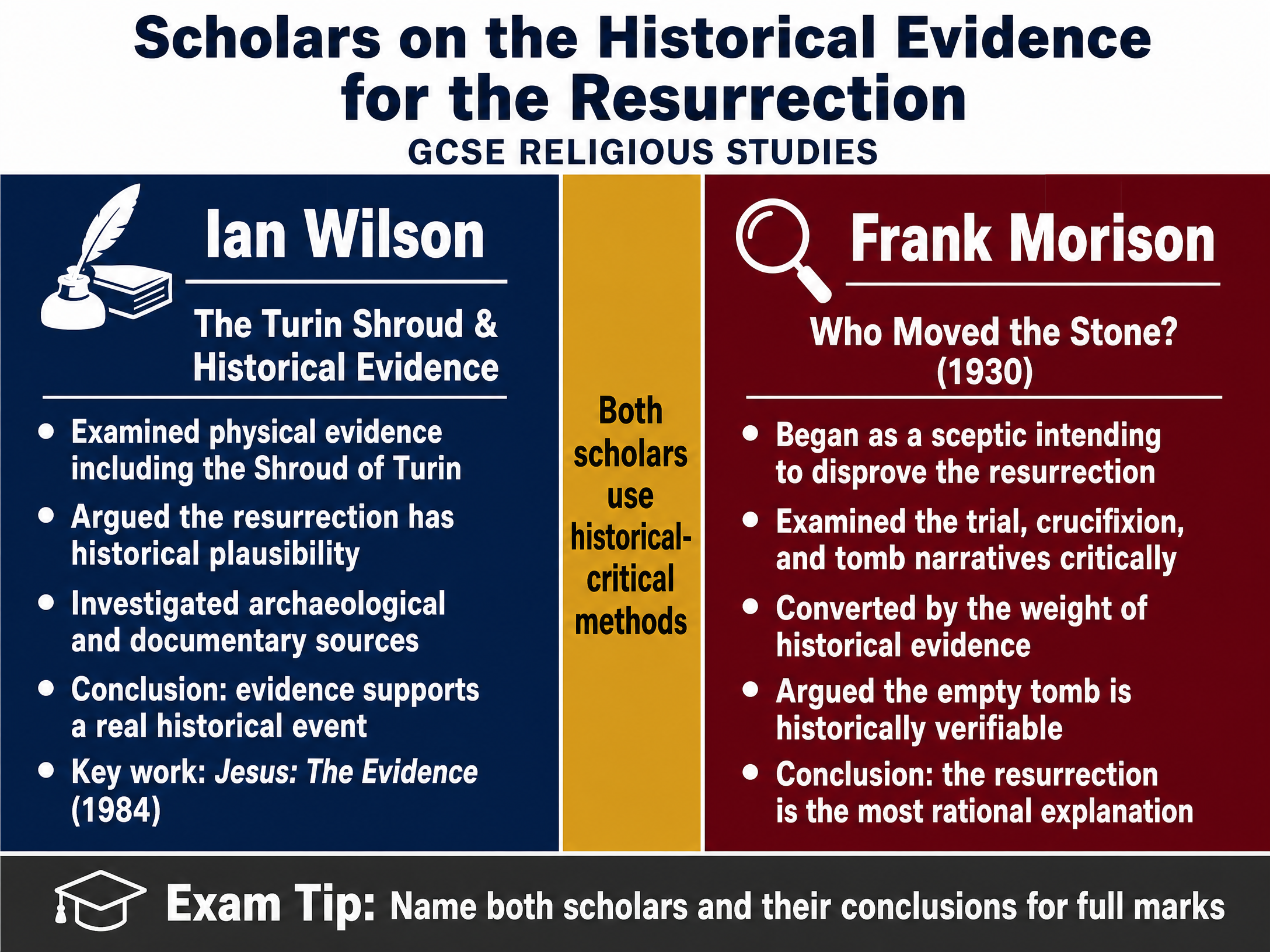
Key Thinker 1: Frank Morison
- Work: Who Moved the Stone? (1930)
- Approach: Began as a sceptic trying to disprove the resurrection.
- Conclusion: Converted by the evidence. Argued that the empty tomb, the transformation of the disciples from cowards to martyrs, and the inability of the authorities to produce a body make the resurrection the most logical historical conclusion.
Key Thinker 2: Ian Wilson
- Work: Jesus: The Evidence (1984)
- Approach: Examined physical and archaeological evidence, most notably the Shroud of Turin.
- Conclusion: Argued that the resurrection has genuine historical plausibility and that physical evidence supports the Gospel narratives.
Ethical Living: The Sermon on the Plain (Luke 6)
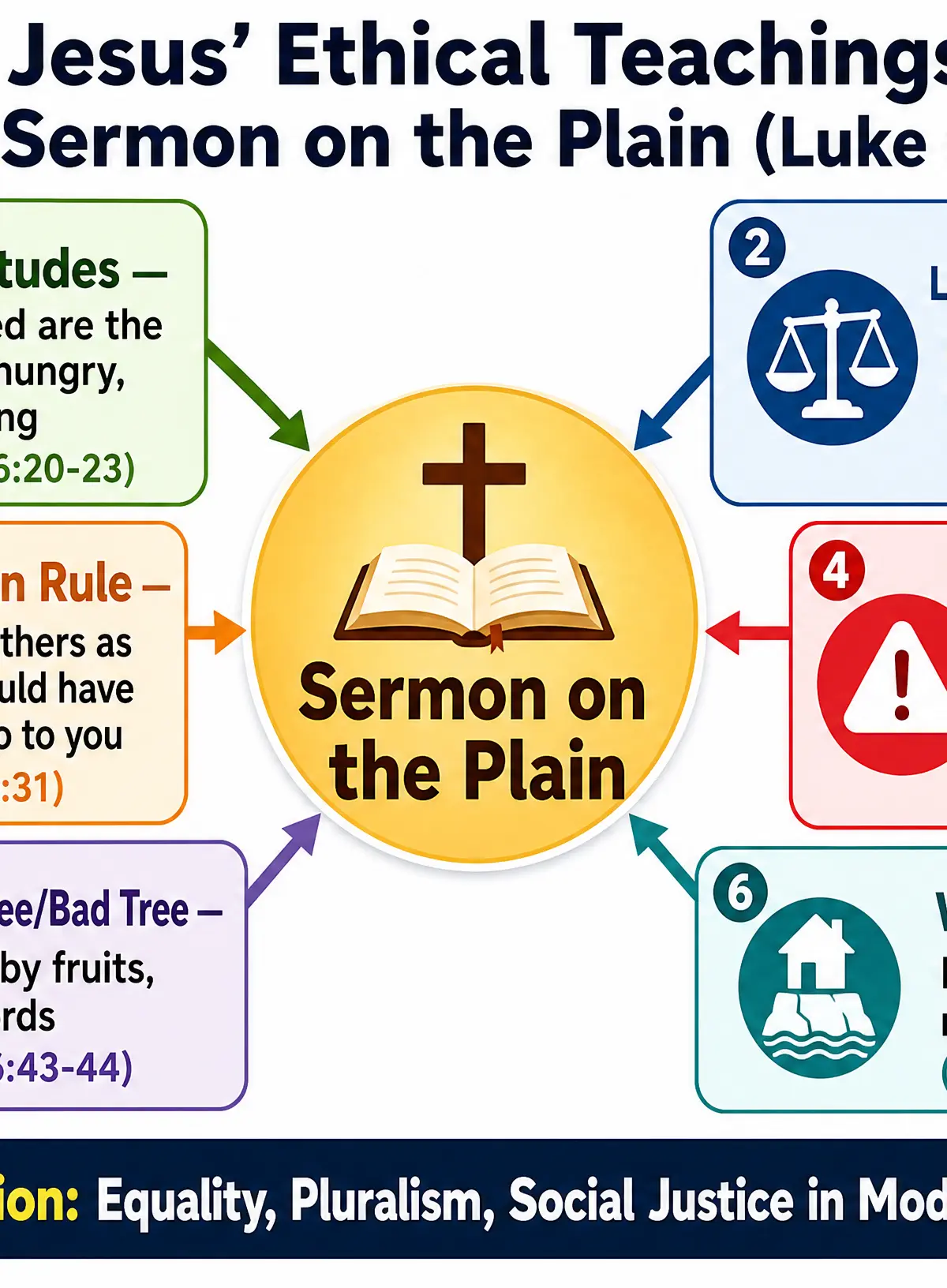
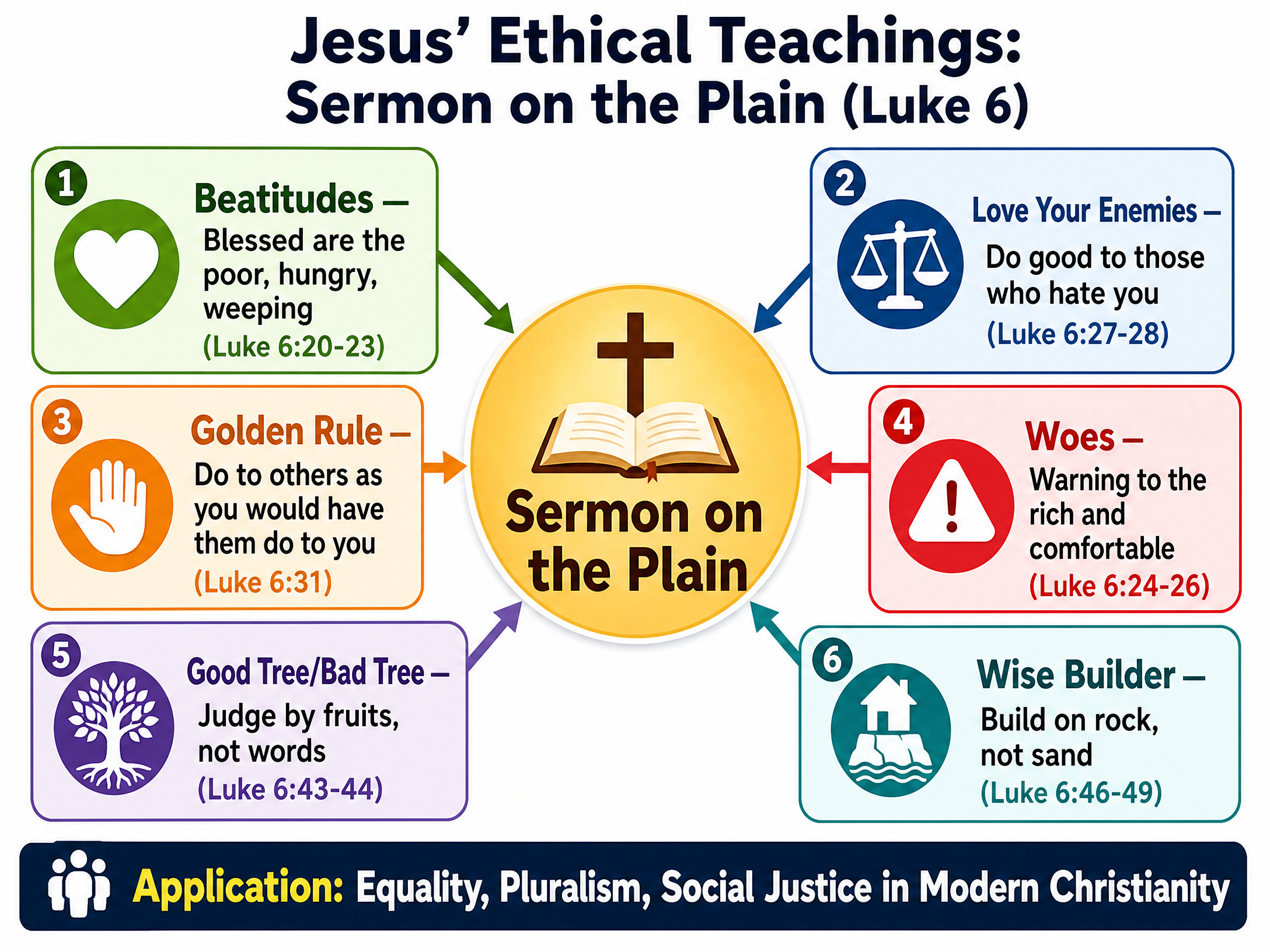
While the resurrection is the core of Christian belief, Jesus' ethical teachings form the core of Christian practice. The Sermon on the Plain (Luke 6:17-49) is a masterclass in radical ethics.
Key Teachings
-
The Beatitudes (Luke 6:20-23)
- "Blessed are you who are poor, for yours is the kingdom of God."
- Jesus reverses societal values. God favours the marginalised, not the wealthy and powerful.
-
The Woes (Luke 6:24-26)
- "But woe to you who are rich, for you have already received your comfort."
- A stark warning against complacency and the hoarding of wealth.
-
Love of Enemies (Luke 6:27-36)
- "Love your enemies, do good to those who hate you."
- The most radical departure from the norm. It demands non-retaliation and active goodwill towards oppressors.
-
The Golden Rule (Luke 6:31)
- "Do to others as you would have them do to you."
- The universal principle of empathy and fairness.
Comparison with First-Century Judaism
Context: Jesus was a Jew speaking to a Jewish audience. His teachings must be understood in this context.
- Continuity: The Torah already commanded love of neighbour (Leviticus 19:18) and care for the poor. Jesus upheld these values.
- Change/Radicalisation: Where Judaism permitted proportional justice ("eye for an eye" - Lex Talionis), Jesus demanded non-retaliation ("turn the other cheek"). Where Judaism focused on loving fellow Israelites, Jesus extended love to enemies and outsiders.
Examiner Tip: Do not present Jesus as opposing Judaism. Present him as extending and intensifying the ethical demands of the Jewish tradition.
Application to Contemporary Life
Jesus' teachings continue to shape modern Christian responses to:
- Equality: The Beatitudes drive Christian charities and social justice movements to fight poverty and systemic inequality.
- Pluralism: The command to love enemies and the parable of the Good Samaritan (Luke 10) encourage Christians to respect and care for people of different faiths and backgrounds in a diverse society.
- Pacifism: "Turn the other cheek" is the foundation for Christian pacifism and non-violent resistance (e.g., Martin Luther King Jr.).
Visual Resources
3 diagrams and illustrations
Interactive Diagrams
1 interactive diagram to visualise key concepts
Conceptual Flow Outline
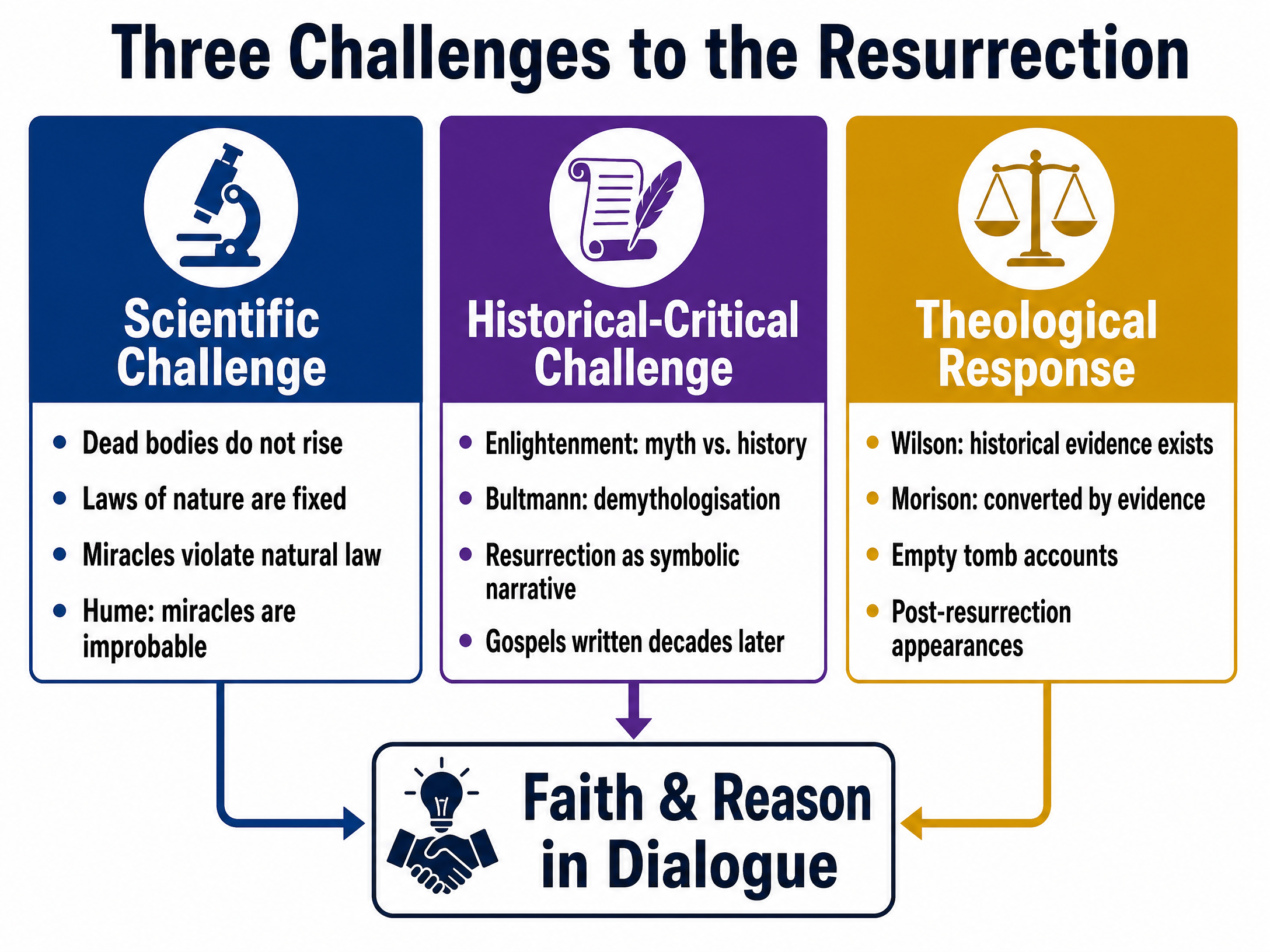
Flowchart showing the flow of challenges and scholarly responses regarding the resurrection.
Worked Examples
3 worked examples — open one to explore the question and available guidance.
Practice Questions
Test your understanding — click to reveal model answers
Outline Bultmann's view on the resurrection. (4 marks)
Hint: Use the term 'demythologisation' and explain what he thought the resurrection actually was (symbol vs. history).
Explain how Jesus' teachings in the Sermon on the Plain can be applied to modern issues of equality. (8 marks)
Hint: Link specific teachings (like the Beatitudes and Woes) to modern wealth inequality and charity.
'Historical evidence proves the resurrection happened.' Evaluate this statement. (15 marks)
Hint: Contrast scholars like Morison and Wilson with Bultmann and the Enlightenment critics.
Outline two teachings from the Sermon on the Plain. (4 marks)
Hint: Think of the Beatitudes, Woes, or rules about enemies.
Explain the significance of Frank Morison's work 'Who Moved the Stone?'. (8 marks)
Hint: Explain his starting viewpoint (sceptic) and his conclusion based on evidence.