Pearson Edexcel · A-Level · Religious Studies
Sikhism – Practices that shape and express religious identity: The affirmation of a distinctive Sikh identity and the Singh Sabha movements
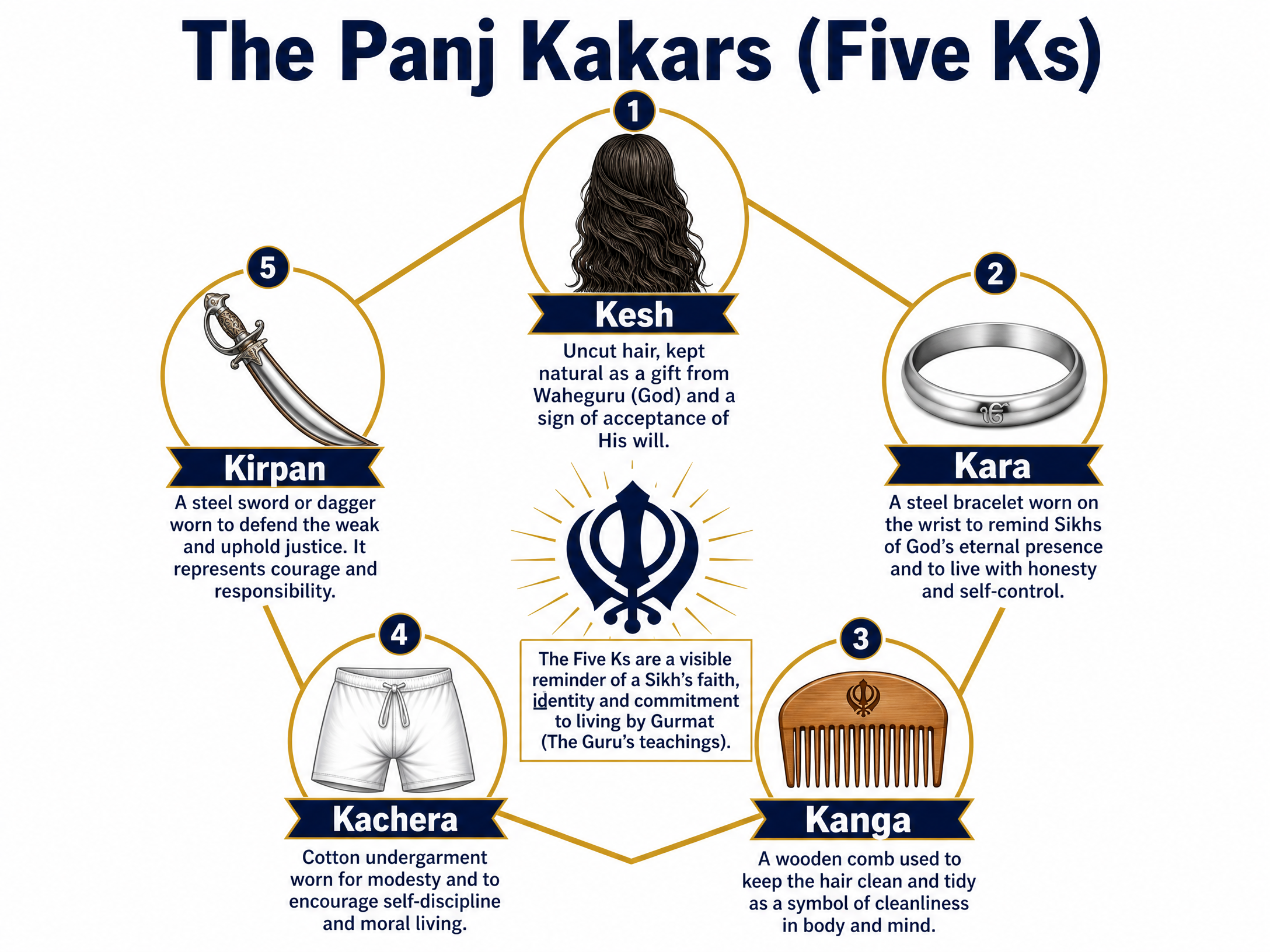
This study explores the late 19th-century Singh Sabha movement, a crucial period of reform that defined and standardised modern Sikh identity. Understanding this topic is essential for examiners as it connects the historical context of British colonial rule to the orthodox practices, such as the Five Ks and the Sikh Rehat Maryada, that shape Sikhism today.
- 7 min read
- 3 worked examples
- 5 practice questions
- 6 key terms
Study Notes
Overview
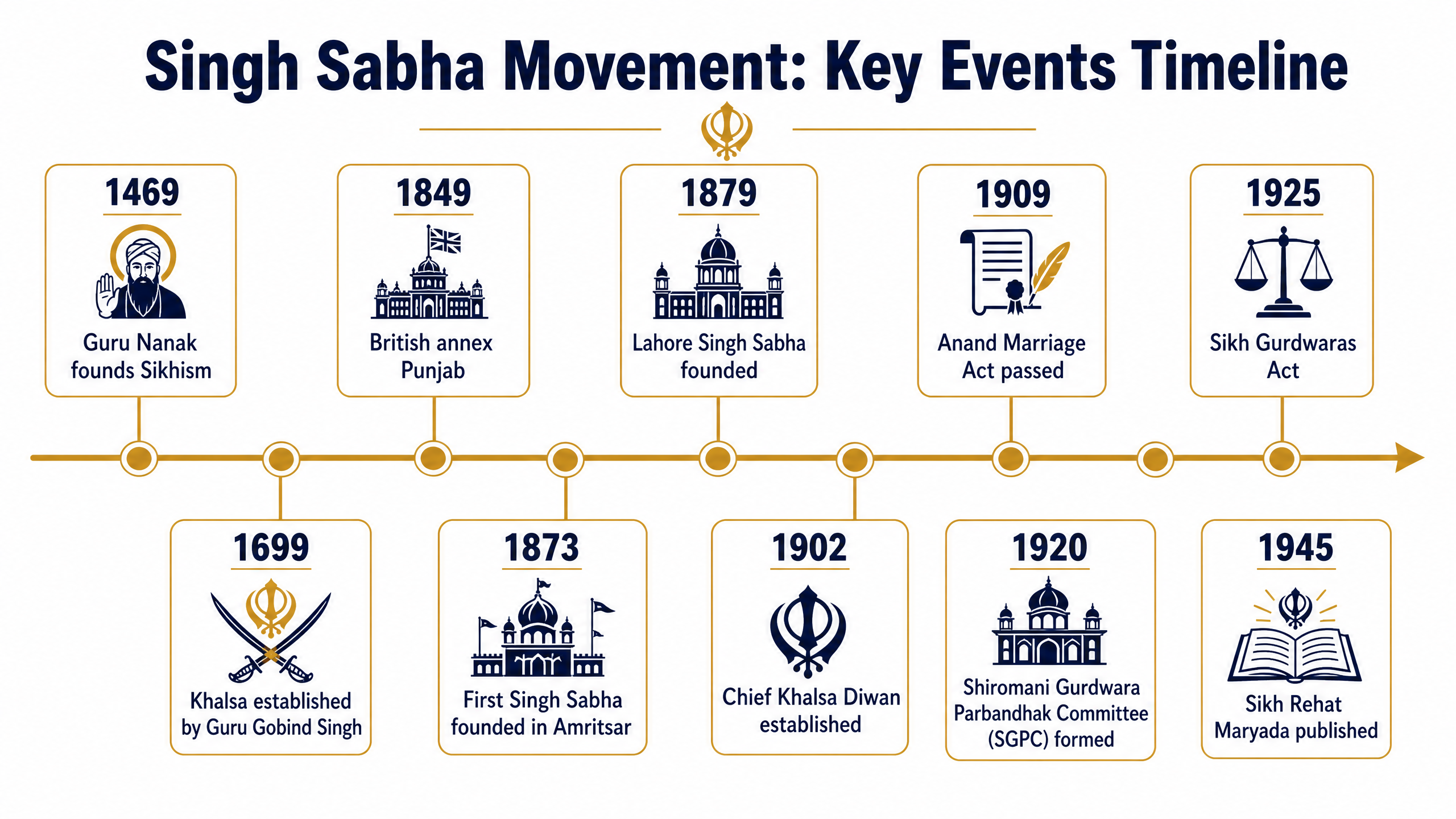
The affirmation of a distinctive Sikh identity in the late nineteenth and early twentieth centuries is a pivotal topic in GCSE Religious Studies. Following the British annexation of the Punjab in 1849, the Sikh community faced significant challenges from Christian missionaries and Hindu reform movements like the Arya Samaj. In response, Sikh leaders established the Singh Sabha movement, beginning in Amritsar in 1873, to protect and revive their religious heritage. Examiners expect candidates to understand not just the timeline of these events, but the causation and consequence—how external threats led to internal reform, resulting in the standardisation of Sikh practice through institutions like the SGPC and documents like the Sikh Rehat Maryada. This topic bridges historical events with the lived reality of modern Sikh practice.

Key Events & Developments
The Founding of the Singh Sabhas
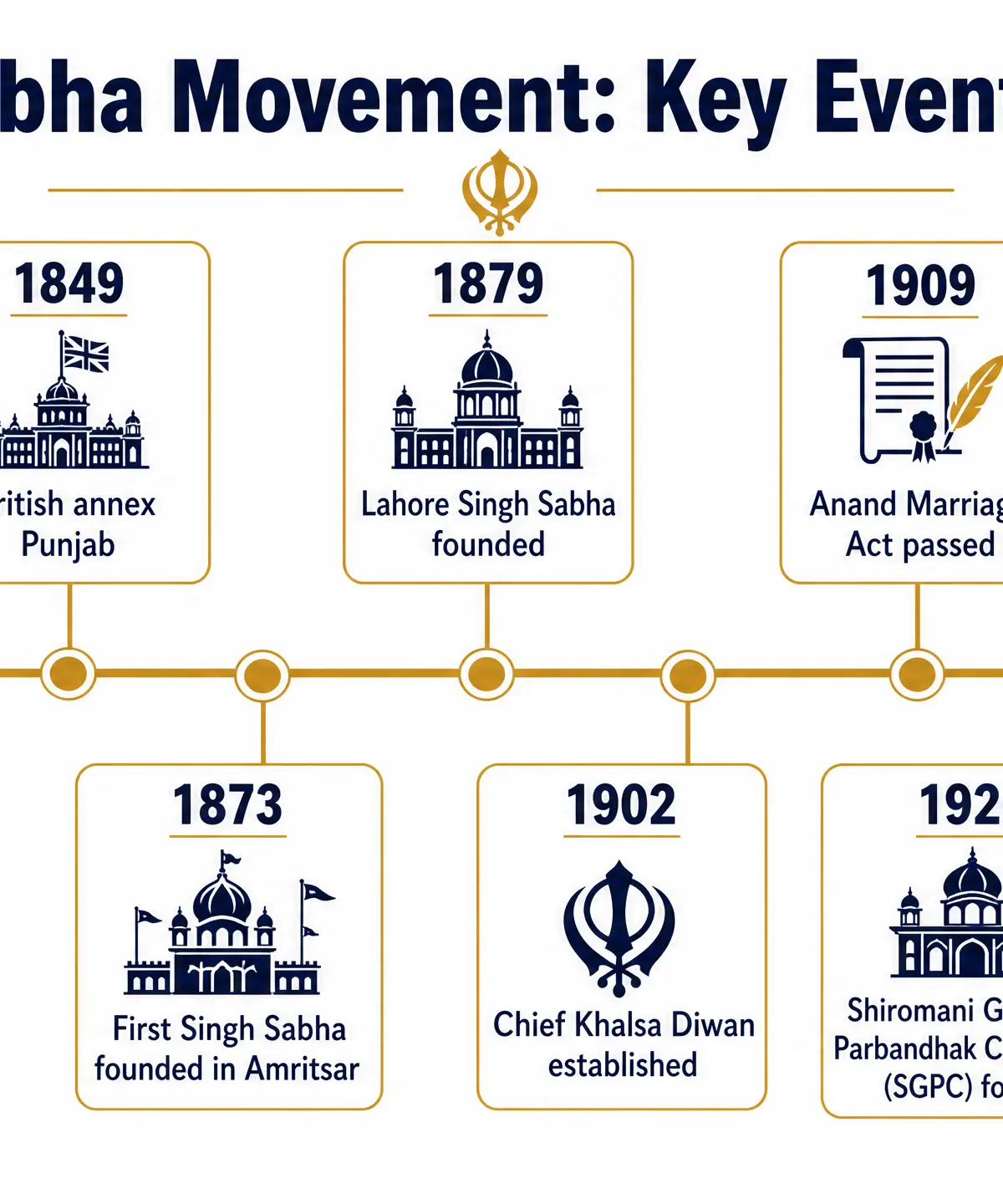
Date(s): 1873 (Amritsar) and 1879 (Lahore)
What happened: The first Singh Sabha was established in Amritsar by prominent Sikhs, including Khem Singh Bedi, to restore the purity of Sikhism and promote education. Six years later, a more radical branch was founded in Lahore by figures like Bhai Ditt Singh, focusing heavily on removing Hindu influences and caste distinctions from Sikh practice.
Why it matters: This marks the organised beginning of the Sikh renaissance. For the exam, understanding the slight differences between the conservative Amritsar branch and the progressive Lahore branch demonstrates high-level evaluation skills regarding diversity within the movement.
Specific Knowledge: Amritsar (1873), Lahore (1879). By 1900, there were over 117 Singh Sabha branches.
The Anand Marriage Act
Date(s): 1909
What happened: The British government passed legislation legally recognising the Anand Karaj (the Sikh marriage ceremony) as a distinct and valid form of marriage, separate from Hindu law.
Why it matters: This was a monumental legal victory for the Singh Sabha. It provided official, state recognition of Sikhs as a separate religious community, fundamentally affirming their distinct identity.
Specific Knowledge: Anand Marriage Act, 1909, Anand Karaj.
Formation of the SGPC and the Sikh Gurdwaras Act
Date(s): 1920 (SGPC formed) and 1925 (Act passed)
What happened: The Gurdwara Reform Movement (Akali movement) successfully campaigned to remove corrupt hereditary priests (mahants) from controlling Sikh shrines. This led to the creation of the Shiromani Gurdwara Parbandhak Committee (SGPC), which was given legal authority over gurdwaras by the 1925 Act.
Why it matters: This shifted control of sacred spaces and resources back to the orthodox Sikh community, ensuring that worship aligned with Khalsa principles rather than syncretic or Hindu-influenced practices.
Specific Knowledge: SGPC (1920), Sikh Gurdwaras Act (1925), mahants.
Publication of the Sikh Rehat Maryada
Date(s): 1945 (Final approval)
What happened: After years of consultation, the SGPC published the definitive guide to Sikh conduct and conventions, standardising everything from daily prayers to the initiation ceremony (Amrit Sanskar).
Why it matters: This is the ultimate consequence of the Singh Sabha movement. It codified what it means to be a Sikh, reinforcing the importance of the Five Ks and the teachings of the Guru Granth Sahib.
Specific Knowledge: Sikh Rehat Maryada, 1945, SGPC.

Key Individuals
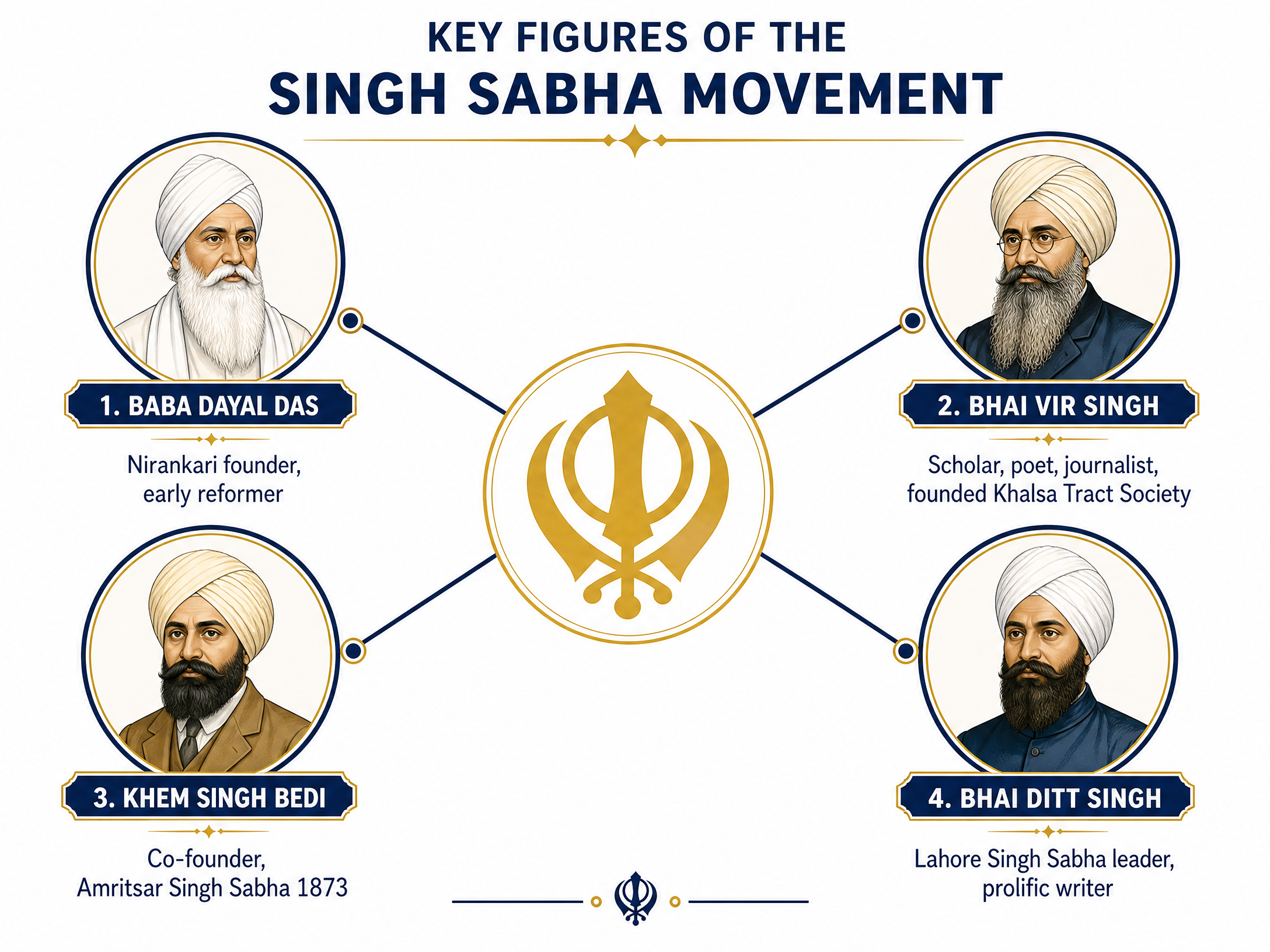
Bhai Vir Singh
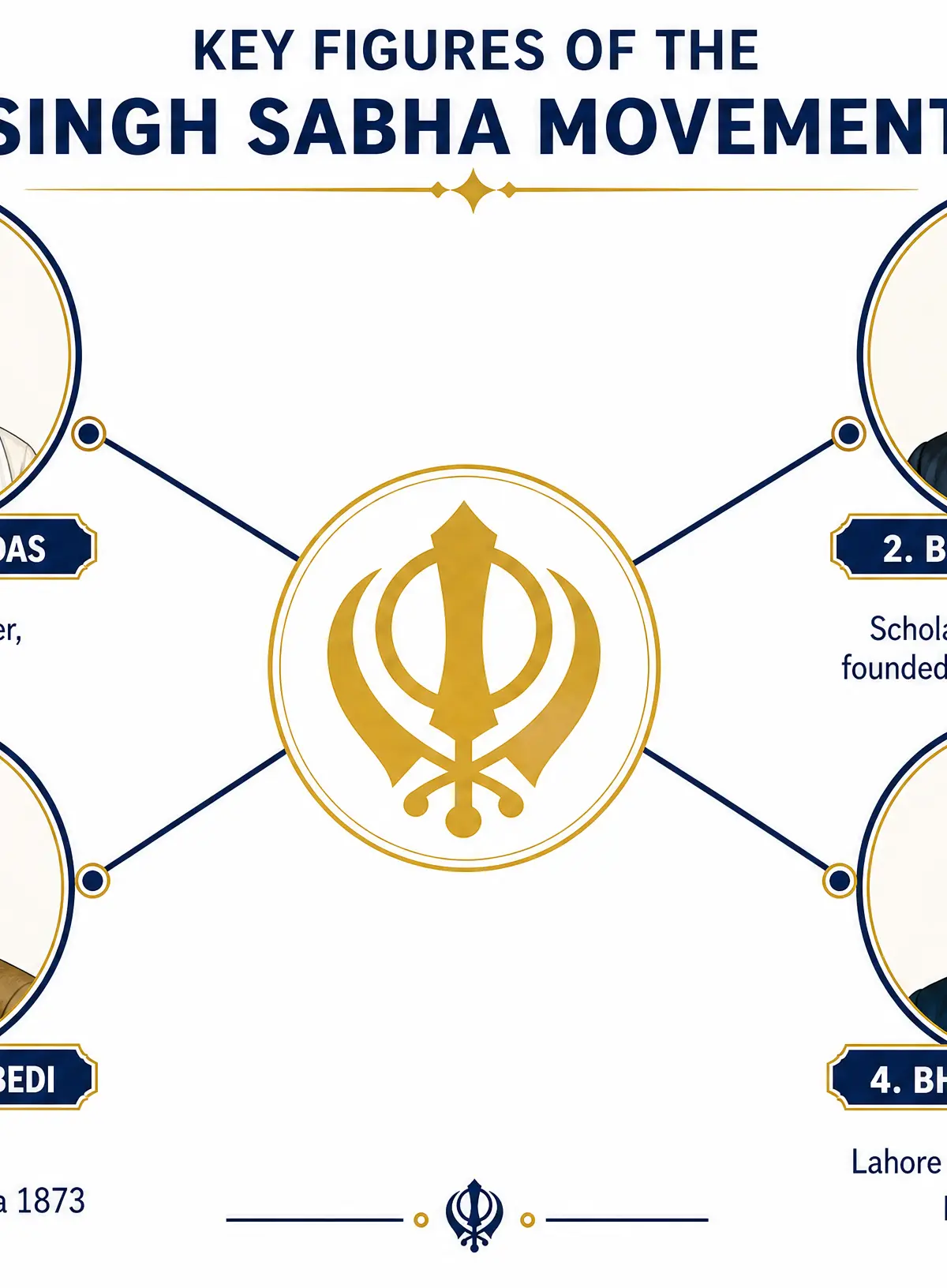
Role: Scholar, poet, and leading figure of the Singh Sabha.
Key Actions: Founded the Khalsa Tract Society (1894) and the newspaper Khalsa Samachar (1899). He wrote extensively in Punjabi to promote Sikh history and values.
Impact: He used the power of print media to reach the masses, shaping the modern Punjabi literary language and defining orthodox Sikh identity for a broad audience.
Khem Singh Bedi
Role: Co-founder of the Amritsar Singh Sabha.
Key Actions: Helped establish the first Singh Sabha in 1873. As a direct descendant of Guru Nanak, he commanded immense respect.
Impact: He provided the traditional authority needed to launch the reform movement, though his more conservative views later clashed with the Lahore branch.
Bhai Ditt Singh
Role: Leader in the Lahore Singh Sabha.
Key Actions: A prolific writer and powerful speaker who aggressively campaigned against caste discrimination and the influence of Hindu rituals in Sikhism.
Impact: He drove the more radical, egalitarian reforms of the movement, pushing for a strict adherence to Khalsa ideals.
Second-Order Concepts
Causation
The Singh Sabha movement was triggered by a combination of long-term and short-term causes. The long-term cause was the gradual integration of Hindu practices into Sikh worship during the period of the Sikh Empire. The short-term triggers were the British annexation of the Punjab in 1849, which removed Sikh political power, and the aggressive proselytising by Christian missionaries and the Hindu Arya Samaj, which threatened Sikh demographics.
Consequence
The immediate consequence was a surge in Sikh educational institutions (Khalsa schools) and Punjabi literature. The long-term consequence was the total institutional and doctrinal standardisation of the faith—most notably through the SGPC taking control of gurdwaras and the codification of the Sikh Rehat Maryada.
Change & Continuity
While the Singh Sabha brought massive change by removing Hindu rituals and mahants from gurdwaras, it framed this change as a continuity—a return to the original, pure teachings of the Gurus and the Khalsa discipline established by Guru Gobind Singh in 1699.
Significance
This movement is historically significant because it successfully prevented the assimilation of Sikhism into broader Hinduism. It defined the boundaries of the faith that are still recognised globally today.
Source Skills
When approaching sources on this topic, consider the provenance carefully. A source from a British colonial official might view the Singh Sabha as a political threat or a useful administrative partner. A source from the Arya Samaj might be hostile, viewing Sikhs as a sect of Hinduism. A source from the Khalsa Tract Society will be highly persuasive, aiming to promote orthodox Sikh identity. Always evaluate how the author's purpose affects the utility of the source.
Worked Examples
3 worked examples — open one to explore the question and available guidance.
Practice Questions
Test your understanding — click to reveal model answers
Describe two features of the Singh Sabha movement's educational reforms. (4 marks)
Hint: Identify a feature and add a specific supporting detail for each.
Explain the significance of the Anand Marriage Act 1909 for Sikh identity. (8 marks)
Hint: Think about the legal status of Sikhs before and after the Act.
Explain why the Gurdwara Reform Movement was necessary in the 1920s. (8 marks)
Hint: Who was controlling the gurdwaras, and what were they doing wrong?
‘The Singh Sabha movement was entirely successful in its aims.’ How far do you agree? (16 marks)
Hint: Argue yes (SGPC, Rehat Maryada, Anand Act) but also argue no (internal divisions, ongoing diversity).
How did the British annexation of the Punjab affect the Sikh community? (8 marks)
Hint: Focus on loss of political power and the arrival of new religious threats.