Pearson Edexcel · A-Level · Religious Studies
Texts and interpretation: The Kingdom of God in Luke, the death of Jesus, and the crucifixion and resurrection narratives
This topic explores the profound theological and historical significance of the Kingdom of God, the death of Jesus, and the resurrection narratives in Luke's Gospel. Understanding these events is crucial for grasping early Christian beliefs about salvation, conflict with authorities, and God's redemptive plan.
- 5 min read
- 3 worked examples
- 2 practice questions
- 6 key terms
Study Notes
Overview
This study guide covers the core theological themes in Luke's Gospel regarding the Kingdom of God, the reasons for Jesus' death, and the significance of his crucifixion and resurrection. Examiners expect candidates to understand not just the narrative events, but their theological meaning for early believers. You must be able to discuss the Kingdom as a past, present, and future reality, analyse the religious and political conflicts that led to the crucifixion, and evaluate scholarly perspectives from figures like Albert Schweitzer, I.H. Marshall, E. Rivkin, R.A. Culpepper, and F. Matera. Mastery of these areas will enable you to construct balanced, analytical responses that secure top marks.
Listen to the comprehensive audio guide for this topic:

Key Events & Developments
The Kingdom of God in Luke
What happened: Jesus inaugurated the Kingdom of God, presenting it as a multi-dimensional reality.
Why it matters: The Kingdom is the central theme of Jesus' teaching. It is not merely a place, but the dynamic rule and reign of God breaking into human history.
Specific Knowledge:
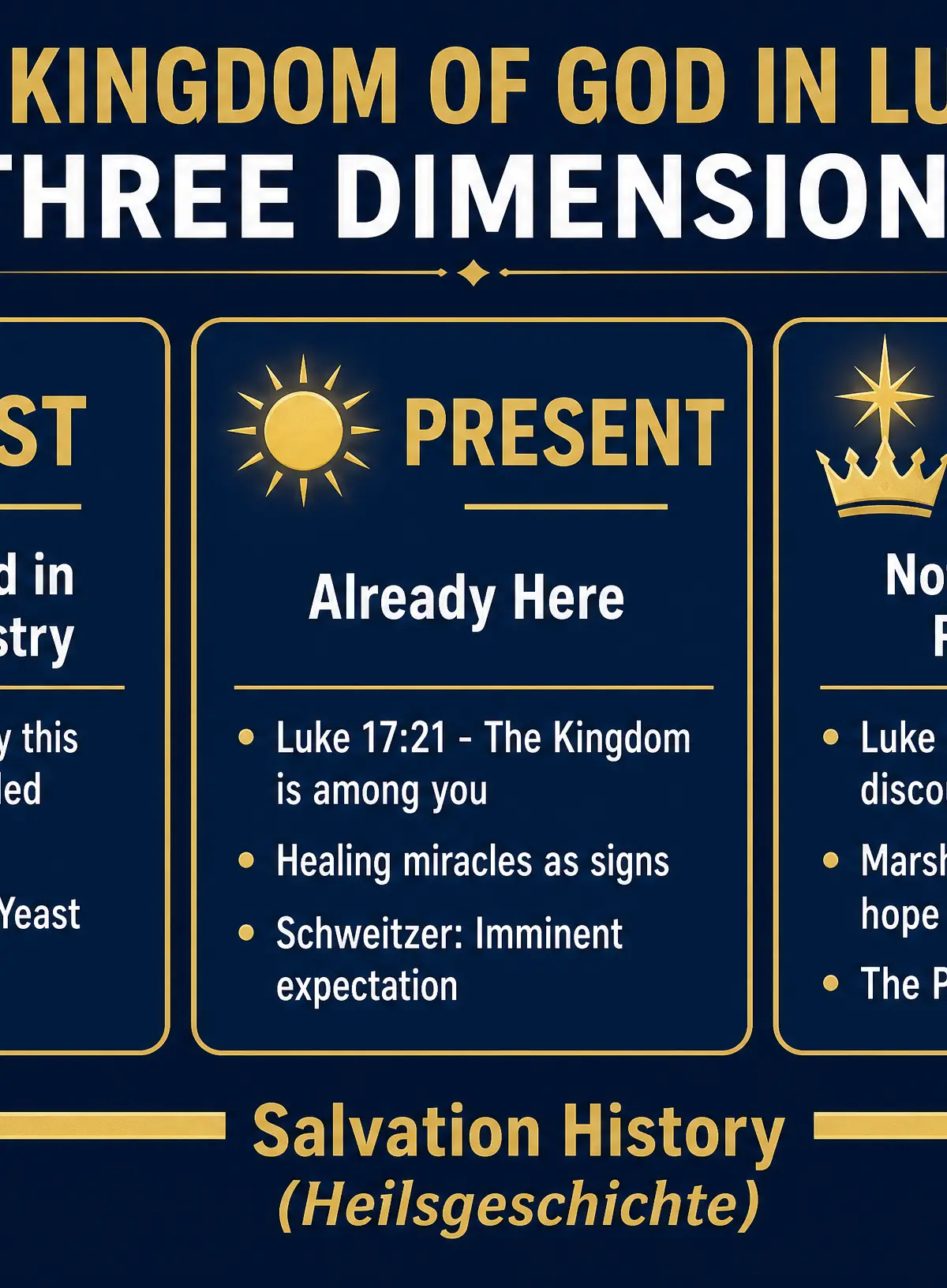
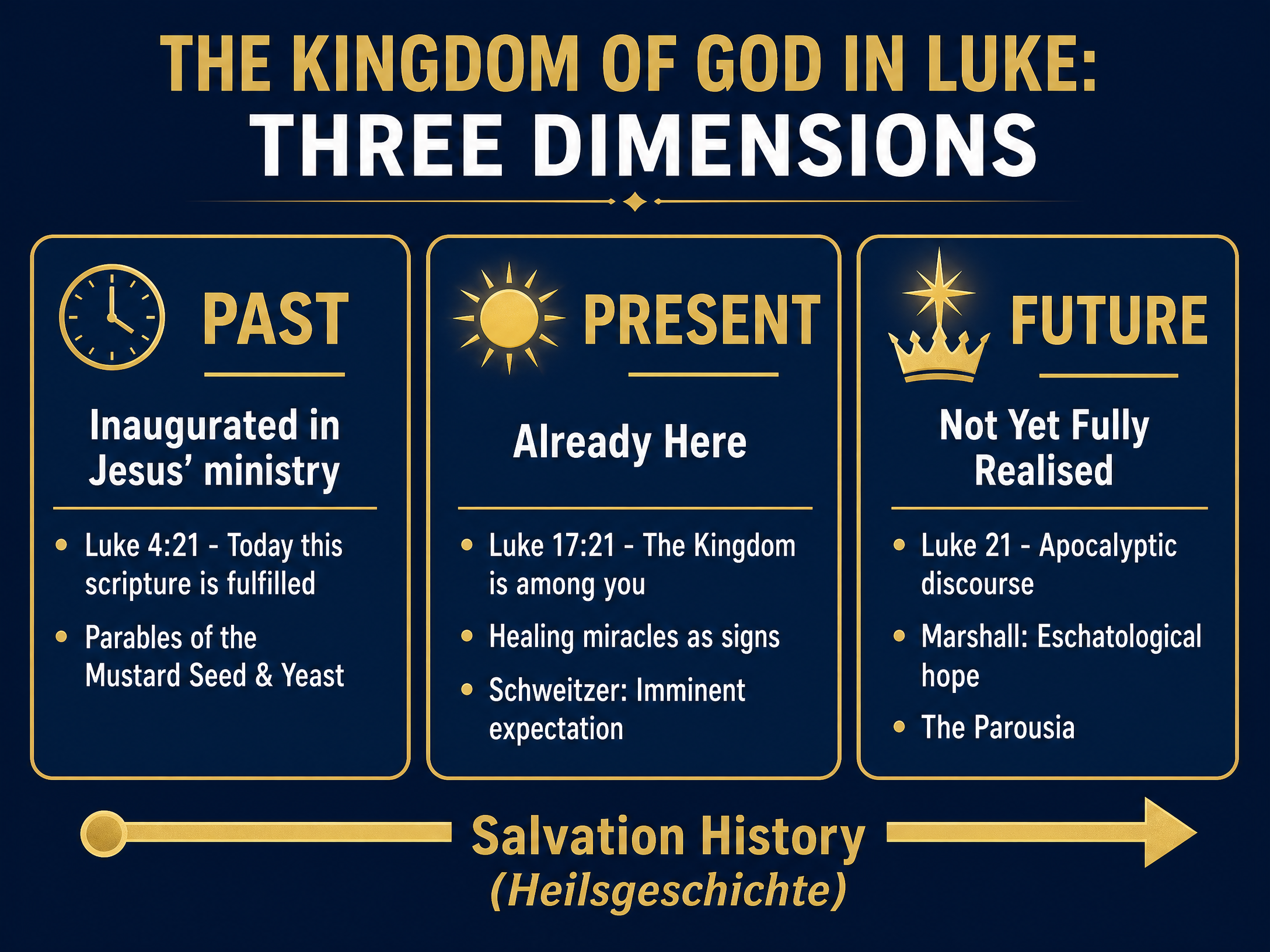
- Past (Inaugurated): Luke 4:21 - Jesus reads from Isaiah and declares, "Today this scripture is fulfilled in your hearing."
- Present (Already Here): Luke 17:21 - Jesus states, "The Kingdom of God is among you." Evidenced by his healing miracles and table fellowship with outcasts.
- Future (Not Yet): Luke 21 - The apocalyptic discourse regarding the coming of the Son of Man (the Parousia).
- Scholarly Views: Albert Schweitzer argued for "thoroughgoing eschatology" (Jesus expected an imminent end). I.H. Marshall emphasises Heilsgeschichte (salvation history) — an "already but not yet" tension.
Conflict and the Death of Jesus
What happened: Jesus faced mounting opposition from both Jewish religious leaders and Roman political authorities, culminating in his crucifixion.
Why it matters: Understanding the dual nature of this conflict is essential for explaining why Jesus was executed.
Specific Knowledge:
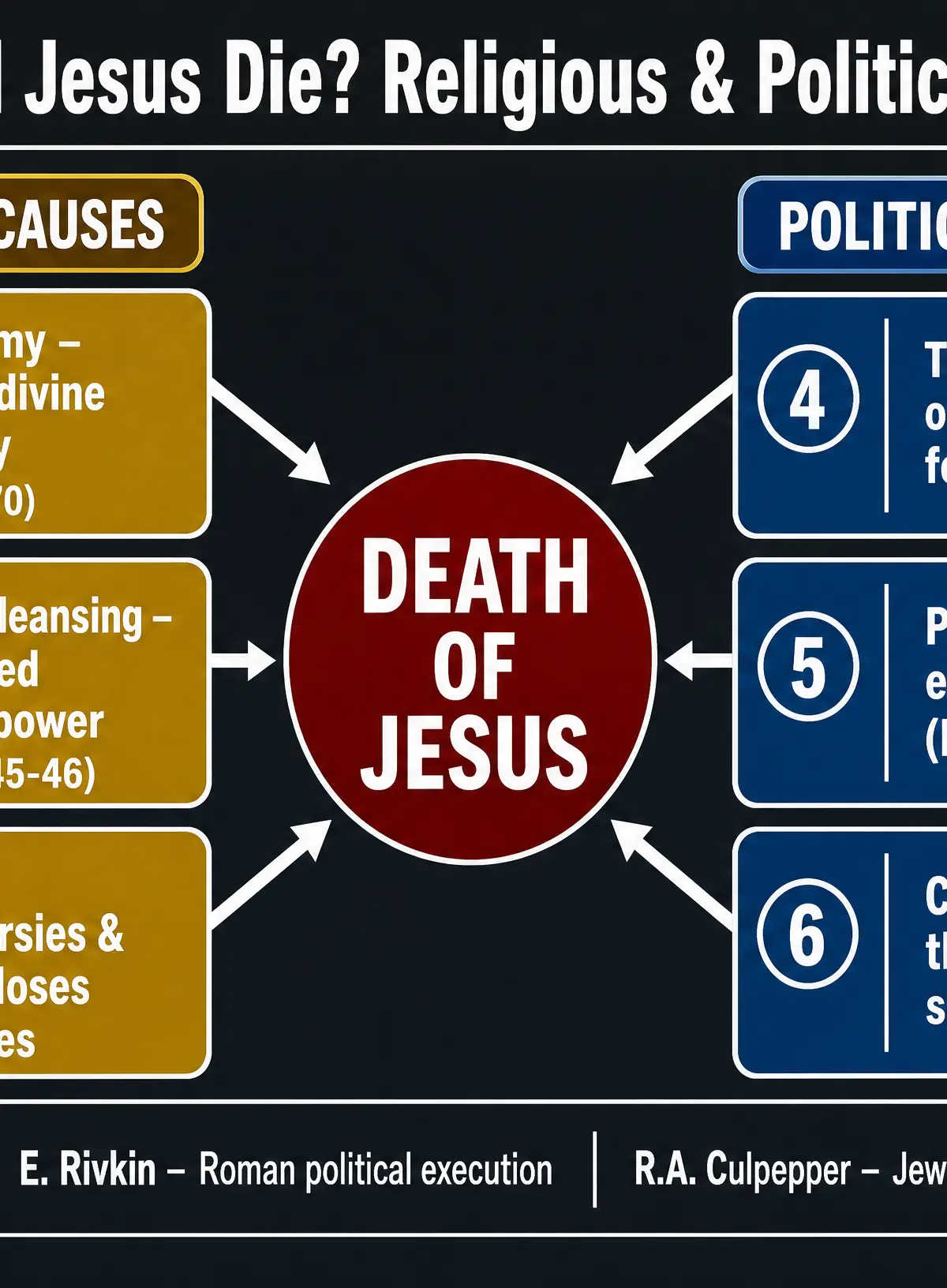
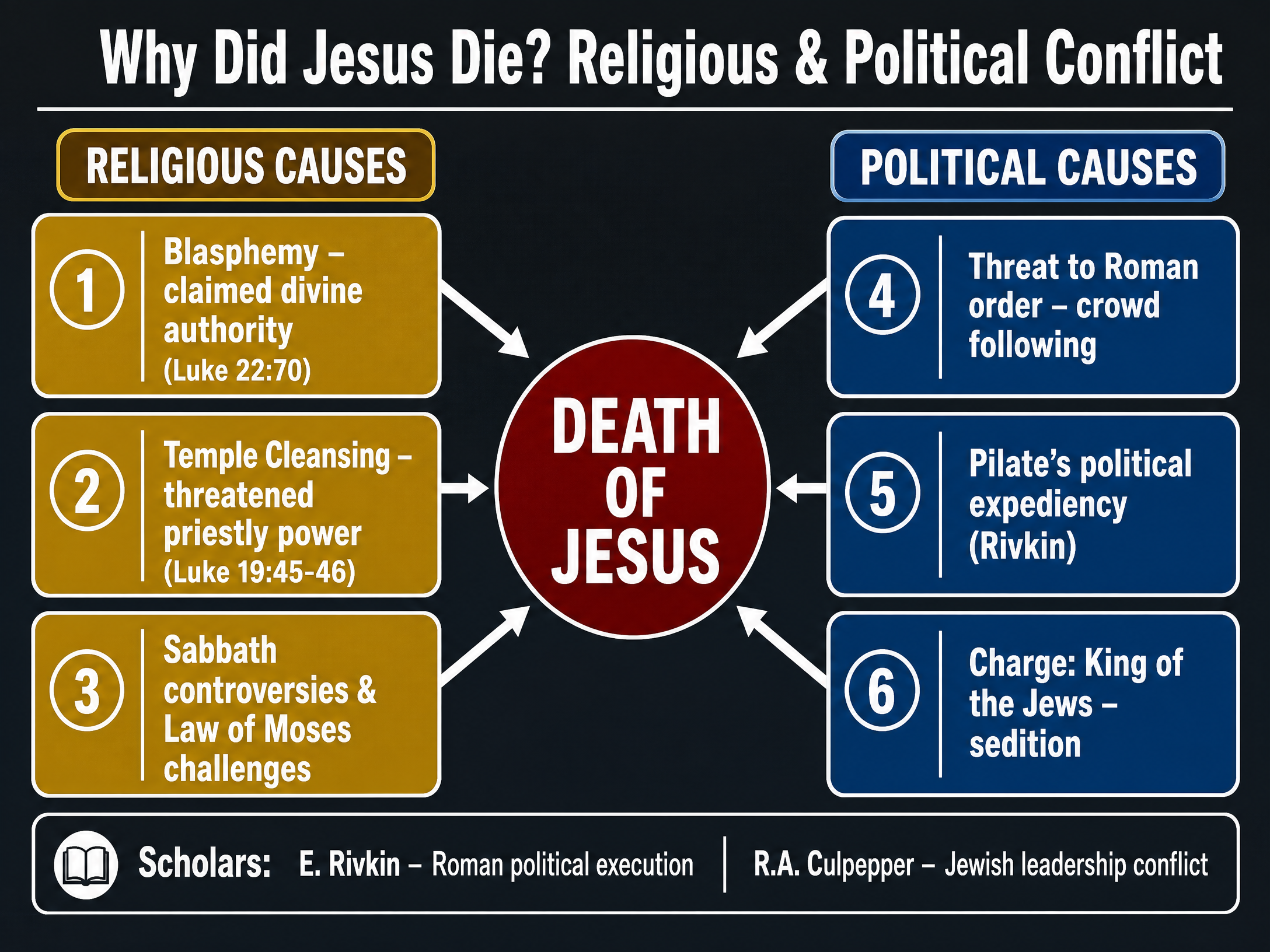
- Religious Causes: Blasphemy (claiming divine authority in Luke 22:70); Temple Cleansing (threatening priestly power in Luke 19:45-46); Sabbath controversies (healing on the Sabbath, challenging the Law of Moses).
- Political Causes: Jesus was seen as a threat to Roman order (gathering large crowds). The charge against him was sedition ("King of the Jews"). Pilate chose political expediency to maintain peace during Passover.
- Scholarly Views: E. Rivkin argues it was fundamentally a Roman political execution. R.A. Culpepper highlights the narrative progression of conflict with Jewish leadership over power and status.
The Crucifixion and Resurrection Narratives
What happened: Jesus was crucified, died, and was resurrected, appearing to his followers.
Why it matters: These events form the climax of God's saving plan and the foundation of the Christian faith.
Specific Knowledge:
- Crucifixion Symbolism: Darkness at noon (echoing Exodus); tearing of the Temple curtain (access to God); Jesus quoting Psalm 31 ("Father, into your hands I commit my spirit"), showing serene trust.
- Resurrection Appearances: The empty tomb (women as first witnesses); the Road to Emmaus (recognising Christ in scripture and the breaking of bread); the appearance in Jerusalem.
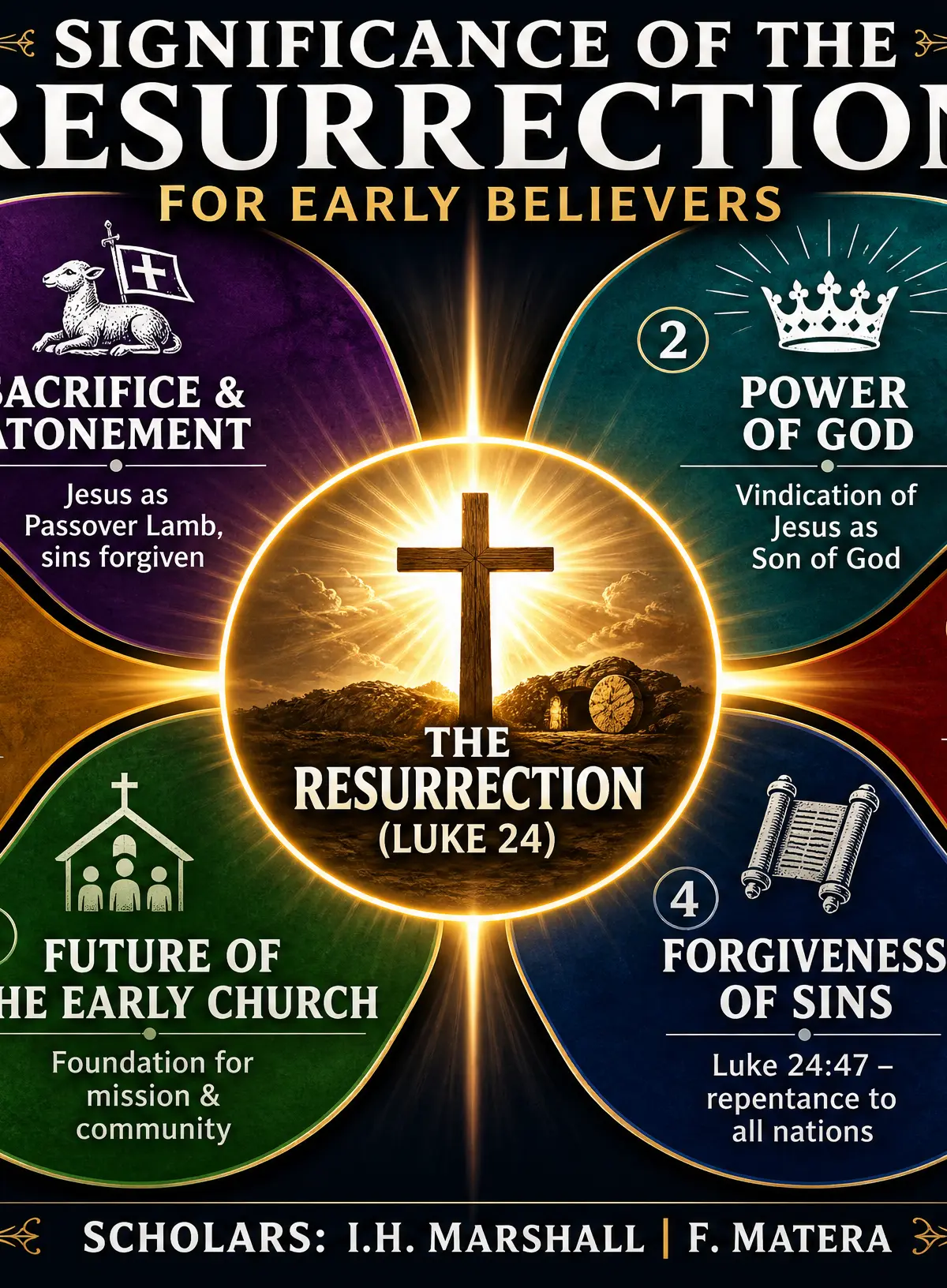
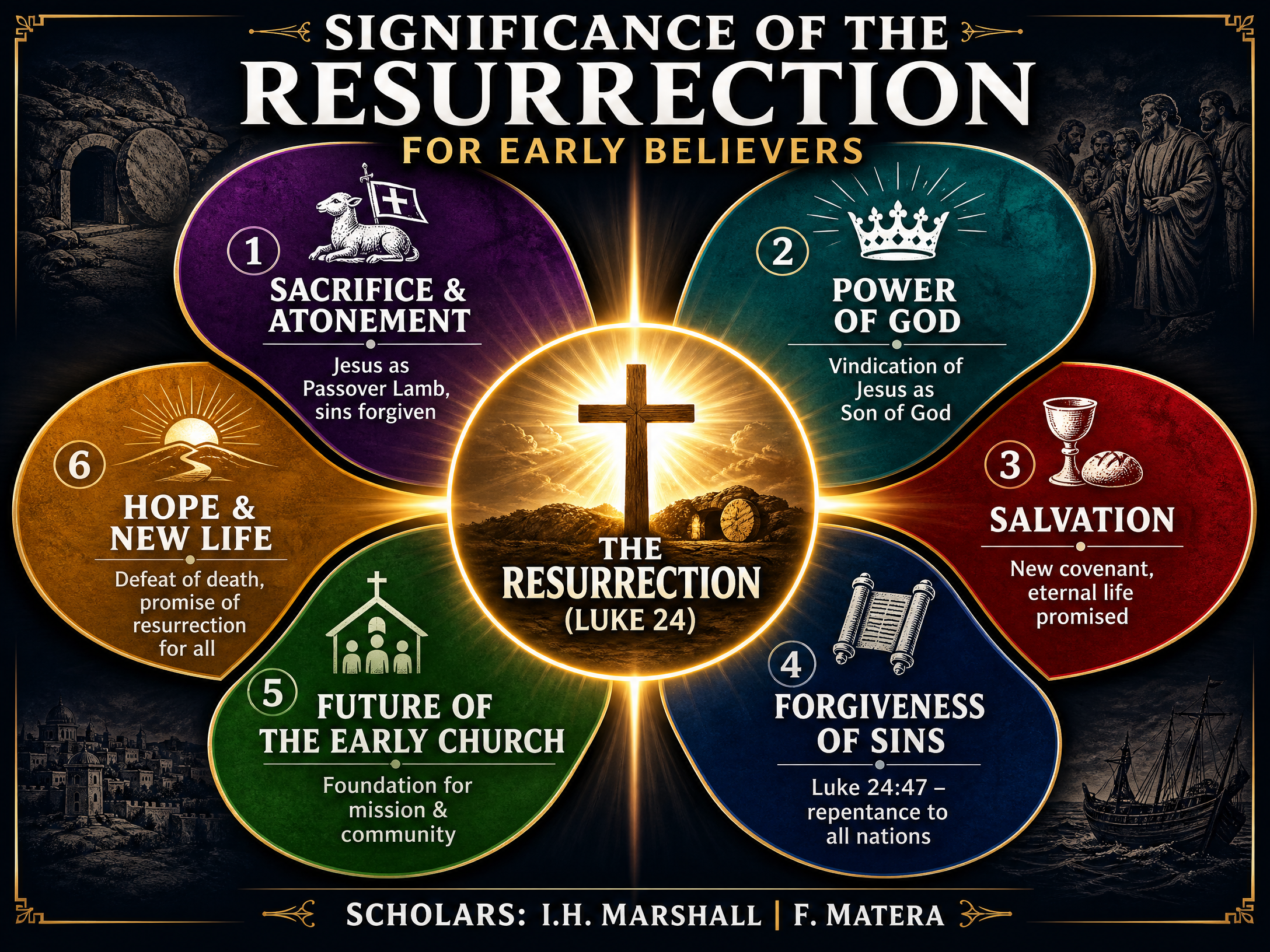
- Significance for Believers: Proof of vindication, defeat of death, and the basis for the Church's mission to preach "repentance and forgiveness of sins to all nations" (Luke 24:47).
- Scholarly Views: Marshall sees the crucifixion as dei (divine necessity). Matera focuses on atonement and sacrifice. Both view the resurrection as the ultimate confirmation of Jesus' identity.
Second-Order Concepts
Causation
The death of Jesus was caused by a complex interplay of short-term triggers (the Temple cleansing, the triumphal entry) and long-term underlying tensions (differing interpretations of the Law, the Roman occupation). It was both a religious dispute over authority and a political issue of public order.
Consequence
The immediate consequence of the resurrection was the transformation of a frightened group of disciples into a bold missionary movement. The long-term consequence was the establishment of the Christian Church and a new covenant based on forgiveness of sins.
Significance
For Luke, these events are not just historical facts but the climax of Heilsgeschichte (salvation history). The resurrection validates Jesus' earthly ministry and his teachings about the Kingdom of God.
Visual Resources
3 diagrams and illustrations
Interactive Diagrams
1 interactive diagram to visualise key concepts
Conceptual Flow Outline
The Three Dimensions of the Kingdom of God in Luke
Worked Examples
3 worked examples — open one to explore the question and available guidance.
Practice Questions
Test your understanding — click to reveal model answers
Explain Luke's understanding of the Kingdom of God. (8 marks)
Hint: Ensure you cover the past, present, and future dimensions, using specific scriptural references.
"The resurrection is the most important event in Luke's Gospel." Evaluate this statement. (15 marks)
Hint: Compare the significance of the resurrection with the crucifixion and the teachings on the Kingdom. Use scholars like Marshall and Matera.