AQA · A-Level · Sociology
Course version: 7192 · Version from Sept 2015
Core themes - 4.1.3 Theory and Methods: the theoretical, practical and…
Full specification wording
Subject Content – A-level: Core themes - 4.1.3 Theory and Methods: the theoretical, practical and ethical considerations influencing choice of topic, choice of method(s) and the conduct of research
Sociological research design is shaped by theoretical, practical, and ethical considerations.
Checked against the AQA 7192 specification (opens in a new tab) on .
- Point 5 of 9
- 4 key terms
Study notes
From the checked teaching notes for this specification point.
The idea
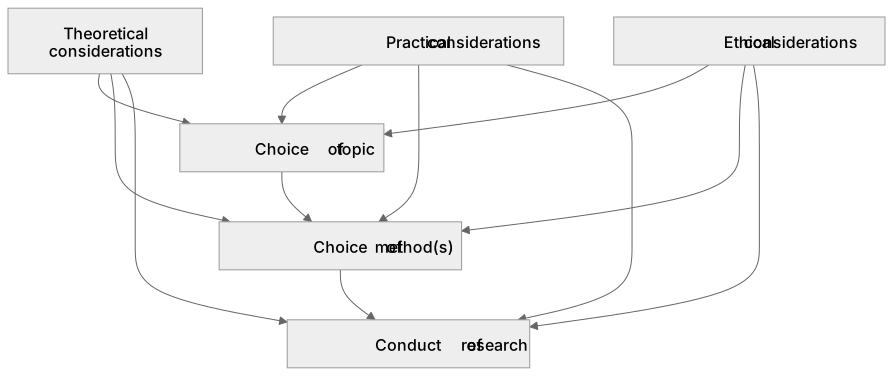
Sociological research design is shaped by theoretical, practical, and ethical considerations. Theoretical factors involve the researcher's perspective, such as positivism favouring quantitative data for reliability, or interpretivism preferring qualitative data for validity. These influence both the choice of topic and the methods used. Practical considerations include time, funding, access to participants, and the researcher's skills, which dictate the feasibility of methods and the conduct of research. Ethical considerations, guided by professional guidelines, ensure participant protection. These include obtaining informed consent, ensuring confidentiality, and avoiding harm. Together, these three dimensions interact to determine what sociologists study, how they collect data, and how they manage the research process from inception to publication.
What earns the marks
- Identify theoretical factors such as positivism (seeking reliability and representativeness) and interpretivism (seeking validity and verstehen).
- Recognise practical constraints including funding availability, time limits, access to the target group, and the personal characteristics of the researcher.
- Identify ethical guidelines such as informed consent, right to withdraw, confidentiality, anonymity, and protection from harm.
- Explain how these considerations interact, for example, how a theoretical preference for participant observation might be limited by practical issues of access or ethical issues of deception.
- Understand how the choice of topic is influenced by funding bodies, societal values, and the researcher's own theoretical stance.
Common mistakes and how to put them right
Confusing theoretical and practical issues, for example stating that validity is a practical issue.
Put it right: Validity, reliability, and representativeness are theoretical issues, whereas time, cost, and access are practical issues.
Treating ethical issues as merely legal requirements.
Put it right: Ethical issues relate to moral principles and professional guidelines, such as those from the British Sociological Association, focusing on participant wellbeing rather than just the law.
Assuming researchers only consider one factor when designing a study.
Put it right: Researchers must balance theoretical, practical, and ethical considerations simultaneously when designing and conducting research.
Exam tips
- Use the acronym PET (Practical, Ethical, Theoretical) to structure your evaluation of research methods and ensure you cover all required dimensions.
- Always link the choice of method back to the researcher's theoretical perspective, explicitly using terms like positivist or interpretivist.
- When discussing the conduct of research, consider how the characteristics of the researcher might practically or ethically impact the participants and the data collected.
Try the lesson
The start of the Subject Content – A-level: Core themes - 4.1.3 Theory and Methods: the theoretical, practical and ethical considerations influencing choice of topic, choice of method(s) and the conduct of research lesson, made from checked teaching notes for this specification point.
Have a go first
Which of the following is a practical consideration that might influence a sociologist's choice of research method?
Listen
Sociological research design is shaped by theoretical, practical, and ethical considerations. Theoretical factors involve the researcher's perspective, such as positivism favouring quantitative data for reliability, or interpretivism preferring qualitative data for validity. These influence both the choice of topic and the methods used. Practical considerations include time, funding, access to participants, and the researcher's skills, which dictate the feasibility of methods and the conduct of research. Ethical considerations, guided by professional guidelines, ensure participant protection. These include obtaining informed consent, ensuring confidentiality, and avoiding harm. Together, these three dimensions interact to determine what sociologists study, how they collect data, and how they manage the research process from inception to publication. A strong answer earns marks for these points. Identify theoretical factors such as positivism (seeking reliability and representativeness) and interpretivism (seeking validity and verstehen). Recognise practical constraints including funding availability, time limits, access to the target group, and the personal characteristics of the researcher. Identify ethical guidelines such as informed consent, right to withdraw, confidentiality, anonymity, and protection from harm. Explain how these considerations interact, for example, how a theoretical preference for participant observation might be limited by practical issues of access or ethical issues of deception. A common slip: Confusing theoretical and practical issues, for example stating that validity is a practical issue. Instead, Validity, reliability, and representativeness are theoretical issues, whereas time, cost, and access are practical issues. Exam tip: Use the acronym PET (Practical, Ethical, Theoretical) to structure your evaluation of research methods and ensure you cover all required dimensions.
See it
Key words
Say what each word means before you turn the card.
Positivism
Try answering aloud or in your head before turning the card.
Interpretivism
Try answering aloud or in your head before turning the card.
Informed consent
Try answering aloud or in your head before turning the card.
Practical considerations
Try answering aloud or in your head before turning the card.
See every definition
- Positivism
- A theoretical perspective favouring quantitative data in order to seek reliability and representativeness.
- Interpretivism
- A theoretical perspective preferring qualitative data in order to seek validity and verstehen.
- Informed consent
- An ethical guideline ensuring participant protection, alongside confidentiality, anonymity and protection from harm.
- Practical considerations
- Constraints including time, funding, access to participants and the researcher's skills, which dictate the feasibility of methods and the conduct of research.
Label the diagram
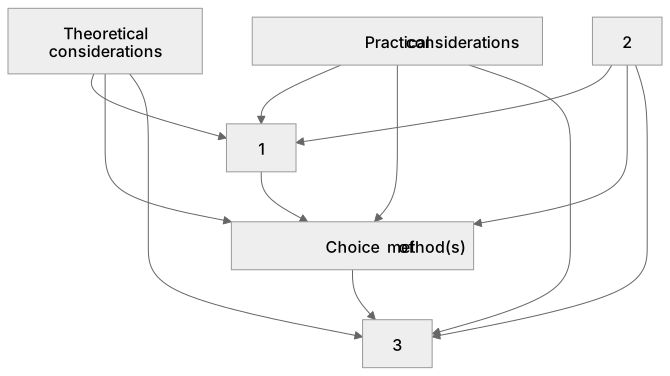
Some boxes have lost their names. Pick the right name for each number.
1Box 1
2Box 2
3Box 3
There is more to this lesson
The full lesson goes on to check your understanding and help you earn the marks. Create a free account to carry on, with your progress saved.
A week of Premium from your first lesson · Then the free plan continues · No card, no charge
Test your understanding of Subject Content – A-level: Core themes - 4.1.3 Theory and Methods: the theoretical, practical and ethical considerations influencing choice of topic, choice of method(s) and the conduct of research
Active recall beats re-reading. Take an instant quiz now to test what you’ve learned and lock it into long-term memory.
A week of Premium from your first lesson · Then the free plan continues · No card, no charge